






By DASHNOR KALOÇI
Part Fifteen
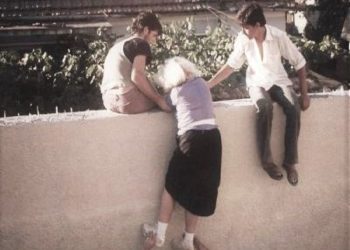
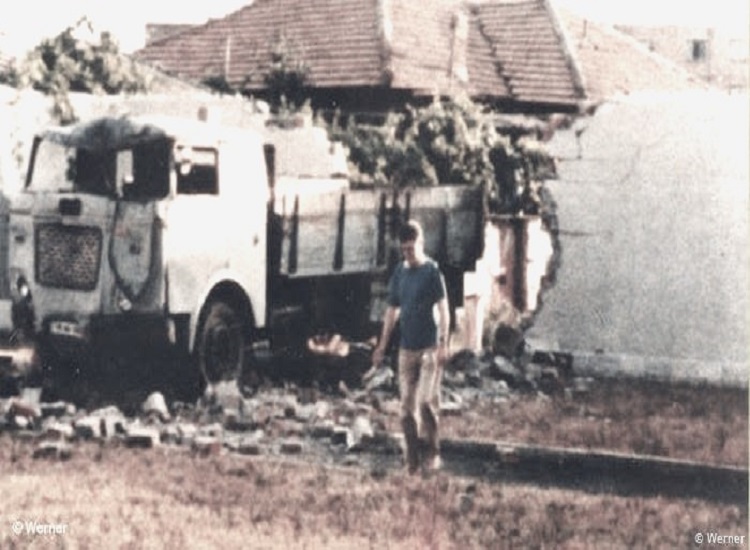
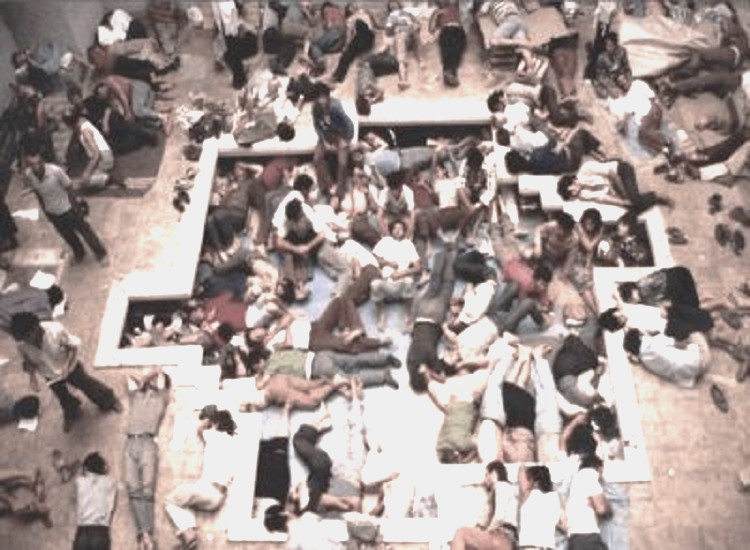
Memorie.al / Less than a week had passed since July 2, 1990, when thousands of Albanian citizens scaled the iron railings and walls of foreign embassies in Tirana and entered their premises with the goal of leaving Albania, when the high leadership of the AWP (Albanian Party of Labor), headed by First Secretary Ramiz Alia, held the 11th Plenum of the Central Committee, which conducted its proceedings on July 6 and 7. Although the agenda was pre-determined around three main points, dominated by the development of education in Albania, during almost the entirety of that plenum’s proceedings (especially under Item 4, “Miscellaneous”), the event of those days – otherwise known as “July 2nd of the Embassies” – was discussed and debated. In that plenum, which was attended by all members and candidate members of the Central Committee of the AWP, first secretaries of district party committees, ministers, key cadres from the education, culture, science, and economy sectors, leaders of the Labor Youth Union of Albania, as well as officials from the Central Committee apparatus of the AWP, Radio-Television, ATA (Albanian Telegraphic Agency), etc., several key figures were absent: Nimet Cani, Ali Vukatana, Reiz Malile, Shpëtim Çaushi, Zylyftar Ramizi, Qemal Lame, Zef Loka, Pirro Kondi, and Hekuran Isai, who had been “in the field” for several days “managing” the embassy crisis.
After the opening of the meeting by Ramiz Alia, the floor was given to the Minister of Education, Skënder Gjinushi, who presented the relevant report (“On the perfection of the educational system and the further qualitative strengthening of schools”). However, the central theme of that plenum remained the “embassy event,” analyzing in detail how and why it happened (“the role of foreign intelligence agencies”), up to the tasks required to manage that situation in those hot days of July, when over five thousand Albanian citizens from all districts of the country were inside the premises of several major embassies in Tirana, awaiting their departure from Albania.
Furthermore, throughout that meeting, but mainly under Item No. 4 of the agenda (discussed in the final session), several major events that had occurred in various districts of the country during that year were analyzed. These included the January protests in Shkodra demanding the removal of Stalin’s bust; events in the city of Kavaja where the population clashed with police forces; mass escapes across the state borders with Yugoslavia and Greece; mass gatherings at holy religious sites, such as the St. Anthony Church in Laç, Kurbin; the legal permission of religious faiths and the opening of places of worship; or other pressing issues seeking solutions, such as international talks regarding the re-establishment of diplomatic relations with the US and the Soviet Union (discussions held with the Soviet Deputy Foreign Minister in Sofia by Sofokli Lazri); the Kosovo issue; international pressure for Albania’s opening to the world and its adherence to several international conventions; the privileges of the high leadership of the AWP and their families living mainly in the “Bllok”; rumors circulating among the public regarding Enver Hoxha’s family and Ramiz’s relations with Nexhmije; changes in legislation and the penal code; the release of political prisoners; equipping citizens wishing to visit relatives abroad with passports; the new economic mechanism; housing and employment for many population strata in all districts; granting land and livestock to cooperative peasantry; up to supplying urban populations with basic food products and various industrial goods.
As will be seen from the archival documents pertaining to the 11th Plenum of the Central Committee of the AWP, which are being published for the first time, in addition to the top leadership and high-ranking functionaries of that time, several other prominent figures who continued their political careers after the 1990s were either discussed or mentioned in that meeting, such as Skënder Gjinushi, Fatos Nano, Sali Berisha, Rexhep Mejdani, Gramoz Pashko, Spiro Dede, Dritëro Agolli, Ismail Kadare, Moikom Zeqo, Mehmet Elezi, Lisen Bashkurti, Koço Kokëdhima, Ylli Popa, Aleks Luarasi, etc.
Likewise, in the voluminous dossier of this plenum, documents belonging to district Party Committee secretaries or the “Information Group” – who traveled across all districts of the country to document the main issues arising from base party organization meetings where “The Letter of the Central Committee” was discussed – are of great interest. These documents constitute the largest and most critical part of the dossier in question, arguably among the most important of the entire communist regime era under Enver Hoxha and his successor Ramiz Alia, as that period and its unfolding events marked the prologue to the collapse of that regime.
Similarly, documents pertaining to the final session of that meeting under Item No. 4 of the agenda, “Miscellaneous,” are of immense interest. This constituted the most heated topic of the entire plenum, where fierce debates took place regarding the discharge from duties and retirement of three Politburo members (Rita Marko, Manush Myftiu, and Prokop Murra), or the dismissal from ministerial posts and other high functions of several other “leaders” who had held power for years, such as Simon Stefani, Pali Miska, Muho Asllani, Lenka Çuko, Vito Kapo, Pirro Kondi, Jovan Bardhi, etc., alongside the appointment of “young comrades” to the high forums of the Party and State, such as Xhelil Gjoni, Abdyl Backa, Niko Gjyzari, Kiço Mustaqi, etc. Regarding these matters, we are informed by the documents in question retrieved from the Central State Archive (Fund of the former Central Committee of the AWP), published for the first time with corresponding facsimiles by Memorie.al.
Continued from the previous issue
MINUTES OF THE MEETING OF THE 11TH PLENUM OF THE CENTRAL COMMITTEE OF THE AWP, HELD ON JULY 6 AND 7, 1990
MISCELLANEOUS
Certain issues regarding current situations and the political problems arising from them.
COMRADE SIMON STEFANI: I stated that the Sigurimi organs bear responsibility. But regarding the surrounding of embassies with police forces, we spoke earlier with Comrade Adil: Should we keep them surrounded as if in a state of war, or will we allow citizens who wish to go to them free access? It was decided to let them be free. And then this situation developed. We have said that even if we leave them free to go into embassies, encampments will be created inside them.
COMRADE RAMIZ ALIA: If you speak in this manner, Simon, you cannot find where the responsibility lies or where the truth about these events is. First, people entered the embassies precisely when there was a police cordon in front of them. Even the first 6 people who entered the Italian embassy went by truck when a police cordon was present. Likewise, people entered the French embassy when there was a police cordon, and a policeman even entered inside the territory of the French embassy.
COMRADE SIMON STEFANI: Yes, that is what happened.
COMRADE RAMIZ ALIA: The same thing was repeated at the Greek embassy, where people went by bus and stepped straight from the bus into the embassy. Therefore, it is not true that simply because policemen formed a cordon, people did not enter embassies. Comrade Adil also informed me about the conversation you had with him. He asked me whether we should keep foreign embassies surrounded by a police cordon at a time when we passed the law granting passports for foreign travel. What sense would it make for people equipped with such passports to go get visas at embassies while we keep the embassies surrounded?
It is contradictory to issue passports to people and simultaneously tell them: “Do not go!” Those who go to enter embassies wish to leave the country. Based on the decree approved by the Presidium of the People’s Assembly, we tell them: “Come, take your passport, and there is no need to clash with the police!” That is the motive, not the conclusion that might arise from the way this matter was presented. Judging in that manner makes it appear as though “Comrade Adil or Comrade Ramiz and other comrades caused these events because they permitted one or several policemen not to perform their duty in this case.”
COMRADE SIMON STEFANI: No, I did not say that.
COMRADE RAMIZ ALIA: You did not state it like that, but that conclusion emerges.
COMRADE SIMON STEFANI: We had organized the protection of embassies with police, yet people still entered them. Naturally, once the police stopped hindering them, the influx of people into embassies became greater.
COMRADE NEXHMIJE HOXHA: Then how do you explain that the rush of people entering embassies occurred at a precise, specific hour?!
COMRADE SIMON STEFANI: They did not go at a single hour, Comrade Nexhmije. People went to embassies on other days as well.
COMRADE NEXHMIJE HOXHA: Crowds of people went specifically on July 2nd, at 10 o’clock at night. When we discussed in my office the issue of issuing passports for abroad, you, Comrade Ramiz, told me that this measure of ours would disrupt our enemies’ plans, and that they might now initiate another action. The very next day, this action organized in a different form took place…!
COMRADE SIMON STEFANI: That is correct, the enemy operated…!
COMRADE RAMIZ ALIA: But we must foresee these actions.
COMRADE SIMON STEFANI: It is understood that foreign intelligence agencies operated and worked in the open. But can we put them in prison now?
COMRADE MUNTAZ DHRAMI: Excuse me, Comrade Ramiz, I wanted to say something. In general, in the public mindset following these events at the embassies, an impression has formed that something even bigger will occur once the Football World Cup finishes. It is thought that further unrest should be expected later, because currently a large portion of the population is glued to television screens watching the tournament. I believe we must be prepared for this situation. Our propaganda must work to prevent a more serious situation, but regardless, something must also be done regarding funds to secure and supply the market with necessary consumer goods.
COMRADE RAMIZ ALIA: Comrade Adil spoke on this matter.
COMRADE MUNTAZ DHRAMI: Following the recent plenums of the Party’s Central Committee, and especially after the 10th Plenum, people were expecting wage increases or some shift in Party leadership – they expected some incompetent officials to be removed…!
COMRADE RAMIZ ALIA: Which comrade do you think we should remove from the Party leadership? Speak your mind openly, as we are here in a meeting of the Central Committee.
COMRADE MUNTAZ DHRAMI: This is public opinion; it is not just me saying it…!
COMRADE RAMIZ ALIA: Do you have any concrete proposal?
COMRADE MUNTAZ DHRAMI: I spoke about public opinion being such, but I do not have a specific proposal…!
COMRADE RAMIZ ALIA: So whom do you leave to make the proposals, me?
COMRADE MUNTAZ DHRAMI: I do not think proposals should be made only by you, Comrade Ramiz, but this problem must be discussed, because our people say that “stairs are swept from top to bottom.” We who live among the public hear both good and bad opinions. Such opinions are heard everywhere – on buses, within families, etc. Even regarding some cadres who have appeared and spoken on television, the public has “sized them up for what they are worth.” Our people today are politically astute and know how to determine who is a capable cadre and who is not.
I also wanted to emphasize another point. Public opinion must be clarified regarding several issues that can be resolved by Foreign Trade, Domestic Trade, concerning contracts being drafted, the construction of hotels, etc. By making such matters clear to them, an idea of future prospects can be built: where a hotel will be built, where a joint venture will be formed, where work will proceed through international relations to secure greater interests for the state. Or the public should know, for example, those refrigerators, sewing machines, etc., will be imported and sold, and the sale of these goods should not be restricted solely to foreign-currency stores.
COMRADE RAMIZ ALIA: Fine, agreed.
COMRADE SHEFQET PEÇI: Public opinion is that the organs of the dictatorship of the proletariat have shown negligence regarding everything that transpired. The Ministry of Internal Affairs has its levers everywhere – in neighborhoods, workplaces, etc. What information did these levers provide while the situation was simmering and moving through neighborhoods? If these levers failed to bring such data forward, then paying their employees is pointless.
COMRADE JASHAR MENZELXHIU: I think Comrade Foto also bears responsibility for propaganda, as Secretary of the Party’s Central Committee overseeing this sector. Our propaganda is in retreat instead of being on the offensive in this situation. Several articles published in newspapers, in my opinion, were erratic. I agree with all your conclusions, Comrade Ramiz.
COMRADE FOTO ÇAMI: The articles published in the press, to which you object, Jashar, were not approved by the Party’s Central Committee apparatus, but were approved by the respective editorial organs.
COMRADE JASHAR MENZELXHIU: Even if you did not approve them, your stance toward those articles was not consistent. When we spoke together about some of these articles, you approved one, while regarding another you remarked that it was a “vile writing,” yet you did not react further against that article either. You direct all propaganda, and you must examine these matters with greater care. Likewise, I have criticisms regarding the comrades directing the Sigurimi organs.
After 1 AM on those days, crowds of people were seen along the boulevard, conversing around the large fountain near the Palace of Culture. Do our Sigurimi personnel see these actions? Why do they not perform their duty? We must confront evil early on, rather than wait “until smoke appears” before taking measures. Three years have passed with talk about incompetent cadres. You yourself have spoken on this issue several times, Comrade Ramiz. Yet it appears those incompetent cadres are not moving and will not yield their positions.
COMRADE RAMIZ ALIA: It is good that we raise these issues in the meeting of the Party’s Central Committee, so that comrades feel greater responsibility for their duties and the criticisms directed at them. I support the criticism leveled here against the propaganda sector within the Central Committee apparatus. Comrade Foto bears responsibility for these matters; I have criticized him several times myself. He must stay on top of work as a propagandist, because often he works in an academic manner. Party work requires us all to roll up our sleeves, speak calmly with the people, and jointly find solutions.
Now, for example, we face the challenges of struggling for the further democratization of life. But I say with regret that not all comrades in the Party leadership are at the forefront of this struggle. Recently, I have spoken frequently on this issue, and I will need to speak continuously to explain internal and external situations, the problems we encounter, and the paths we seek toward solving them. I never shirk this duty; however, to overcome difficulties more easily, we must all fight together. The processes of democratization taking place in our country are being observed by world opinion as well.
I am not pleased when public opinion comments that only Ramiz Alia speaks on this or that issue, while making assumptions about other comrades in leadership remaining in one position or another. I believe and have no doubt that none of our comrades in leadership – from the Politburo to the Central Committee – is against the Party line. But reaction spreads slander aimed at dividing the Party, labeling one as “conservative” and another as “liberal.” To color the canvas of slander, it even resorts to the most absurd fabrications, such as “Nexhmije and Ramiz are fighting and killing each other!” etc.
However, what must draw our attention amidst this whirlwind of slander is that the public wishes to see us, to hear from all of us, so that slander finds no foothold and does not confuse people. The people say: “A good brave man has many companions.” And my companions are brave. In defense of the Party line are all these members of the Central Committee. But the great tasks ahead require everyone to step forward and shoulder their share of the burden in their respective field. For instance, in agriculture or industry, Pali and Besnik – who direct these sectors – must speak on the Party line, just as comrades Manush, Rita, Lenka, and Simon can speak regarding the sectors they oversee.
In the People’s Assembly, Comrade Adil spoke. He also gave a television interview, which the public followed with interest. The public rejoices when it hears us and sees us leading work. Therefore, I wish to emphasize once more that more militancy is required from all of us today. I hold the view that Jashar’s criticism of the propaganda sector is of a broader nature. I also take note of Comrade Haxhi Lleshi’s observation when he asked why what is stated is not implemented. If the public grows doubtful that “what Comrade Ramiz says is not being implemented,” consider the harm caused to Party work!! Does such a situation strengthen unity in the Party?!
Therefore, comrades, I emphasize that it is paramount to support the Party line, make it clear to the masses, and struggle alongside them to implement it. When I say this, I do not mean some formal discourse stating: “The Central Committee of the Party, headed by Comrade Ramiz…” etc., but a concrete breakdown of the Party lines issues within the sphere where we are most competent. Comrade Qirjako Mihali, for example, is a candidate member of the Politburo and Director of the State Bank, yet the public has never heard him speak on the role of the bank in the new economic mechanism.
These issues related to a financial specialist’s expertise need not be explained by me or Adil, nor can we claim to be competent in this field. In whatever post we hold, we must acquire the skills needed to justify the trust of the people; otherwise, they will not love us or follow us, and this carries grave consequences for the Party. Comrade Prokop Murra, for instance, was not a military professional, but the Party sent him to direct the Ministry of Defense, and there he became a good soldier. We are all accountable for the Party’s because; hence, we must strive to perfect our work to prevent critical situations from arising. Every day and at every step, we must justify the trust granted to us by the people to lead them, reflecting how and to what extent we are capable of fulfilling our duties.
Let the people judge us on this. But we do well to express criticisms to one another with the goodwill and respect instilled by our shared struggle and work, just as we would do well to eliminate formalisms and official labels that have settled into our mindset regarding formal concepts of respect. It is as harmful as it is formal to assume, for example, that I lack respect for a comrade simply because he was not standing at my right hand during this or that event.
These formalisms must be eliminated, just as we must combat the feeling of excessive agitation created when even esteemed and older comrades address me with the formal “You” (Ju) rather than the informal “you” (ti). I mentioned these examples to emphasize that within our mutual relationships and attitudes, the people should observe greater simplicity, communication, and a practical spirit that opposes formalism and officialdom./ Memorie.al
Continued in the next issue