

By Prof. Dr. Ksenofon Krisafi
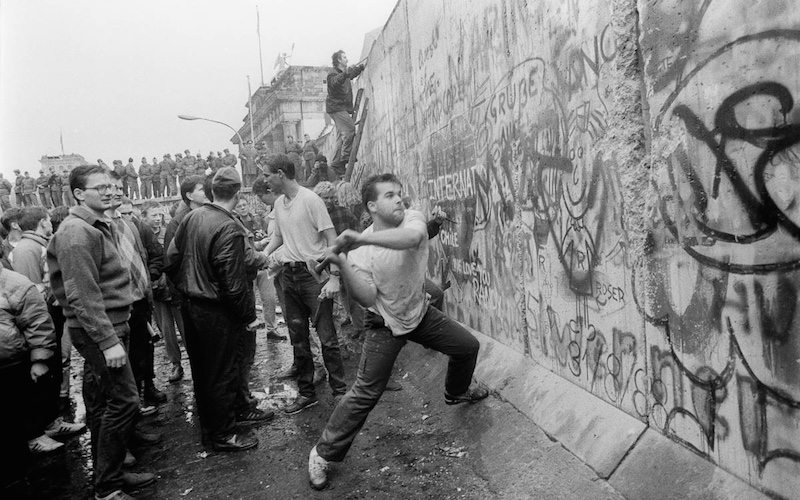
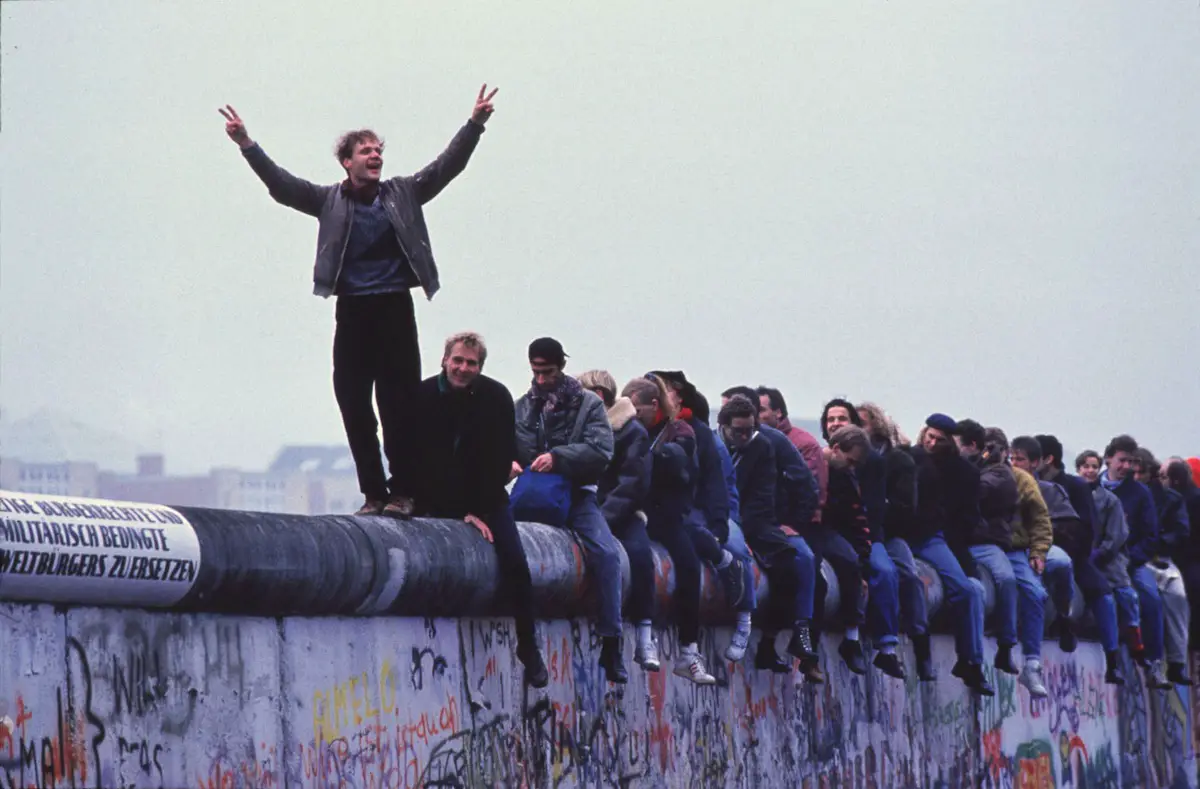
Memorie.al / On October 3, 27 years passed since the reunification of the two former German states, the Federal Republic of Germany and the German Democratic Republic, and the creation of the Federal Republic of Germany. The completion of this process was preceded by numerous efforts over many years, meetings and negotiations undertaken by the German leaders of that time among themselves, with the leaders of the four occupying powers – the USA, the Soviet Union, Great Britain, France, as well as with other countries and with the leading structures of NATO, the EU, the UN, etc. Thus was recreated the powerful state of Germany, with a territory of 357,021 km², a population of over 82 million inhabitants, with a developed economy that ranks among the first countries for gross domestic product and among the main exporters of goods in the world, with a high standard of living and a comprehensive social security system.
It has been described as the locomotive of the EU, the country with a prominent leading role in NATO. It is a member of the UN and other international organizations, and has relations with all the countries of the world. On October 2, 1987, Albania and Germany announced the establishment of diplomatic relations between them. The arrival at this day came after overcoming a long Calvary of efforts by both sides.
Albania at the end of the 1960s and the 1970s of the last century was experiencing difficult times in internal and external developments, poverty, misery, political and economic depression, international self-isolation, which were leading the country toward economic asphyxiation and serious problems in people’s livelihoods. Meanwhile, the Euro-Atlantic world, which had not lost its attention to this country with interesting potential on the geostrategic plane, continued to follow its developments.
In this context, a special role seems to have been taken by Great Britain, which was thought could influence through offers for resolving the issue of the return of the gold reserve of the National Bank of Albania, which had remained in conservative sequestration in London since the end of the Second World War, and the Federal Republic of Germany, toward which Albania had advanced a request for compensation for damages caused during the War.
The aim was that through finding a solution to these issues, influence would be exerted on breaking Albania’s isolationist shell. The Albanian communist leaders, frightened by openness to the Euro-Atlantic world, as well as uncertain about the British and German offers, dragged out the negotiations endlessly. Then came the era of glasnost and Gorbachev’s perestroika, when the communist system fell almost everywhere in Europe.
The West, convinced that Albania could not resist this wave of changes, without abandoning its own strategic policy, modified its tactical positions, moved to a position of expectancy. As a consequence, the time of Albania’s “emergence” into Europe was prolonged. For several years, Albanian and West German delegations had been negotiating in full discretion. In Vienna and Bonn, talks had been held at high levels.
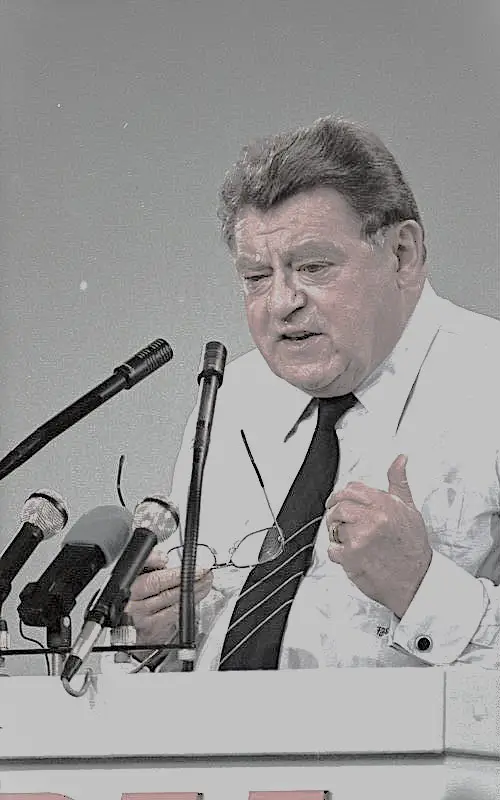
Strauss had come to Tirana, who had also negotiated, but without result. Both sides had hardened in extreme positions. Tirana demanded compensation for war damages and then the establishment of diplomatic relations; Bonn insisted on diplomatic relations and subsequently the beginning of economic, financial, technical and scientific cooperation, as an opportunity for partial and indirect fulfillment of the Albanian request.
After many years of losing precious time, Tirana became aware that it had to rectify its position. It had become clear that nothing could be achieved far from compromise, by following the tactic of stubborn obstinacy and advancing ultimatum demands. There were no chances for a solution except moving closer to the German viewpoint, which was not easy. For years, domestic opinion had been maximally suggested with slogans, formulas and ideological paroles, that Germany would be forced to accept the Albanian demands.
In 1987, the Ministry of Foreign Affairs, taking into account what had been clarified from the previous talks as well as from the meeting with Strauss, restarted preparations for holding another meeting in Vienna. For its preparation, according to the order of Minister Reis Malile, together with the director of the Second Directorate, Andon Bërxholi, we prepared a mini-platform of position, which, after being discussed also with other colleagues, was approved by the high leadership and transmitted to the ambassador in Vienna.
He would meet his German counterpart and would declare that the Albanian government thinks that, through direct talks, we should overcome the obstacles that currently appear to us. He would repeat the request for payment of compensation for war damages. If the German ambassador insisted that diplomatic relations first be established and then talks held, he should tell him that we are not against the establishment of diplomatic relations. But, as we have made clear to you earlier, in our conditions it cannot be discussed and resolved separately from the issue of reparations.
Addressing the current government of the FRG for reparations does not mean that we consider it guilty for the numerous and great crimes and destructions committed against our people by the Nazis. We think that the FRG government itself condemns these crimes.
With their compensation, it fulfills an obligation that falls upon it as successor of the western occupation zones of Germany. This obligation has been recognized and realized earlier toward a not small number of states. However, taking into consideration what you have told us about the difficulties that appear to you in this case, and not wanting to impose conditions on you, we agree to announce the establishment of diplomatic relations.
The issue of obligations deriving from the Second World War should be considered an internal problem of the two governments and should not be published. It should be resolved through diplomatic channels. On March 17, 1987, the next round of Albanian-German negotiations was held in Vienna. The agenda was quite defined: talks about the establishment of diplomatic relations and discussion of administrative and technical modalities for opening embassies in Tirana and Bonn.
The atmosphere of the talks seemed eased and one felt that they would be the concluding negotiations, after which would come the act of inaugurating diplomatic relations. The German delegation requested that, in the content of the act of their establishment, any reference to reparations be avoided and suggested that the possible text to be included in the protocol be formulated as follows: “both sides presented their positions, known since the notes exchanged in 1975 on the issues of damages caused in Albania during the Second World War. They agreed that this does not affect the establishment of diplomatic relations.”
There was also discussion about economic cooperation, for which the German side accepted without hesitation the organization of special meetings for economic, technical-scientific and cultural cooperation. After the appropriate solution was found, they moved on to the examination of the technical and administrative format for opening the embassies.
For determining the final profile of the documents, the editing, translation and comparison of texts, it was agreed that, on September 4, 1987, specialists of both sides would meet in Vienna. The author of this writing, in the capacity of head of the Legal Bureau of the Ministry of Foreign Affairs, was a member of the Albanian specialists’ delegation.
At the meeting it was determined that the documents would not contain the names or the functions of those who would sign them: Kastrup, an official in the West German MFA, and Andon Bërxholi. Other details of this nature were also treated, which show the extraordinary attention and scrupulosity of the German side to determine and fix in advance every technical and practical detail.
The file of Albanian-German relations, a substantial part of which was the establishment of diplomatic relations, was ready for the solemnities of their inauguration and formalization. On September 14-15, 1987, the delegations of both countries met in Tirana, who discussed once again the content and presentation of a document titled: “Protocol on the talks between the delegations of the Government of the P.S.R. of Albania and the Government of the FR of Germany, for the establishment of diplomatic relations.” Everything was carried out without difficulty. The atmosphere of the negotiations was almost festive.
On September 15, 1987, the protocol was signed, which would enter into force after approval by the competent organs of both sides, according to the legal procedures provided by their legislation. On the day of its entry into force, the establishment of diplomatic relations would be announced and that would be considered the official date. The Albanian side approved the documents on September 23, 1983, while the German side at the beginning of October.
On October 2, 1987, in Tirana and Bonn, the establishment of diplomatic relations between Albania and the Federal Republic of Germany was announced. This long-awaited event could not but be considered a great achievement, which constituted an important station on the path of the Albanian people’s march toward a better future, toward progress and development.
Diplomatic relations with the FR of Germany were one of the first acts of Albania’s opening to the democratic world. Later they would be re-established also with the former Soviet Union (July 1990), the USA (March 1991) and with the United Kingdom (May 1991). Albania and the Albanian people, because of the dogmatic positions elaborated by the country’s high leadership, had lost a long time, and with it also the opportunity for an immediate and important material and financial compensation, fully deserved for the sacrifices and sufferings they faced during the Second World War, for the damages and losses they suffered.
The complex issue of reparations, which united political, economic, legal, historical elements, etc., was simplified to the extreme, banalized, dragged out excessively and treated with a pronounced lack of realism. In the Ministry of Foreign Affairs it was treated superficially. It had been set aside and performed only technical actions. The “line,” the “directives” for the positions to be held in every meeting were elaborated “high up” and came ready, only for “whitewashing.”
The relevant specialists of the Ministry, until shortly before the conclusion of the matter, were generally kept away, were not allowed to become acquainted with the course, the details of the negotiations, the proposals, counter-proposals, arguments and reasonings used by the parties, etc. After the establishment of diplomatic relations there was an enthusiastic development of reports between the two countries, mutual visits of personalities, negotiations and cooperation agreements in the economic, commercial, financial, technical-scientific fields, etc.
Albania was included in the general schemes of German financings, aids and credits and was treated like all the other countries that benefited from them, but with a special priority. This gave it the opportunity to secure almost every year larger amounts of aids and credits. Thus a successful format of economic cooperation was configured for a multidimensional and multi-planar development.
Albania, for a series of factors related to it, the Balkan region and Germany’s interests, has been and continues to be in its attention. The new political representation in the Bundestag, after the result of the last elections, has no reason to influence German policy toward it and the Western Balkans. The Berlin Process, initiated in 2014, as Germany’s and Chancellor Merkel’s challenge to assist the countries of the Western Balkans for EU membership, continues to remain an important objective of their European policy.
The government and Albanian politics in general consider and treat Germany as a strategic partner in Europe, with a special weight. The jubilee of the anniversary of the re-establishment of diplomatic relations between the two countries should serve to take stock of the achievements in the entire spectrum of Albanian-German relations, to reflect in order to take courageous steps to raise their level to higher standards. / Memorie.al