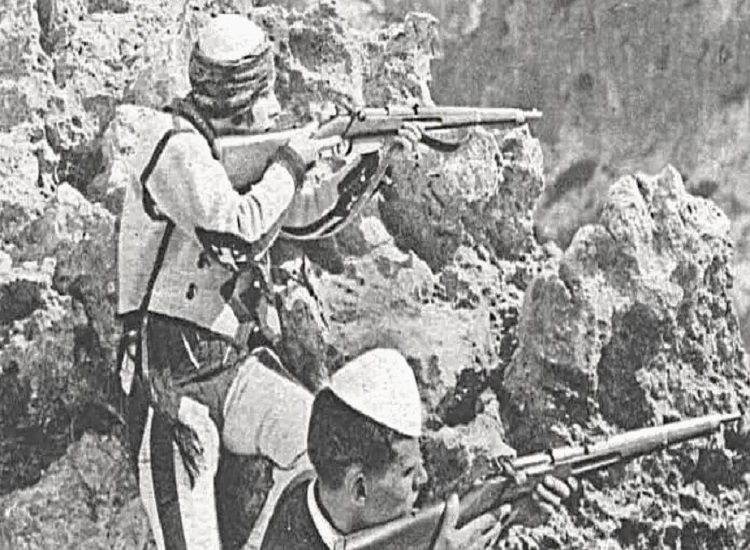
Memorie.al / The war for the defense of Shkodra, 1912–1913, is the most difficult war of the Albanian people for the defense of territorial integrity, as well as a glorious page in the history of Albania. It was entirely a modern, well-organized war, which due to its duration in a 6-month Serbian-Montenegrin siege, constitutes the most unique case of heroic resistance of Albanians in the First Balkan War. But unfortunately, very little has been written about this historical event in the basic textbooks of the History of Albania, in academic editions, both in 1965 and that of 2002. I would say that in a certain way, regarding the manner of its development, intensity, number of victims, and the role it played in the fate of Albanians, Albanian historiography and academia owe a “debt” to this historical event.
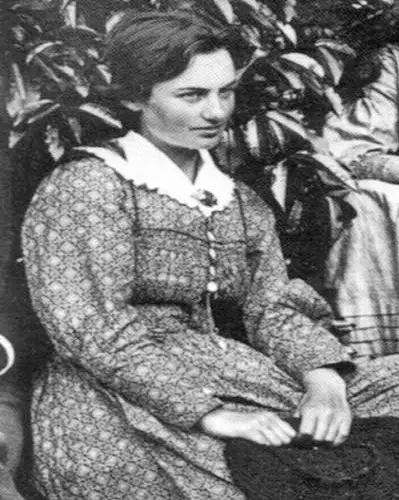
We must be grateful to several Albanian and foreign authors, who, better than the “official” historians, have shed light, written diaries and good works on this war, on whom we have relied in drafting this article, such as: Edith Durham in “The Burden of the Balkans”; Zambuar, “The Siege of Shkodra” and “The Siege of Shkodra”, Gino Berri, also with a book on the siege of Shkodra, and especially a more complete work on the defense of Shkodra, by the former soldier from Vlorë, Përparim Rexhepi.
The siege of Shkodra began on October 20, 1912, and ended on April 23, 1913. But to understand this event well, one must look at the historical framework of the time: The general uprisings of the Albanian people against Turkey and the Young Turks in the years 1910–1912, are the forerunners of the historic act of the Declaration of Independence of Albania, which was crowned on November 28, 1912, by the Old Man of Vlorë, Ismail Qemali. The Turkish army had been heavily hit by the Albanian rebel forces. On the other hand, the other Balkan states had also declared war on Turkey. Tension had risen in the Balkans and beyond, so the Balkan War had begun. Serbia, supported by Russia, became the initiator of a new Balkan alliance against Turkey.
In the spring of 1912, the Serbo-Bulgarian agreement was reached, which also included Montenegro and Greece in the alliance. The alliance was called “anti-Turkish”, but for Albania and Albanians it was a new plan of attack, invasion and dismemberment. These “allies” did not come to us as liberators, but as conquerors. The Serbian army occupied the Vardar Valley, the Sanjak, Novi Pazar, and the Plain of Dukagjin and headed towards the Adriatic. The Greeks occupied Himara and reached the Llogara Pass. Meanwhile, the Montenegrin army began fighting and laid siege to Shkodra, just as Russia, Austria, Italy, and especially the southern Slavs, who were trying to establish their power all the way to the Adriatic, had the same goal.
King Nikola conditioned the existence of Montenegro on Shkodra, which he “dreamed” of as the capital of his state. The Montenegrin army was the first to attack Turkey, hoping to achieve its objectives before the great powers, primarily Austria-Hungary, reacted. Thus Montenegro, without any notable military tradition, entered Shkodra with 30,000 troops on October 8, 1912. The war began as a joyful grotesque, accompanied by a cannon shot towards Shkodra by Prince Mirko.
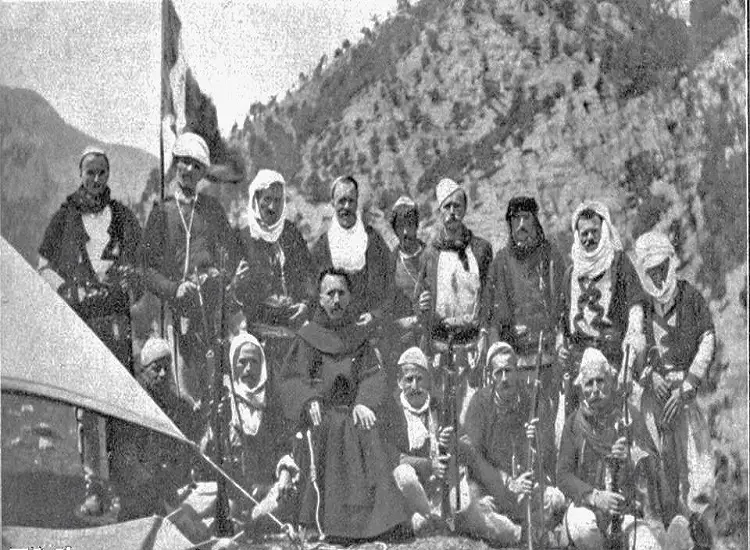
“This shot signaled the beginning of Montenegro’s war against Turkey, but also the beginning of the First Balkan War.” Within the week, the armies of Serbia and Montenegro, in full “synchronicity”, began to invade the lands of northern Albania, with Shkodra as their target. On the side of the Montenegrin army, over 3,000 Albanian highlanders were placed, bought or deceived, whom Montenegro has never recognized as allies in the war against the Turkish army.
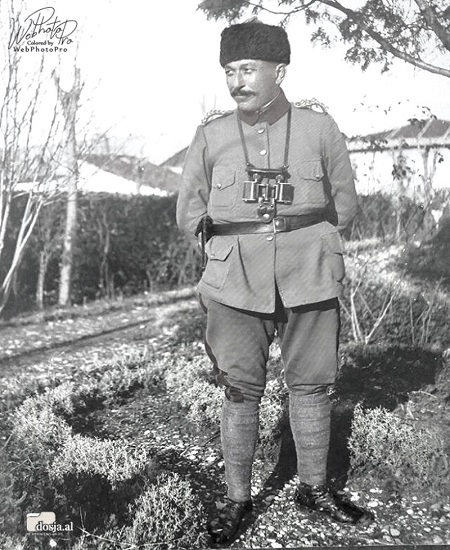
In this grave situation of invasion, Albanians from all over Albania rose to their feet to save the existence of their homeland and turned their weapons against the new invaders. According to Serbian and Turkish sources, 24,000 forces of the Turkish Corps, under the command of Hasan Riza Pasha, deployed in 5 regions: Shtoj, Bardhaj, Berdicë, Tarabosh, Tepe, participated in the defense of Shkodra. In his aid, under the direction of Esat Pasha, more than 15,000 Albanian reservist defenders were placed around the city, coming from the districts of Lezhë, Dibër, Mirditë, Krujë, Tiranë, Shijak, Durrës, Kavajë, Elbasan, Gramsh, Peqin, Pukë and Shkodër (5,000 themselves). The Turkish headquarters had foreseen everything needed for the defense of Shkodra.
Albania was on the brink of a new dawn, when thousands of shells and tons of iron and fire rained down upon Shkodra. In December 1912 and January 1913, Mount Tarabosh, the hills of Beltoja, Berdica and Bardhaj became an arena of bloody battles that history had not known until then. In this theater of war, Serbia entered the game to support Montenegro, which on November 10, 1912, ordered two divisions, “Shumadija” with 6,500 troops and “Drina 2” with 9,219 troops, one to set off from Prizren towards Durrës and the other from Gjakova towards Shëngjin, to conquer Albania.
Both Serbian units, on the way, encountered Albanian resistance. Meanwhile, the Montenegrin troops commanded by King Nikola had declared that they would fight to the last cartridge to take Shkodra. But, despite having many Serbian forces in their support, they failed every time they tried. This happened because the Turko-Albanian troops were better prepared in the military field, in armaments and fortifications, as well as being more resilient.
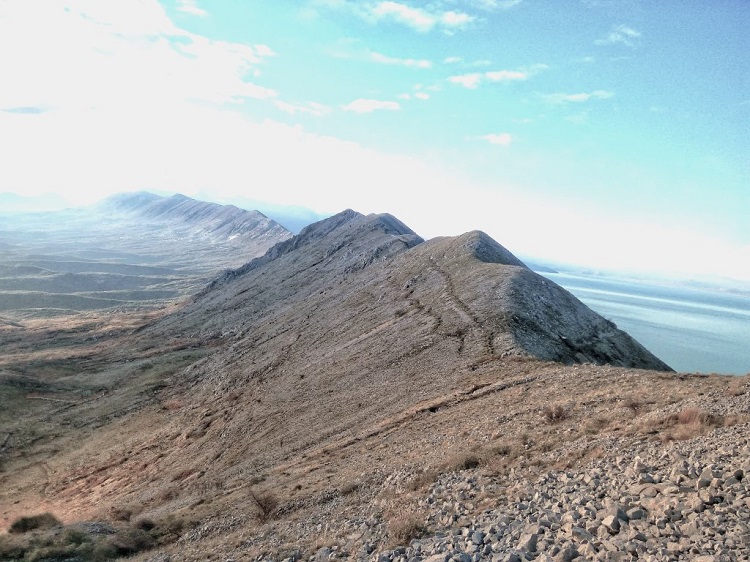
Hundreds of Shkodra citizens, men and women, worked for the rear, digging trenches, laying barbed wire, collecting food and fuel reserves, transporting war materials, and opening new roads. Others were involved in transporting and treating the wounded, sewing clothing for the freedom fighters, etc. The Turko-Albanian command had established good relations with the city’s notables. Shkodra was defended in two defensive lines: One, from the slopes of Tarabosh, the hills of Berdicë and Vukatanë, and the second, from the hills of Tepe, Bardhaj, the bank of the Kir River, Golem and Dobraç, etc. The artillery was placed at Tarabosh, Berdicë, Tepe, Bardhaj and Shtoj. The key to the defense of Shkodra has been considered Mount Tarabosh. Whoever defended Tarabosh, held Shkodra in his hands.
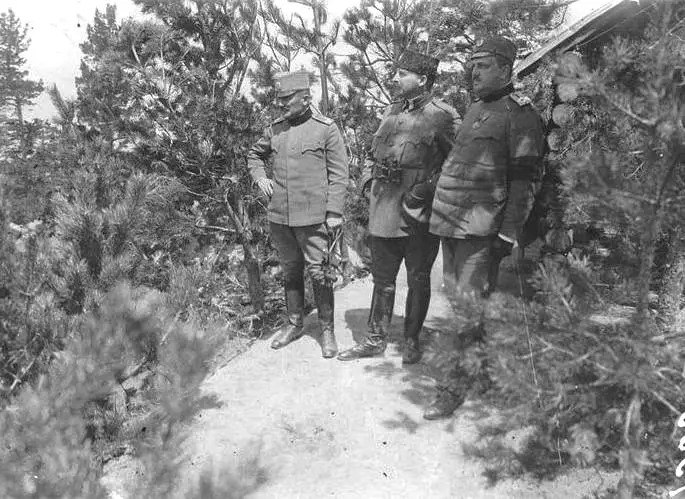
The battles for its defense were linked to field-type fortifications with lines and trench connections, which gave security to the city’s resistance. The safest areas were: Shtoj, Bardhaj, Tarabosh, Tepe and Berdicë. The Shkodra garrison. The interconnection system was also well organized, from the main central in the fortress to those of the defense regions. The resistors of Shkodra had been supplied with armaments, food and clothing for a certain period, but many shortages were filled with the contribution of the people of Shkodra, who shared even their last bite with their defenders during the Serbo-Montenegrin siege.
On December 3, an armistice was concluded between the Turko-Albanian army and the Balkan allies. King Nikola ordered the cessation of hostilities, but Hasan Riza Pasha replied that: “Now Shkodra is an Albanian city that cannot take orders from a Turkish command and that the city wishes to defend its independence against the Montenegrins.” To save Albania and secure its independence, Shkodra had to be defended. Therefore, the Turkish general at that time declared: “Shkodra can resist for another 6 months.”
On December 5, 1912, the Montenegrins launched a large-scale attack from Bardhaj to the lakeshore. In the darkness of the night, hand-to-hand combat with bayonets took place; the battlefield became smoke and flames from the firing of rifles, machine guns and cannons that struck incessantly. When day broke, many Montenegrins lay dead on the battlefield, hung up on wires, in ditches and trenches. Even in this case, the fate of the fighting was decided by the Turkish artillery, which attacked with a hail of shrapnel all positions.
Hasan Riza Pasha won the bet because Shkodra stood heroically under a most complete siege. On December 9, he attacked the Serbs in Shirokë, Bushat, Bardhaj, and then in Oblikë. On December 16, he retook Pistull, Paqram, Hajmel, Shelqet. On December 29, the final attack of 1912 took place on all fronts, where Albanians distinguished themselves as invincible masters under conditions of complete siege. Giani B. Macario writes: “The city of Shkodra was defended mainly by Albanians…” Therefore, Hasan Riza Pasha, seeing that Shkodra was lost for Turkey, declared that alongside the Turkish flag, the Albanian flag should also be raised in the fortress, to link Shkodra with the government of Vlorë, presenting the Serbo-Montenegrins with a fait accompli.
At the same time, the Vali (governor) also received the support of the Albanian highlanders, who, having understood the “game” of Montenegro, declared that they would fight for freedom and independence, not for Montenegro, and Vienna was also notified of his plan. January 31 was set as the day for raising the Albanian flag over Rozafa, as well as for the attack of the Shkodra Garrison forces on the Serbo-Montenegrin forces. But, one day earlier, after the meeting of the Vali and the archbishop of Shkodra for the recognition of this plan, unfortunately, Hasan Riza Pasha was killed at the door of his house.
After him, command of the Shkodra Garrison was not taken by Esat Pasha, who did not recognize the declaration of Albania’s independence and the government of Ismail Qemali, nor did he continue the resistance against the Serbo-Montenegrins. On February 2, 1913, by means of a letter sent to King Nikola, he asked for an armistice, while the Montenegrin side chose the alternative of using force. But even in this case, the attack of Montenegro and Serbia on Berdicë and Bardhaj ended in a true slaughterhouse as they were heavily hit, leaving over 2,500 soldiers on the battlefield.
On April 10, 1913, Serbian Prime Minister Pashiq ordered Serbian forces to leave the siege of Shkodra. Thus, after 6 months of heroic defense of Shkodra, it was said that as a result of “the depletion of food” for the Turkish units and the civilian population, Esat Pasha asked the Montenegrin command to set the terms for the surrender of the fortress. Instead of handing the fortress over to Albania, he sold it to Serbia, committing one of the most shameful and unscrupulous acts of treason against his own nation. The Shkodra garrison should and could have continued its resistance for another three weeks, because the international factor, especially Austria-Hungary, had already given its verdict that Shkodra should remain with the Albanian state. They had even sent their naval fleet to the Adriatic coast.
On April 23, he signed the agreement for the surrender of Shkodra to King Nikola. So Esat Pasha withdrew, Shkodra was betrayed, sold to the enemy. Despite the difficulties of the siege, bombardment, lack of food and medicine, the people of Shkodra never accepted the surrender of their city. Meanwhile, Esat Pasha quickly forgot the last behest of Hasan Riza Pasha. He did not take into consideration the stance of the Shkodra notables not to surrender the city, and contrary to them, he signed the surrender of Shkodra to the Montenegrins. Despite the ambiguities of Esat Pasha, the surrender of Shkodra by him has been called an attack on the independence of Albania.
The news of the occupation of Shkodra was received in Serbia with joy and ecstasy. But it didn’t last long; as a result of international pressure, on May 4, King Nikola declared: “We must withdraw”, and on May 9 he signed the agreement for the surrender of Shkodra, according to which it passed to the administration of the International Military Commission. This was finalized on May 14, 1913, with the withdrawal of Montenegrin troops from the siege of Shkodra, who, as they left, burned and looted half of the Shkodra bazaar, took the city archives and plundered the collection of weapons in the fortress. They had received orders to withdraw. So, a few days before leaving, they decided to burn the city market.
After one year of international administration, the northern city was united with Independent Albania. The defense and siege of Shkodra, for Albanian historiography, literature, arts and beyond, will be a strong point of reference and inspiration for all of us. They constitute a culminating event in the history of Albania towards its affirmation as a nation and a state. Hasan Riza Pasha also remains a respected and honored figure for Albanians. For this occasion, Gjergj Fishta said: “Hasan Riza Pasha will be remembered as the best patriot for our salvation from the clutches of the Montenegrins…He deserves to be remembered on par with the heroes of the Albanian nation.” Gratitude to the defenders of Shkodra!
Treacherous murder that plunged Shkodra into an even more miserable path
Hasan Riza Pasha, the vali of Shkodra, who was preparing to transfer Shkodra from the Turks to the Albanians, was killed by his Albanian deputy, Esat Pasha Toptani, so that he would be free to give it to the Serbs, as he did. Hasan Riza Pasha and the most discussed figure in the modern history of Albania, Esat Pasha Toptani, both lived in large houses in Fushë-Çelë, very close to each other.
On January 30, 1913, Hasan Riza and Esat Pasha discussed at length at the Toptani’s house about the issues of the day. At 6:45 p.m., as he was returning alone, without guards or adjutant, he headed for the house opposite. In the darkness of the night, three strangers appeared before him. Two of them shot him with a revolver. The guards and officers, who rushed out of both houses, found the commander lying in the street, drenched in blood. Hasan Riza Pasha died a few hours later.
Before dying, he asked Esat Pasha to take care of sending his family to Istanbul after the war, while he asked his officers, gathered around his bed, not to surrender the city under any circumstances. The general was buried the next day in the Parruca Mosque in the presence of the entire population of besieged Shkodra. The Young Turks collaborated with Esat Pasha, while the latter agreed, tempted by the fact that after the murder of Hasan Riza Pasha, the command of the city would remain with him. As was seen later, Esat Pasha aimed to reach an agreement with the Montenegrins for the sake of his own interests.
Hasan Riza Pasha was the most complete and intelligent officer as well as a great commander of the Turkish staff, who loved Albania. Riza Bey, the Turkish soldier, brave and trustworthy, showed rare qualities even in the last moment of his life. He told the officers standing near him: “Swear that you will defend Shkodra to the death.” When the Turkish Minister of War, Mehmet Pasha, heard the news of the murder of Hasan R. Bey, he said: “… they treacherously killed a great hero.”
Miss Durham wrote: “Osman Bali and Mehmet Kavaja, two servants of Esat Pasha, later boasted about the deed they had done.” 13 years later, on September 8, 1926, Osman Bali would be killed by Lam Leka and Myslym Peza. He had managed to become a major of the National Guard. According to all different archival and historical sources, the elimination of Hasan Riza Pasha has been characterized as an organized murder./ Memorie.al