
By Dashnor Kaloçi
Part Five
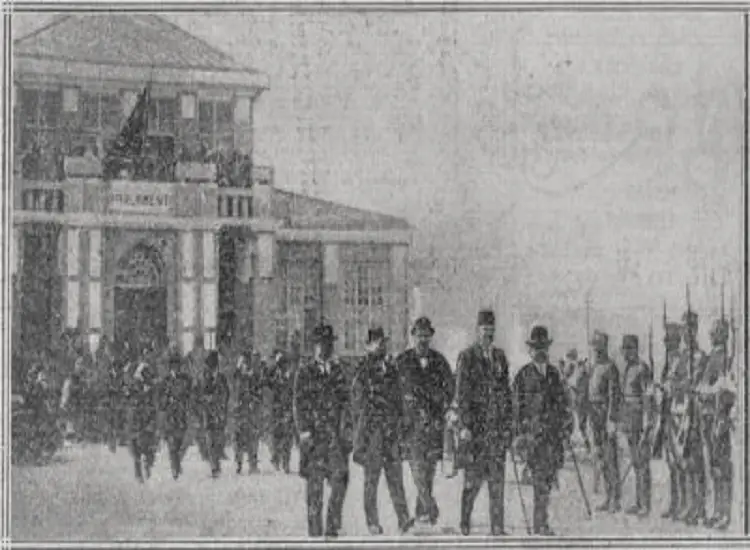
Memorie.al / The history of parliamentary elections in our country, or more precisely the attempts at elections, find their origins since the time of Ottoman rule, when Albania was part of the Turkish Empire. One of the first Albanian deputies elected to the first Parliament of Turkey, which opened its proceedings in December 1877, was Abdyl Frashëri. However, that parliament did not last long, as it was dissolved by the Sultan himself due to the start of the Russo-Turkish War. After the dissolution of the first parliament, there were several other attempts at elections, but all failed for various reasons. The first regular elections in Albania were held only in 1908, when the Young Turks came to power in Turkey. Those elections w1ere not direct, but through representation, or as otherwise known: with secondary electors.
The first Parliament of Turkey opened on December 10, 1908, and there, out of 266 deputies, 27 were Albanians elected from the four vilayets of Albania. At that time, members of the “Union and Progress” Committee in Turkey, which included many Albanians, split into three political groupings. The first grouping was “Union and Progress” (the Turko-Macedonian party) with 164 deputies, where 130 were Turks, 5 Arabs, 1 Greek, and 15 Albanians, who were led by Hasan Prishtina, deputy of Kosovo.
In the second group called “Liberal Union” (the Greco-Albanian party), which included 45 deputies, there were 12 Albanians led by Ismail Qemali. Among other Albanian deputies in the Turkish Parliament at the time were Esad Pashë Toptani, Nexhip Draga, Rexhep Pashë Mati, etc. After 1908, there were several other elections where Albanians continued to vote for their representatives in the Turkish Parliament, lasting until November 1912 when Independence was declared and Ismail Qemali was elected head of the Government.
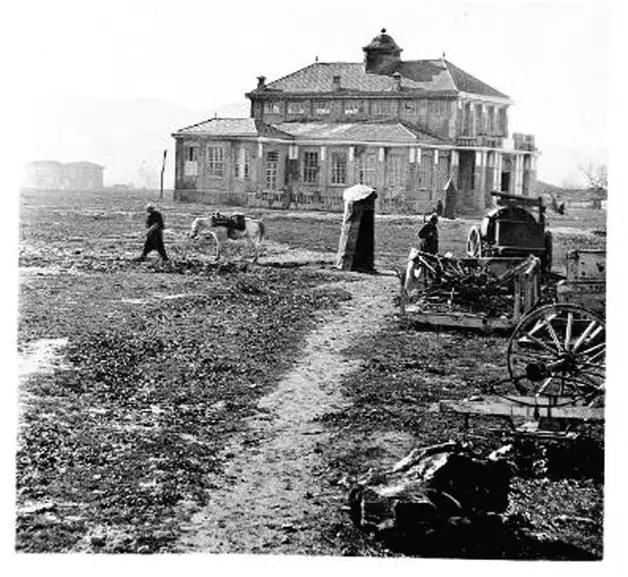
Meanwhile, the first parliamentary elections in Albania were held in the spring of 1921, as until that time they had not taken place due to the First World War. The first Albanian Parliament opened on April 21 of that year, and the first building of the Albanian Parliament was where the Academy of Sciences stands today. 76 deputies participated, elected following a relatively regular process from the nine prefectures of the country: Berat, Durrës, Elbasan, Gjirokastra, Korça, Kosovo, Shkodra, Vlora, and the Albanian colony in the USA.
As in the past, those elections were conducted through a system of representation (secondary electors). Following a brief history of parliamentary elections in Albania from that period until 1991, Memorie.al publishes here the full Fundamental Statute of the Albanian Republic (Constitution) of 1925, including the electoral legislation and the Parliament’s regulations published by the “NIKAJ” Printing House in 1925.
Continued from the previous issue
Fundamental Statute of the Albanian Republic (1925)
(Tirana, “Nikaj” Printing House, 1925)
Penal Code 1928
Book One
ARTICLE 21. – The ban from public offices is either permanent or temporary. Permanent ban causes the loss of:
- The right to vote and to be elected in any electoral district, as well as any other political right.
- The status of Deputy or Senator, as well as every elective office, every civil service or public office granted by the State, the Municipality, or an institute placed by law under the care of the State or Municipality.
- Ranks, academic dignities, decorations, and other public signs of honor.
- Every right bringing profit or honor connected to the aforementioned offices, ranks, titles, or decorations, and every religious benefit previously held by the convict.
- The office of tutor or guardian, except those over descendants in cases specified by civil laws.
- The capacity to acquire (acquérir) any right to office, rank, or other distinctions mentioned above.
Temporary ban causes the incapacity (incapacité) of the convict to acquire or exercise the aforementioned rights and offices for a period of no less than three months and no more than five years.
ARTICLE 22. – The punishment of light imprisonment ranges from one day to two years and is served in special establishments. The convict serves this by being locked up at night and compelled to work during the day. For minors under eighteen and women, if they are not repeat offenders and the sentence is no more than ten days, the court may order the punishment be served at their residence.
ARTICLE 23. – In cases specified by law, light imprisonment may be served in a workhouse, or by performing labor for public benefit. If the convict does not appear or refuses to work, the imprisonment is served in the ordinary manner, deducting the time of labor already performed.
ARTICLE 24. – Women serve sentences of life imprisonment, aggravated imprisonment, and light imprisonment in establishments destined for them.
ARTICLE 25. – Punishment by light fine consists of the obligation to pay the State Treasury a sum of no less than one and no more than two thousand gold francs.
ARTICLE 26. – The suspension from exercising a profession or a trade starts from three days and extends to two years.
ARTICLE 27. – When the sentence does not exceed one month of imprisonment or light fine, if there are mitigating circumstances and the offender has no prior convictions, the court has the right to issue a judicial reprimand in place of the set punishment. The reprimand is a public lecture delivered in the courtroom regarding the violation and its bad consequences.
ARTICLE 28. – In the case of a reprimand, the convict is personally obliged to undertake the payment of a set sum as a light fine, providing one or more reliable guarantors. This fine is paid only if the convict commits another offense within a set period (up to two years for crimes and one year for misdemeanors).
ARTICLE 29. – The law specifies cases where the court, alongside the principal punishment, places the convict under special surveillance by the Public Security Authority for one to three years. The convict must declare their place of residence within fifteen days.
ARTICLE 30. – Punishments cannot be increased, decreased, or exchanged except when expressly stated by law. Adjustments are calculated based on the quantity of the punishment the court would have applied without the presence of mitigating or aggravating circumstances.
ARTICLE 31. – Temporary punishments are calculated in days, months, and years. Each day is twenty-four hours, each month is thirty days, and the year is calculated according to the official calendar.
TITLE III: Effects and Execution of Penal Sentences
ARTICLE 32. – Life imprisonment and aggravated imprisonment for more than five years result in a lifelong ban from offices. Aggravated imprisonment for more than three years results in a ban for a duration equal to the sentence.
ARTICLE 34. – Those sentenced to death (before execution), life imprisonment, or aggravated imprisonment for over five years are under legal interdiction (interdiction legale). For the administration of their property, civil laws for the interdicted (interdits) apply. The convict also loses paternal power (puissance paternelle) and marital authority over their wife for the duration of the sentence.
ARTICLE 35. – A conviction for a crime that prevents election to Parliament or the Senate causes the automatic removal (ipso jure) of the convict from such membership held at the time of sentencing.
ARTICLE 37. – The court may order the confiscation of items used for or destined for the commission of the crime, as well as items originating from it.
ARTICLE 39. – For every crime that harms the honor of a person or family, even if no material damage is caused, the court—at the victim’s request—may order the convict to pay a sum as satisfaction, considering the degree of spiritual distress and social status.
ARTICLE 41. – The time spent in pre-detention before the final verdict is deducted from the total time of imprisonment. One day of pre-detention equals three days of internment.
ARTICLE 45. – Ignorance of penal laws does not constitute an excuse.
ARTICLE 47. – A person who, at the time of the offense, was in such a state of mental weakness as to have lost consciousness of their actions or was unable to act otherwise is not punishable. However, if the court deems them dangerous, it orders their transfer to the local Prefecture for legal measures to be determined by special law. / Memorie.al