By Ekrem Murtezai
– “Fadil Hoxha, As I Know Him,” a book by Ekrem Murtezai –
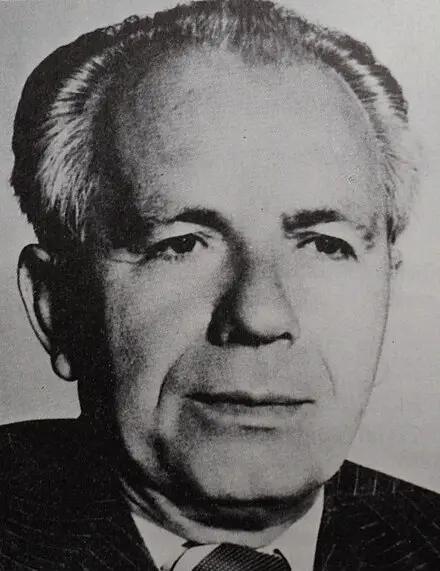
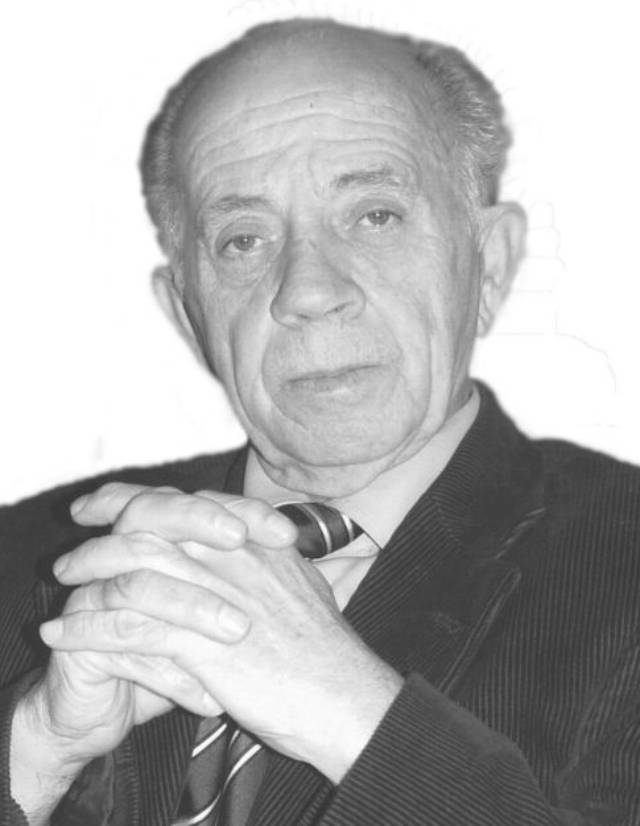
Memorie.al /The life and activity of one of the most controversial figures in Kosovo, the former communist leader Fadil Hoxha, continues to be shrouded in a mysterious shadow even today. Various books and articles have been written about this figure, most of which are either pro or against him. The well-known Kosovar philosopher Ekrem Murtezai, who was the Chief of Cabinet and simultaneously an advisor to Fadil Hoxha for about five years (1979–1984), when the latter was a member of the Executive Bureau, the highest point in his political career, has decided to put his thoughts on Fadil Hoxha and his experience as a close collaborator of the communist leader down on paper.
The book, titled “Fadil Hoxha, As I Know Him,” which will be published in a few months, as Murtezai has not yet finished it, attempts to strike a balance between the various stances on the former communist leader.
He tells ‘Expres’ that Fadil Hoxha, or as Murtezai calls him, “the commander of the National Liberation Army and the organizer” of what could be called the uprising or revolution of the Albanian masses of Kosovo, is a prominent figure who cannot be ignored by anyone who aspires to write the newest history of Kosovo.
“As one of the closest collaborators of the President of Yugoslavia, Josip Broz Tito, Fadil Hoxha is undoubtedly a controversial figure. This controversial character of his personality stems, among other things, from the fact that his activity extended to many fields in a territory that includes not only today’s Kosovo but also wider, even to the northern part of Albania,” evaluates the philosopher Murtezai, who is also a member of the Kosovo Academy of Sciences and Arts.
According to him, this controversial character of Fadil Hoxha also stems from the fact that during different periods of the socio-political development of Kosovo, and along with Kosovo, of former Yugoslavia, he had different positioning’s, which give his followers and well-wishers the opportunity to speak in a superlative manner about Fadil Hoxha, as a man, as a politician, as an activist, as an Albanian, but also as a communist.
Murtezai emphasizes that Hoxha’s opponents deny what is central to him, which according to Murtezai, is the patriotic character of Fadil Hoxha’s activity and views.
“The patriotic character of Fadil Hoxha, his greatness, stems from the fact that within the communist ideology, the socialist policy, within the establishment, the social-political structure he belonged to, whose basis was internationalism, Fadil Hoxha always successfully managed to present, defend, and advance the cause of the Albanians of Kosovo, but also of Albanians outside Kosovo, those in the Presheva Valley and in Macedonia, where Albanians, as is well known, had almost no rights,” asserts academician Murtezai.
In the work “Fadil Hoxha, As I Know Him,” the emphasis is placed on presenting data and facts that are less known to the general public. As Tito’s collaborator, member of the Executive Bureau, Chairman of the Assembly of Kosovo, Chairman of the Executive Council of Kosovo, Commander of the National Liberation Army, Fadil Hoxha, according to Murtezai, always had the Albanian cause, the nation’s cause, at the focus of his attention and political activity, which Murtezai attempts to prove with the facts he is aware of.
Murtezai also talks about the Bujan Conference and Fadil Hoxha’s role in it, as well as the weaknesses and values of his personality, and his relations with the two communist leaders of that time, Josip Broz Tito and Enver Hoxha.
“The issue of the Bujan Conference is inevitable; neither Bujan can be bypassed by Fadil Hoxha, nor Fadil Hoxha by the Conference. It is true that Hajdar Dushi, Zeqirja Rexha, and others were the writers of the resolution, but as far as I know, from the conversation I had with him and from what I have read, it appears that Fadil Hoxha was the ‘Spiritus Movens,’ he was that moving spirit, that living breath that gave the main determinants on how the resolution of the Bujan Conference should be elaborated and formulated,” Murtezai says about the conference, in which the main message was the self-determination of the Albanians of Kosovo and unification with Albania, but which never came to fruition.
Murtezai recounts that Fadil Hoxha first met Tito in Leskovac, at the time when the issue of relations between the Soviet Union and Yugoslavia had escalated to the maximum and Yugoslavia was threatened with attack by the Soviet Union. “When he was elected a member of the Executive Bureau at the great Congress in 1969, and until Tito’s death, Fadil Hoxha was a close collaborator of Tito’s; the relations were close. I can personally testify with full responsibility that on many issues concerning Yugoslav policy, and especially the policy of the League of Communists and the Yugoslav government towards Kosovo, Tito consulted with Fadil Hoxha,” emphasizes Murtezai.
Meanwhile, when talking about Fadil Hoxha’s relations with the Communist Party of Albania and with Enver Hoxha, Murtezai claims that when the Yugoslav Communist Party began to betray the principles on which the National Liberation Army of Kosovo was formed, and when the war in Drenica erupted and other instances showed that the Albanian cause was not progressing as it should, Fadil Hoxha went incognito to Enver Hoxha and complained about the bad, undesirable, and unexpected situation of the Albanians.
“Unfortunately, it is unknown who, whether Enver Hoxha or Koçi Xoxe, or both, or only one, denounced Fadil Hoxha to the OZNA of Yugoslavia; they notified the then chief of police Aleksandar Ranković, who in turn notified a fierce anti-Albanian policeman, who came to Prishtina and interrogated Fadil,” he asserts.
After the Cominform Resolution in 1948, when relations between Albania and Yugoslavia worsened, according to Murtezai, Fadil Hoxha withdrew and showed no signs of leaning towards Enver Hoxha and the Communist Party of Albania, even though, according to his words, he hesitated for a long time, wavering on which side to take, Tito’s or Stalin’s.
“After pondering for about two months, he decided to align himself with Tito, and this automatically meant; not with Enver Hoxha, not with the Communist Party of Albania, and because of this, Enver Hoxha accused Fadil of being a Titoist,” Murtezai emphasizes.
Murtezai’s book, as he claims, aims to show that Fadil Hoxha, despite the weaknesses that appeared either as a personality or due to the system he was heading, nevertheless remains an honest Albanian, a man who put his life in the service of the people.
The book, which attempts to shed light on the truth about Fadil Hoxha, according to the author Ekrem Murtezai, will showcase the values and weaknesses of the former communist leader and thus balance the contradictory opinions that have appeared so far about Hoxha’s personality. / Memorie.al