
By SHERADIN BERISHA
Part Two
Memorie.al / The second decade of the twentieth century was one of the hardest periods that the Albanian people were passing through in their entire history. The First Balkan War that began in October 1912 brought great changes to the geographic space of ethnic Albania. The neighboring states: Serbia, Montenegro, Bulgaria and Greece, which constituted the “Balkan alliance,” taking advantage of the successes of the general Albanian uprising of the summer of 1912 against the Ottoman army, in October-November 1912, occupied half of the ethnic Albanian territories. While the Great Powers at the London Conference on 29 July 1913 recognized Albania as a sovereign state, Kosovo (with its present-day territory), Kumanova, Skopje, Tetova, Gostivar, Dibra, Kërçova, Struga, Ohrid, Manastir, etc., remained under Serbian military occupation. These Orthodox states, basing themselves on the unjust decisions of the London Conference, to the detriment of Albania, benefited from these territories:
Continues from the previous issue
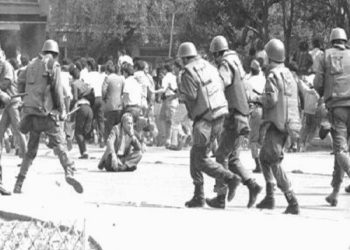
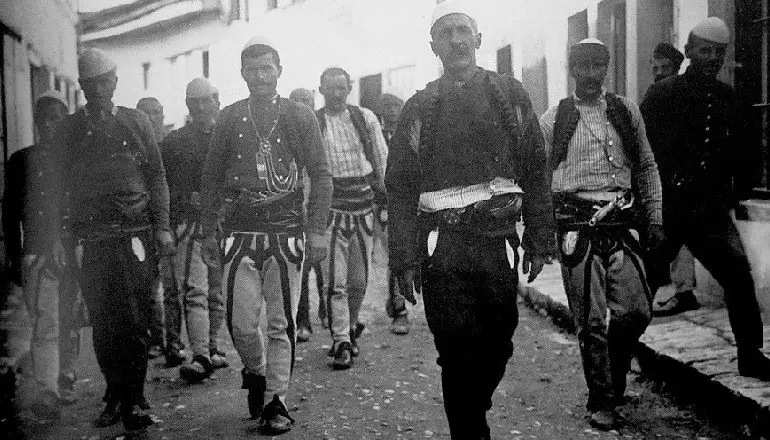
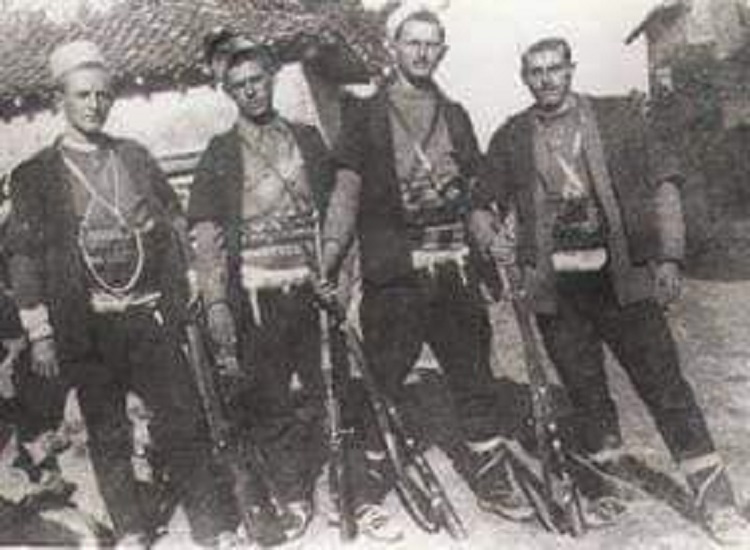
The bloodiest battles took place on the eastern slopes of Pikllima (Koritnik), in the districts of Brezna (near Hani i Llapushnikut) and as far as Zhur and Billushë of Vërrin. In these battlefields, hundreds of Gorans, Opojans and Vërrinas joined the Lumjan rebels under the command of the patriot Nail Hyseni – Dani, as well as a part of the fighters of the left wing (second column) led by Ramadan Çejku, Kadri Shahini, Rasim Selmani who climbed the hill of Zbinec…!
In the bloody battle fought at Hani i Lapushnikut, Qazim Lika was seriously wounded and “three Gorans of Brodit pulled him from the battle line and sent him to the Hospital of Thessaloniki for treatment. Meanwhile, at the head of the insurgent forces of this wing remained Nail Hyseni – Dani from Rapça, who fought bravely against the Serbian forces.”
In the fighting of late September and early October 1913, 20 Albanian fighters also fell as martyrs on the battlefield: Kadri Shahini, Mustafë Cuni, Bajram Maliqi, Tafuz Allaraj, Mehmet Shpata, Ramadan Allaraj, Sali Karanxha, Shaban Tahiqi, Qerim Krasniqi, Murat Murati, Dajlan Basha, Vehip Beqiri etc., 16 while the enemy forces had over 30 soldiers killed and many wounded.
Foreign diplomats have also written about these fights. Thus the Austro-Hungarian consul notified his government in Vienna with cipher telegram no. 28, dated 29.09.1913 that “the Albanians under the leadership of Qazim Lika, after long fights, have broken the Serbs in Kolesjan, Vasije and up to near Bicaj… and today about 50 wounded Serbs have reached Prizren.”
So, the Albanian insurgents in these battles, after emerging triumphant, the remaining Serbian units retreating toward Prizren, enabled them to concentrate on the frontal line: Vlashnje (the bridge of Vlashnje) – Poslisht – Billushë – Hoqë e Qytetit – Jeshkovë – Lybeçevë – Lez – Sharr…, just as in the autumn of 1912.
THE EXPANSION OF THE UPRISING ALSO IN THE HIGHLANDS OF GJAKOVA
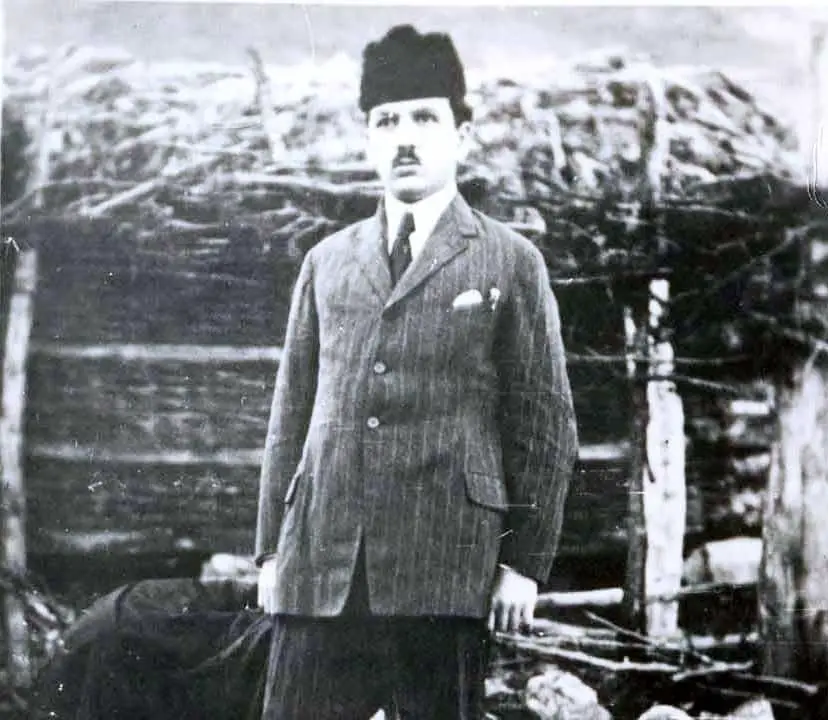
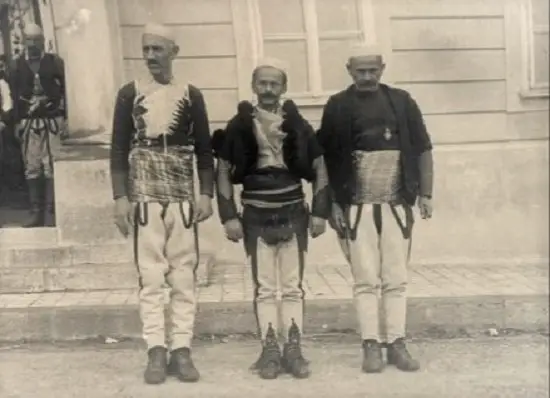
The Albanian uprising at the end of September also expanded into the Highlands of Gjakova and its leaders were: Bajram Curri, Sali Hoxha, Isa Boletini, Hysni Curri, Bajram Daklani etc. Bajram Curri with the other chieftains after returning from Shkodra, feeling the miserable condition of the population in the Highlands of Gjakova, which from the Serbian repression had abandoned their hearths, made a call to take up arms against the Serbian invaders.
Bloody fights took place first at Qafa e Morinës and then continued throughout the entire Highlands of Gjakova. Meanwhile, the Albanian insurgents aimed at the liberation of Gjakova, to escape the fierce terror, 10 thousand inhabitants of this area were forced to leave for Nikaj, Mertur, Pukë, Toplanë, Shkodër and elsewhere.
The Serbian command in this zone (in the direction of Qafa e Morinës…) had mobilized seven battalions reinforced also with heavy artillery, which reached 12 thousand military forces, led by General Vashoviq and cruel officers such as Sava Llazaroviç (who was known among the people also by the name ‘Savë Batarja’) etc.
In the bloody wars that were fought even hand to hand, 80 fighters fell as martyrs on the battlefield, of which 21 from the village of Shipshan, where the war headquarters was also located led by Bajram Curri, while from the enemy forces 350 soldiers were killed. At the beginning of the first week of October 1913, the Albanian insurgents, after a heroic fight, managed to drive out the Serbo-Montenegrin occupying forces from the Highlands of Gjakova.
THE EXTINGUISHING OF THE UPRISING
The news coming from the war fronts about the successes of the Albanian insurgents deeply shook Nikolla Pashiq and his government cabinet. Although this situation had terrified even Russian diplomacy, the Russian press demanded from the Serbian government that it mobilize to re-occupy the Albanian territories and threatened that no one could force the Serbian army to leave the territories it would seize again! At that time the pro-government Serbian press and the Russian newspaper “Pravda” accused Bulgaria and Austria-Hungary of the incitement and logistical support that they were allegedly giving to the Albanian insurgents.
This chauvinist propaganda tried to convince Serbian opinion of the alleged incapacity of the Albanians to fight against the Serbian forces, and therefore they accused Bulgaria and Austria-Hungary of the preparation and organization of this uprising, with such great dimensions! This anti-Albanian propaganda was based on a proclamation issued on 12 September 1913, by the Bulgarian voivode Millan Matov, who declared that, “…the agreement has been reached to secure the autonomy of both regions.21 meanwhile, the newspaper “Odjeg,” organ of the Serbian Radical Party, wrote without hesitation “that the Arnauts are commanded by Austrian officers!”
The Serbian government, having support, especially from Russia and France, at the end of September and beginning of October 1913, made quick preparations for the extinguishing of the uprising and on this occasion only in the direction of Dibra… it mobilized up to 40 thousand troops, while along the entire frontal line of the fights of more than 100 km it activated about 70 thousand troops. At the beginning of October the Serbian army began the offensive against the Albanian insurgents in three directions:
In the direction – Dibra – Struga – Ohrid – Pogradec;
in the direction – the Valley of the Black Drin – Dibra – Peshkopi – Lumë to fall behind the Albanian forces, which were attacking Prizren, while the Serbian forces also attacked from Prizren the Albanian insurgents, who were positioned in the region of Vërrin.
While the other direction from Gjakova toward the Highlands 23, with the aim of cutting the road for the insurgents so that they would not penetrate into the Plain of Dukagjin. The Serbian army sought to extinguish the Albanian uprising as quickly as possible so that it would not spread inside Kosovo.
THE MASSACRES OF THE SERBIAN ARMY IN DIBRA AND OTHER ALBANIAN SETTLEMENTS
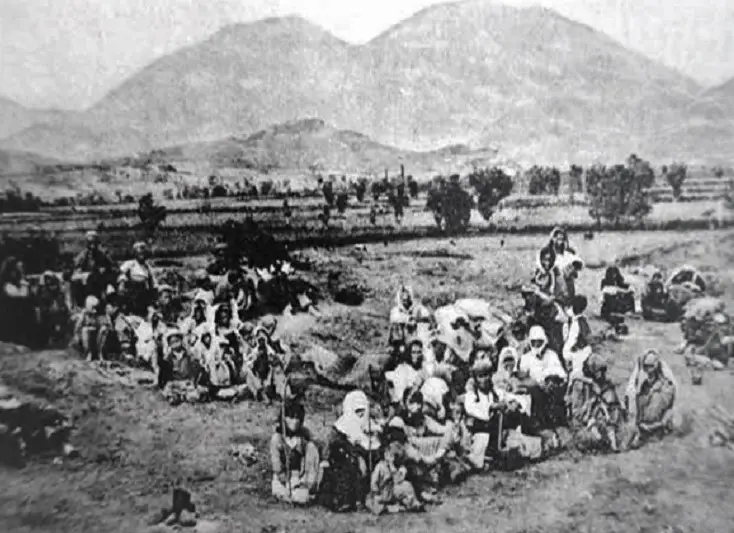
The occupying operations of the Serbian heavy artillery that began on 1 October 1913, the Albanian insurgent forces in the regions of Dibra and beyond found them in trenches, which for several days in a row remained unconquered, to thus give the opportunity to the unprotected population to withdraw into the interior of Albania. The greatest influx of the population was made in the direction of Elbasan, Tirana and Durrës 24, while the fate of those who had no opportunity to flee would be tragic.
In a telegram sent to the Austro-Hungarian consul in Durrës, on 10 October 1913, it is said that: “The number of Dibranë… emigrated until today to Tirana and Durrës reaches 10 thousand souls. Since others are continuously pouring in, it is concluded that after two or three days it will increase threefold. People possess nothing, except the clothes they wear and therefore their misery is colossal.”25 And according to the data, it is said that the city of Dibra, once with 18-20,000 inhabitants, at the end of 1913 had remained with only 2,000 inhabitants, but even this minority was dying of hunger.
The barbaric Serbian army during this occupying operation, against the Albanian population, exercised a terror unparalleled in the history of humanity and this genocide was not done simply by the sadism of the Serbian soldiers, but its source was in the highest political and military circles of Serbia. According to a news item published in the form of a communiqué in the newspaper “Politika,” King Petar Karagjorgjeviq himself at the meeting of the council of ministers of the Serbian government, had given consent for such a punitive expedition in Albania.
The Serbian crimes in Dibra and beyond have been seen up close also by the writer Haki Stërmilli. About the massacres in Dibra, he writes: “In the city, the tannery, which was a slaughterhouse for livestock, became a slaughterhouse for people. The city smelled of human blood, everywhere insecurity and a terrible silence reined. Besides the tannery, also within the city, among the gendarmerie posts there was a prison each, where only the order of the post-commander or the desire of some gendarme was enough for the walls of that prison to be well acquainted with the blood of innocent Albanians.”
The genocide and terrorization of the Serbian army included all Albanian settlements in Macedonia. Only in the line Struga – Dibra – Mavrovë – Gostivar – Tetovë, 180 villages were completely burned and destroyed, while in the district of Ohrid about 30 other Albanian villages were burned. In these military expeditions, thousands of innocent Albanians were killed and cruelly massacred.
The Serbian soldiery burned and devastated the villages of Dibra
In Upper Dibra, they killed and massacred, burned and plundered these villages: Valikardhin, Sopotin, Shupencën, Gjoricën, Homeshin, Okshatin, Topojanin, Kovashicën, Glloboçishtën, Bllacën, Zogajn, Kërçishtën, Çerenecin, Maqellarën, Pesjakën, Erebarin, Vojnikun, Allajbegun, Avdeni, Çoken, Majtarin etc. Meanwhile in Lower Dibra, the Serbian barbarians devastated the villages: Rabdish, Zimur, Tomin, Grazhdan, Muhurr, Ushtelenxë, Deshat, Sohodoll, Razhnapojë, Çerie, Pilaf, Luzni, Brezhdan, Bahute, Çetush, Pollozhan, Blliçe, Lipjan, Peshkopi, Trepçë, Çidhën, Penës, Venishtë, Divjak, Sllatinë, Vleshë, Kullë, Sllovë, Dardhë, Shumbat etc.
In Gostivar they burned: Reçanin, Zdunjën, Ravenin, Vertokun, Mirditën, Zajasin, Ternicën, Nisrovën, Jançen, Orkushtin, Simnicën, Kalishtin, Konjarën, Sollokicën, Deshatin, Verganin, Bigorin, Pilatin, Çafën, Zuznijën, Shtirovicën, Dobovën, Strazimirin, Certanin, Klenjen, Stellovan, Bllacën, Spasin, Majtaren, Çerenin, Vojnikun, Klobçishtin etc. In Reçan after 30 people were shot, the Serbian units gathered 200 elders, women and children, locked them in two houses and burned them alive. In Zdunjë, 37 men, women and children of the village were burned within the day. The next day 9 others were also massacred at the place “Vakuf” of Banica.
Those days of October 1913 in the village of Simnicë, 113 houses were burned, 18 people were killed, among them also two women. After eight days, at the invitation of the secretary of the sub-prefecture, 22 people were summoned by name, who after being tied up allegedly to be sent to the sub-prefecture were massacred right at the place “Vakuf” of Banica and the massacrers were: Vojvoda Bogdan, Petro Mitre, Kërsti… with their band. In Vertok, 18 people were shot and buried in “Bigorë,” while in “Vakuf” of Banica, 40 other men of the village were also shot.
In Raven, 30 people were massacred, of whom 12 people were thrown into a well. In the village of Vergan, 52 people under the age of 25 were killed. In Bigor, 13 people were massacred, in Zuznije 45 people were massacred, in Shtirovicë 45 people…! In Kalisht, during the road to Pozheran, 43 people were killed and slaughtered…, while during the road to Gostivar, 32 Albanians of the village of Çegran were massacred. In the village of Çafë of Gostivar, 94 people were killed and massacred: women, elders, children and among them were: Murat Selimi with his wife and four children, Jonuz Selimi with his wife and three children and Mehmet Halili with his wife and four children.
In Rekë they burned: Monarcin, Tërnikën, Nistrovën, Jançën, Radostushën, Kosovrastin, Skudrinën, Prisojnicën, Varbënin… etc. In Gollobërdë they burned: Zabzunin, Klenjën, Stellovën, Boravën, Sebishtin, Ostrenin, Okshtunin… In Kërçovë, 70 men were killed, from the beatings, and their bodies were burned, likewise in October 1913 also many villages around Kërçova were burned and the males were killed and mercilessly massacred. The village of Zajas was burned twice: the first time 40 males were killed and thrown into a well, while the second time over 200 others were killed. Likewise also in the village of Sop, about 200 Albanian inhabitants after being tied up were put into the mosque and burned alive, in Çellopek 47 people were massacred.
In the villages of Llozhana, Lisiçan, Klenja, Lutvin, Zhitovcë, Deshovë, Dobrishë etc., the Serbian army mercilessly massacred hundreds of Albanians, not sparing even the women and children.
Such cruelties were also committed in the villages: Leshnicë, Dragomash, Mahmudaj, Llapkadol, Plasnicë, Lishicë, Divjakë, Venishtë, Sllatinë, Tria, Veleshkë, Kal, Dardhë, Reç, Shumbat, Palaman etc. In Gjoricë, 14 people had been massacred together with the elder of the village.
In Zogaj the entire village had been plundered,… 124 houses had been burned and in a terrible manner some men, women and children were burned by the flames of the fire. In Maqellar, 10 houses had been plundered and burned and 27 people were slaughtered with bayonets. The others, to save their lives, gave 50 oxen, 113 goats and two cows. In Bllaç, the village had been plundered and then set on fire, while all the villagers without distinction (men, women and children) were massacred in the cruelest manner, which man cannot describe that slaughterhouse.
In Allajbeg, 23 men and women as well as a 5-year-old child were terribly massacred, while the entire village was plundered and then 65 houses were burned. In Zuznije, 45 people had been massacred, 5 houses were burned and all the livestock were stolen: 1,500 sheep and 20 horses. In Deshat, 15 houses had been burned where two women, two children of 7 years and one of 10 years were burned alive, and 50 oxen and 500 sheep had been stolen. The Serbian barbarities have also extended into the region of Demirhisar and Përlep, where 6 villages were completely burned, while all the inhabitants of these villages were killed and massacred. / Memorie.al