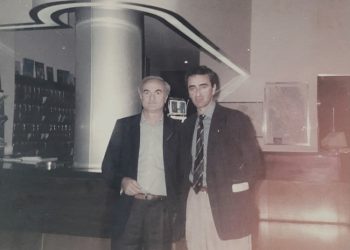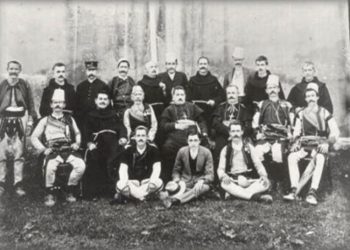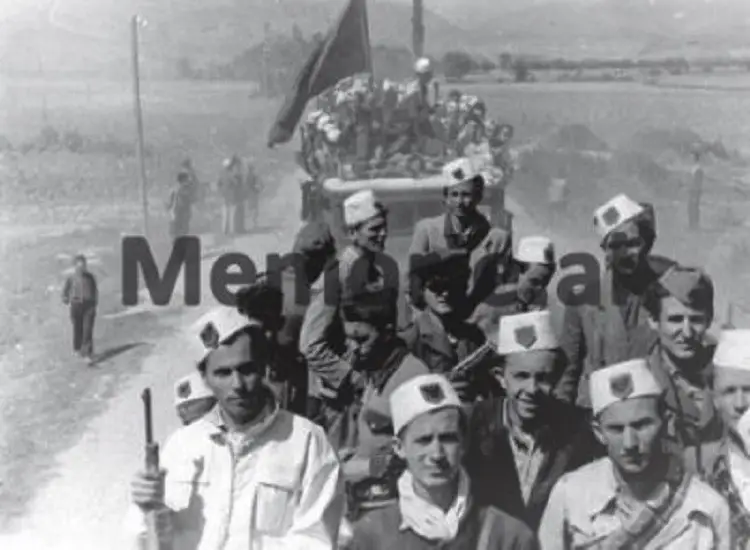
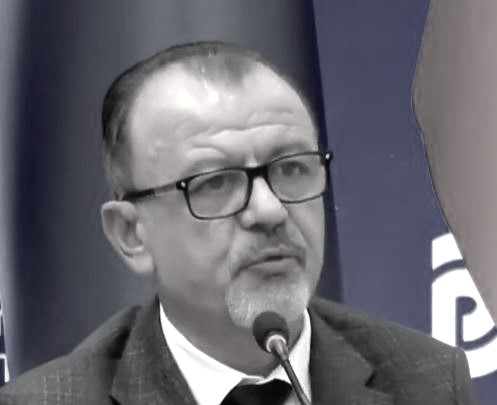

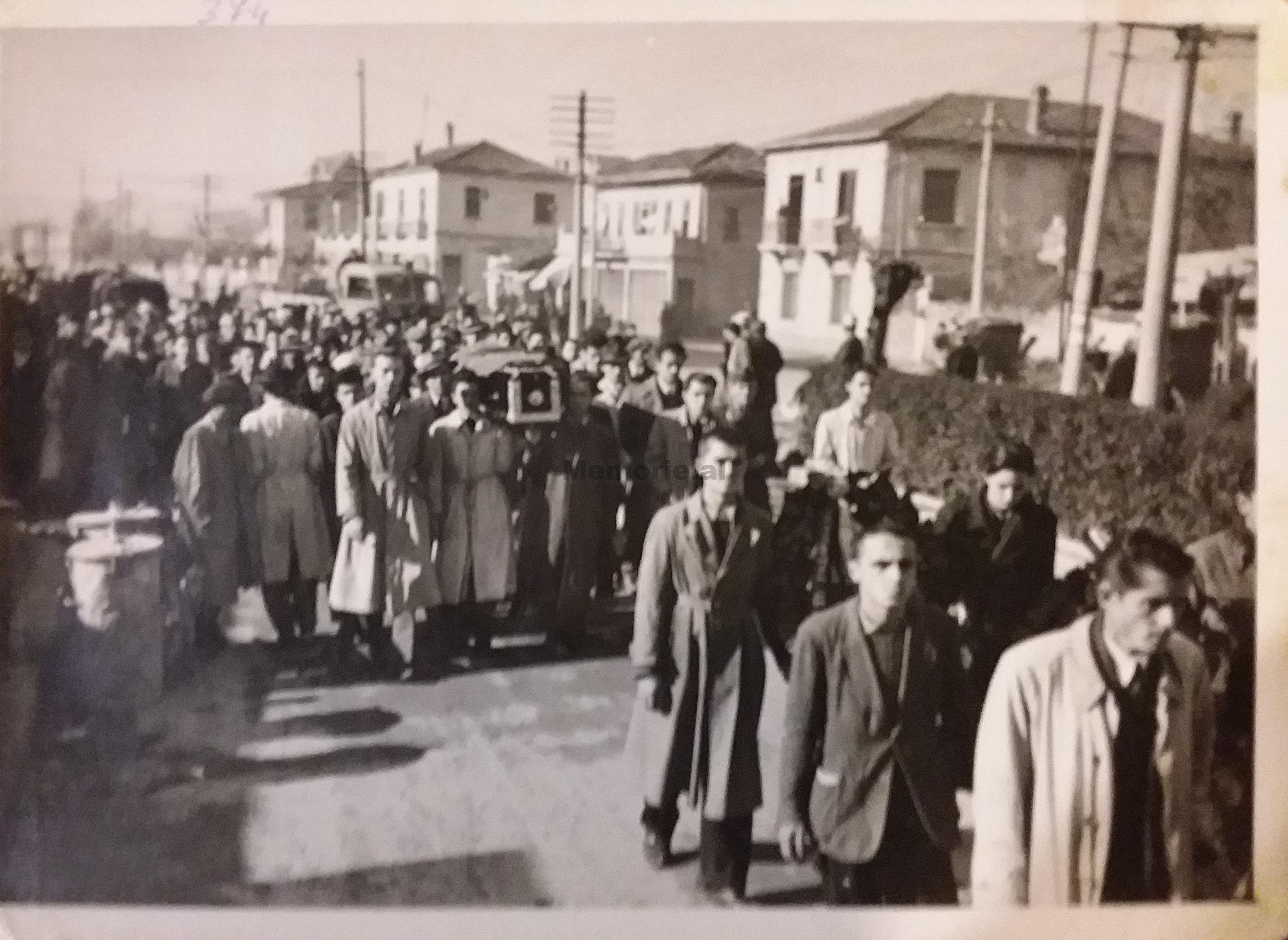
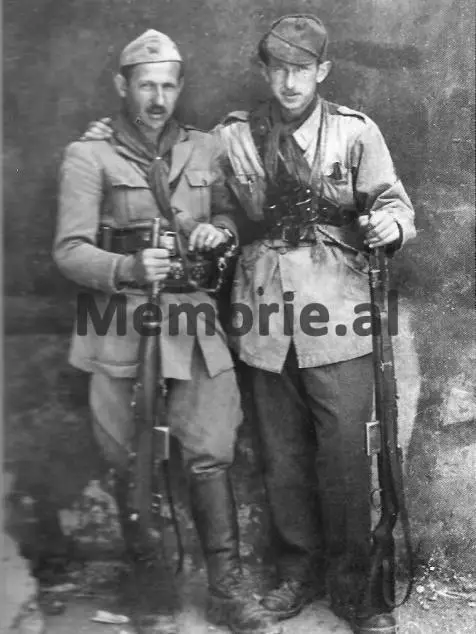
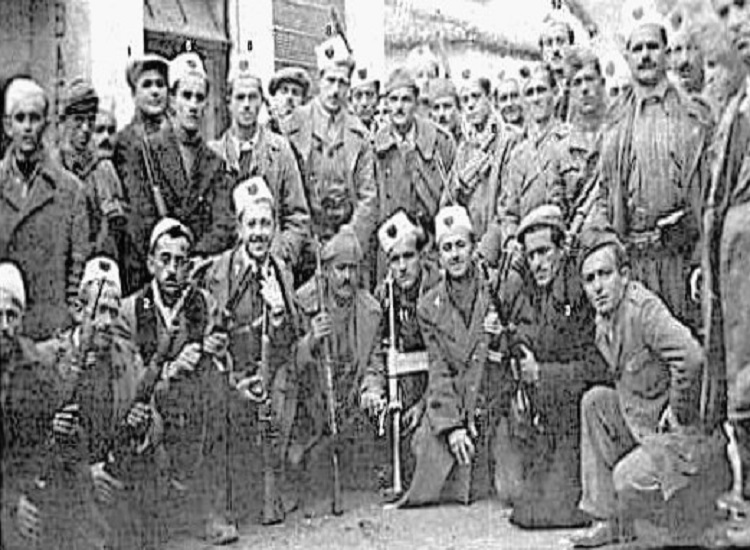
Memorie.al / His family have been pursued by persecution across four generations. It all began with the murder of his great-grandfather by Serbs, continued with the execution by firing squad of five other family members ordered by Mehmet Shehu, and then with the imprisonment of his father by the communist regime. Their descendant, lawyer Artan Murrizi, recounts what the survivors of the family line told him about October 21, 1943, the time under dictatorship, and how they received the decoration from President Bujar Nishani.
Mr. Murrizi, how did you receive the decoration given by President Nishani to those executed in the massacre of October 21, ’43, which included members of your family?
Although belated, the President of the Republic, within his constitutional right, decorated those killed in the massacre of October 21, 1943, with the “Martyr of Democracy” medal. We, the family members of those shot in that massacre, are grateful to the institution of the President. This initiative arose from the requests of family members in cooperation with the Association of Former Anti-Communist Political Persecutees and the Democratic Party branch of Lushnja.
The materials, along with the request, were sent to the institution of the President. Local media were notified ten days in advance about the decoration ceremony, and they covered the event thoroughly. The local government was also informed to my knowledge. The “Martyr of Democracy” decoration is a high honor, and in the motivational section that President Nishani presented with this decoration, its reasons are explained.
What consequences did this massacre bring upon your family?
From the Murrizi clan, the following were executed: Ismail Murrizi, my father’s uncle; Kadri Murrizi, Haxhi Murrizi, Hysen Murrizi, and Avni Murrizi, all relatives of my grandfather. So we have five executed individuals. My family, as a middle-class family, was engaged with nationalists, but to be fair, at the same time they also helped individuals who were not nationalists, for the sake of the friendly relations we had with them.
During World War II, they helped nationalist bands. My grandfather, Arifi, and his brother, Ismaili, also raised orphans because their father, Xhaferr Murrizi, had been shot by Serbs in 1913, and today, of all the clan members buried in the village, we do not know the grave of our great-grandfather Xhaferr. The great-grandfather was a village elder, and to save his people, he sheltered them in the forest and confronted the Serbs himself until they killed him along with another person from the Çerma area. Their fate and the place where they were killed are unknown.
Five young men were executed. The oldest among them was 41 years old, and the youngest had not yet turned 18. Regarding the latter, there is an interesting fact: he had been married for only about four or five months, leaving his wife three months pregnant. She gave birth to a son and never left her husband’s family, raising the boy until she died. She did not seek to remarry, despite being very young.
Also, one of those executed left his bride pregnant, and the son born was named after the father killed in that massacre – his name is Kadri Murrizi. Of all of them, only Ismaili’s body was recovered; the others could not be identified because the bodies had begun to decompose and had been torn apart by wild animals.
How did you manage to get his body, but not those of the other executed?
A family friend, Kadri Hoxha, went and took the body, paying five gold napoleons.
Whom did he buy the body from…?
He paid the partisan guards of Mehmet Shehu; otherwise, they could not have taken Ismail’s body – he is my father’s uncle. As for the others, it was the villagers of the area who helped, either out of humanity or because of the consequences that decomposition of the bodies might bring. They helped after the guards who were watching over the corpses to prevent family members from taking them had left, and they buried them in a common grave.
How were your ancestors involved with the Balli Kombëtar at that time?
After the killing of the great-grandfather, the two brothers discussed it so that one would engage in war, becoming a part of it, while the other would take care of the family. And since Ismaili was the eldest and first among the sons, he decided to go himself.
What happened on the day of the massacre, according to what your surviving ancestors told you?
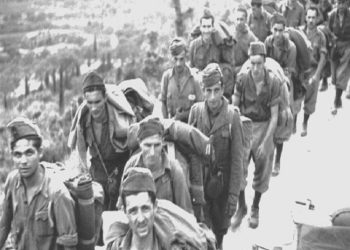
First, I want to clarify that on Cen Hasan Hill in Golem, Lushnja, where the massacre occurred, 82 people were shot by the First Brigade, led by Mehmet Shehu. According to a document found in the State Archives, it appears that in addition to these, 12 other persons were killed, who remain unidentified to this day, as well as three other victims whom Mehmet Shehu took with him and about whom no information exists. It is believed they were Italian prisoners. The executed nationalists came mainly from the area of today’s Divjaka. From the village of Divjaka alone, over 30 young men were executed – almost one per household.
And how did they recount the event…? Why did their mass execution happen? What was the conflict between the Ballists and Mehmet Shehu’s brigade?
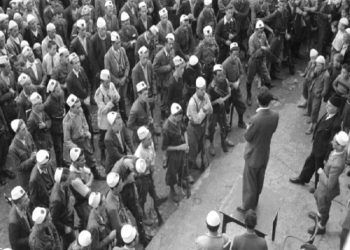
The killing occurred between two villages, Golem and Matjan. According to the archives, the hill is called “Cen Hasan Hill” – the place where the massacre of October 21, ’43, took place. All those who were executed had their own band led by Isa Manasteliu. During the verbal confrontation between the two groups, Mehmet Shehu demanded that they join his band.
They did not agree because they had information that the partisans were led by Yugoslavs and Russians – specifically the Bolsheviks – but also because Mehmet Shehu was not from the area and they did not trust him. Not all of those who were executed responded to this demand, and there is an expression that has circulated over the years, uttered by one of those executed, who said: “I would become a pig, but I will not become a communist.” I should note here that the number of victims could have been even larger.
In the archives, there is a document showing how Dushan Mugosha, who was the brigade’s deputy commissar, through Fiqirete Shehu, asked Mehmet Shehu to remove some Orthodox Christians from the execution list and increase the number of Muslims. The archive contains a document where he says: “Let’s remove some uncircumcised [‘lafshë-paprerë’ – a derogatory term] and replace them with circumcised ones.” This is another testament to the division and fratricide directed by the Slavs.
…And how did Mehmet Shehu react after the refusal?
Mehmet Shehu demanded that all the nationalists there join his band. I do not know how long this demand lasted, but I can say that at the moment of the execution, the group of nationalists was determined not to join the Bolshevik communists; they remained in their own band, as they were grouped. There was no exchange of fire between them, and no one from Mehmet Shehu’s band was killed.
Altogether, the Balli nationalists, that day was on “Cen Hasan Hill” and had not imagined what would happen that day. They were partly armed, and although they faced another armed group, namely Mehmet Shehu’s band, they did not draw their weapons to fight against them; instead, they waited for them and first talked. After they were surrounded by armed men, Mehmet Shehu and his men disarmed those who were armed. After disarming them, he insisted on taking them into his band, whether they liked it or not. His call was answered negatively, and they remained determined in that stance until they were executed.
Were they shot right there?
Yes, they were shot at the very place where they were talking, on “Cen Hasan Hill.” The execution was sudden, unexpected, and without any chance to avoid it or escape because all around they were guarded by Mehmet Shehu’s band, all armed. They even say that the stream of blood was so great that day that those who had been removed from the line because they were Orthodox moved more than twenty meters away, as the blood reached them – such was the horror of that day.
How did persecution follow you during the dictatorship, given that you had five executed family members?
The massacre of 82 executed individuals in this event is no coincidence, because the Slavic-communist philosophy aimed not only at the destruction of the Albanian nation but also of anyone who thought against it. This event accompanied all of us, not just my clan but also other families, for 45 years. Some of their heirs were imprisoned during the communist regime for their beliefs. Specifically, from my family, some were imprisoned as opponents of the regime.
My father, along with four of his cousins, were imprisoned, and this event is the origin of the persecution that began even earlier, with the great-grandfather, who was killed by Serbs, then his son by the Slavic-communists, then the grandson imprisoned by Enver Hoxha’s regime. And the great-grandson suffers the same consequence – me, from the descendants of communists. Before the 1990s, my family and the entire clan had no rights, including the right to education, because in every case the answer was: “You are the nephew, the son of the Party’s enemy,” although I had high grades.
With the fall of the dictatorship, I was able to get an education at the Faculty of Law and worked as a deputy judge, a lawyer, and until 2013, in the Ministry of Justice. I was removed from the Ministry of Justice – I worked as an inspector in the Inspection Directorate – and I was fired as soon as the leftists came to power in 2013. For this dismissal, I have a final court decision, which the descendants of the dictatorship do not enforce. Currently, I work as a self-employed lawyer.
Do you believe in justice…?
Regarding the massacre of October 21, ’43, our clan filed a criminal complaint in 1994, a case that was investigated and then dismissed by the prosecutor’s office on the grounds that Mehmet Shehu, as the orderer of this massacre, could not be investigated and tried because he had been killed. However, in that file, facts and evidence were gathered showing that elements of a criminal offense – crimes against humanity – had been committed. / Memorie.al