
By ERALD KAPRI
Part Four
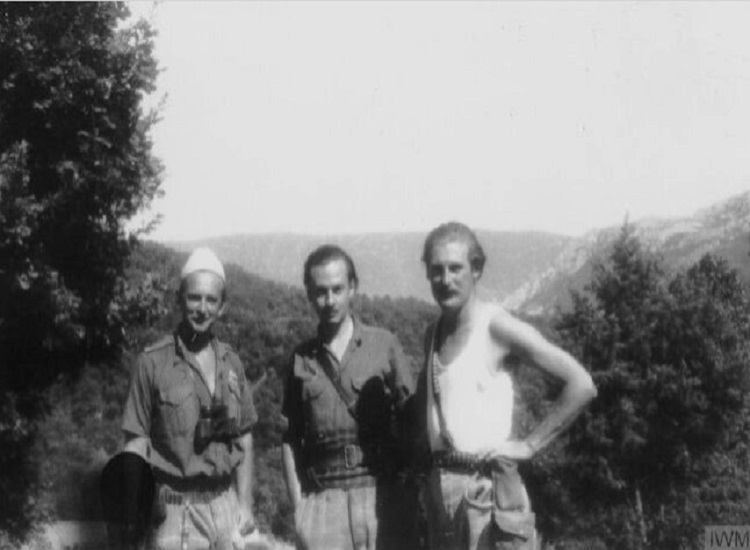
Memorie.al / Among the British officers who fought and led war operations in Albania in the years 1943–1944, three were among the most active and remained the longest: Billy McLean, David Smiley, and Julian Amery. Initially, the first two arrived earlier in Albania, in April 1943, and formed the First Brigade. Later, they returned in the spring of 1944 to stay for several months alongside the headquarters of Abaz Kupi and his thousands of forces. At the end of the war, the three officers drafted a memorandum of over 40 pages and submitted it to the British Foreign Office, reporting in detail on their missions.
Continued from the previous issue
Memorandum of the Three British Military Officers in Albania, in 1944
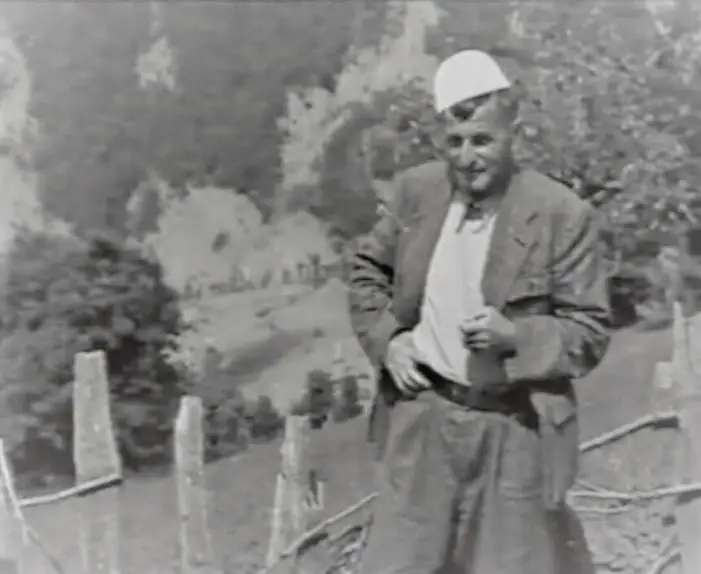
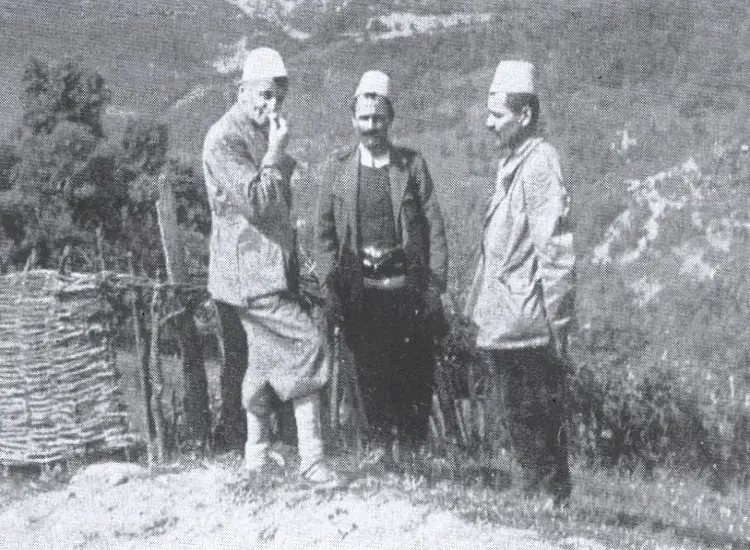
Abaz Kupi in his final days of stay in Albania. Those of the mission, who had experienced service from both sides, were of the opinion that although as a military unit, the partisans of the National Liberation Front were undoubtedly superior in terms of their organization, discipline, and equipment, the Geg highlanders – who formed the main backbone of Kupi’s forces – were better fighters from an individual standpoint.
Perhaps it is also worth remembering that Lieutenant-Colonel McLean, Major Smiley, and Sergeants Jenkins and Jones, who had also had experience with the National Liberation Front, all agreed that each of them saw more destroyed German trucks and killed Germans within three weeks (September 6–24) – time during which they stayed more with Kupi – than during the remainder of the 14 months of their stay in Albania.
- Military Intelligence
(a) Military Reconnaissance Missions. Mission personnel carried out detailed reconnaissance of the entire area of Durrës, Shijak, Vora, Tirana up to San Giovanni di Medua, including coastal defenses, ammunition depots, bridges, German command posts and installations, as well as the airfield and the city of Tirana. This was made possible by the full cooperation of Kupi, particularly regarding escorts, guides, etc.
(b) Agents. Kupi was always ready to place his officers and agents at our disposal to secure specific information, and generally went to great lengths to pass such military information into our hands as he secured it through his channels. Most of this information was provided by Franz Linder, an NCO in the Gekados Operational Bureau of the 21st Alpine Troops, destroyed by the Zogists, which included details of the German order of battle and operational order for the withdrawal of the 21st and 22nd Alpine Troops, believed to be the only certain German operational unit prior to execution.
(c) Documents. Kupi made painstaking efforts to ensure that paybooks, seized documents, and propaganda leaflets fell into our hands. In particular, a briefcase belongs to the 181st Division of the 21st Mountain Troops Headquarters, containing important information including assessments regarding the military and political situation in the area where the 181st Division operated.
(d) Political Intelligence. Kupi kept us informed of political developments and frequently carried out specific verifications at our request. He attempted to discourage other Albanians from establishing contact with us, but never tried to prevent us from establishing any kind of political contact we desired. Albanian officials maintained an unreasonable and irritating stance. However, despite the difficulties or bureaucracies imposed, the Italians remained cooperative and well-disciplined. In many instances, they assisted Albania in loading and unloading ships and consequently avoided delays in cargo transport.
III. SUBVERSION
Kupi provided us with every opportunity to contact enemy personnel, such as Turkestani and Italian troops that we wished to subvert, and indeed assisted us and regrouped them after they had once deserted. It must also be stated that in many instances Kupi attempted to subvert the Turkestani troops himself, though in no case with any great success.
- RESCUE OF PILOTS
Eight Americans and one British Air Force pilot were rescued by Zogist forces. Captain Taylor of the US Navy and Lieutenant Bullock were also assisted by the Zogists when they were trapped at Cape Rodon. It should also be noted here that regarding the 11 American pilots parachuted into Mirdita, it was reported that they had been handed over to the Germans by Gjon Markagjoni.
MAIN ASSISTANCE
(a) The headquarters and mission personnel of nearly 200 people were under the protection of Zogist forces from April 17 to October 27. Shelter, food, guards, guides, and interpreters were provided by Abaz Kupi, along with all other possible assistance during this period, such as bargaining for the purchase of transport animals (mules), fodder, grain, oil, and finding couriers to maintain contact with Tirana.
(b) All arrangements were made for Lieutenant Hands and his party, who were safely escorted to the partisans in the South of the country, and for Lieutenant-Colonel Seymour and a group of Americans, who were escorted to the Yugoslav border in the North of the country and handed over to the partisans.
(c) During the final month, the mission ran out of funds and fell into debt, and when “Force 399” refused to send additional money, there appeared to be no remaining way to resolve the matter. To avoid a black mark on the British reputation for non-payment of debts to Albanian peasants, Kupi lent us a considerable sum to settle the debt, even though he was aware at the time that we were expected to leave Albania shortly and that he would not be traveling with us, meaning he had little prospect of receiving his money back.
(d) Evacuation. The mission was granted all facilities for terrain reconnaissance and carrying out the evacuation, even though our departure meant a fatal blow to Abaz Kupi’s cause. It should also be noted that at a time when there were no other acceptable means for our evacuation, Kupi made efforts to find a boat for us.
APPENDIX “B” TURKESTANI TROOPS
At the time of the mission’s arrival, there were a large number of Turkestani, Caucasian, and other non-German troops in Albania. It was always an integral part of our plan to subvert a portion of these troops in order to create a striking force under the direct command of the mission, which would enable us – in accordance with the principles established by General Wingate – to exercise a major influence on the nature of these types of operations, in which we could involve nationalist leaders.
With this objective in mind, we attempted to establish contact with German troops, but with the exception of a meeting with Cpl. (otherwise Colonel) Brandt arranged by W/Cdr. Neel in June – the results of which we have treated previously – it was only in the month of August that we achieved some success in this direction. In August, we managed to establish contact with Turkestani units in the Cape Rodon and Durrës area through two Turkish-speaking hoxhas.
On September 5, one of the hoxhas reported that he had succeeded in organizing a large-scale desertion from one of these units. However, the report turned out to be highly exaggerated, like most Albanian reports. Nevertheless, the hoxhas had managed to provide us with enough Turkestanis to use as agents, whom we persuaded to return to their bases and, through letters or personal contacts, convince the rest.
As a result of these efforts, two companies of Turkestani troops killed their German commanders and deserted. At least 80 of them regrouped under our command, while the rest vanished or perhaps eventually joined the partisan forces. This refers to the Turkestan Bn of the 359th Regiment, which consisted of 4 companies of Kazakh troops and one company of Tajik troops.
Note not to confuse Kazakhs with Cossacks. It is also worth noting that the Russians referred to Turkestanis as “Asiatics” rather than Turkestanis. (In each company that deserted, there were also a few Uzbek and Kyrgyz troops).
They had been taken prisoner by the Germans on the Russian front, mainly after operations around Kharkov in May 1942, and after a period of harsh treatment in a POW camp, they were persuaded in September 1943 to voluntarily join the ranks of the German army, primarily on promises of better food and pay. They were stationed and trained in Ukraine and became part of the 176th Regiment.
Later, these troops were moved through Germany and Italy to the Balkans and transferred from the 176th Regiment to the 359th Regiment. All officers and most NCOs were German. These troops carried German equipment and rifles, but light machine guns and automatics of Russian manufacture. Those who were regrouped by us were mainly Tajiks, some Kazakhs, and a few Uzbeks.
They spoke Persian, Turkish, and in most cases, Russian. We organized them into five groups with four Russians who had escaped from the TODT organization serving as NCOs. In order to fully commit them to our cause, we deliberately used them in the first attack launched by the Zogists against German positions, heading off the possibility of a second desertion on their part.
Subsequently, they took part in several actions against the Germans, and after the decision was made not to supply them further, they were used to guard the mission’s headquarters, as they lacked sufficient ammunition to participate in other operations. They proved to be brave, well-disciplined, tough, and cheerful, despite bad food, continuous rains, malaria, and a lack of clothing and boots. / Memorie.al