


Dashnor Kaloçi
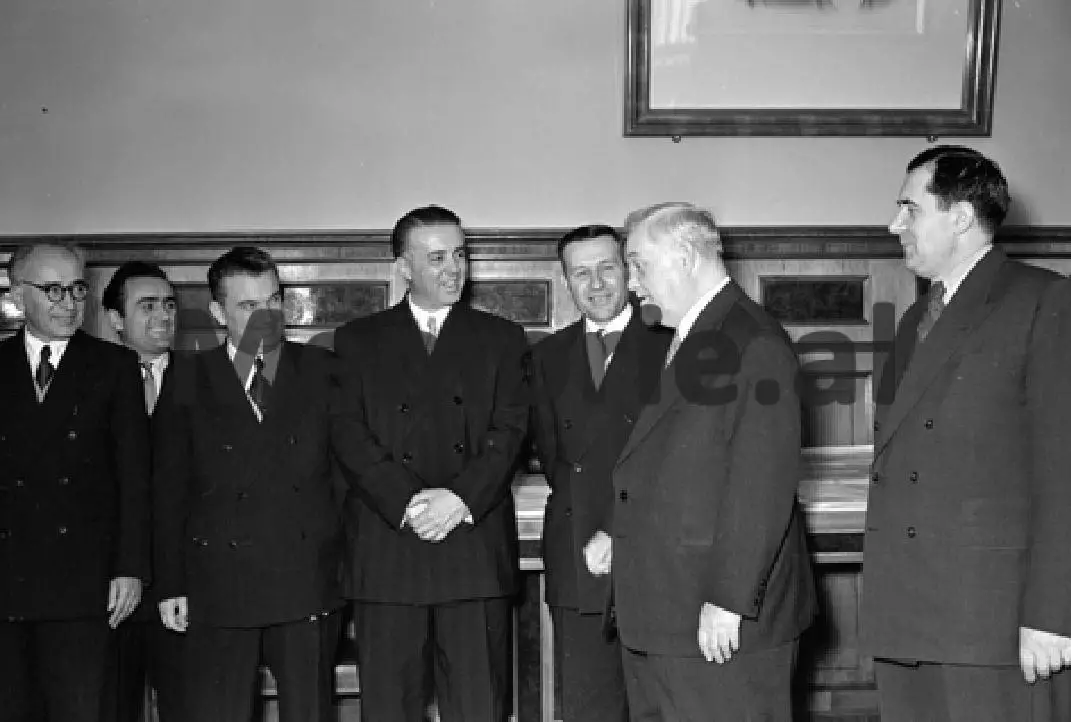
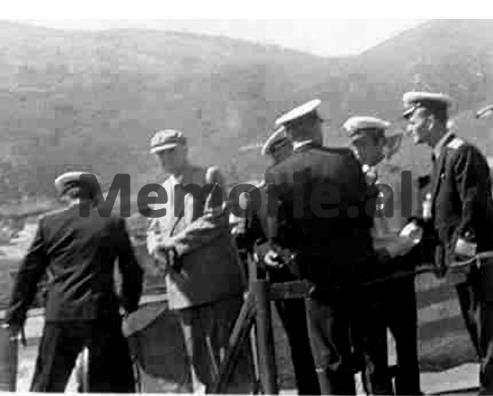
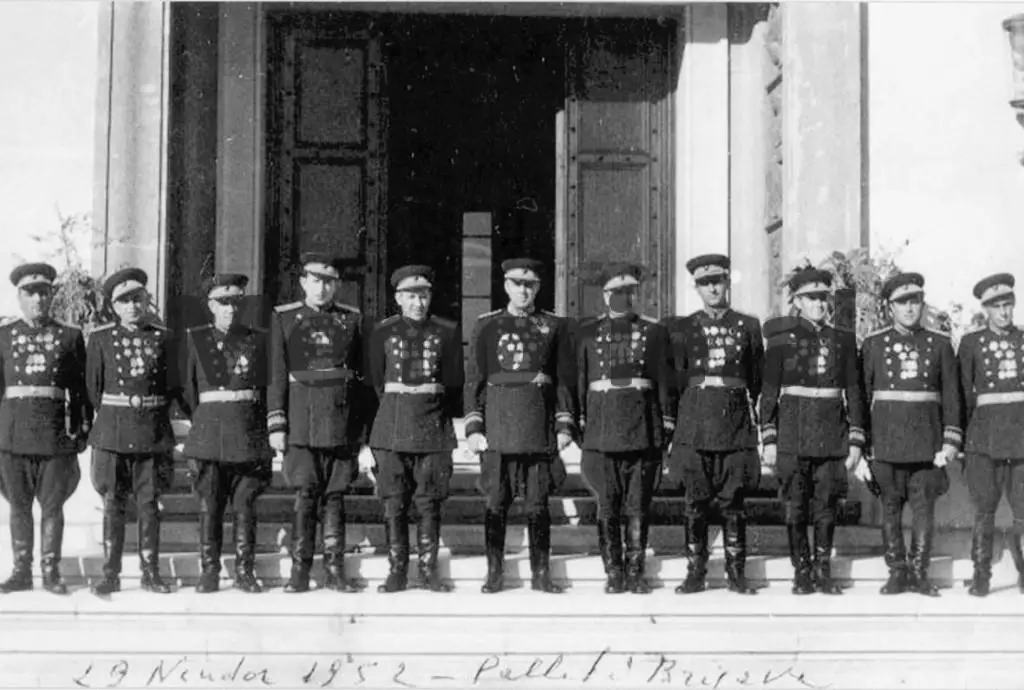
Memorie.al/ publishes the unknown history of communist Albania’s relations with the former Soviet Union in the military field since 1955 when official Tirana signed the accession to the Warsaw Pact where most of the countries of the Communist East were, or as they were otherwise known. “People’s democracies”. Testimonies of Colonel Skënder Malindi, former Director of Army Combat Training at the Ministry of People’s Defense, who recounts how relations between the Soviet Union and our country developed at that time, starting with the supply of weapons of all kinds that The Soviets brought to the Albanian army (tanks, artillery, aircraft, submarines, locations, etc.), visits of Soviet military delegations to Albania and Albanian ones in some places of the Communist East, where joint exercises took place, secret movements of Russian submarines. of Pashaliman across the Mediterranean, until the secret visit of Marshal Zhukov to the top of the mountain on the island of Sazan, where he, seeing with binoculars the entire sea area, addressed the Black Sea commander, Admiral Kudet Cov who was nearby, saying…!
Continued from the previous issue...
Receiving the invitation for Albania’s accession to the NATO military pact, (Organization of the North Atlantic Treaty Organization), in 2009, which rightly then and then throughout all these years, was considered an event or the largest historical event that our country has ever had, is not the first case of Albania’s entry into such military pacts. Although in circumstances and conditions political and military completely different from those of the time when Albania was fully accepted in the North Atlantic Treaty, as is already known from history, communist Albania has acceded to the Warsaw Pact. From which he left ‘de facto’ in 1961, when the close relations and the great friendship that existed at that time between Albania and the Soviet Union broke down, while ‘de jure’ left only in 1968 when the Kremlin carried out military aggression. to Czechoslovakia. But how was Albania’s entry into the Warsaw Pact received and how was it considered by official Tirana at that time? What did our country gain or lose from membership in that military pact to which most communist countries in the East adhered, or as it was then known as the “People’s Democracies”, and how did relations between Albania and the Warsaw Pact develop? Regarding these and other events and facts related to that period of the ‘Cold War’, we know the interview of Colonel Skënder Malindi, former gang commander in the Skrapar Region during the War years (1939-1944), and then one of the major military men of the Ministry of Defense and the Albanian Army for years, until he was struck in 1975, as a member of the so-called “Coup group of Beqir Balluku in the Army”.
Mr. Malindi, after the accession of Albania to the Warsaw Pact, did our country send military troops to a joint exercise that was then held in the framework of that pact?
We have never sent troops, but several times we have sent groups of senior officers to participate as observers in large-scale exercises in the Soviet Union under the Warsaw Pact. One of these was the one held in 1959 in the Tbilisi area in the Caucasus, where together with several member states of the Warsaw Pact, a delegation from the Ministry of Defense of Albania was invited, which was headed by General Vaskë Gjino.
Who else was part of that delegation?
As members of that delegation were: Muhamet Prodani (general, general), Sul Domi (colonel for artillery), Petrit Çobani (colonel for tanks), Dhori Gjoni (colonel for chemistry), Skënder Malindi (colonel, for combat training) etc… The exercise, which took place for seven days somewhere near the border with Turkey, was on the topic: “Korparmata in attack” and was led by the commander of the Okruk military district, Army General Galiski, the hero of the Soviet Union, who during the war of World War II, had been an army general. During the training conclusions, he also asked us to say our remarks and laughed when we told him we had no remarks, as everything had gone well. He praised the Iraqi delegation for making appropriate remarks about the exercise.
What about other exercises, did the Albanian military participate?
In addition to this exercise, we Albanian military have assisted as observers in another exercise held in Odessa in 1958, where the head of the delegation was Petrit Dume and its members: Dilaver Poçi, Et’hem Gjinushi, Sulo Kozeli, Myslym Keta, Sul Domi, Skënder Malindi, Mendu Backa etc. So, in total during those years we Albanians have assisted in 2-3 Warsaw Pact exercises that took place in the Soviet Union.
What about senior Warsaw Pact soldiers coming to Albania to attend our trainings?
In addition to the three or four generals I mentioned above who came to us in 1956 at the United School where they gave us theoretical lectures, from the Warsaw Pact in 1959 came to Albania ten senior Soviet generals of all types of weapons, who assisted in a major exercise we did in southern Albania. Once again, sometime around 1959, the operational director of the Warsaw Pact Joint Command came to Albania, holding the rank of lieutenant general. He was accompanied by a Romanian general and a Czech, who took part in a staff training with maps that took place in the Petrela tunnels.
But after the break-up with the Soviets in 1961, what were Albania’s relations with the Warsaw Pact?
Even after the break-up with the Soviets, they considered us part of the Warsaw Pact, and despite the fact that we did not attend any meetings or exercises, they regularly sent us invitations. This continued until 1968, when the Soviets entered Tanks in Prague and Albania emerged ‘de jure’ from that military pact.
Colonel Malindi: “Army General, Shtemenko, received Petrit Dumen and me in the office, suggested that we train for the atomic bomb…”
During his military career as a senior staff member in the Albanian Army and Director of Combat Training at the Ministry of National Defense in Tirana, Colonel Skënder Malindi had the opportunity to participate as an observer in several exercises conducted by the Warsaw Pact in the former Union. Soviet. In one of these exercises held in 1958, he also met the commander of the Warsaw Pact, Army General Shtemenko. Regarding the meeting that every military soldier of his career would dream of, the retired colonel, Skënder Malindi, said: “After assisting for seven consecutive days in the training that took place in the region of the Odessa military district, our delegation returned to Moscow. During those days of our stay in the Russian capital, the Chief of General Staff, Lieutenant General Petrit Dume, took me with him to a meeting he had planned with the commander of the Warsaw Pact, Army General Shtemenko, who During World War II, he served as Deputy Chief of General Staff and as the Red Army Chief of Operations, during which time he reported to Stalin twice a day on the war they were waging with German forces. He received us alone in his office located inside the headquarters of the Joint Command of the Warsaw Pact, somewhere inside the city of Moscow.During our conversation which took place in Russian, Shtemenko asked us about many things that k were connections with our army. Then he asked us if we were doing imaginary drills with the atomic bomb and when we told him we were doing that, he told us: “I have not been to you, but in Poland and elsewhere, wherever I have gone, I have noticed all the maps with a circle (sign of the atomic bomb). And they told me that with an atomic bomb they had taken a battalion out of the fight. Therefore, you Albanians, too, must be careful not to fall into their mistakes that had no idea what an atomic bomb was.You must pay great attention to the exercises with the atomic bomb, because it has power is great and destructive “, recalled Skënder Malindi the suggestions of the head of the Warsaw Pact, in their conversation that lasted more than 30 minutes.
Malindi: “Soviet submarines in Pashaliman with only Russian crew moving across the Mediterranean observing NATO bases”
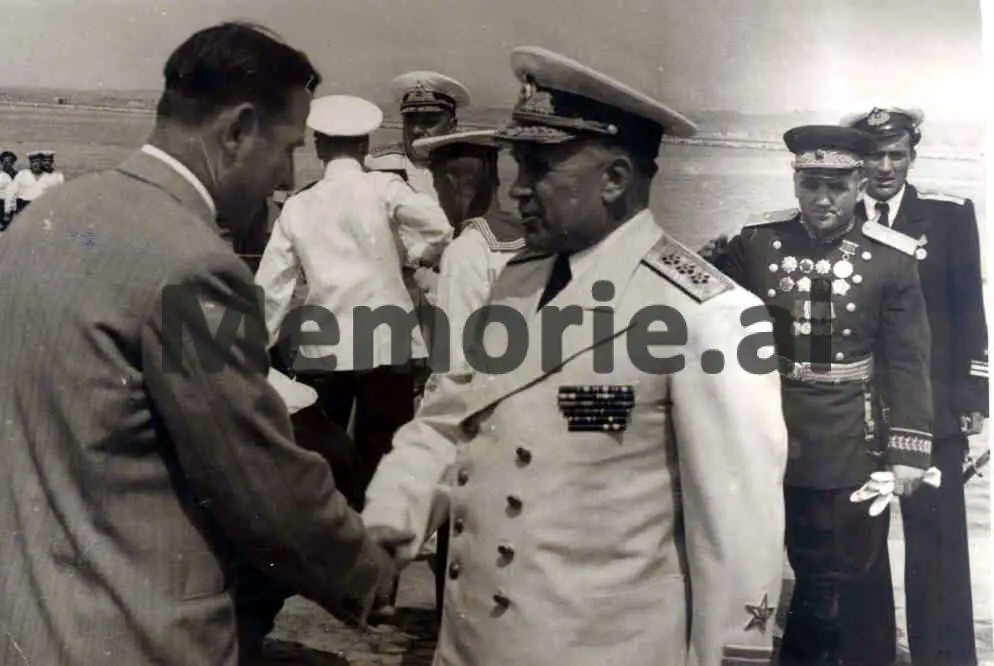
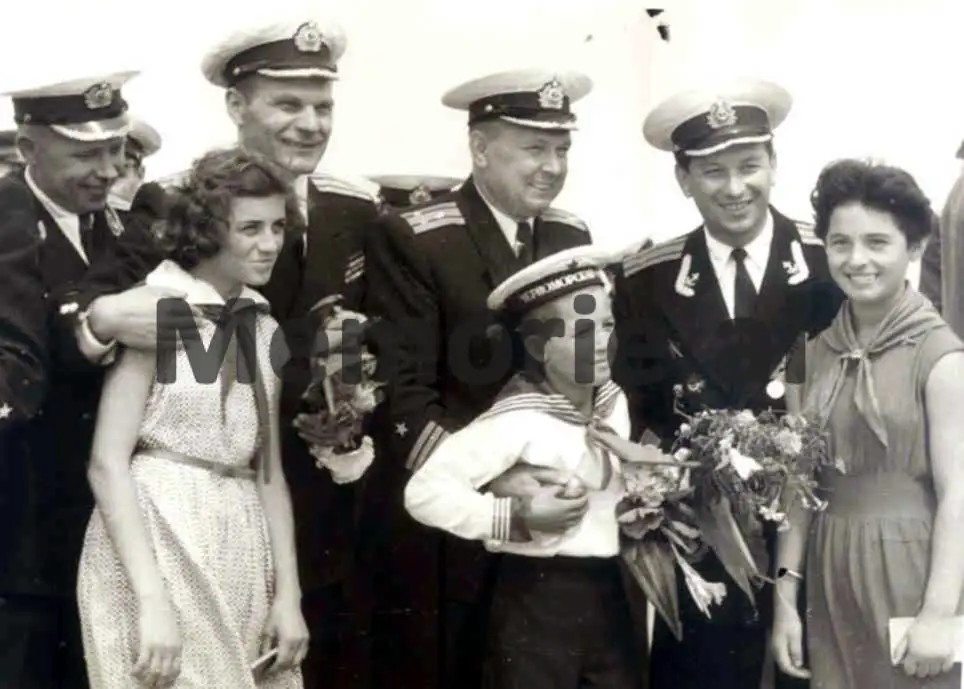
In his testimonies, the retired colonel Skënder Malindi, told us by shedding light on a not very well known fact (as before the ’90s and later), which has to do with the role of the Soviet military in our country and the Pashaliman naval base, which has been recognized as one of the most important available to the Warsaw Pact throughout the Mediterranean. In this regard, Malindi said: “At the Pashaliman base, out of a total of 12 submarines, according to the agreement we had with the Soviets, 4 submarines were with a joint Albanian-Soviet crew, while the other 8 were only with a Soviet crew. And also, according to that agreement, the 8 submarines with Russian crew, were free to move and act without informing the Albanian side. Due to this fact, during those years that the Soviets stayed at that military base, after being supplied with food, water and fuel, with their 8 submarines they moved not only within the territorial waters of the Albanian space, but for three or four months in a row they went across the Mediterranean Sea. Their purpose was to control and monitor all naval military bases that there was NATO at the time in the Mediterranean, such as those in Taranto, La Speczia (where there was a naval base) Naples, etc. They even went as far as the ports of Tunisia (in northern Africa), with which n at that time the Soviets had very good friendly relations. The Russian submarines of the Pashaliman base carried out those movements in great secrecy and everything was kept in complete secrecy by us, the senior Albanian military. This was conditioned by the very fact that if Soviet submarines were detected by NATO forces, they could be hit and bombed by them. Seeing the great importance Pashaliman had for the Soviets and the Warsaw Pact, Marshal Zhukov had plans to further strengthen that base. Which he expressed to some extent to us Albanian soldiers who accompanied him during his visit to Sazan and Karaburun in 1956 “./Memorie.al