
By Auron Tare
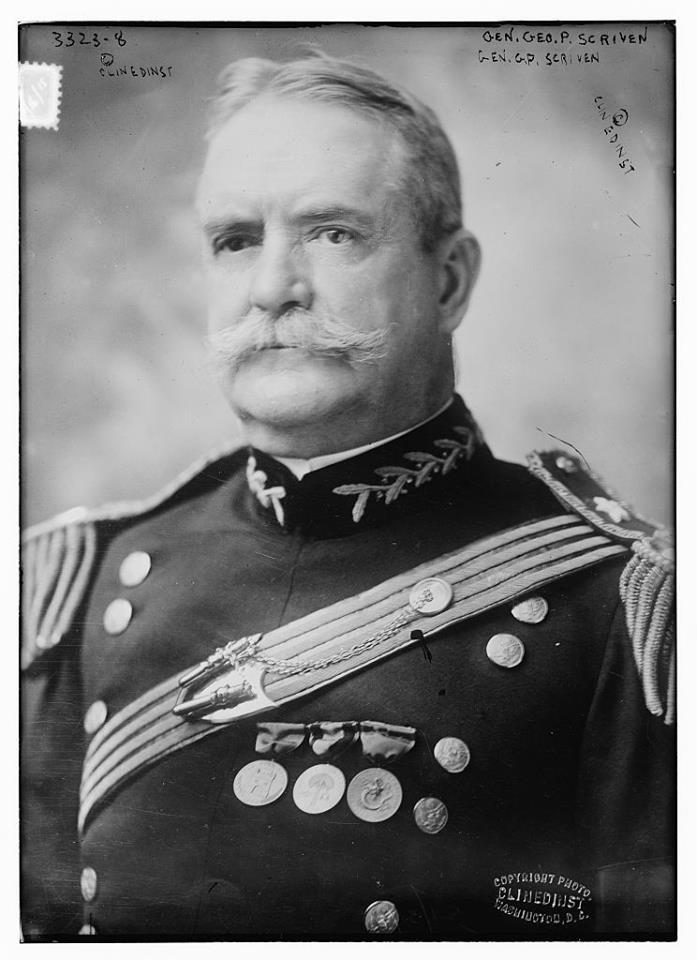
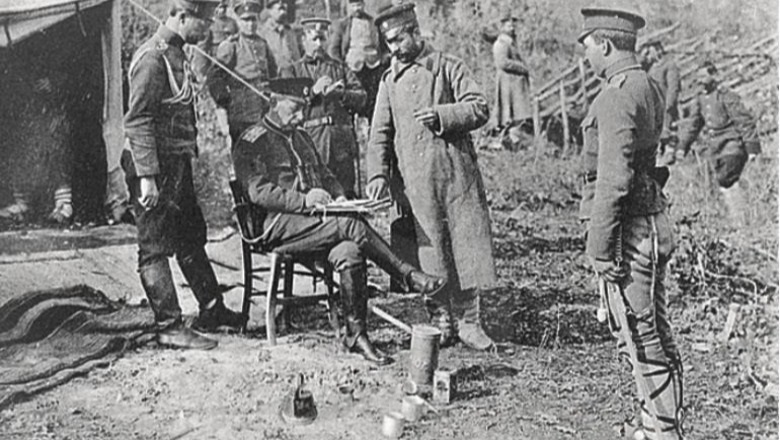
Memorie.al / “Nature and art have combined to produce a bountiful garden.” Thus wrote nearly 100 years ago the American General George P. Scriven, about a corner of the Balkans that he had had the fortune to visit during the Great War. Brigadier General Scriven, a name well-known in the history of the U.S. Army as commander of the Signal Corps and later as one of the pioneers of aviation, left his very interesting notes on his journey to southern Albania. A report for the U.S. Army, as well as two public writings about Albania ranks him among the first American travelers to the Albanian lands. With a rich career in the military, serving in several countries as a military attaché, General Scriven served as an adviser to Italian troops on the Balkan front during the Great War. Interesting is the general’s perspective on post-war Albania, as one of the few countries that had benefited from the war, with important public works in its infrastructure.
The General, from the notes, a fragment of which we are publishing today, seems to have had unforgettable impressions from his Albanian journey. Publicly, he describes himself as a friend of this unknown and very poor, yet very beautiful, country.
The report for the U.S. Army is a note on the strategic roads that traverse Albania, and especially the importance of Vlorë as a strategic military point of great significance. Meanwhile, in an article published in one of America’s most important publications, the American general appears to appeal to Italy, which had openly shown its ambition for “patronage” over post-war Albania.
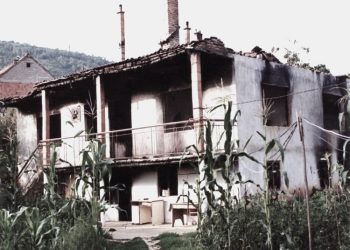
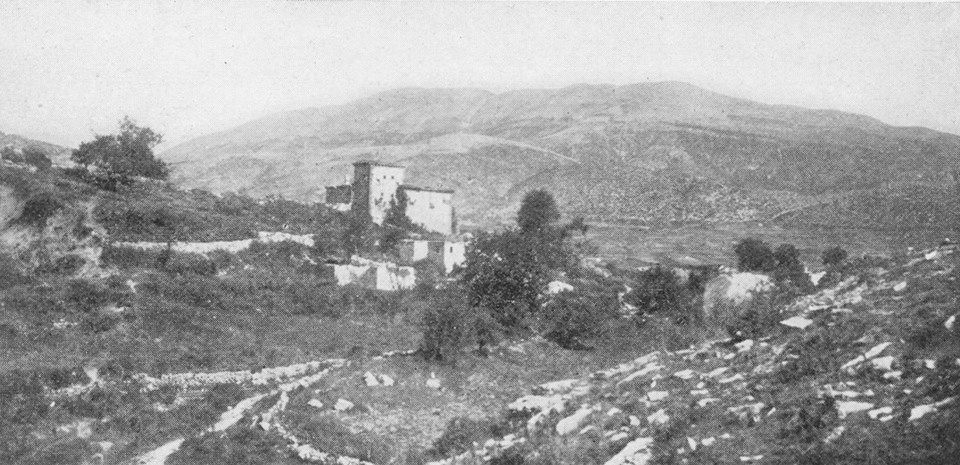
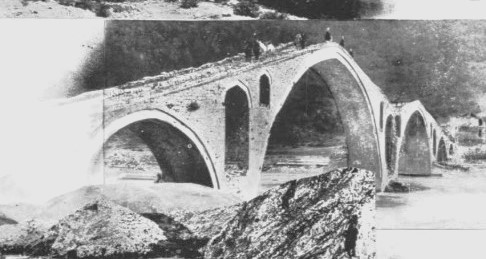
Besides the interesting notes of General Scriven, his photographic collection is of great interest, leaving us rare views of the southern regions, including the Bektashi cemeteries of Tepelena, as well as a rare image of the village of Nivica, in the highlands of Kurvelesh, where the houses built as towers are clearly visible, a physiognomy now completely disappeared from this region.
THE GENERAL’S MEMOIRS
“The loneliness and isolation of Albania has now passed with the World War, the Adriatic storm will soon dissipate, at least for a while, Paris will one day act, and from the South, the hand of Greece will withdraw through the establishment of peace or because Northern Epirus is Southern Albania, the harsh spine of the Balkan Gjembaç [thornbush], which only an unwise hand would dare to seize even if it stands alone. But Albania is no longer alone; the War brought it friends.
And in fact, more than friends, the War elevated it, for whoever has seen it has no doubt that the occupation of the Allied armies made it possible for the entire population that was behind the front line from the Adriatic to the Aegean Sea to be a blessing. The Allied Army was a powerful building force, which did good and left behind great works, for which the Albanian people, the heterogeneous groups under the name Macedonian, and the unreliable Greeks, will forever recognize them as important works for the Balkans and for humanity.
It is not an exaggeration to say that in Albania, the greatest good works were brought by the Italians. They were the ones who built the roads, developed the cities, opened up the country, gave advice to the inhabitants, opened schools, fed the hungry, it was the Italians who established the courts, treated the sick, and helped the poor. Why should this peaceful work of Italy not continue in peace, just as it did in war? Why should Italy and Albania fall out? Few of its friends, among whom I count myself, think that the Albanians still cannot walk alone.
They must know that they need a friend; they need the hand of a guide to direct them in their steps toward progress. A guide and not a patron, who can withdraw at the end of his service. This I believe Albania will accept and I am not alone in this conviction. But the outstretched hand must not be of steel, hidden in a velvet glove. The Albanian must not accept any patron, just as he has not had one to this day. The test of a disinterested friendship is difficult to establish for any country, with the exception of America, which has passed the test.
Therefore, a visible test and trust is needed before Albania takes the hand of a country that seeks to help it. …… Albania is truly a land of wonders, but for centuries forgotten, unsung, except for Byron’s verses, unknown like some islands lost in tropical seas, and yet a land where nature and art have combined to produce a bountiful garden, where the future will be enlightened.” / Memorie.al