“THE DUPLICITY OF BEDRI SPAHIU, ACCORDING TO HIS OWN CONTRADICTIONS”!
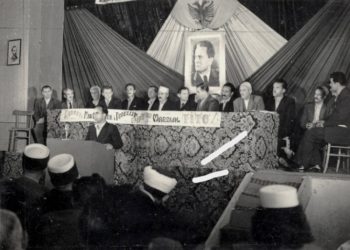
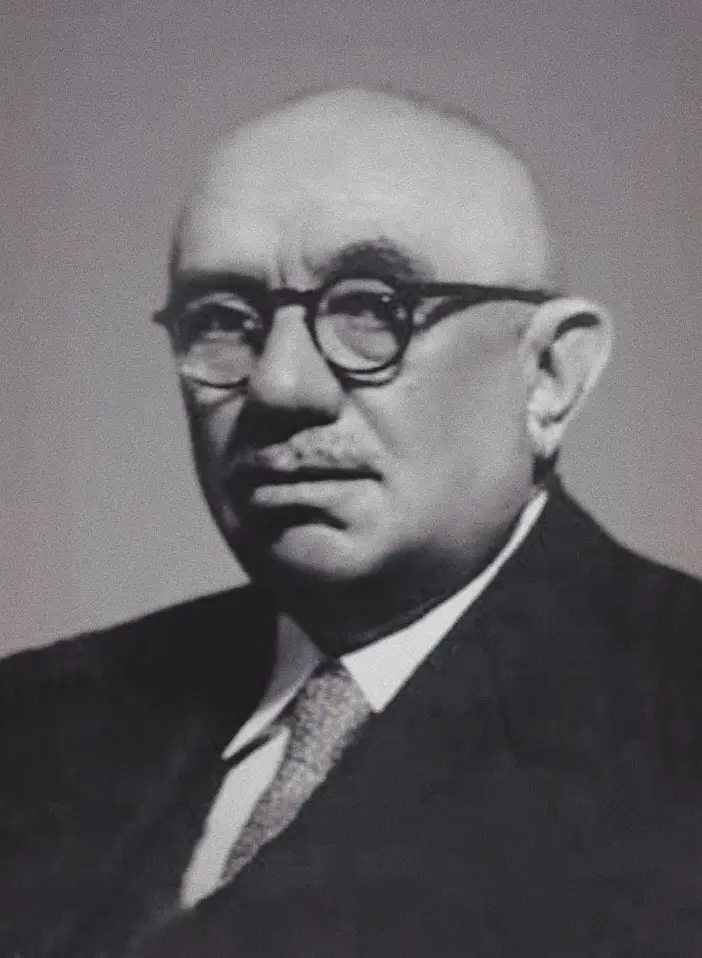
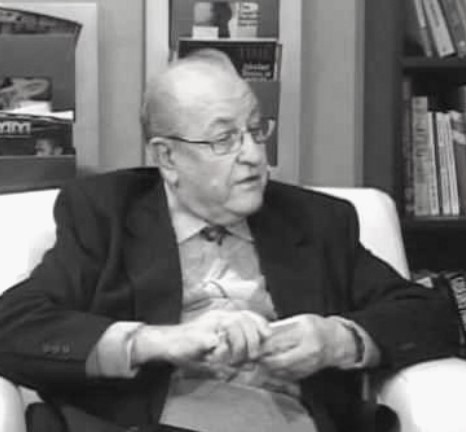
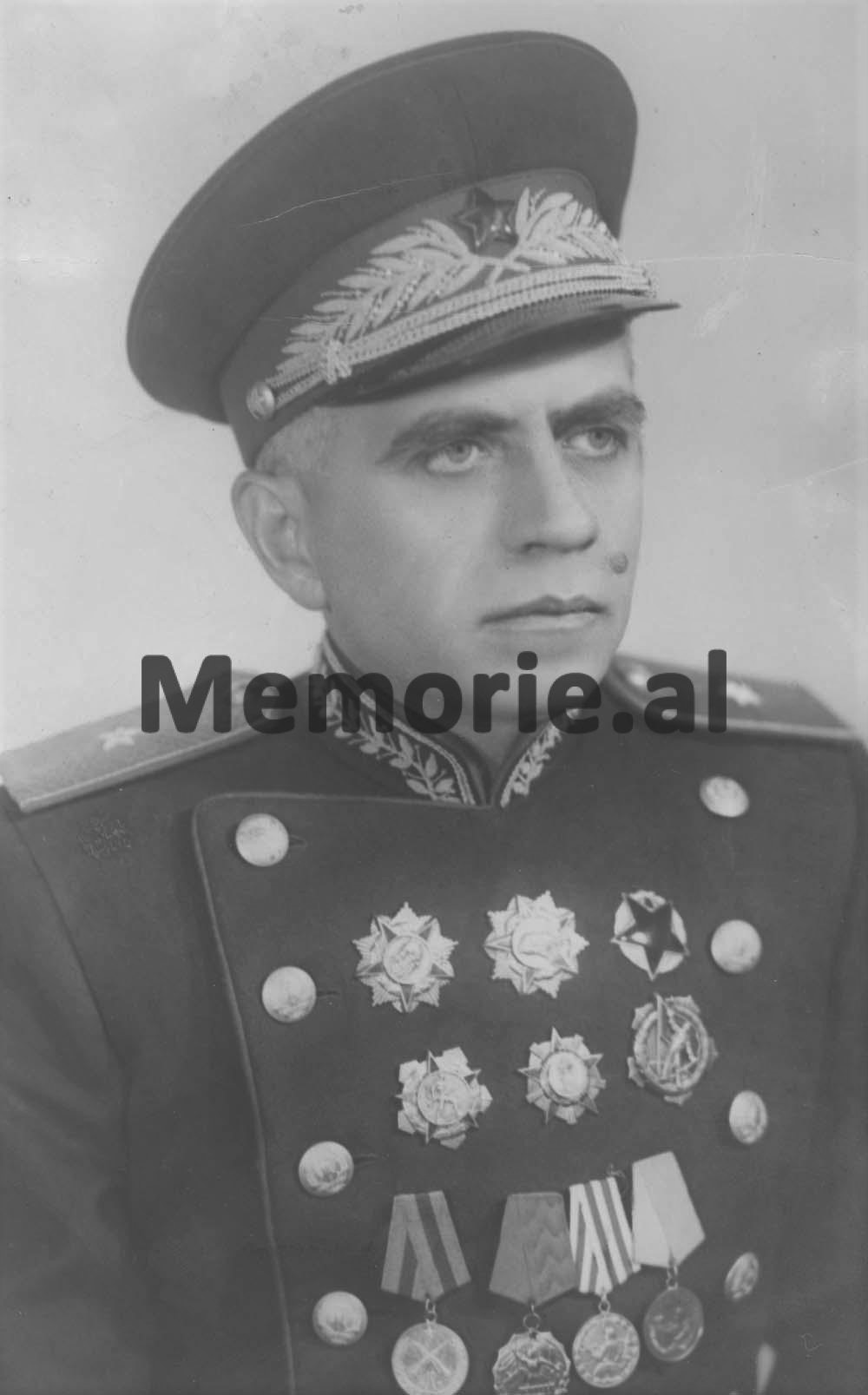
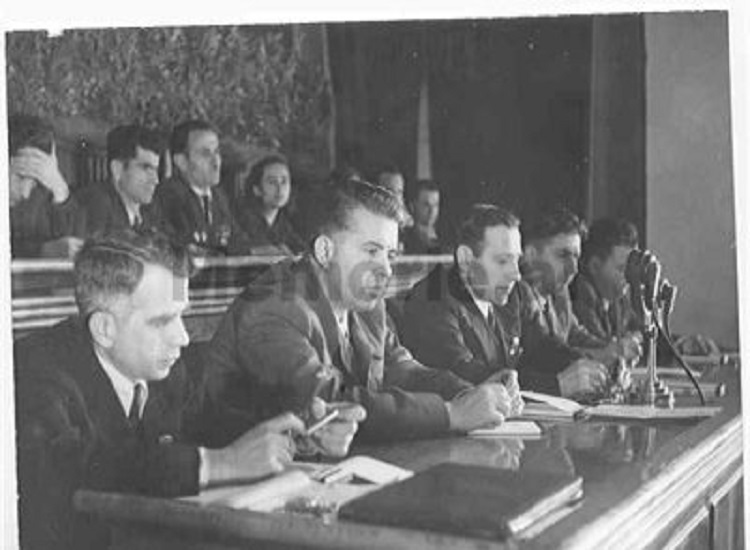
Memorie.al / It is not chance that drives me, after writing the piece titled: “When will history be written, as well as the people involved in it, without embellishments or disfigurements?” – to pause and write about the cornerstone of the indictment of the ‘Special Trial’, Major General and Chief Prosecutor, Bedri Spahiu. I hold many memories of him, and on the other hand, I also know many testimonies about him. I have also read with great attention his public self-criticism, and with even greater curiosity, the ‘Political Testament’ written by him. I will try to gather these together, and also present them for discussion. In the ‘Special Trial’, Bedri was the prosecutor and Koçi Xoxe was the chairman, and they condemned, on very questionable and vague charges, the heads of Albanian intelligence and patriotism.
But what about three years later? At the Trial of Koçi Xoxe, Bedri was again the prosecutor who demanded the execution by firing squad of Koçi, his comrade-in-arms, fellow member of the Political Bureau, and many, many other things that linked him to Koçi! “A man of principle,” someone might say of him. “Faithless towards his comrades,” thinks another. “Blinded by his loyal service to the dictator,” adds a third.
These are all different viewpoints, agreed. But on what path of reasoning does Bedri himself lead us with his statements? Bedri affirms, even in his deep old age, that; “If Bahri Omari were to be resurrected a thousand times, and I were the prosecutor, I would have him executed by firing squad another thousand times with my own pleasure, without Enver Hoxha’s order.”
How much spite this statement expresses, and on the other hand, how much pains it causes, when we judge the above statement today! His spite, belonging to an incorrigible stubborn man, makes us pity him, (trying to be extremely balanced towards him), but it inevitably reminds us, in association of ideas, of the ancient Roman saying: “Errare humanum est, sed perseverare diabolicum”! (To err is human, but to persist in error is diabolical).
Let us now stop judging his spite and analyze the object of our pain. Bedri affirms with the greatest cold-bloodedness that he would re-execute Bahri Omari another thousand times, even without Enver Hoxha’s order. This statement, made and repeated by him, honestly leads us into deep thoughts about how to maintain impartiality in our judgment regarding his person. On page 27 of the “Political Testament” of Bedri Spahiu, which he addresses to the government with his accusations on January 24, 1965, he states:
“I accuse you that instead of conducting the investigations based on the scientific system, which is the system of our Republic, you conduct them based on the medieval inquisitorial system, which is categorically prohibited by the laws of the Republic, and is classified as a criminal offense by these laws…” and further in his clarifications he continues: “How quickly have you forgotten where such a method led in 1946 – 1948”?!
How contradictory is Bedri Spahiu the prosecutor, and also the old man, compared to the imprisoned Bedri Spahiu. Throughout his years in prison, he demands the application of scientific investigative legislation, but when he leaves prison and repeats his statement in writing once more, as sadistic and equally criminal, about how he would act towards Bahri Omari, there he admits as normal that if Enver Hoxha gave the order, there should not be the slightest doubt that that macabre inquisitorial order would be carried out by Prosecutor Bedri!
Let us now analyze when Bedri Spahiu speaks about the false witnesses, and on page 72 says that: “You have, among other things, the example of 1948, when the convicted were used as prosecution witnesses against Koçi Xoxe.” I read this passage and it’s as if someone removes decades, half a century passed, from my stature and memory, and it appears before me as if the development of Koçi Xoxe’s trial were yesterday.
I remember many facts that I could recall, e.g., when Koçi declared that he had attempted to cut his veins, to put an end to the tortures and, along with them, his life, but I will stop at one of the crucial moments directly related to the trial’s prosecutor, Bedri Spahiu.
Koçi Xoxe had declared that he clearly saw he was the prey of a conspiracy hatched against him, stating that he had remained tied for about two months, subjected to torture, and, worst of all, great pressure was also put on his family. And Bedri Spahiu, with his characteristic outburst, had rushed at him saying that he (Koçi), now that the criminal plan had been revealed to him, didn’t know what he was saying, that they had not only not tortured him, but they hadn’t even touched him with basil! So the lead-investigator Bedri Spahiu in this case, with the arrogance his position gave him, applied such psychological pressure on the defendant Koçi Xoxe, that the latter, outraged, declared he would not speak another word.
And the ever-ready prosecutor retorted, addressing the chairman of the judicial panel, Frederik Nosi, to take note that the defendant refused to speak, that he didn’t want to say anything about Tito, and thus was covering for the latter (Tito). I remember those situations and read how in his “Testament” Bedri Spahiu continues and says: “I accuse you that in the practice of your work, you have replaced the principle according to which the investigator must prove the accusation to the defendant, with [the investigator proving it to] the investigator.” (page 27).
Further down he says: “… from the perspective of the variety of criminal methods, our people here surpass others and everyone else combined. And I say this, I who was a political prisoner even during Zog’s time, and during fascism, and not just once, and not just in one prison!” (p. 112). I stop reading, shaken. On one hand, I have before me newspaper articles that, as current news, deal with the discovery of the place where the 17 martyrs of the ‘Special Trial’ were executed.
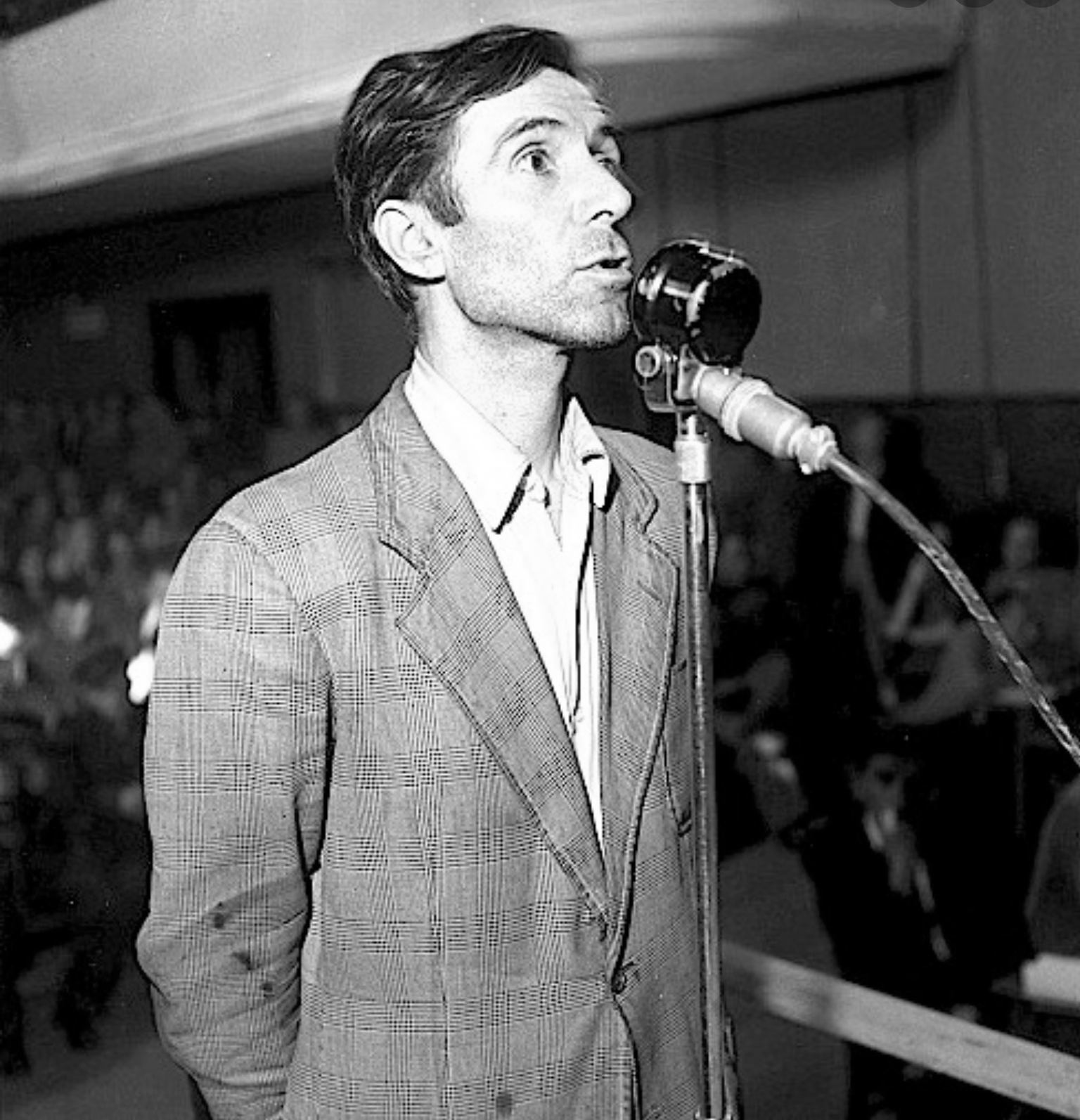
On the other hand, I have fresh in my mind the reading of the accusation that Bedri Spahiu, now imprisoned, directs at the government regarding the methods used against prisoners. But I cannot help but recall the scene when, faced with the cold and rigorous logic of Kolë Tromara in the courtroom, the representative of the prosecution, Bedri Spahiu, not knowing how to counter him, commits a gaffe which I believe has no precedent in the annals of court hearings: he grabs the microphone stand and prepares to hit the defendant, Kolë Tromara!
And this, in the hall where the session of the ‘Special Trial’ was taking place in the presence of hundreds of participants! And I now, after decades, trying with the utmost impartiality, cannot help but ask myself: when in the hall and before the public, the prosecutor cannot restrain himself and acts brutally, what physical violence has he allowed himself during the investigation?
How contradictory are the stances and actions of Bedri Spahiu as prosecutor of the ‘Special Trial’ or of that of Koçi Xoxe with Vasil (Vaskë) Koleci and Pandi Kristo and comrades, compared to his preachings, after the dictator put him in prison!
On page 90 of the “Political Testament”, Bedri Spahiu affirms: “In my free life, I have read only Marxist literature, and nothing else!” (page 90). And continuing in the same, he makes the second statement; “Now I am myself a man who wants to know and, as such, I am a student of the world, of life, of people.” These statements open many paths for discussion.
Without wanting to philosophize at length, we see two sides to this statement. His entire culture was as much as he had taken from Marxist literature, but those who were condemned as enemies of the people, simply because they had not joined the National Liberation War and saw that conditional collaboration with the occupier served the nation’s interests better, what formation did they have?
They, not only knew Marxism fundamentally, but also the history of the October Revolution, with all its negative consequences for Russia, extremely well. They also understood the danger that cooperation with the emissaries of the Serbian Communist Party posed to our country.
On the other hand, they also knew very well the historical developments in the Balkans and beyond, and had very clear Serbian expansionist goals. Thus, the field of political developments as well as the goals of the Slav-communists was much clearer to them than to Bedri Spahiu and his comrades.
Yet, Bedri Spahiu, along with the entire judicial panel chaired by Koçi Xoxe, who was, in the full sense of the word, an illiterate, condemned to death as well as to rot in prison those who thought that the lesser evil was collaboration with the occupier. In this context, I will bring before the public the words of Father Anton Harapi spoken in his speech when he accepted the duty of member of the Regency:
“Here, then, is one first work accomplished: after so many months of anarchy, as terrifying as it was dangerous, today – for better or worse – we have a High Council, we have a Parliament, we have a Government, we have an Albanian authority. Some see this work with a good eye, and some with a bad eye, so much so that even my friends and well-wishers said to me: what did Father Anton need to get into this work?! I must answer these, not as an official, but as a friend, not to justify myself, but to enlighten my own and their mind.
I think there is no Albanian bird that would think I took this burden for a morsel, for interest, or for some intrigue. Perhaps someone might think it’s some mania of mine that drove me here. And I confirm the word to them and I say to them: yes, the mania for Albania, yes that was what put the dilemma before me: either anarchy, to shed blood, or to withdraw my hand from the national cause. And since my spirit did not tell me to do either one or the other, I was forced to choose between two evils: either to do a foolish thing, by accepting this office, or to show weakness, by withdrawing. I decided it was better to do a foolish thing: or – as those Albanians who want to remain pure say – I chose to compromise myself…”!
I have brought this fragment from the programmatic speech of Father Anton Harapi, so that the objective reader, he who is inclined to judge impartially by trying to understand the situations, as well as the circumstances of the actions, with the curiosity of discovering the truth, might be interested in reading the entire speech of this priest, patriot, and great erudite (which speech, along with the above writing, I will put at the disposal of the magazine “Kuvendi” for publication).
To conclude with the analysis of the figure of Bedri Spahiu, trying to observe and balance all the available data, as I hope future researchers will do in evaluating history, as well as the figures of our people, but without prejudging them, I bring to the reader the passage with which Bedri Spahiu ends his ‘Political Testament’:
“I greet you sincerely, oh legal officials, for I am like that Christian who, whenever he curses God, turns and makes the sign of the cross, because he remembers Satan. I greet you sincerely and with unconditional respect, even you representatives of opinions contrary to mine, for I am a partisan of tolerance in the realm of thought.”
I will not burden the reader further by launching into a commentary on the above autographed lines of Bedri Spahiu. I will let him do it himself, in a reasonable manner. But I don’t know why these remind me of the characters sculpted by Brecht, Shakespeare, or Dickens, where the parables of characters like Arturo Ui (the all-powerful Al Capone, seen through Chaplin’s magnifying glass), intertwine with Iago (the personification of duplicity solely for the jealousy of power), as well as with Uriah Heep (the personification of ugliness and demonization fused into one).
To conclude with the figure of Bedri Spahiu, I will remind the reader of a figure, as well as a macabre scene as told by the priest who was present at the execution site: Fejzi Alizoti was tied up, along with his 16 comrades, condemned to death by Koçi Xoxe with the insistence of Bedri Spahiu. “Fire!” shouted the squad commander, and the hail of bullets laid all 17 victims on the ground. After the volley, silence. The silence of death.
And the silence was broken by the faint voice of Fejzi Alizoti: “The Lord had mercy on me. Forgive me now, you too, according to international laws.” Bedri Spahiu rushes over, looks at the innocent one lying there on the ground, soaked in blood and dust, tied to two dead men, and with a sadistic voice that could never be sated with blood, tells him: “We do not recognize international laws, we recognize our own laws”! He draws his pistol and, with all his spite, shoots that corpse, still alive”! / Memorie.al