

Part Twenty-Six
Memorie.al / The American Intelligence Service have attached very great importance to the trial held in 1954 of several Albanians who had been recruited by the CIA. In several recently declassified documents, the alarm following the court’s decision to execute 8 persons by firing squad is shown, among them well-known names such as Zenel Shehu and Hamit Matjani. The CIA has also published the reactions that the death sentence brought about. It shows there that the Albanians in exile were alarmed by such a thing and warned of revenge against the regime. The documents show that some of the agents used pseudonyms, while there was fear that they might have leaked information.
Continued from the previous issue
20 April 1954
The Trial in Tirana of the CIA Agents
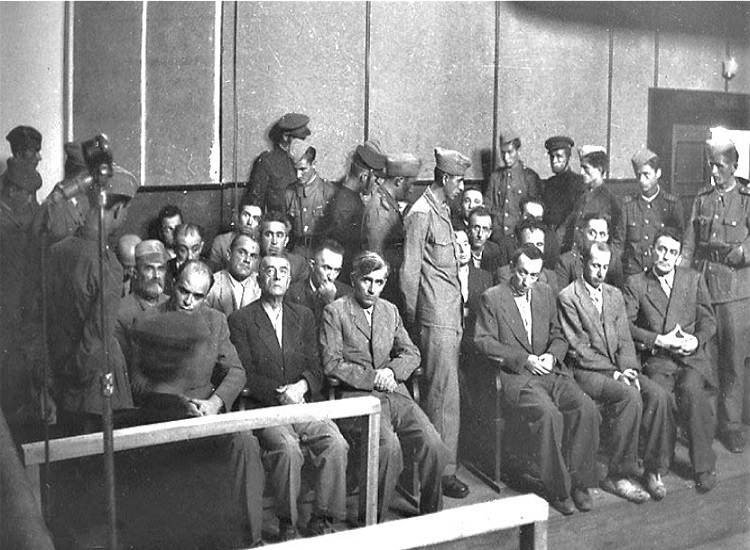
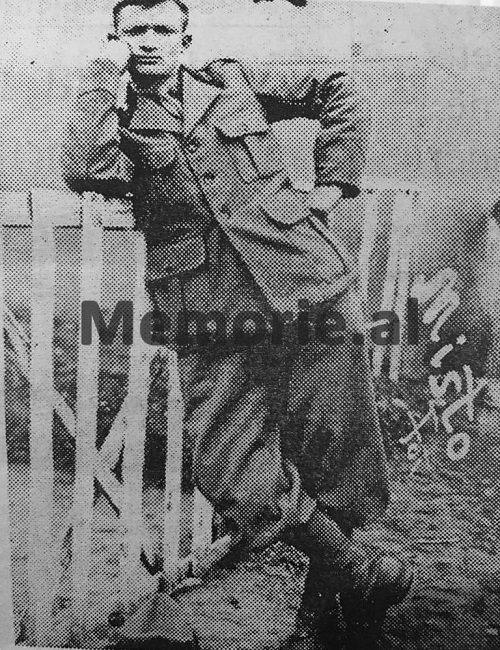
The trial of the 8 CIA agents, whose capture and trial was announced by Radio Tirana on 29 December 1953, began on 5 April 1954. The trial lasted 5 days and ended with the conviction of the accused. The following members of our group “Apple Team” were sentenced to death by firing squad: Zenel Shehu, Halil Branica (personally recruited by King Zog), Ahmet Kabashi, Naum Sula, Gani Malushi and Rapush Agolli (the latter recruited inside Albania). Hamit Matjani, a guide and consultant recruited by the CIA, was sentenced to death by hanging, while Ibrahim Laçi, a contact of our group, was sentenced to 10 years in prison.
The sentences were carried out on 15 April 1954. The enemies claim to have killed three of our agents immediately after they landed by parachute. We do not know what has become of two members of our group, such as Tahir Preçi, the initial radio operator, and Pal Nikolla, the subgroup leader. There is a small possibility that they may still be free, while the greater possibility is that they were killed during interrogation, or sentenced in secret for refusing to cooperate with the judges.
Public Trials
The trials were in fact made public as a means of propaganda against the United States and Britain, as the main organizers of clandestine activities against the communist government in Albania. That is why the manner of the agents’ capture and their being brought under control has hardly been mentioned at all. Thus we are still without data on when our group passed under the control of the enemies. The cooperation between the United States and King Zog has been made public. The cooperation between US espionage and Greek organs has also been analyzed in fine detail, emphasizing the submissive manner of action of Greece and other Western countries in relation to the US, as well as the ease with which American agents cross borders and operate in these countries.
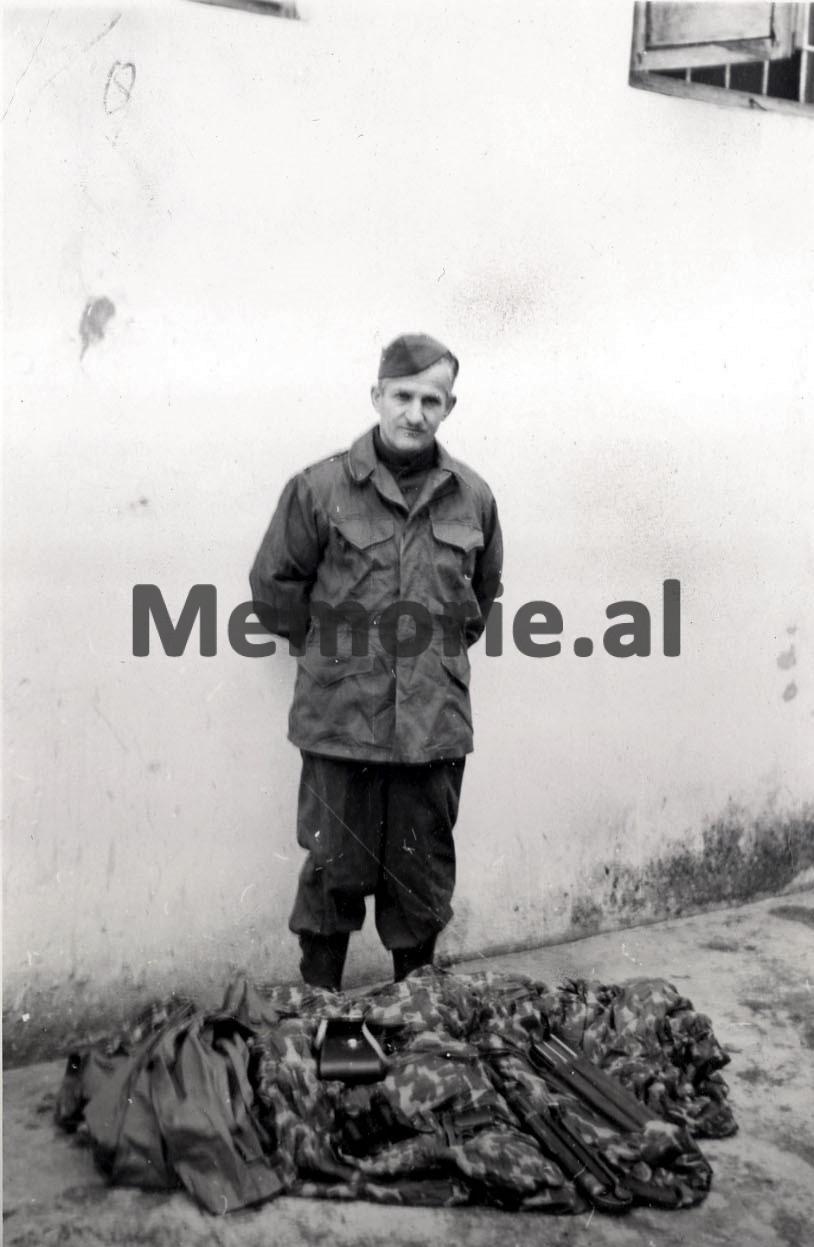
Some information has been made public regarding the training methods and the physical location of the agents’ areas in Greece, but most of the points and methods have already been changed, and those that remain will be changed soon. In addition, all the supplies, ammunition, weapons, clothing, radio equipment and gold were seized and displayed in the courtroom. Regarding CIA personnel, no real name was exposed during the trial, except for one contact agent who left in the autumn of 1951.
Other agents involved used pseudonyms in their contacts with Albanians. In order to counter the effect of the propaganda brought about by the trial, at least partially, a brochure was released in Tirana after the executions, which elevated the killed agents as martyrs of the cause of Albania’s liberation. Another brochure has been proposed and is being drafted.
10 March 1954
Text of the Propaganda Leaflet
Page One
Did you read “Zëri i Popullit” on 21 February? The newspaper said that issues can be resolved only by peaceful means, in a manner acceptable to all. But at the Berlin Conference, Molotov showed that the USSR does not allow international issues to be resolved except according to his conditions. Why is Molotov afraid to make concessions as all the other parties did, in order to reach agreement on the treaty with Austria and the liberation of the country from military occupation?
Molotov is afraid because he knows that any softening of Soviet oppression in Europe will allow the oppressed countries to say what they think about the communists. Do you remember 17 June in Germany? Molotov remembers. He does not dare allow free elections, because this would remove his justification for keeping military troops in Romania and Hungary. He does not dare withdraw military troops from Eastern Europe, because the people will overthrow the communist regimes.
Molotov does not dare allow free elections in Germany, since the communists do not win a single seat in the West German parliament. Molotov cannot risk free elections anywhere, so Hoxha must fabricate fake elections of people’s councils, so that you do not throw him down from power, as he deserves. The communists elevate the concepts of democracy, but it is in fact the West that holds free and democratic elections, not the dictatorship of Hoxha and of a single party.
Page Two
The traitors are trembling! All the satellites of the Kremlin in Europe felt the tremors of death as they heard of the killing of Beria, the former powerful head of Soviet Intelligence, after a secret trial, together with a number of friends and subordinates. Since the death of the mass murderer Stalin, Malenkov, the Enver of Russia, and Beria, the Mehmet Shehu of Russia, were waging a bloody war.
Malenkov struck first, which is why it was Beria who found death. But who will strike first in Albania? Hoxha-Malenkov or Shehu-Beria? Who will take his supporters with him, toward death and catastrophe? This is the question the communist leaders ask themselves, since they know that they do not have a long life. Whose turn is it to suffer the fate of Koçi Xoxe and his friends?
In less than 20 years, four successive heads of the Ministry of the Interior have been executed, 60 percent of whom were Soviet marshals and generals of Lenin since 1917, with the exception of the traitor, mass murderer, Stalin.
12 October 1954
Summary of CIA Operations in Albania
Until July 1954, the activities of the National Committee of “Free Albania” were directed by the officers of the CIA and British MI-6 services in Rome. Contact with the NCFA headquarters in New York was maintained through a secret consultant, while its Albanian part dealt with the supervision of the texts of clandestine radio broadcasts and propaganda leaflets. In July 1954, following the agreement with the British, the entire American and British staff withdrew from Rome, and the NCFA’s contacts with the CIA have been carried out only from Athens.
This has brought fear on the part of some of the Committee’s members that US interest in Albania was fading. The Albanian emigrant class was also astonished by the announcement of 12 August 1954 on the formation of the National Democratic Committee under the leadership of the dissident wing of the National Front, which had previously withdrawn from the NCFA and had made every attempt to sabotage its activities. Our Division has proposed that the leadership of the NCFA be transferred to the “Free Europe” Committee, while the clandestine propaganda activities be carried out in the name of the NCFA.
The Division believes that this move will strengthen the position of the NCFA in the eyes of Albanians, as well as dispel the fear that the West is no longer interested in Albania. When the American project for Albania was being considered for launch in 1949, it was discovered that the British had started a project with almost the same objectives, so it was decided that the two projects should be coordinated in order to use common structures and to prevent the CIA and MI-6 from stepping on each other’s toes.
But US and British operations have been almost entirely separate, with only exchanges of general information on the approximate areas of activity and their timing, simply to prevent clashes. Operational intelligence has been exchanged freely in the field and also at the official level; London-Washington. Propaganda activities were carried out jointly from Rome and Athens until July 1954, when both the CIA and MI-6 withdrew their officers from Rome, in order to coordinate activities from Athens.
16 July 1953
Greek-Turkish-Yugoslav Diplomatic Initiative on Albania
Referring to the New York Times article, 12 July 1953
Memorandum for the Director of the CIA
I fully agree with your comments regarding the diplomatic initiative of the countries in question, as reported in the article of the American daily, and one of the first questions that arose was: “Is this initiative an independent action of these nations or is it prompted by the US, Britain, or both together? If it is independent, what should the American government do to adapt it to the general diplomatic platform, which focuses on weakening Albania’s connection with the Soviet Union?
If, on the other hand, it was prompted by us, what are the next steps to be taken, bearing in mind the wishes and international promises made by these neighboring countries? In raising these questions with the staff, I had in mind an old document on Albania, regarding the new political developments. We have always suggested that the necessary steps should be taken in the diplomatic field, in coordination among us, the British, Italians, Greeks and Yugoslavs, to reach an understanding regarding the territorial integrity of Albania.
We think that in order to increase the effectiveness of the operations, it is necessary to prepare the proper atmosphere through diplomatic actions and the issuing of simultaneous statements. On my last trip, I discussed and alerted our embassies in London and Rome about the adoption of the proposal by the State Department, and their position was positive, but they emphasized the unresolved problem of Trieste, as a blocking point in the negotiations between the Italians and the Yugoslavs, also on the Albanian question. The Trieste problem is quite complicated by De Gasperi’s position in the Italian government, and the fact that he cannot make significant moves at the moment means that there may be concessions to the Yugoslavs.
June 1951
Basic Policies – Department of State
Memorandum
A British memorandum dated 20 June 1951 raised the question of the future status of Albania and the appropriate action to be taken by the United States and Britain, particularly regarding the possibility of the collapse of the internal regime, or of a possible disruption of peace in the Balkans, as a result of Soviet aggression or of the Cominform countries.
The US Position on Albania’s Independence
The US continues to have as its objective the preservation of Albania as an independent state friendly to the West. Any policy aimed at the disappearance of Albania’s independence, or at a partition between Yugoslavia and Greece, will not be supported. The main reasons for this are as follows: The Albanian people have a character of their own and strong feelings for independence. Moreover, it has been a country, at least nominally independent, since 1912. The right of Albanians to be independent has been recognized and supported in many public statements of the US government, and also by Britain.
If there were no independent Albania, there does not appear to be any other way to resolve the territorial conflict between Yugoslavia, Greece and Italy in this strategic area, which affects the security of all three. None of these states will support the establishment of the influence of their rivals in this region, and no agreement on partition is likely to be stable and permanent. The surrender of Albania to one or more neighboring countries would sow the seed of minority problems that could undermine the security of the region.
Diplomatic Actions
The support we have given to the National Committee for “Free Albania” has been made on the assumption that an independent Albania is important to American interests. Actions that neglect Albania’s right to independence, apart from moral factors and the difficulty of justifying them before public opinion, would give a powerful propaganda weapon to the Soviet government and its puppets in the Albanian government. But it may nevertheless be necessary to accept some measures of neighboring nations for armed intervention in the event of the outbreak of fighting in the Balkans.
The US government believes that the continuation of diplomatic efforts and other avenues should aim at an independent Albania friendly to the West, but at the same time we must be vigilant in preserving American policies and interests in the region and preserving good relations with Italy, Greece and Yugoslavia. It is believed that the desired goal is the transition from an Albania dominated by the Soviets toward a free country not dominated by neighboring countries, which will have the general support of the West.
The measures to be taken in this direction must be coordinated with the American and British governments, and as the case may be with other Western governments. But also the possibility of Albania’s inclusion in a larger federal unit must be kept in consideration. Such a federation must be at least Balkan and not an agreement with Yugoslavia or Greece. In no way should a federal agreement with Yugoslavia be encouraged, until the country becomes more compatible with Western ideals.
American Views Regarding the British Proposals
It appears that the British government is not ready, just as the US is not ready, to take military measures to neutralize Albania in the event of a Soviet attack on Yugoslavia, although this does not exclude the use of unconventional means. If at the time of such an attack Albania would constitute a risk and threat to Yugoslavia and Greece, the United States accepts that a military intervention may be necessary, perhaps partial in Albania, by the Greeks or the Yugoslavs, while ensuring a non-spread of the conflict among neighbors and the temporary nature of the action.
But the United States does not accept such actions at the present time, and therefore seeks policies of non-intervention from the Greeks and Yugoslavs. From the British memorandum it was not clear whether the approach of the latter was for the near future or for the scenario when the Greeks and Yugoslavs have sent military missions to Albania. In order to encourage the Greeks and Yugoslavs not to intervene in Albania, guarantees of non-intervention must be taken from both sides, and it must be discussed along other lines, while reducing the value of their arguments on the effectiveness of a possible intervention.
Suggestions of the United States
Believing that it is inappropriate to seek now data on the approach of the Greeks or Yugoslavs for a possible intervention in Albania, the United States has a plan of action on the objectives accepted by the US and Britain, to avoid situations that could make possible the military intervention of Greece or Yugoslavia. As noted above, the US believes that the continuation of diplomatic efforts and other efforts will be the way to bring about a free Albania friendly to the West.
The main difficulty in the work toward this objective, and especially for the situation after the elimination of Soviet power in Albania, remain the conflicting aims among Yugoslavia, Italy and Greece, as well as their fear and suspicions of one another. Much can be gained if they are assured that none of the rivals will gain a privileged position in Albania. Consequently, we propose that at the appropriate time the US and Britain increase their chances of success by obtaining from the three neighboring countries the respective statements that the countries have no claims and that they recognize Albania’s right to independence, with institutions chosen by themselves.
It would be desirable that such statements include resignations from the respective claims of each country, although such a thing would be difficult to obtain from Greece. With the confirmation of the above commitments by the three neighbors and with the support of the US, Britain and possibly France, the elimination of Soviet control in Albania and the creation of an independent Albania would succeed. / Memorie.al
Continued in the next issue