Part Twenty-Three
Memorie.al / The CIA has shown the great role that the Soviet Union had in communist Albania. In several “Top Secret” documents, but declassified for years, it is shown that the USSR built several important military bases, especially in the South of the country. There, the submarines that Moscow had on the island of Sazan and the Bay of Vlora are shown in detail, as well as the air bases, such as that of Rinas, Kuçova, etc. Then a panorama of political developments is given, where the dismissal of Defense Minister Beqir Balluku in the summer of 1974 from all functions in the army and party is mentioned. Likewise, a special place in the documents that the CIA has declassified are also those that speak of Albanian political emigrants in Yugoslavia, who are included in the Committee of Prizren, initially headed by Apostol Tanefi and under the pressures of the UDB, which recruits them with coercive measures, such as return to Albania, etc.
The aims of the USA
As was declared in 1947, the policy of the United States of America regarding Albania has as its goal the protection of the country’s independence and to ensure the freedom of the Albanian people to carry out their affairs without interference from foreign states or groups of states. On the other hand, it has also been declared that “the political influence of Albania, its economic and military resources are small as regards the security of the USA. Its strategic importance lies only in its location, as a possible base of operations, as an entry into the Adriatic Sea and as an entry into Greece from the north.
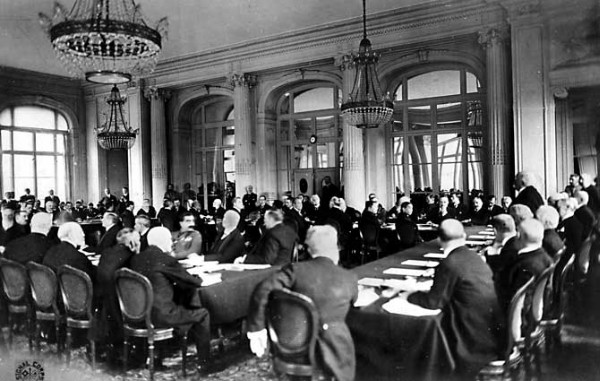
So the interests of the USA in Albania are only consequences of interests in Italy, the Adriatic, and Greece. The position taken by President Wilson against the proposals for the partition of Albania at the Paris Peace Conference in 1919 secured the independent survival of the country. Continuing this already established tradition, the United States did not recognize the annexation of Albania by the Italian Kingdom and consequently its occupation in April 1939, but considered Albania as a victim of the axis of aggression.
During the Second World War, the USA encouraged and supported the local resistance against Nazi and Fascist forces. On December 10, 1942, Secretary of State Hull declared the restoration of an independent Albania according to the principles of the Atlantic Charter. The USA did not recognize Hoxha’s regime. On May 8, 1945, an informal mission went to Albania to observe the conditions and developments for the subsequent recognition of Hoxha’s regime.
Conditions for Enver Hoxha
Although our informal relations with the Albanian authorities worsened after the establishment of relations with the USSR, we continued to seek understanding along our lines of proposal for recognition of the regime. The fulfillment of two conditions for recognition had been set forth; the first, the holding of free elections, and the second, the staying in force of the treaties in force between Albania and the USA since April 1939. The first condition was fulfilled with the holding of elections in December 1945, while the second condition was being dragged out by the authorities, during which time the American mission in Albania was becoming the object of unfriendly, impolite, and suspicious treatment.
Finally, on August 13, 1946, nine months after the American offer for recognition, the Albanian regime signaled acceptance of the treaties and multilateral agreements in which Albania and the USA were parties, but did not accept the bilateral agreements between the two countries. Not receiving these guarantees from the regime, the USA withdrew its mission on November 14, 1946. Another issue arose between Albania and the US government and the communist guerrilla movement in Greece, while the latter was being supported by Albania, Yugoslavia, and Bulgaria.
Albania’s participation in this adventure, as well as Albania’s obstruction of the work of the UN special commission for the Balkans, have been criticized several times by the United States. In 1948, the State Department informed its connections in the Balkans that American objectives regarding the satellite countries of the USSR were the identification of democratic countries that did not ensure human rights for their people and countries that discriminated against the interests of the USA and other friendly states.
The directives stated that although the USA accepted Albania’s participation in general regional and Balkan agreements for the welfare of states, we would oppose its adherence to bilateral federations or broad groupings of states that created ideological unions, since such a development was contrary to the will of the Albanian people.
Conclusions
Soviet obstacles to US access to Albania have not caused significant strategic or military disadvantages. The country’s economic resources have only limited local advantages. Access to the terrain, which is a broad primary coastline in the Balkans, in the event of a major conflict would also be insignificant due to the lack of suitable ports, airfields, and poor communications in the country.
Likewise, Soviet control over Albania gives it only a weak advantage in the event of a major conflict. The country’s economic resources cannot be reached by land, and their development would require large investments in people and machinery, which would be out of proportion to the benefits, and therefore even the USSR cannot carry them out.
Although the use of advanced submarine bases or suitable airfields would have advantages in time of war, the possible sites for them are limited in number and capacity, and would be unusable against a superior air or naval military force. And in fact, Albania’s importance for the Great Powers is mainly negative and consists of the possibilities for use as a guerrilla base for military harassment in major operations.
Soviet control of Albania seems to be complete. It is exercised mainly by Albanian communists and by Soviet personnel there. In the event of internal conflict, the Soviet government, not having direct access to Albania, would think of saving its military personnel, since they could not do more without risking starting a general conflict.
The current sporadic resistance in Albania cannot overthrow the regime without help from outside Albania. There is no other alternative except Hoxha’s regime in Albania, and the only possibility comes from groups outside Albania.
No government or power in Albania can exist without the help of one or several great powers. The current economic and social standards are not favorable for the functioning of a democracy, in the Western sense of the word. A non-communist regime must necessarily follow democratic forms of action and ensure human rights in the country.
Of Albania’s neighbors, Yugoslavia, increasingly in difficulty with the Kremlin and the Cominform, seems to be creating problems for Hoxha’s regime. They come in the form of guerrilla attacks, economic sanctions, and propaganda. As long as there is a regime like Hoxha’s in Albania, Tito’s government cannot attempt to overthrow the regime without risking being struck by the Soviets from the north and east. If the communist regime in Albania falls from other causes, the situation or the time would determine whether the Kremlin would oppose Tito’s attempts to advance there.
Therefore, in the event of anti-Hoxha developments, the circumstances of the relations between Albania, Tito, and the Kremlin, as well as those between Tito and the non-communist world, should be carefully examined. Actions to overthrow Hoxha would have an advantage for us only if the situation is such that Tito cannot enter Albania, or if he can be influenced not to do so out of a desire to consolidate his own regime.
Greece has not advanced with its territorial claims in Albania, nor to neutralize the resistance against claims based in Greece. It would need diplomatic pressure to make Greece not interfere in Albania in the event of any internal crisis.
Italy currently has no claims, while it is Albania that has claims against Italy. Italy has condemned and even supported activities against Hoxha’s regime, especially when encouraged by the USA.
The situation is being prepared for a careful unification of the anti-communist groups of the emigration, under the direction of the United States and the Allies. Some emigrants have created committees for anti-regime activities from outside Albania and in connection with the internal resistance. But they need monetary and material support. They would be hindered if King Zog participated personally, just as it would not work if members of the groups “VATRA” or “Shqipëria e Lirë” participated?
The overthrow of the Hoxha regime by Albanian anti-communists and the establishment of an anti-communist regime in Albania would have a significant psychological effect in raising the morale of resistance groups, as well as in other communist countries under Soviet domination, in the Balkans and in Eastern Europe.
The current policy of the United States toward Albania should be reviewed to benefit from the current situation in Albania and the Balkans.
The instruments at the disposal of the USA for the execution of policy in Albania are insufficient for the implementation of the desired policy. Therefore, full cooperation with the British government, the French government, and their agencies is needed and must be gained. In later stages, cooperation with the Turkish government could also be considered.
June 1948
The Greek guerrilla war
The long-awaited offensive of the Greek army against the center of the communist guerrillas in the Gramoz mountain area, in the first days has been inconclusive. Both the guerrillas and the army know that the future of the rebellion will depend on this operation, so both sides are fighting with caution but with determination. The army forces number about 70,000 people and have superior equipment and armaments, while the guerrillas, about 7,500 in number, have the advantage of the harsh terrain, prepared positions, numerous mined areas, and the maintenance of security on the Albanian side of the border.
There have been reports of cases of withdrawal of surrounded guerrillas into Albania, and their return to attack the army from the flanks or from the rear. The exact time at which the army units were placed in their initial positions shows that the operation is well planned, despite the harsh position they are encountering. But the most difficult test will be whether the army can surround the border part with Albania in order to prevent the withdrawal and regrouping of the guerrillas after the incursion.
Near the southern part of the border with Albania, the army is keeping under control the Janina-Konica road and is penetrating toward the north, parallel to the border. The attacks toward the north aim to prevent the guerrillas from intervening to disrupt the army’s advance. The main objective of the first phase is the creation of the link with the two points of the border attack and consequently the encirclement of the guerrillas to prevent their return to Albania. In almost all sectors, the rear of the army is threatened by other guerrilla forces that may come from outside the operational zone.
March 1951
Reports of executions of citizens of Tirana
One February night in 1951, two hand grenades were thrown into the garden of the Soviet embassy in Tirana. The campaign of reprisal began that same night against this “act of sabotage against the great friend of the Albanian people,” with the arrests of about 400 persons, mainly members of the intellectual class. About three hundred of them are reported to have been executed. The rest are being held in the New Prison and the Old Prison of the Security. In the days that followed, the family members of the arrested wandered from one prison to another trying to find them to give them food.
Among the executed persons were included: Ali Kaceli, about 40 years old, owner of a shop on “Rruga e Barrikadave.” He lived on “Rruga e Pishës” with his wife and four children, who after his death are reported to have been in a serious condition for their daily bread; Niko Lezo, pharmacist, who in 1951 was unemployed. He was married to a French woman and lived with her and two children on “Rruga e Durrësit.” The head of the State Security in Tirana was Xhavit Struga. Of the 100 intellectuals arrested but not killed, six were released in November 1951.
The executions and arrests were ordered by the Ministry of Internal Affairs of Moscow, according to lists drawn up in advance by the Security. Among the arrested persons were former fascists, but also many innocent people who were simply intellectuals or merchants of bourgeois origin. The head of the Security of Tirana, Struga, had sent the lists to the Ministry of Moscow, which had requested the elimination of the persons in question in a suitable manner, such as pretexts for sabotage attacks or crimes against the regime. The grenades at the Soviet embassy were thrown by two agents of the Security, who made sure that they would not cause any damage. / Memorie.al
Continues in the next issue