




By DASHNOR KALOÇI
Part Two
Memorie.al / Even though it was heavily propagandized that “unlike capitalist countries, in Socialist Albania the health service was free for all citizens,” throughout the entire period of the communist regime of Enver Hoxha and his successor, Ramiz Alia, it left much to be desired. In fact, in many aspects, such as the apparatus and equipment of hospitals and other health facilities with medicines and various contemporary medicaments, it was a problem that remained unresolved until the collapse of that regime. But one of the greatest wounds of the healthcare of the pre-1990s, it is said, was that of the high number of deaths of children aged 0 to 1 year, or as it was otherwise known in medical terminology: “infant mortality.”
Among other things, this is also made known by several archival documents of the Ministry of Health of that time, where its correspondence with some of the highest party and state institutions and organs of that time is found, in which it is made known that only during the year 1971, in all the districts of the country, out of 72,771 births, 7,027 deaths were recorded in children aged 0 to 1 year.
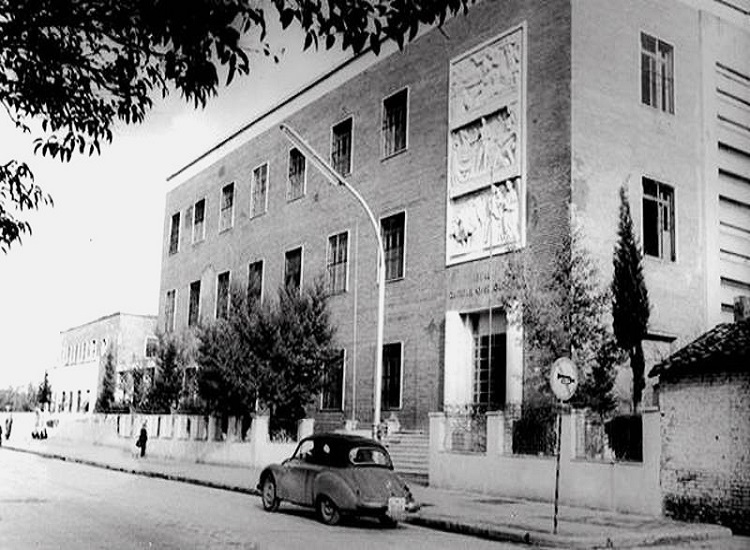
But what shocked Tirana and alarmed the high party and state leadership of that time was the death of 27 infants at the Tirana Maternity Hospital (today the “Nana Mbretëreshë” Maternity Hospital) during just a few days at the end of September and the beginning of October 1972, which forced the relevant organs of that time to completely close the Tirana Maternity Hospital. But why did such a high number of deaths occur in that maternity hospital at that time and what were the reasons that led to the decision to close that Maternity House? What is stated in the report-information of the Minister of Health of that time, Dr. Llambi Ziçishti, sent to the highest instances of the state, and what was the reaction and response of the high leadership of that time, starting from Prime Minister Mehmet Shehu, the Secretary of the Central Committee of the PLA, Hysni Kapo, the First Secretary of the Tirana Party Committee and member of the Political Bureau, Manush Myftiu, etc.?
The following archival documents, published for the first time, bring a detailed overview of the alarming state of infant mortality in Albania in 1971, as well as the efforts of the state apparatus to bring this tragic phenomenon under control. Through the report of the Deputy Minister of Health, Dr. Kleo Miho, as well as official reports signed by Dr. Bukurije Maçi at the Directorate of Mother and Child, the true picture of the medical service in the districts and villages during the communist regime is revealed.
These official documents from the beginning of 1972 bring to light not only the high figures of infant mortality, where respiratory tract diseases such as bronchopneumonia accounted for up to 60% of cases, but also the deep infrastructural backwardness in rural areas. The documents reveal the failure of the plan for the construction of maternity houses and consultories, the lack of maternity leave and medical check-ups for children 0-3 years old, as well as the scandalous conditions of food in village kindergartens, where even the most basic items such as wheat bread and milk were missing. Through an administrative self-criticism, the reports also strike at the bureaucracy of local health sections and the superficial or fictitious-form reflection of demographic data from the districts. Related to this, etc., the documents in question make us acquainted, extracted from the Central State Archive (fund of the former Central Committee of the PLA), which are published for the first time and with the respective facsimiles by Memorie.al
Continues from the previous issue
REPORT-INFORMATION OF THE MINISTER OF HEALTH, DR. LLAMBI ZIÇISHTI, RELATED TO THE SEVERE EVENT OF THE DEATH OF 27 INFANTS AT THE TIRANA MATERNITY HOSPITAL IN OCTOBER 1972
I N F O R M A T I O N
Following our previous information on the infection circulating in the Maternity House in Tirana, the situation has developed in this manner:
Since 17.X.1972, there have been no patients from the contingent of children born in the ward isolated from contacts. This shows that the disease is under control. The number of sick children so far is 50. This includes those who became ill in the city, after having left the hospital well. All these children have been in contact with the disease.
The disease has a severe course. As emerges from world experience, mortality is over 50%. In our maternity hospital, 16 deaths have occurred so far. This includes children born with very low weight, but who had signs of this disease. The fact that with rigorous anti-epidemic measures, in the separate ward, since 17.X.1972 there have been no sick children, and taking into account the anatomopathological data, it can be concluded, but with reservation, that it is not a matter of a virus, which would be more severe regarding spread. In this direction, laboratory investigations continue.
Regarding this disease, all the personnel of the maternity hospital have been placed under special conditions of sterility and prophylaxis. The team of the best pediatricians is regularly at the children’s side. Measures have also been taken to reduce as much as possible the number of women coming from outside the city and who have the possibility to give birth in other institutions. So far there is no reason to close the maternity hospital. The opinion of specialists is that the disease has been dominated from the first measures. The increase in the number of the sick is only from the contingent of contacts. Also, the control and follow-up in the city of all children leaving the maternity hospital has been ensured.
Every day about 20 children leave, but so far no case of disease has been observed even in the city among children born after 17.X.1972.
Tirana, 27.X.1972
M I N I S T E R
Llambi Ziçishti
LETTER OF MITI BOZO TO HYSNI KAPO RELATED TO THE SEVERE EVENT AT THE TIRANA MATERNITY HOSPITAL IN OCTOBER 1972
Comrade Hysni,
I think that this information of the Ministry of Health should also be sent to comrade Manush, because, it seems to me that in this matter there is a spirit of justification. In the maternity hospital we have a party organization that should analyze the situation more deeply.
Miti Bozo
11.XI.1972
LETTER WITH THE RESPONSE OF HYSNI KAPO REGARDING THE SEVERE EVENT AT THE TIRANA MATERNITY HOSPITAL WHERE 27 INFANTS DIED
Manush is aware only of the child and the other services, but also of the responsibility that the cadres of the house have, who have not respected the rules and the discipline required. He has told me that we will make these matters a problem in the Party organization.
Hysni Kapo
13.11.72
REPORT-INFORMATION OF THE MINISTER OF HEALTH DR. LLAMBI ZIÇISHTI, ON THE SEVERE EVENT AT THE TIRANA MATERNITY HOSPITAL AND THE MEASURES TAKEN TO STABILIZE THE SITUATION
I N F O R M A T I O N
ON THE SPREAD OF AN INFECTION IN THE NEWBORN WARD AT THE TIRANA MATERNITY HOSPITAL
As has been related also in previous informations, starting from 3.X.1972, in the newborn ward at the Tirana Maternity Hospital a rapid spread of a severe infection was noticed, which presented with immediate worsening of the general condition, with rise in temperature, with weight loss, and with gastro-intestinal disorders. From the above date until 6.XI.1972, out of 411 born, this infection affected 67 of them and caused 27 deaths (= 40%).
In the figure of the sick, 17 children are included, who presented the signs of the disease after leaving the maternity house. Of these, 4 resulted in death at the Children’s Clinical Hospital. The Ministry of Health was notified of the created situation on 9.X.1972 and immediately a broad commission was convened with various specialists, who on this occasion proposed a series of measures to make possible the stopping of the spread of the infection.
These measures had a general hygienic, prophylactic, and organizational character and were accompanied by anatomopathological investigations and extensive microbiological analyses. These examinations pointed out on 16.XI.1972, the presence of the microbe ‘Coli pathogen O111’ in the sick children, in some containers for feeding children, and in some premises of the maternity hospital. It is supposed that the primary source of the microbe is a healthy and temporary carrier (perhaps a mother).
The discovery of the causative microbe made it possible to put into practice a series of more concrete and more specific measures, since the ways through which the infection spreads in newborn children are well known. Infections caused by pathogenic coli are known and described in all countries and from time to time this microbe takes on great aggressive characteristics against newborn children and small children. These aggressive characteristics become pronounced in institutions with a gathering of children as a result of the multiplication and rapid passage of the microbe from one child to another, causing a high mortality that reaches about 50%.
The main measures that were put into practice at this time consisted in the repeated disinfection of floors, beds, premises, hands, and in the replacement and multiplication of many devices in order to eliminate the possibility of the passage and spread of the microbe. Other important measures consisted in the creation of special and isolated premises for the sick children, for whom a more complete and intensive treatment was put into practice, being helped by pediatricians of the children’s hospital and by specialist doctors who carefully and regularly followed all the work processes in the maternity house.
The children who had been in contact with the sick were kept isolated in separate wards. New uninfected wards were created for the other newborns. Special personnel were assigned for each ward, creating the possibility of eliminating the spread of infection by the personnel themselves.
With the doctors of the maternity house, a great work was done by the comrades of the commission regarding the fundamental problems of the keeping and protection of the newborn child, on its proper feeding, on the appropriate treatment, etc.
The measures taken made possible a visible change of the situation and the microbiological investigations resulted very limited or entirely negative. This change was noticed also from the fact that from 17.X.1972 until 30.X.1972 there was no sick child from those born during this period and kept isolated from the sick children or from contacts. These children were followed also at home after leaving the maternity hospital and continue to be healthy.
At this time a broad work was done to fully utilize the capacity of the Yzberish (Kombinat) maternity house as well as those of the villages and to limit unnecessary arrivals from other districts.
The children who left the Tirana Maternity House were followed with great care by the personnel of the children’s consultories and by the doctors and personnel of the polyclinics, with whom explanatory work was also done. The measures and the situation created during the last two weeks allowed the belief that the situation could remain fully under control, provided that the rules were maintained by the personnel themselves, which is the main factor of direct and indirect spread of the infection.
The closure of the obstetric sector of the Maternity House was not considered necessary during the first phase of the epidemic, because there was no accurate data on the causative microbe and on the manner of spread of the infection. In this phase it was thought, among other things, that it might be a matter of a viral, aerogenic infection that has no connection with environmental conditions. After the determination of the microbe and the measures taken, the closure of the obstetric sector was not seen as necessary due to the maintenance of the situation under control and the non-appearance of any new case for a two-week period.
During this phase, the repeated examinations pointed out the curbing of the situation also from the microbiological side. The possibility of the spread of the infection as long as it had to do with the cleanliness and sterility of the personnel could be the same even in the premises where the obstetrics sector might eventually move. But despite the organized controls, two severe violations of epidemiological rules were noticed by the personnel, which allowed four new cases of disease to appear on 30.X.1972, followed by six other cases until 3.XI.1972.
Once again it was proven that the infection could spread only through the known epidemiological routes. Since 3.XI.1972 there has been no new case. On 5.XI.1972 a broad consultation was held, following which it was decided to immediately close the obstetric sector of the Tirana Maternity House and to utilize with expanded capacity the maternity hospital of the Kombinat.
Such a measure appeared possible at a time when the number of children in the maternity hospital had dropped to 18 and entered into force on 7.XI.1972 at 6 o’clock, with personnel from other maternity houses. During a period of several days, the disinfection of the Tirana Maternity Hospital will be carried out once again, but as was pointed out in the consultation even after the temporary closure of the obstetric corps, the return to this ward creates guarantees only in case the rules of hygiene and asepsis are applied meticulously.
Therefore it becomes necessary to do an educational work with the personnel and to carry through to the end a series of structural measures to prevent or to more easily face eventual intra-hospital infections. From this situation conclusions will be drawn both for the maternity hospital itself and for other curative institutions. Of the sick children, currently all are in improvement. The development of the situation is being followed systematically by the staff created especially for this purpose. / Memorie.al
Tirana, 8.XI.1972
M I N I S T E R
Llambi Ziçishti
Continues in the next issue