By ZIJA ÇELA
Part One
(And events that intertwine)
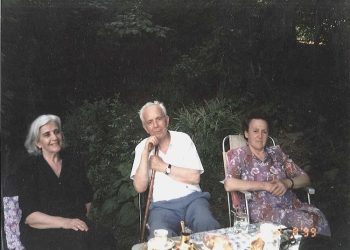
Memorie.al / One afternoon, I was walking along the edge of “Shallvareve” [the pines] with my wife and the writer Luljeta Dano, when I see Mr. Xhelil Gjoni in front of me. It was as if I sensed that, after many, many years, he had something to tell me, and the two of us talked on foot. I remember he mentioned an interview that was to be published the next day. And he informed me of a detail; he said he had stated that; “a friend of mine asked for my resignation.” The next day I don’t know how it slipped my mind and I didn’t get the newspaper or magazine. However, the formulation that a friend had asked for his resignation, I did not forget. Xhelil Gjoni had been one of the high-ranking party officials during the communist regime, but he had made a career in just a few years also in pluralism, being elected a deputy of the Socialist Party.
In the position of a neutral reader, several questions arose. Who was the man who asked for his resignation? Since he was described as a friend, what was the circle of friends of Mr. Gjoni? Was it more likely that the one asking was a colleague of his, a high-ranking party functionary or a high-ranking state functionary? For what reason was he not mentioned by name?
By leaving him anonymous, was the protagonist doing honor to himself, to the other, or was it simply a memorialistic void? If it was such, willingly or unwillingly, did it not stir up more mystery for the reader, since anonymity surpasses the named in enigma? And yet, to which period did the request for resignation belong, that of monism or of pluralism?
I knew all the answers to these questions; life had brought it to me to know them. The author of the interview himself was convinced of this, therefore during the meeting he did not draw it out with details, and he only communicated to me the statement: a friend of mine asked for my resignation. But since Mr. Gjoni had not hesitated to make the “quotation” public, why had the photo itself been retouched?
Were the unknown facts and the nuances of the event not worth it for the reader? From its dryness, a passing statement remains insufficient, while the narrative recreates and proves the picture. Thus, it seemed to me that circumstances had placed me by themselves before the obligation to narrate.
I had heard the name of Xhelil Gjoni ever since I worked in Kukës. The fact that he was editor-in-chief of “Zëri i Popullit” gave him weight and personality. A friend of mine from the village of Buzëmadhe, who was a volunteer correspondent of the press, whenever Xhelil’s name was mentioned, for some reason would shake his arms up to his armpits and, rubbing his palms as if to remove some goosebumps from his body, would say: “He is a capable man, by the eyes of my forehead, Xhelil Gjoni is a whirlwind, he’ll uproot you!”
After I had been transferred to Tirana (I had been appointed in Kukës in September 1968 and had stayed until January 1977), although I had never met him directly, his authority was felt in the League of Writers as a presence in absence.
As it was felt even more widely, in the intellectual circles of the capital. I remember that the boast of some was expressed with the words: “Yesterday I met comrade Xhelil!” Let alone the elation: “Yesterday I drank coffee with comrade Xhelil!” According to them, for the rest of us this implied: A flea in the ear, babelok, my shoulders are warm!
And indeed, to have Xhelil Gjoni as a friend, the potent member of the Central Committee, who had now also become secretary of the party committee for Tirana, you were certainly more protected; therefore this approach was widely coveted. Mr. Gjoni himself has demonstrated his relations with some writers and artists in a book of his after the change of system. But the picture would be complete if we also had the opposite: the viewpoints of these relations from writers and artists.
Unfortunately, perhaps at that time I had still remained a “half provincial,” in the sense that not only did I have a closed circle of friends (all of them my own age), but I also led a closed life, work – home, home – work and, of course, in cases where we drank strong drinks. We drank a lot in that time, we drank and “chatted.” (Meanwhile, from prose editor at the magazine “Nëntori,” where I had replaced the unforgettable Faik Ballanca, they had sent me to “Drita,” and for some time they weren’t even bringing us a new editor-in-chief.)
Even then, but especially later, I have thought about which was the “key” that I lacked the most, so much so that sometimes I came out exposed and made “gaffes.” This was information. That special kind of information that is not spread officially, but circulates in circles that have connections with the high ranks.
In the League and outside it there were those who had these possibilities either through family bridges, or marriages, or clans and cliques that, as in every society, were consolidated. I lacked these. So that, when something reached my ear, all of Tirana had already learned it. But perhaps it was also related to the type of person.
In those early times, after I had “descended” from the mountains of Kukës to the capital, as we were talking one day in the premises of the first floor and a question was put to me, to which I gave an immediate and quite open answer, my editor-in-chief of the magazine, Professor Dalan Shapllo, turned to me with a kind of pity and warning regret: “Ah, Zija, you are a Lucien!” (The question: Who is today, in your opinion, our most talented writer? The answer: Ismail Kadare.)
Then Professor Dalan smiled, explaining that he was referring to Balzac’s Lucien when, full of illusions, he has just descended to metropolitan Paris. I remember that those present were Hasan Petrela, Ndue Zef Toma and another, probably Llambro Ruci. Years later, in 1982, together with two editors of the newspaper “Drita,” I made a work trip to Fier, Vlorë, Sarandë.
When we returned, I was notified that comrade Xhelil Gjoni had asked for me and that I would be notified again to appear in his office. This call fell upon me suddenly and there is a chance that from some superstition I may have crossed myself, for good luck, as they say in my hometown, in Shkodër. It did not take long and that same week, it was a Friday, I was notified again.
But one can imagine, it did not turn out for good luck.
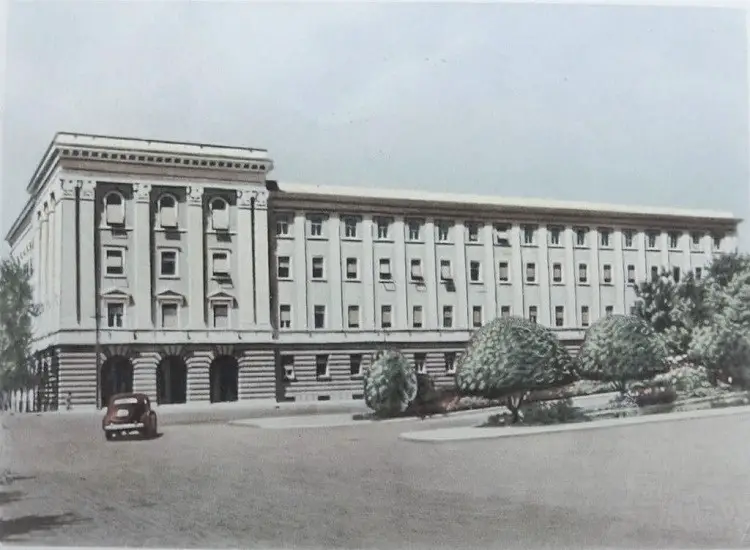
From the League of Writers to the party committee (it was located exactly where the central headquarters of the PS is today), the road took no more than three minutes. But someone who was calling me prolonged it: “Teacher, oh teacher!” It was an acquaintance from Helshani, a village between Kukës and Tropoja, where I had been appointed together with my wife, having finished higher studies. We shook hands and talked for a bit, but it remained a regret that that man, who used to give me invitations in the village, because of the haste I could not invite for coffee.
Although it was the first meeting, surprisingly, in comrade Xhelil’s office I did not experience inhibiting emotions, of those that seem to close your mouth. Perhaps the manner of reception with the standard but liberating questions helped, how are you, how’s it going, etc. And I recall that I answered: “I am well. But I just met a peasant from Helshani of Kukës and the poor man cried his troubles to me. Because of the Fierzë lake, the road that connected Helshani with Shëmrina, and thus also with Kukës, has been flooded.
The village has remained isolated and in the cooperative they had to take twenty lekë for a day of work, only twenty lekë, comrade Xhelil.” He lowered his head, coughed lightly as if to scratch his throat and murmured something. What he murmured I don’t know, but he would also have been right to say to him: “Look how this yokel comes to you, comes like a goat to the butcher!” Then he addressed me: “I have called you…” And again a cough before he began.
He had called me to communicate to me that, from the organs of the Ministry of Internal Affairs, the file and the signed order for my arrest had arrived on his table. Who had signed it, I would learn later. But if it was also approved in the party instance, then…! It is likely that, at that moment, I raised my head up to see if the ceiling was falling.
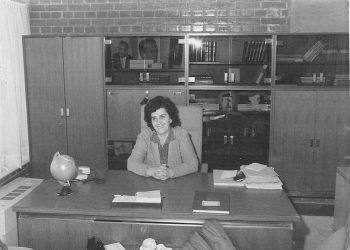
Xhelili was seated at the head table, I near the other table that was long and created the classic T shape. Now, as he spoke, he had begun to leaf through the file page by page, which seemed to all be stitched and embroidered. Since he was not stopping individually at each one, I understood that he did not intend to empty the “pandora’s box” with all that the papers contained.
After he drew my attention that from time to time I had spoken jokingly (Ah, those clubs and “bad company”!), that even my refusal to move from the magazine to the newspaper had been an unweighed blunder, he stopped especially at a manuscript that, just as he was describing its history through the file, surprisingly turned out to be entirely true. He said: When you first wrote this novella, you were in Kukës, it bore the title “People Who Live with the Dead” and it was shorter.
Then you used it in the novel “Men Do Not Come out of War,” a novel with pronounced ideological errors, which the Publishing House “Naim Frashëri” returned to you as unpublishable and unreworkable. Here (in the file) there are written analyses by specialists who know well the method of socialist realism, the teachings of the Party and of comrade Enver. He was silent for a moment. Then: Now also something else, those close ties with…!
As soon as I stopped to think about one argument, the other half slipped away without me hearing it well. Besides that novel, two other things my mind told me I could not escape. One was the close tie with Visar Zhiti, whom they had arrested in Kukës and in the interrogation, as he would later assert in his book “The Roads of Hell,” they had asked him insistently about me. (Also in the newspaper MAPO: “The Arrest, the Accusations and the Questions in the Interrogation about Zija Çela.”)
As if to further weigh down the suspicions and the inclination of the scales, a short time after his arrest, my novel “A Summer without Goodbye” came out of the press. In Kukës they staged a kind of “readers’ trial” for me, with the protest that why I had named the main character precisely Visar, why I had presented the Hasjans as poor and ignorant, as some militants shouted in the hall, and why…?! The journalist of Radio-Kukës, the very one who had replaced me, formulated the accusations in the most dangerous manner: Extraction of reality, de-heroism, lack of proletarian partisanship. But after ’90, Skënder Vaqari’s service as a Sigurimi informant would be published and he would admit it publicly in the newspaper “Koha jonë.”
Now I know that my file, the one that Xhelil Gjoni would later have on the table, had been opened back in Kukës, being filled in then page after page. Not for nothing had the chief prosecutor Avdi Gashi, with whom I had argued outside the hall, red in the face, as if he would burst from spite, threatened me severely: “We’ll throw the irons on the spot, the irons we’ll throw!” But he did not manage to throw them at me either then or later. The other weak point was the biography of my wife.
The Himariot father-in-law had been arrested for attempted escape in a group and, regardless of the penal policies, had served seven years in prison. This had been the reason why my wife, the fellow student with whom I was crowned in the fourth year of studies, and I had been appointed so far away, in a village without electricity. But Xhelili had the kindness not to touch bluntly the “stain,” which I had supposedly placed on myself early on.
And so I had time to fill with breath. At a moment, when I did not expect it in those circumstances, he asked me: “Are you well?” Who knows what he had caught in my countenance, or had reasoned in general about the effects of these situations? I returned to him, yes, I am well. In fact, with that much smoke in my head, I was in the clouds.
It has been a Friday, I repeat, because the day has remained a fixed nail for me. On Fridays the eight inner pages of the newspaper “Drita” were printed in the polygraphic (a newspaper where before me others too had “eaten” it) and, although I went late in the afternoon, wanting to avoid the house, I set off for there right at that lunch hour. After I had come out of that office, for one thing I was sure:
I would no longer be that horse of free runs, of natural inclinations for freedom, of the whims that my soul could not hold. There in Kukës, on one occasion I had struck with my fist the table of comrade Sinan Demhasa, the secretary of the party committee for ideology, naively defending the right of Agim Spahiu – according to my reasoning a constitutional right! – To publish.
(With a letter sent to the directorate of “Naim Frashëri,” a firman bearing the official seal and the signature of the secretary, the poet had been forbidden the publication of his first book for biography tricks.) Now they had put the hobble of the tether on me and it seemed to me as if my knees were bloodied from the sudden fall. If I had not been arrested with that file, as I would learn later, this was because for public people, the arrest order was executed after the approval of the party, the party – state, in that case Xhelil Gjoni. And I, as I was told, “was entering among the known and talented writers.” / Memorie.al
Continues in the next issue