By Prof. Bardhosh Gaçe
– Aristidh Kola and the World of the Arvanites of Greece –
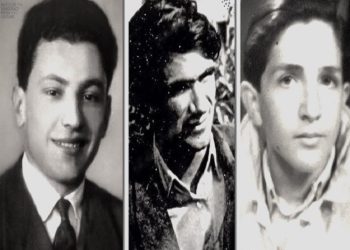
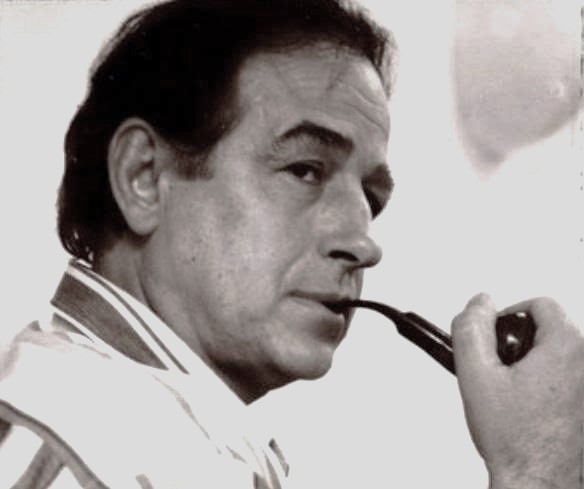
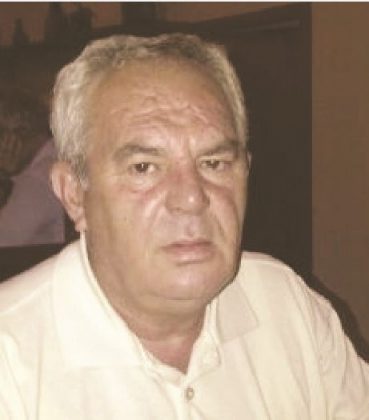
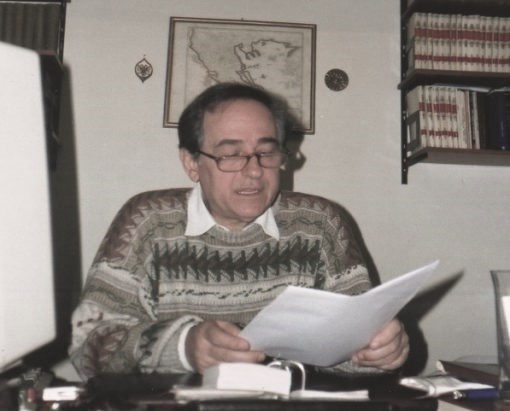
Memorie.al / In the contribution to bringing to today’s attention of studies and the truth about the Arvanites, the effort and research, study, debut, and scientific work of Aristidh Kolias stands out, for dealing comprehensively with the Arvanite issue, from their first movements in Italy and Greece, then with identity testimonies, their contribution, and their historical evidence in the history of Greece. Aristidh Kola was born in Kaskaveli of Thiva, in Central Greece, known for its early Arvanite settlements. Nourished by the traditions and history of his ancestors, Aristidh Kola was educated with a love for his forebears.
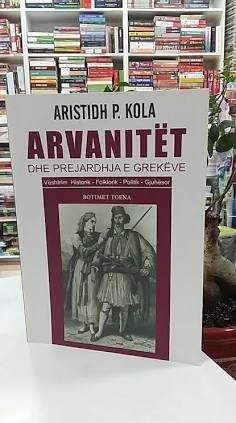
He studied law in Athens, while devoting himself to the history and traditions of the Arvanites, which constitute one of his most important works, such as “The Arvanites and the Origin of the Greeks.” His studies and published works are an important continuation of the historical and ethno-cultural traditions of the Arbëreshë of Greece by Arvanite scholars such as: A. Kullurioti, T. Evangjelidhis, P. Kupitori, and up to the more recent ones, Georhio K. Mihas, Gjona M. Paidous, G. K. Kollias, J. P. Gjika, Helena Gjika, Antonio Belushi, Petro Furriq, and others.
His studies and works deal with the important issues of the Arvanite phenomenon in Greece, attempting in his time to create a reliable history of the Arvanites, a necessity for the scientific studies of his time, without overlooking the Albanian phenomenon in the Balkans. His work is extensive and multi-disciplinary. Tracing early studies, particularly the chronicle of the Byzantine emperor John Kantakouzenos, Kolia believes that the first wave of Arbërs in the lands of Greece (Thessaly) occurred around the year 1259, becoming more massive around the year 1315, after the invasion of Arbëria by the Serbian king Stefan Dušan, who established his military siege.
The testimonies, debate, data, facts, history, and specifics from many fields by Aristidh Kola come from his written contribution, regarding him as one of the people with an important profile for Arvanite and Albanian culture, whose contributions encompass knowledge, data, testimonies, studies, research, that of knowledge and science, history and law, Çam and Albanian culture and folklore, who became involved in numerous and ongoing polemics with certain Greek national-chauvinist circles.
Aristidh Kola was a historian, jurist, culturologist, linguist, and an important activist who also led the “League of the Arvanites,” an important organization that created special relations and connections for Albanians in the difficult conditions of state opposition from the Greek state, which is well-known in Greece. His written work is mainly based on the cultural, folkloric, linguistic heritage, traditions and customs, folklore, and other ethnological and anthropological knowledge of the Arvanites, considering this wealth an important source for Albanian studies.
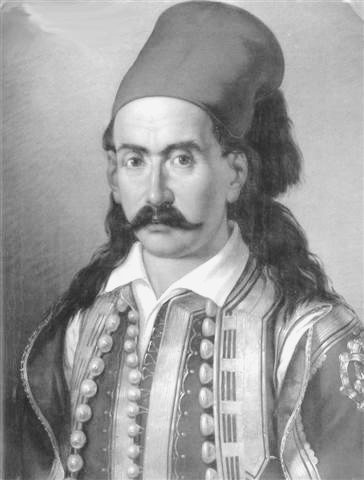
In 1983, he published the work “The Arvanites and the Origin of the Greeks,” a foundational work for the cause of his studies, permeated by a deep scientific and argumentative precision, which is followed by other books written and published by him such as: “The Language of the Gods” (1989), “Declaration of the Arvanite Union,” “Corrective Dictionary of Arvanite Words,” “Comparative Dictionary of the Albanian Language,” “Greece in the Trap of Milošević’s Serbs,” “The Song of the Mercenaries, the Origin of the Greeks,” “Myth and Truth,” “The Third Burial of Marko Boçari,” which shows how extensive he is, just from the title information of his works, ranging from history, to language, lexicology, but also anthropology and historical testimonies, where his contemporaneity and scientific polemic stand out.
Through his book “The Arvanites and the Origin of the Greeks,” he makes a historical, folkloric, political, linguistic overview, penetrating the depths of the times when the Arvanites had their connections with the Hellenes, as it is said, that the Arvanites are the creators of Modern Greece, opposing the false writing of history, that “Many people have doubted our direct connection and closeness with this ancient Hellenic people.” In support of his thesis, he reveals facts preserved in the Arvanite and Greek substratum, unexplored. Throughout history, many Arvanites have emerged on the scene during the most difficult historical moments, which have preserved Greece from destruction or deformation of its ancient and well-known classical identity and in post-Homeric times.
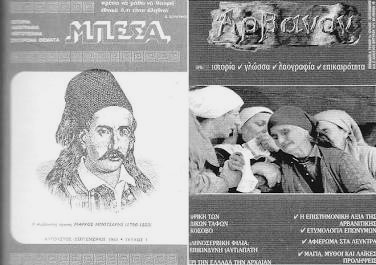
In Kola’s work and his fields of research and studies, his contributions to research and ethno-cultural activity stand out, in the realm of history, material and spiritual heritage, toponomastics, demographics, that of Arvanite settlements in Greece since the 14th century and other hearths such as: Morea, Thessaly, Boeotia, Attica, Euboea, and other fields. A good part of his debate and opinion he brought through the magazines of the time, such as “Besa” and “Arvanika,” which stands out for highlighting the historical testimonies of the Arvanites.
Arvanite customs constitute an important argument with which Kola has testified and debated on their early truth in continuation of coexistence with the Greeks. Through these two well-known magazines, which include writings, documents, relics, testimonies on the doctrines and customs of the Arvanites and their contribution to Greek history and culture, the deep roots of Arvanite culture are illuminated. There is even a proper re-attention to a Homeric poem written by an Arvanite, Haxhi Sherreti, titled “Alipashiada” with over 10,000 verses, which provides an epic testimony on the resistance of the Arvanites against the Ottomans, a work that weaves culture and history within the Arvanite population in Greece. Of this nature is also the figure of Kolokotronis and the Kolokotronis family, about whom Aristidh Kola speaks.
In Arvanite history, Kolokotronis is an important figure in the memory and history of Greece, a well-known warrior who also had his own fighters, like “Kolokotronis’ fighters,” Arvanites around the years 1500-1800, Arvanite fighters regardless of whether they were Christian or Muslim. In the chronicles of the time, they appear with Ndretë of Morea during the revolution of 1821, later in the liberation of Morea (with 3000 Arvanite fighters from Thesprotia), but also in the Ionian events as “sea pirates” in the Greco-Kic legions, whose authentic descriptions are brought by the French colonel Voutier, who described them with “their heads shaved in front and the Albanian long ponytail.” About Kolokotronis, Aristidh Kola says, “that he knew little writing, while he spoke Greek brokenly.” He says that Kolokotronis “read the book on the History of Skanderbeg, …I read about the life of Skanderbeg. His work made me think…” proving that Skanderbeg is honoured as their hero.
Aristidh Kola exposed himself to scientific knowledge and scholarly works related to the Arvanites, having an excellent profile as an albanologist and a detailed researcher of the migration of the Arbërs from Greece to Italy (Cosenza, Sicily, and Venice), on which occasion, through the study of the well-known song “O e bukura More” (O Beautiful Morea), or “Oj More, ajo Arbëri” (Oh Morea, that Arbëria), he reveals the difficulties, drama, and tragedy of a terrible migration of the Arbërs fleeing the Ottoman terror of Sultan Mehmet from their settlements in Greece.
In the Arvanite resistance are also the testimonies collected and placed in the historical context and the martial character of the Arvanites about the Arvanite leader Korkodil Kladha (1463) and the well-known fighters Petro Rali and Petro Bua, as well as their cooperation with Skanderbeg’s son, Gjon, for organizing the Albanian uprising against the Turks. In 1984, Kola debated in the well-known magazine “Besa,” where through his work “The Albanians Who Made Greece,” he seeks to penetrate the ancient Albanian-Greek truths, using linguistic arguments (interpretation of the surnames of the Kolokotronis lineage), which he considers an important knot through which light is shed to know the Arvanites and Çams.
Precisely in an interview for the newspaper “Iliria” of New York in 1966, Kola thinks that the majority of the Greek population has its origin from present-day Epirus and Albania, and this is testified since the ancient authors, Homer and later, but the problem is that Greek history does not consider the Pelasgian thesis of origin.
His study-scientific work extends widely in time and in important and difficult thematic studies, such as: In his research-study archive, Aristidh Kola had an extensive compilation of songs, legends, and various chronicles collected in Korona, Mystras, Nauplio, Corinth, Arkandi, Hydra, Poros, or some other place, as testimonies of the Arvanite wars against the Ottomans; -He has traced Arvanite folk songs of their migration from Greece to Southern Italy, where numerous testimonies are given on the wars and battles of the Celts and armators in Morea, Corinth, Peloponnese, Souli, etc., as well as their relations and resistance against Ali Pasha Tepelena;
In many of Kola’s studies there is a major contribution of scientific studies on linguistics, ethnology, ethnography, doctrines, customs, folklore, and other knowledge of folk culture. Thus: -Through the history of the Arbër migrations, Kola brings for the Albanian language and toponymy many place-names that still live on in various places such as Thessaly, Malea, Psanë, Samos, in the Aegean islands, etc., in village names, personal names and surnames, which are still present in today’s Albania and people of our days;
In his work “The Language of the Gods,” Kola conveys interesting hypotheses of a philological character, from the explanation of the name Athens to the Acropolis, etc.; The archive and findings he has discovered in folk culture and ancient Arvanite tradition have enabled him to make mythological interpretations for many mythological figures such as: zanat (fairies), orët (fates), ‘The Good Ones’ and the prophecies of Dodona, the saints of Mount Tomor near Ioannina, beliefs in sacred trees and forests: The anthropology of the Arvanites (body, appearance, clothing, hair-cutting, character, life profession, customs, etc.) are present as identity testimonies of the Arvanites in Kola’s research;
- Kola did not forget to interpret from his knowledge and the remaining testimonies among the Arvanites the issues of family organization, friendship, and the matters of vllamia(blood-brotherhood) (how it is created, how it is preserved, how it functions, and why it is done), as an early source of the Albanians, from the early canons of the North and South; – The woman in the Arvanite heritage has her own place in the family and society; an Arvanite calls his wife “My Lady!” and she is strongly protected by the customary code of Arvanite tradition.
An important examination in the scientific work of Aristidh Kola includes other issues such as studies on Arvanite clothing, where the fustanella stands out, about which he has referred to Byron, who called the fustanella “the most magnificent in the world,” and describes this clothing complex in detail, where the symbolism, art, colours, and its early identity culture stand out; likewise, the study and ancient heritage that comes through the “Christmas carols,” Dionysian festivals, etc.
The Çam dance remains one of the most beautiful scenic interpretations, where the weaving of epicism, dramaticity, power, the earth-heaven relationship, spirit-power, the “Çamiko” dance is a dance that connects times, people, ritual, and human actuality, as well as his thoughts on the well-known ballads “The Bridge of Arta” and “The Dead Brother,” which are widely interpreted in Albanian folkloric studies. Kola was coherent and a scholar of the updating of Albanological studies. He maintained continuous contacts with Albanian albanologists in Tirana, Greece, Italy, and wherever they were, being a collaborator and interested in everything related to the tradition, identity, and issues of historical and contemporary Albanian culture. / Memorie.al