
The third part
Memorie.al – Albania was sunk in debt, and the “clearing” method used at the time among socialist countries was not enough to pull a country out of crisis. Albania produced nothing to exchange. It would be Enver Hoxha himself who, in defiance of every socialist slogan, had signed a dubious contract with a Jewish merchant, which consisted of opening a corridor for cigarette smuggling. All the behind-the-scenes of this agreement – how it was created, how “Albtrans,” the trading enterprise under the Ministry of Internal Affairs, operated – are revealed to us by its former director in the 1980s, Lorenc Nenshati, in the book “Albtrans, Top Secret.”
Continued from the previous issue
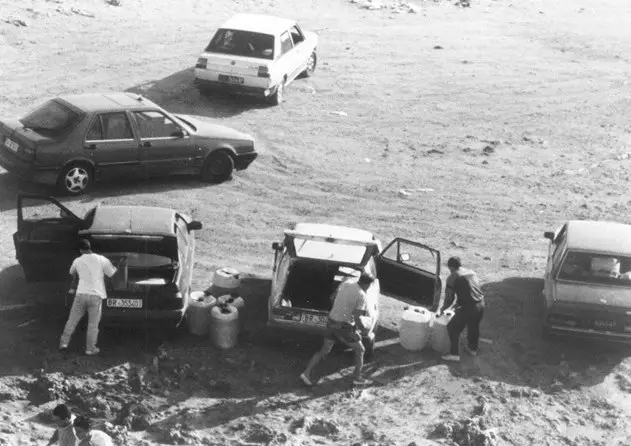
The barges with contraband cigarettes began to pass through Albania. The latter began to earn several tens of thousands of dollars, which were poured into the State Bank, but what happened to them further on was unknown. Albtrans, the trading enterprise under the Ministry of Internal Affairs, had turned into a state secret, by order of Enver Hoxha himself, who signed its authorization. *”Albtrans, Top Secret”* is the title of the book published by “Botart” publishing house, authored by one of the former directors of Albtrans.
Through this book, Lorenc Nenshati reveals the secret agreement to turn Albania into a transit country for American cigarette smuggling. How Albtrans’s activity was kept secret, how its employees were selected, the clashes with the Ministry of Foreign Affairs, and the attempt to export Albanian cigarettes, which the Italians threw into the sea.
Lorenc Nenshati’s book
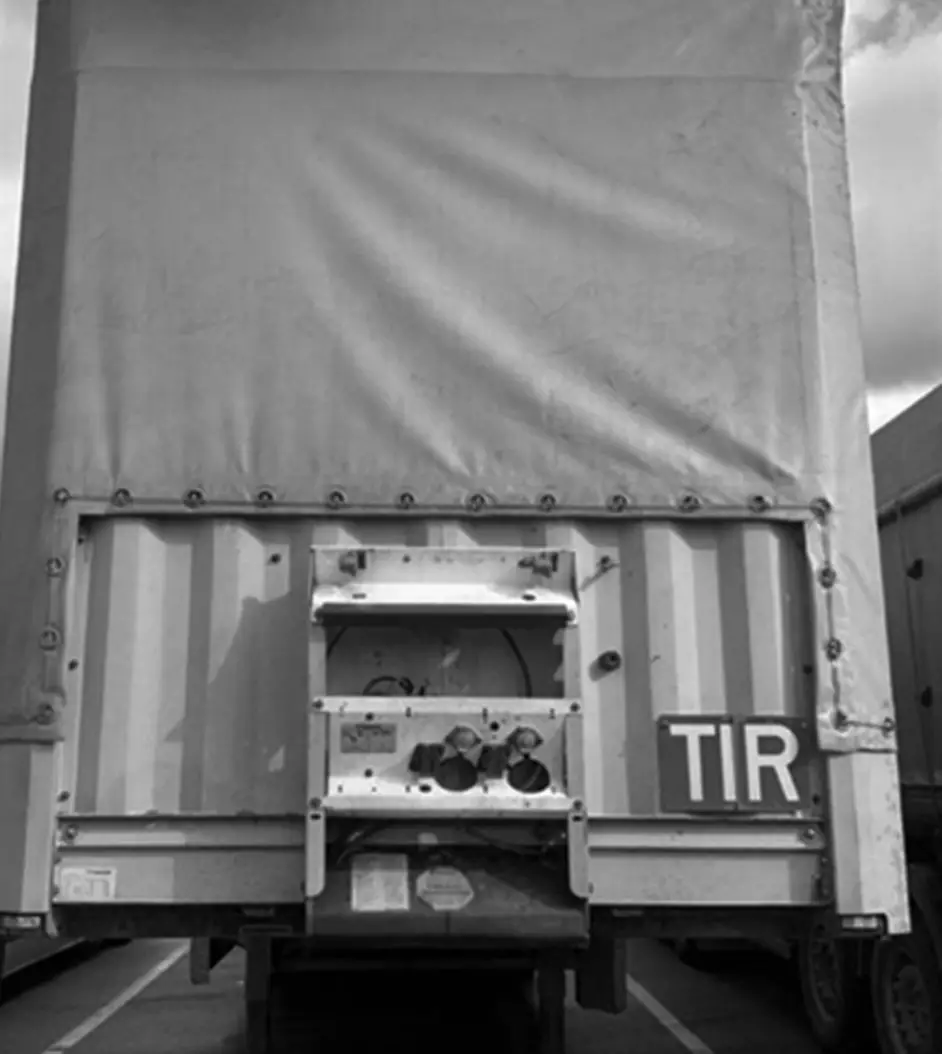
To the simple, indoctrinated people, it seemed that the cigarette industry in Albania was among the rarest in the world. In a way, they quenched their curiosity by imagining and overcomplicating things differently from what they really were. They said that Albtrans sends “Made in Albania” cigarettes as contraband to Italy. Well, in the meantime, two or three TIR trucks carrying cigarettes like a caravan traveled along European highways and then the national road from Han i Hotit–Shkodër–Lezhë–Vorë–Rrushbull almost every day.
However, this anecdote might have had a real basis, but not enough to last long. At the time when Albtrans was under the jurisdiction of Agro-Eksport, there was someone who found it believable that Agro-Eksport had tobacco specialists and so Albania could also produce “American cigarettes.” Therefore, it was thought to mix in a few crates of “Made in Albania” cigarettes, which would be produced by the Durrës factory “Telat Noga,” within the shipments.
Work was done on this for a long time, utilizing all the technology and knowledge of Albania, and finally, a type of cigarette was produced that was not liked within Albtrans’s circles. It was the same variant of the cigarettes on sale, with bitter oriental tobacco, but bearing a different name (some crates still remained, as a memento of the past, in a corner of one of the warehouses). It happened that, for the first and last time, a small quantity was loaded, which they confronted with the Italian market, and there were negative reactions.
On its return, the ship threw the test crates into the sea, paid the money to the Albanian side, along with the profit it had foreseen, and said: “We cannot ruin our market with your unsellable cigarette in Italy! Your tobacco is a kind of bastard oriental product, which is not used here.”
Even Albtrans’s personnel had to be secret. We were all state employees, like everyone else. We had not chosen this job ourselves, but had been transferred there by the state. We too were civil servants in transit, who, like everyone else, were included in the rotation of cadres at any time. The choice of our workplace was made for each of us by the state, for state interests.
The movement of cadres internally had a political and ideological purpose, with open and secret criteria, so you couldn’t tell where the harm might come from. The provincial proportional criterion was legalized, although, like everything back then, even this principle could not be executed perfectly.
There were many provinces that had greater precedence, especially the South and Southeast of Albania. Within the provincial proportional criterion, the religious criterion could also be included, which operated in silence. Very few Catholic believers held responsible positions in Tirana; indeed, this was noticed and whispered about even in Shkodër.
Perhaps, if I were not from Shkodër and did not have the name Lorenc, I would not have had this choice in life… (!) So, to maintain the secrecy of the Albtrans enterprise, all employees had to have an alibi in mind as to where they worked. The two employees with dual duties had it simpler.
They did not find it difficult to identify themselves without problems as to where they worked. According to the interlocutor, they used the cover: “I work at the Ministry of Foreign Affairs (MFA), at the Ministry of Internal Affairs (MIA), or at the Third Directorate.” This way, they were justified before anyone, because indeed those who ran Albtrans and did double work had their professional origins in those three environments.
One good side that covered the staff in these small matters was that they were not very scattered in society—a limitation due to their workplace and the little free time they had. They were often busy at all hours with Albtrans and had no time for a wider social circle.
Some liked to make others think that they had secrets in their hands. People back then generally pretended to deal with or know secrets. The offices were locked with keys, some even with red wax, which was sealed with a personal signet. Safes and red wax identified the importance of the official, which is why safes and red wax were introduced everywhere, even where it was not at all necessary. But Albtrans’s staff did not suffer from these complexes.
They were selected and organized to accept even sacrifices of hardship at work. One could say that, as far as Enver Hoxha was capable of running the party and the state, the work seemed and was simple. No one dared to question the secret of Albtrans. Not even the Foreign Minister was able to raise his voice and go on about the obstacles that Albtrans brought to “the policy of good neighborliness with Italy.”
Perhaps he too, under his breath, spoke with a powerful friend up there, the number three or four leader, but he was clever and did not pronounce himself; he pretended not to know that any such enterprise existed. The only secret of Albtrans, even for us its directors, was the money that was earned and deposited in the Albanian State Bank.
Our duty went only that far. After that, we did not know their fate: how they were distributed or for what they were used. One thing we understood clearly in this matter was that the Economic Directorate of the Ministry of Internal Affairs was also involved in administering that money.
The Foreign Minister was said to be the number one enemy of Albtrans. He made a big political problem out of cases when the Italian Ministry of Foreign Affairs reminded him, by note or verbally, that “… they knew that Albania had a duty-free point that was aiding the black market for cigarettes in Italy.”
Until the end of the 1970s, the Foreign Minister raised his voice in half tones, saying that Albtrans was becoming an obstacle to relations with Italy, while the “Commander” (Enver Hoxha) did not want to turn this enterprise, which touched upon principles he himself had promoted with “Our own forces,” into a matter of broad public opinion. From time to time, Italy called on Albania to cooperate, with the aim that cigarette smuggling in the Adriatic Sea should not be supported, but rather, hindered.
Later, after 1984, when our staff came to lead Albtrans and it became an accomplished fact that this enterprise was indispensable for the Albanian economy, the MFA began to fight it from below. In short, with its possibilities, the expression “It couldn’t do anything to the donkey, so it beat the saddle!” suited it. The MFA had plenty of duties and concrete opportunities to help the country’s economy while exercising its functions. It had daily relations with abroad, with the Diplomatic Corps, and with Albania’s friends on four continents.
In fact, those instructions passed hand to hand, from top to bottom, and no one was able to interpret them. On one hand, the legislation was an obstacle, while on the other; the biggest obstacle was the fear of eventual mistakes. In fact, the MFA had never understood that, first and foremost, diplomacy was economics. It was fighting Albtrans, meaning it wanted to take away from poor Albania even those tens of millions of dollars that it was bringing into the State Bank. I always traveled with a diplomatic passport, and so did Naim. From 1987, when I went to get my passport (passports were handed in each time you returned from service abroad), I was told that the minister had ordered me to take a service passport.
I met the minister, with whom we formally had good relations, and I explained the problem of why it was essential for me to travel with a diplomatic passport. I felt it reasonable to explain to him in detail, from my side as well, what Albtrans was and its importance for bringing foreign currency into Albania.
I told him that it was the most profitable enterprise for foreign currency in all of Albania, since that year alone, the net annual financial balance reached 16 million dollars. I also explained to him that this money came at a time when all foreign trade enterprises were operating below their own pace, as the products Albania trades are being outcompeted by international market products, both in volume, prices, standardization, and also in quality.
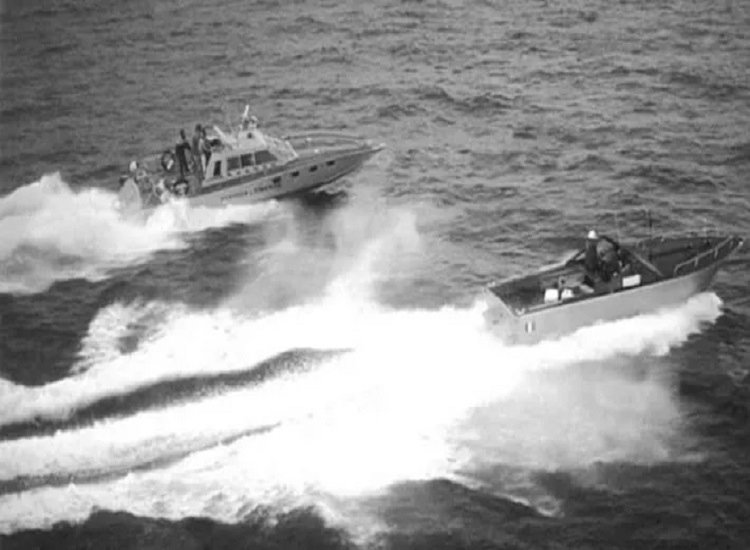
Among other things, I emphasized that the Italian Ministry of Foreign Affairs does not find cooperation with Albania necessary for the elimination of cigarette smuggling on their territory, since they are capable of eliminating it themselves within 24 hours. “The Italian Financial Guard is organized in several brigades and can surround their coastline at any time, confiscating all maritime vessels, including the speedboats that play the main role in bringing goods without customs into Italy. But the Italian government does not dare to take this initiative. The Italians want to ‘pull the chestnuts out of the fire with someone else’s hand.’
More concretely, they want us to close this activity unilaterally, so that they would be justified before their people that it was Albania that closed the activity due to its own political-ideological problems. They know very well that if this activity is closed, the next day thousands upon thousands of families in southern Italy – especially in the regions of Apulia and Campania – will be left without income. In such a case, apart from the rise in unemployment and poverty, crime and terrorism will also increase,” I told the minister in clarifying the matter.
From that time on, our diplomatic passports were no longer obstructed, as long as Reiz Malile continued to be Deputy Foreign Minister. Afterward, Muhamet Kapllani was appointed Deputy Foreign Minister. We congratulated him, as we knew Muhamet, because we had worked in a territory of the Ministry of Foreign Affairs for some time, when he was deputy director of the Institute of International Studies (the director was Sofokli Lazri). Those days, Naim and I were going abroad, but the MFA did not give us diplomatic passports.
The minister received us in his office, as an old friend. But he was not convinced that we were entitled to diplomatic passports, so he insisted on filling our heads with the idea that service passports were enough for us, saying that recently the MFA had taken measures to narrow the circle of those who benefited from diplomatic and service passports. In response, I thanked him for the service passport, but we did not take them, telling him: “Since you are being restrictive in this period, give it to someone else ‘who needs it more,’ while I will manage with a simple passport from the MIA.” / Memorie.al