Memorie.al / “…Among the most beastly tortures we suffer in Burrel prison, the first is the smoke from wood or coal that is lit in a brazier in the middle of the room where we serve our sentence; the second is the noise that does not stop even at night…”! This is a fragment from the description in the letter of Simon Jubani, sent to the Central Committee, taken from the archives of the Ministry of Interior. The letter is considered one of the most important testimonies by Enver Kushi, a member of the working group that prepared for publication the album “Communist Terror in Albania”, a work of the National Historical Museum. Together with the testimony of the Catholic priest, the album completes the brief overview of communist prisons and with other testimonies.
But we have stopped in particular at the letter of Simon Jubani, reading the communist anthropology, the inhuman act upon the psyche of Albanians, and especially upon the part of intellectuals and the religious elite who opposed the regime of Enver Hoxha.
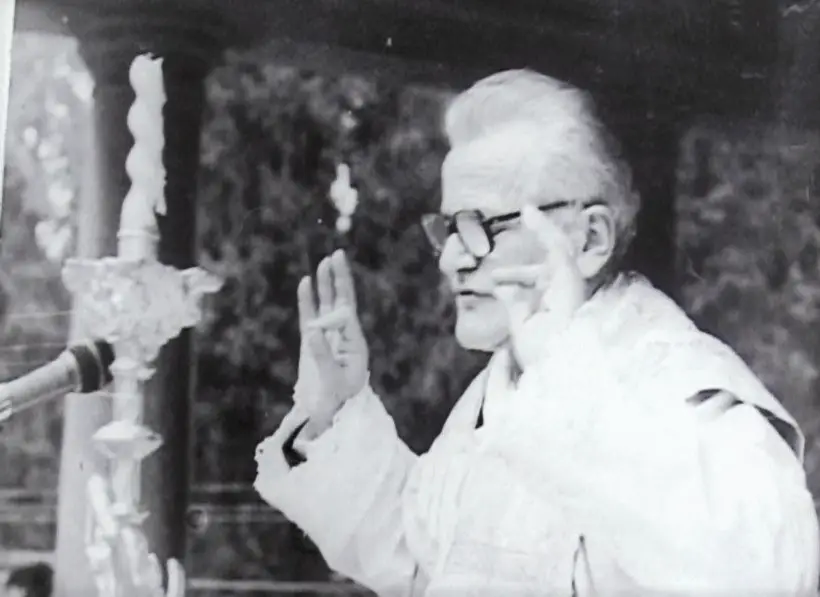
In his book, “The First Mass”, Jubani describes the moment before the arrests and the seizure of his house: “I quickly prepared what had escaped checks and seizures in my house during 26 years: the Latin Missal, a stole, a chalice, a purificator, a corporal, and a cross. When I arrived at the cemetery, Mark, who had his house nearby, brought an ordinary table and a sheet, on which I placed what was needed for an improvised mass…”!
From a sociological perspective, the part regarding treatment in communist prisons is almost unknown. A few years ago (there are interviews and testimonies published in the daily press, psychological surveys have been conducted regarding the consequences of the dictatorship, carried out by the Center for Trauma and Rehabilitation in Albania, headed by Mr. Ardian Kati, a former political persecuted person, where for the first time data on torture in communist prisons have been published).
The emergence of Simon Jubani’s letter from the Archives of the Ministry of Interior, together with a few lines and other testimonies that attest to names and types of torture in the regime’s prisons, seems somewhat scant compared to publications of this nature. Many testimonies are repetitions from other publications that exist so far about communist crimes. Although at the book’s presentation it was said that the album is simple and modest, especially for history to be known, for instance by high school students – this seems somewhat paradoxical given the price and the informational source of the publication.
Nevertheless, setting these aside not as shortcomings but considering the publication as a historical voice, a return to the processes of the dictatorship, it is always an opportunity that does not exhaust the treatment. Especially if we speak of the irritation it may cause to institutions or people engaged in studies, and a suitable case to also lash out at politics, as delayed in the lustration law, as well as for cleansing the administration of people who have served the former regime as well.
Referring to the album, a separate chapter is dedicated to communist prisons, as well as to execution sites. Burrel prison has become a symbol of terror, as Simon Jubani testifies in his letter, even beyond Albanian borders. During the communist dictatorship, Burrel prison was otherwise known as: “the industry of horror”, or “the extermination prison”. The characteristic features of inhuman treatment, physical and psychological torture, up to the physical disappearance of prisoners, have made it known not only in Albania but also in the history of the Balkans and beyond.
The main category of prisoners was intellectuals and theologians who had studied at the most renowned universities in the world, entirely for political and religious beliefs. The service personnel of this prison were chosen and had to be people convinced of the communist ideology. Until 1965, there was no health service; that year a new prison regulation was issued, which allowed a little food from family, clothing, and two hours of airing per day. – “But unfortunately Burrel prison continues to remain a symbol of terror inside and outside the homeland”, writes Dom Simon Jubani, when he informs the Central Committee.
On the other hand, there are names of executioners and judges, torturers and interrogators about whom researchers of communist crimes have not yet spoken, what they represented in terms of their formation, as monsters of the regime, beyond their devoted service. Below we present some fragments from the testimonies of prisoners in Burrel prison, how their treatment was, with facts taken from the Archive of the Ministry of Interior.
LETTER OF THE POLITICAL PRISONER, SIMON JUBANI, SENT TO THE CENTRAL COMMITTEE OF THE PARTY OF LABOUR OF ALBANIA, FROM BURREL PRISON
Burrel, 16/XII/1971
To the Central Committee
Among the most beastly tortures we suffer in Burrel prison, the first is the smoke from wood or coal that is lit in a brazier in the middle of the room where we serve our sentence; the second is the noise that does not stop even at night.
I do not pretend that we have bathrooms as it is said we do; I do not ask to be freed from kicks, fists, daily beatings, but I beg you, order the authorities of Burrel to free us from the smoke that has blinded our eyes and taken our breath; to free us from the noises that have destroyed our nervous system, at least let there be no noise when we sleep.
For the above-mentioned reasons, many hunger strikes have been undertaken, many people have left the rooms to go rest in the dungeon, without clothes on the cement for days and nights, many protests and complaints have been directed as far as Tirana, but unfortunately Burrel prison continues to remain a symbol of terror, inside and outside the homeland.
That is for your information.
The prisoner
Simon Jubani
(Illegible signature)
Statements about tortures and torture methods in the trial of Koçi Xoxe
During the investigation, torture became a working method and was refined and perfected by the suggestions and instructions of Koçi Xoxe. The interrogation file should be read on pages 50, 54, 66. See what kind of torture was inflicted on the prisoner MUZAFER PIPA: “Red-hot iron, thrust deep into the flesh down to the bone, causing terrible pain to the point of madness, which no human being can resist, medieval torture that recalls the Inquisition.
The torture of death provocation was used through the gradual reduction of food, and this method was used by the bandit Koçi Xoxe on the prisoners of Burrel. From this type of torture, the prisoner Koçi Xoxe died.
From the statements of Naum Bezhani
I, the undersigned Naum Bezhani, declare as follows:
I list below various tortures that were inflicted on prisoners, especially during the years 1947-1948. Koçi Xoxe, Vaskë Koleci and others knew about all these and never took any measures against those who did them, moreover they themselves inspired and taught us so, although in appearance they sometimes opposed them (a couple of telegrams they had sent banning the use of wood). Inhuman treatment was carried out before and after the sentencing of Mestan Ujaniku.
Festering wounds on the thighs from red-hot irons
(From the memoirs of the convict Hiqmet Cërloj)
The witness Shaban Zereci, age 45, employee resident in Tirana, was duly sworn, was questioned and said: I had been a partisan since 1942, company commander, battalion commander and I held the rank of captain. I was arrested on 14/VI/1947. I was kept hanging by my feet for 16 days. Then I was tortured with the vest system, salt was put in my mouth, they put feces in my mouth, and because I would not open my mouth, they broke my teeth with a stick until I was forced to open it. I never found out why I was arrested.
The defendant Vango said: During the investigation, torture was a working method; various types of torture were practiced, such as beating with the palm, being left without bread for whole days, hands and feet bound with heavy irons, the vest, cold water, wet rope, and head in a bucket. These methods were discussed and were even raised in meetings, and the tortures became increasingly perfected.
(Taken from the file of the Trial of Koçi Xoxe – Archive of the Ministry of Interior)
These forms of torture were used:
The vest (the most terrible torture).
Whip and stick.
Being left without bread, without water, without sleep, and standing for whole days.
Electric current until the victim fainted.
Heavy chains thrown around the neck.
Tying the hands behind the back to a window or a piece of wood, hung until only the tips of the toes touched the ground.
Breaking bones and tearing flesh with pliers (this was used especially after the sentencing of Shefqet Beja and against them).
Salt in the mouth.
Simulations as if they were going to be executed or hanged, being lifted in the air or brought near the noose.
Moral torture concerning the family.
Being plunged headfirst into a barrel full of water.
Burning of flesh with cigarettes….!
Execution sites:
Tirana: Beshirit Bridge, Farka Bridge, Qesarakë, Prift’s Hill, Dajt.
Shkodër: Zalli i Kirit (from Bardhaj to the bridge over the Kir river), Radio Shkodra’s antennas, Cement Factory, by the bank of the Buna river.
Vlorë: Mezini Well, Soda Forest, Brick Factory, Koçiut Pass.
Gjirokastër: Zinxhirëve Square, Buduk, By the bank of the Drino river.
Berat: Uznovë, Moravë, By the bank of the Osum river.
Durrës: Porto Romano, Bisht Pallë, Golem, Robi Mountain.
Elbasan: Krastë.
Korçë: Drenovë, Qarri Pass.
Peshkopi: By the bank of the Black Drin river.
Simon Jubani: How I celebrated my first mass at the Rramaj Cemetery, November ’90?
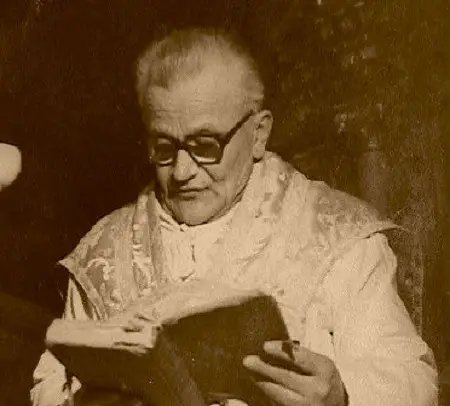
“I pass from life by returning to the house of the Heavenly Father,” the Franciscan Dom Simon Jubani wrote in his death notice, who 20 years ago on November 4th and then on November 11th, 1991, celebrated his first public masses at the Rramaj Cemetery in Shkodër. About those days, in his book “The First Mass”, Dom Simon would write:
“I quickly prepared what had escaped checks and seizures in my house during 26 years: the Latin Missal, a stole, a chalice, a purificator, a corporal, and a cross. When I arrived at the cemetery, Mark, who had his house nearby, brought an ordinary table and a sheet, on which I placed what was needed for an improvised mass…
Before the Mass, I spoke, thanking Mark and the presence of about 300 people gathered at the cemetery for an uncertain Mass, more for prayer and personal devotion, while looking at the graves and caressing the earthen dwelling from which we will one day rise with our loved ones and ancestors…”!
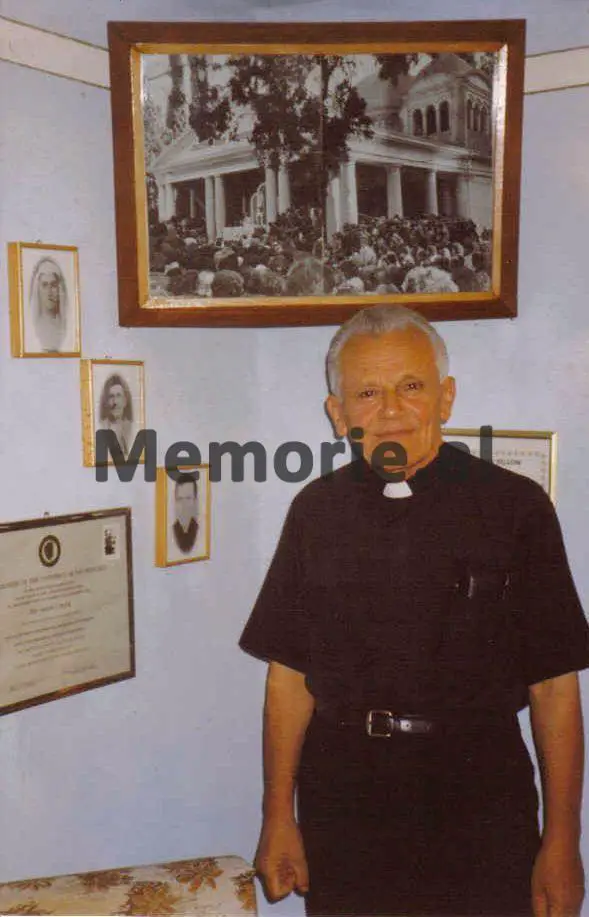
Simon Jubani was born on March 8, 1927 in Shkodër, from a devout Catholic family which gave the Church and the Homeland two priests: the martyr and intellectual Dom Lazër Jubani, who was poisoned with arsenic by the communist secret police in 1982, and the courageous Dom Simon Jubani. On May 4, 1958, he was ordained a priest by Monsignor Ernest Çoba and was sent to serve in the Abbey of Mirdita.
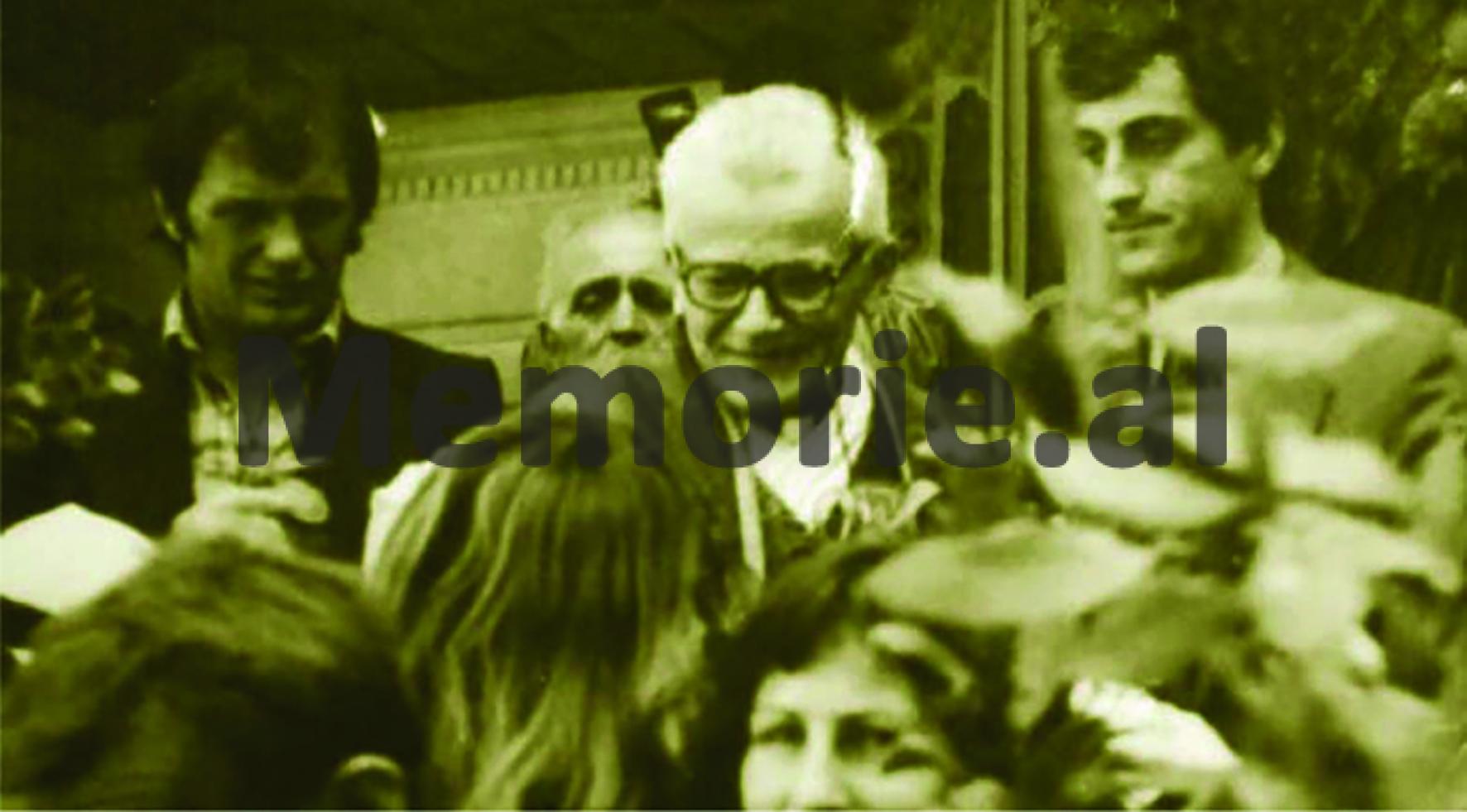
He was arrested in 1963 and suffered fully 26 years in political prisons. Always an active militant, face to face and unbowed before the tortures of the communists and always under the surveillance of spies, he was released on April 13, 1989, together with several other clerics. For the valuable nationwide contribution that God entrusted to him, the University of San Francisco in California in 1991 awarded him the diploma “Doctor Honoris Causa” in human sciences, with the motivation: “Protagonist of a new era in Albania”.
After the fall of communism, Dom Simon served for several years again in the Mirdita Mountains and for the last decade with great dedication and loyalty served in the humility of the confessional of Shkodër Cathedral. After a cerebral hemorrhage, Dom Simon Jubani closed his eyes in the early hours of the morning of July 12, 2012 at the Regional Hospital of Shkodër, under medical care, always believing that only from God can there be justice and reward. He was buried at the Rramaj Cemetery. / Memorie.al