
-The Fascist internment system and the Italian occupation of Albania: A study on the relations between the army and the population-
Memorie.al / The paper will analyze the initial phase of research regarding the Italian occupation of Albania. The aim of the study is to highlight some aspects of the fascist occupation of the country: in particular, the existing collaboration in the field of repression of resistance and the management of the various nationalities in Albanian territory. The sources relate to some military archival collections (war diaries of the occupying armies and reports on war crimes committed by Italians between 1939 and 1943), preserved in the Historical Archive of the General Staff of the Army in Rome.
In the second phase, documents from the Central State Archive (Ministry of the Interior, General Directorate of Public Security) and from the Archives of the Ministry of Foreign Affairs (in particular the fund of the Sub-Secretariat for Albania). In this presentation, special attention will be paid to the fascist internment system in Albania and in the rest of the territories occupied by Italy, with in-depth analyses regarding the different dependencies of the camps (military or police and public security) and their methods of operation (the interned population and the reasons for internment).
Introduction
In this paper, I will analyze the beginning of research regarding some aspects of the Italian occupation of Albania. The aim of the study is to highlight some peculiar features of the fascist occupation of the country, describing the different phases experienced by the occupier and the population. The research is based on the comparison of the experiences of the occupied and the occupier, in the case of Italian soldiers and politicians.
In fact, I completed my doctorate a few years ago with a thesis on the governance of the fascist province under German occupation, and under the formal government of the Italian Social Republic. Therefore, it was very interesting to compare some of the ways in which the occupied territories were managed, through the ‘double lenses’ of regime officials and soldiers at the turn of the ‘Italian-Allied’ armistice of September 8, 1943, and in completely opposite conditions, in the hierarchy of fascist satellite states.
Nevertheless, it is worth mentioning that in the two experiences of ‘collaborationism’, there are common features, both in the treatment of the local administration, i.e., the Albanian government and the Italian government after 1943, and in the main problems related to the world conflict, such as; rationing, management and exploitation of human and territorial resources of the occupied areas, maintenance of public order, repression or agreement with resistance movements and contrasts between allied authorities, or even, as we shall see, in the management of the Jewish question.
Here we will focus on the internment and special surveillance system of Mussolini’s regime, between 1939 and 1943, the year in which, after the Italian surrender to the Anglo-American armies, the territories annexed or occupied by the Royal Army fell under the control of the Wehrmacht. Then we will describe the different phases of the Italian occupation of Albania, in light of the fascist repressive system and the system of maintaining order and law.
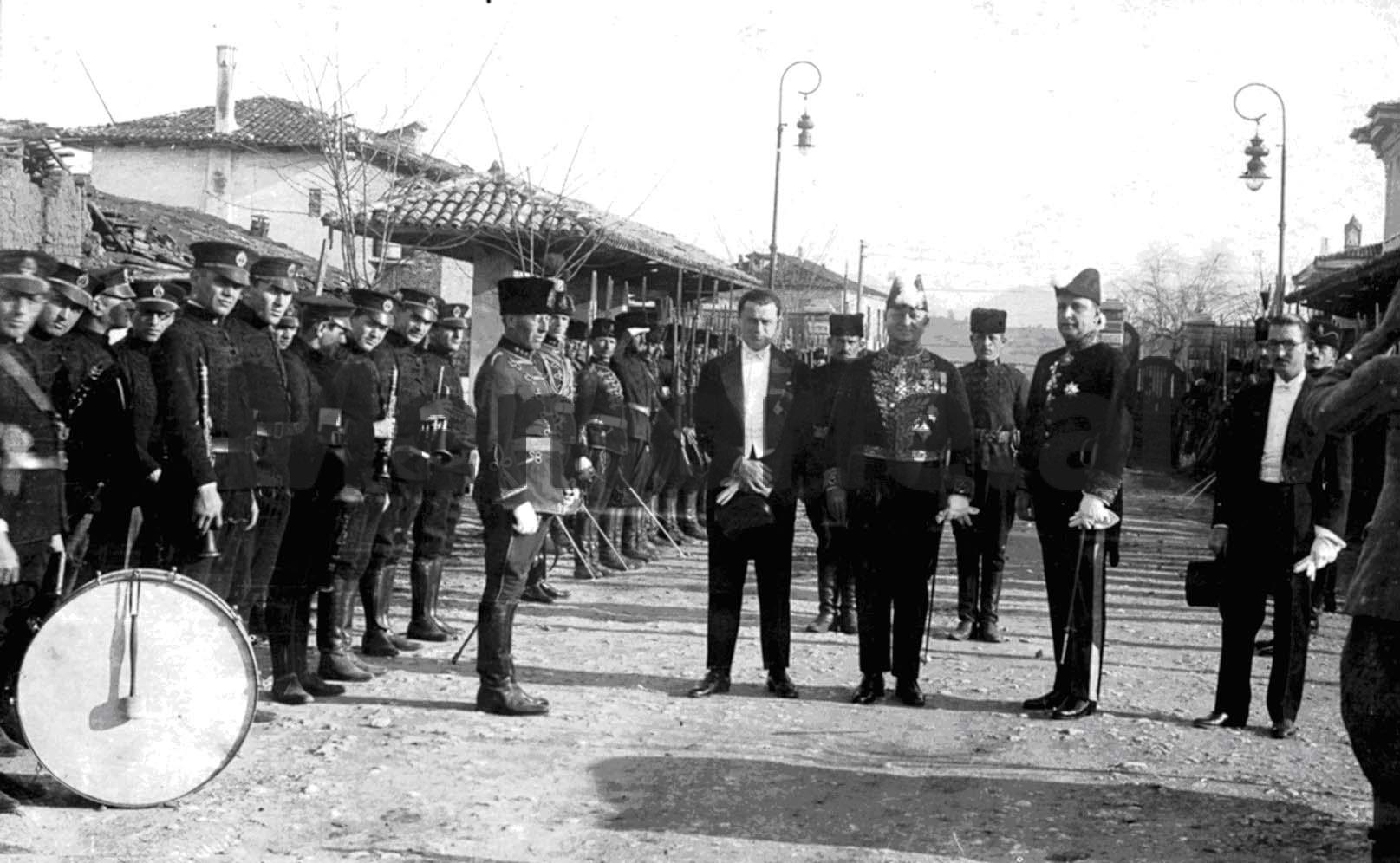
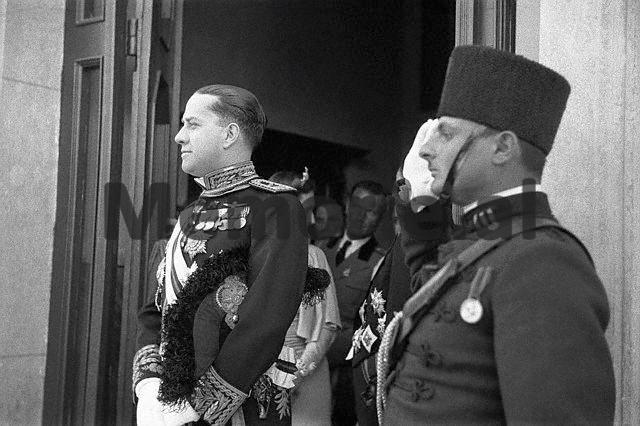
Starting from 1939, with an almost bloodless invasion, the Italian government tried to achieve a certain level of Italian-Albanian cooperation, in order to exploit the mineral resources of its territories (especially chromium, as for oil levels, fascist propaganda exaggerated the extent of Albanian wells);
The creation of an executive with no popular connection and a superior monarchical institutional framework, dependent on the Italian Ministry of Foreign Affairs, did not seem to hinder a moment of real development in the country; on the other hand, this protracted phase was paid for with the sacrifice of every democratic freedom and a growing marginalization of the Albanian population from the highest levels of the national economy. The so-called ‘Ciano system’ was based on widespread corruption, fueled by local elites and the fascist officials themselves, who were only occasionally sanctioned and withdrawn for fraud and other embezzlements.
Some poor choices in monetary matters and the consequent inflationary spiral began to undermine the relationship between the Italian occupiers and the population as early as the beginning of 1940, with prices almost doubling in just six months (77-80% in November 1939); the following autumn, the catastrophic Greek invasion and the counter-offensive in the middle of Albanian territory drowned the ‘imperial’ image of Fascist Italy.
After the failure of Mussolini’s parallel war, in fact one can speak of an organized Albanian resistance, this is the definition given in the war diaries of the Italian army. From January to December 1941, officials of the Ministry of the Interior, Carabinieri, and SIM (Military Intelligence Services) reported that they had placed special surveillance measures on about 21,000 Albanians; 5,600 of them were interned in concentration camps or locked up in special areas, following the model of the fascist and Savoy borders.
The Greek counter-offensive on the Albanian front destroyed the image of power created by the regime’s overwhelming propaganda. The material consequences concerned the last period of the occupation as a whole, characterized from the winter of 1941 onwards by a series of sabotage attacks, explosive and non-explosive (such as that against Victor Emmanuel III, which failed in January 1941), assassinations, and ambushes against soldiers and officials of the Kingdom of Italy.
The fragile Albanian government could hardly be taken seriously by the population, following the criminal acts of harsh retaliation commanded by the Italians and some autochthonous paramilitary formations. These became particularly notorious during the government of Mustafa Kruja, especially for acts of retaliation against partisans and the population of the southern regions and the Ioannina area.
From 1942 onwards, especially in the territories annexed after the German occupation of Yugoslavia and Greece, it became common practice to place responsibility for the attack on the community living within 1500 meters of the incident. The same rules, two years later, would be imposed by the Wehrmacht on Italian civilians and partisans. Anyone found with weapons in hand or at home could be killed on the spot, while internment concerned heads of families, even the elderly, living in places of partisan attacks.
The ‘rules’ of internment concerned so-called ‘political offenses’ committed by the local population (armed uprisings, organization or participation in subversive groups and associations, bomb attacks against the occupying forces, but also incitement to desertion from forced labor or military recruitment), while additional retaliation measures could refer to the entire population of the area between the ages of 16 and 60, held de facto as hostages to prevent further partisan attacks.
In Albania, to an ever greater extent after the winter of 1941-1942, the same radical regulations that were adopted in the territories of the former Kingdom of Yugoslavia would be adopted to cope with an uncontrollable resistance movement. According to Rodogno, the “infamous Circular 3 C” of March 1, 1942, a model provision for the radical suppression of rebellion in the Balkans, was adopted in every context affected by the Italian occupation, with the exception of Southern France.
The circular had been issued by General Roatta, commander of the Second Army. Based on similar principles, the superior commander of the armed forces in Albania, General Renzo Dalmazzo, wrote to the command of COA IX and XXV (in the sectors of Shkodra and Kosovo) on February 16, 1943: ‘Worthy people are arrested in the village centers. The revolt must be kept available to be sent to concentration camps for possible subsequent reprisals’.
A special case for the interned population in the Balkans was that of Pirzio Biroli, commander of the armed forces in Montenegro and, after the war, indicted for war crimes in the area of his command. In the summer of 1941, after the Montenegrin partisan uprising, the general gave his officers and soldiers leeway to destroy the houses closest to the uprising sites, to expel every adult male in the community, and to kill any suspected partisan on the spot.
This policy caused several thousand Montenegrins to be sent to Albanian concentration camps. A year later, the general himself had to understand the negative consequences of this strategy, which was completely ineffective against the rebellion, as he ordered the establishment of a joint civil and military review commission. As a result, 3,000 former internees were able to return to Montenegro from Albanian camps.
Conversely, 3,000 to 5,000 Montenegrins remained within the borders of Albania. To these were added about 1,597 Albanian prisoners of war, interned after the invasion, to be released in 1942, according to agreements with the Albanian government. From the summer of ’42, the number of Albanian internees increased with the increase in resistance activity, which became more and more organized, and consequently with the radicalization of Italian repression.
In particular, at least four internment camps for partisan fighters are known: Berat, Kavajë, and Shijak; two established internment sites, Shiroka (VP) and Berat, where 150 Jews, probably Montenegrins, temporarily resided. In total, according to estimates by Capogreco, Rodogno, and Conti, the number of persons interned for ‘political’ reasons, or to be included in labor battalions, reached a maximum of 25 to 30,000, of whom at least 5,000 were non-Albanian in ethnicity or origin.
The camps for which we have some information were managed by the Italian armed forces, employing the Royal Carabinieri and only partially with the cooperation of the local prefect. Regarding the management of public order, the armed forces, ever more numerous but ever less effective in confronting guerrilla warfare between 1942 and 1943, were joined by the Public Security Services of the Ministry of the Interior, in a competitive position with respect to the army services and the Militia Information Offices, merged with the 9th Italian Army in Albania, but with their own intelligence services.
The conflict between these centers of power, to which the Albanian administrative structure was added, became an increasingly damaging factor for maintaining control over the territory. The replacement of Jacomoni by Pariani and the first agreements with a part of the armed resistance movements led to a temporary truce in the winter of ’43. The following spring and summer, on the other hand, saw a resurgence of Italian anti-partisan warfare, increasingly similar in methods and strategies to the Reich’s anti-bandit units, and consequently the reaction of the National Liberation Movement and partly of ‘Balli Kombëtar’.
In July 1943, with the Mallakastër massacre, the Royal Italian Army was guilty of the most serious war crimes committed in Albania; the fall of Mussolini and the ‘disbandment’ of the army the following September led to a partial settling of accounts with the Italians by the partisans and the dramatic choice of collaboration with the new German masters, or against them with arms.
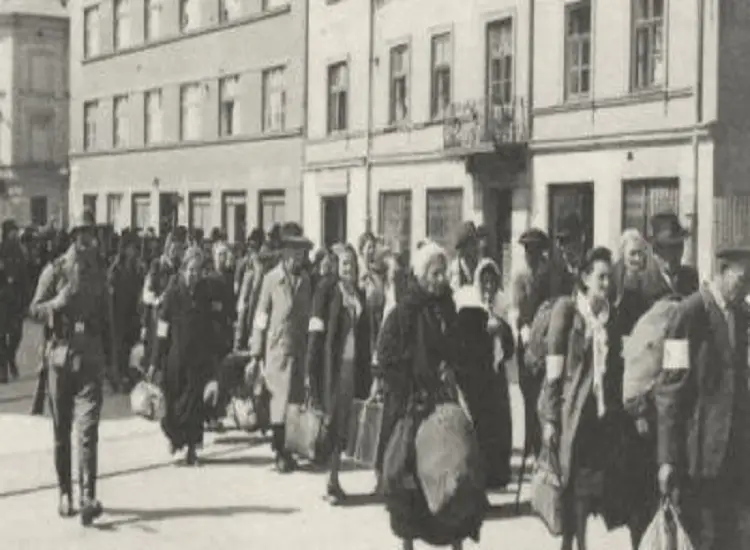
A small mention should be made of the Jewish question. Theoretically, immigration and the stay of members of Jewish communities in ‘Greater Albania’ (meaning the expansion of the nation’s borders after May 1941) was forbidden by order of General Jacomoni. Neither Italian nor Albanian officials showed strict adherence to the rule, especially since the Albanian Jewish population numbered only a few hundred members.
Moreover, although not characterized by humanitarian aims, some senior Italian officers did not particularly appreciate National Socialist pressure to hand over the Jews of the Balkans and were able to use their autonomy to prevent the deportation of several thousand Jews from Albanian and former Yugoslav territories. In other cases, officers and commands collaborated extensively in the Holocaust in Croatia and in Italian-controlled areas of Bosnia.
This attitude should be interpreted in light of the conflicts of competence between the allied authorities and the desire of the Italian armed forces to protect their role. Regarding the camps dedicated to Jewish internment, we have mentioned the camp of Berat, as a residence for 150 Jews from Cimmeria, Montenegro, and the territory of the Albanian Kingdom; to this were added Kruja and Kavaja, and the camp of Pristina with a total of 500 Kosovo Jews, or from the territories of former Yugoslavia interned under Italian control, remembering that the Italians controlled only half of historical Kosovo, with the exception, in Germany, of the Mitrovica area.
The Albanian population cooperated very little in the denunciation and arrest of Jews born within and outside the 1939 borders. According to an estimate after the end of the conflict, the number of Jews in Kosovo who died as a result of violence or internment did not reach 80 persons. However, the initial internment strategy, carried out by Mussolini’s men, could be exploited by the German armed forces and police in the phase after September 8, 1943, with some dramatic results for the Jewish population of the former Kingdom of Yugoslavia.
To conclude, further research on collaborationism or rather on cooperation between the Italian and Albanian sides during the first three years of the war could better explain the authority relations that existed between the Allies and the occupiers; to supplement this, it must in no way result in a rigorous moral judgment, partly linked to the very definition of collaborationism; among the Italians, a type of crime under the Military War Penal Code.
The methodology of scientific research, linked to wider accessibility of Italian military and diplomatic archives, is more than sufficient tools to give dignity to an object of study often marginalized by European and Italian historiography on the world wars: in this way, positive results can be achieved in the study of fascisms and the hypothetical continental order that inspired their changing strategies. Memorie.al