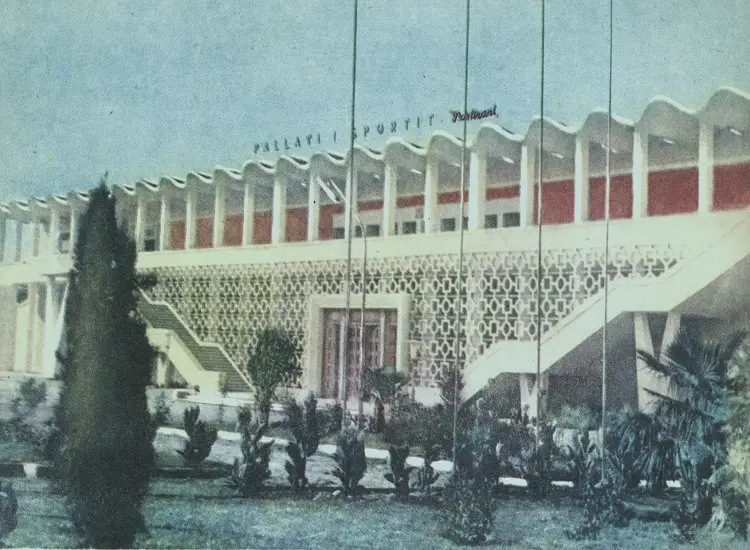
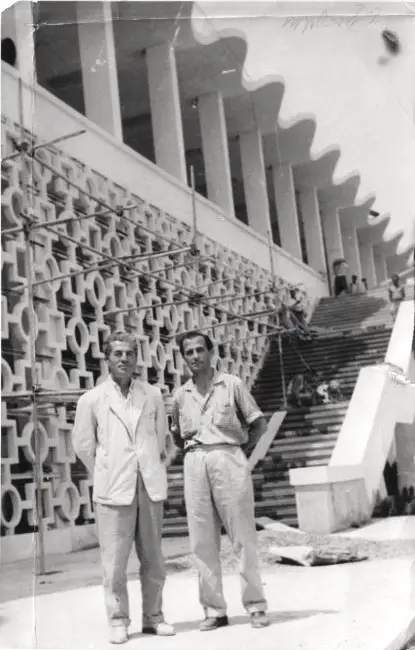
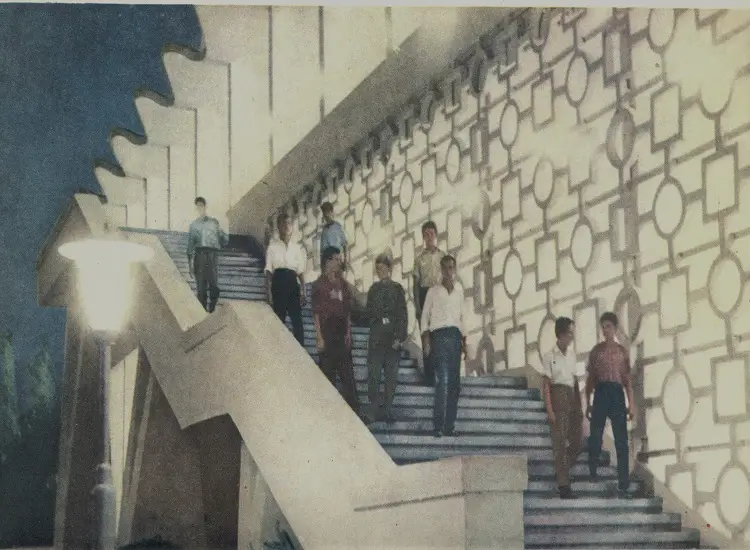
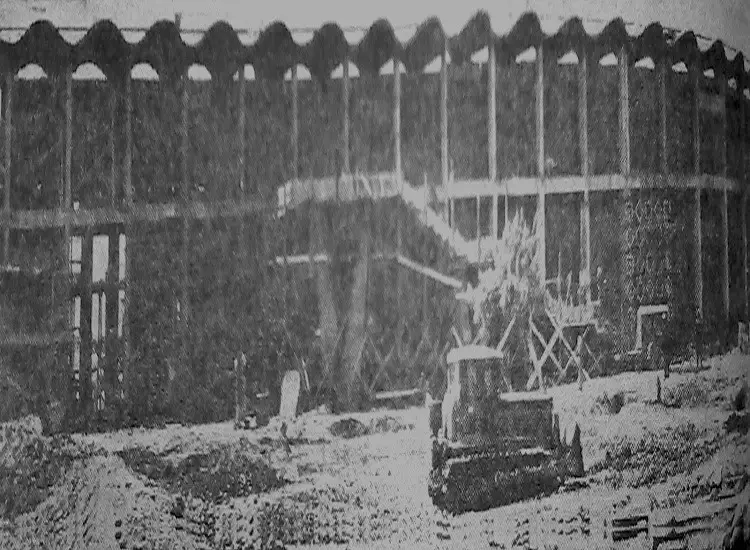
Memorie.al / It were May 1962, yes, when work began on the construction of a sports palace in Tirana. Only 14 months of intensive work, and in July 1963, the largest sports facility in our country, named “Partizani”, was ready. For that time, for the decades that followed, and even today, it has remained a true icon, bearing the main weight of national and international sports activities organized in Albania. But who was the originator, the motive, and how did General Petrit Dume, former Chief of the General Staff of the Army at the Ministry of People’s Defence, realize his passion for building a giant complex for Tirana and Albania – a man who, a decade later, would be executed as an “enemy of the people” together with Minister Beqir Balluku and the Director of the Political Directorate, Hito Çako?
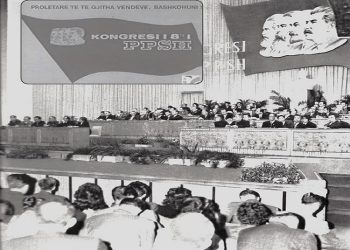
From the designers, the Volleyball Tournament of the Armies of Friendly Countries of the People’s Democracies of Eastern Europe, to the Balkan Games of ’66, then “Virtus”, “Oransoda”, “Jugoplastika”, “Crvena Zvezda”, etc., an artistic-sporting Albania, all inside that palace – from derby matches in handball, rallies with the Chinese, congresses of the PPSH (Albanian Party of Labour), concerts and musical spectacles, to the fashion and modernization injected by the generation of the time, among its passionate frequenters. How do Muhamet Përmeti, Ismet Bellova, and Sulejman Zela, the longest-serving employee, remember today the “Partizani” Sports Palace (today “Asllan Rusi”), the history of that sports facility and its organic connections with it?
Albania and the capital, handball and other sports, in the open air…!
That Tirana and the country lacked a modern indoor environment where national and international handball activities, or other disciplines (gymnastics, weightlifting, table tennis, wrestling, etc.) could be organized, was evident and an indispensable requirement of the time. In the sporting Albania of the 1950s-60s, matches were held in uncomforable conditions and environments, in the open air, with rain and sun, bad weather, cold, heat, on grounds of black earth made from the burnt coal of production enterprise boilers. Tirana had a sports corner at “Shallvaret”, then the “Studenti” Sports Park (former playground) at the beginning of “Elbasan Street”, “Xha Tomi” Park, another near the former courthouse on “Durrës Street”, one behind the Prime Minister’s Office, where for many years various activities were trained and developed, and even boxing matches. While in Shkodra, they played at the “Spartak” Playground, in Durrës at “Nako Spiru”, in Vlorë and Korçë, likewise everywhere in the open air.
The Sports Palace, “Partizani”, a work of General Petrit Dume
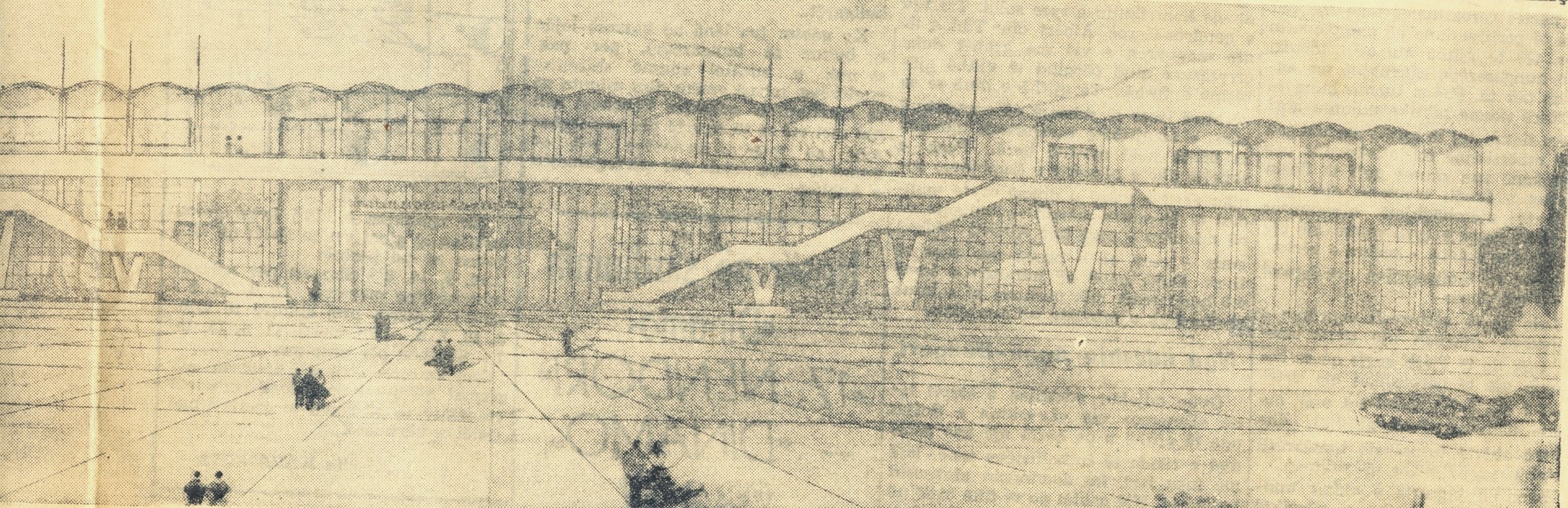
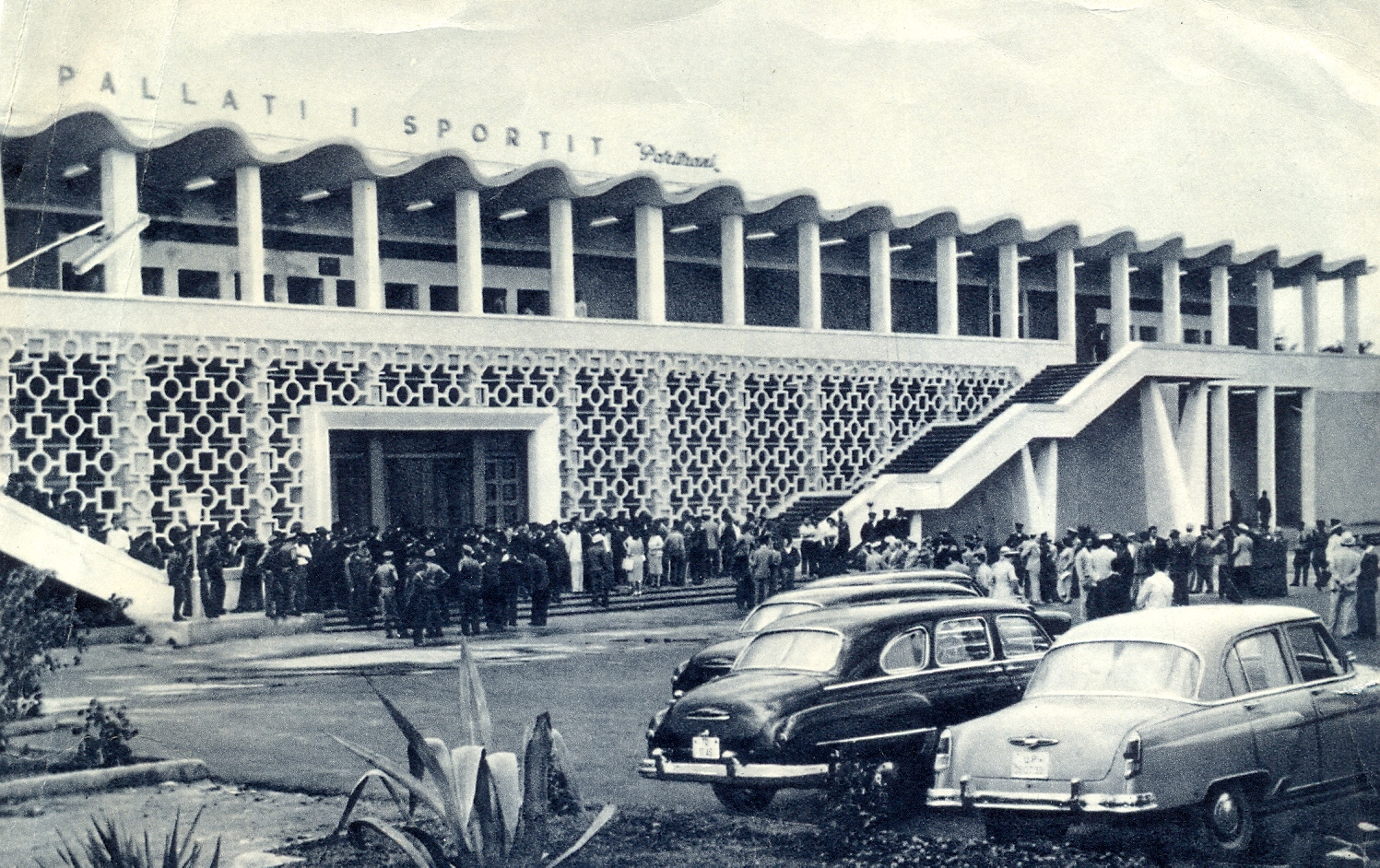
It was Lieutenant-General Petrit Dume, at that time in the position of Chief of the General Staff of the Army at the Ministry of Defence, who conceived, supported, and actively participated in its construction. There was also great engagement from the entire ministry of defence, its officers and major leaders, such as: Minister Lieutenant-General Beqir Balluku, Deputy Minister Rrahman Parllaku, Major-General Thoma Xhixho, Major-General Mendu Backa, Major-General Abaz Fejzo, etc. By exploiting the aircraft hangars of Benito Mussolini’s Italian army from the occupation period (1939-1943) as well as the proximity to the single-storey buildings of the “Partizani” Sports Club, the reason for the rapid and necessary construction of a covered environment of giant proportions was the Spartakiad of the Armies of Friendly Countries of the “People’s Democracies” (as the communist countries of Eastern Europe, etc. were called at that time) in volleyball, which was decided to be held in Tirana in July 1963.
That year, the following would participate in that activity: Albania, the People’s Republic of China, the Democratic People’s Republic of North Korea, and Romania. Construction work began in May 1962, with renowned engineers as designers: Koço Miho, A. Galanxhi, S. Pashallari, A. Nase, S. Velto, and V. Uçi. They worked there with high daily work standards, with brigades of soldiers, with the pledge to finish ahead of schedule, and many athletes, coaches, etc. also worked voluntarily on its realization. A great contribution was also made by engineer Kristaqi, construction technicians P. Toska, L. Tereziu, Th. Poçi, L. Vuksani, Xh. Osmani, S. Bejleri, M. Gjoni, Z. Ujku, Th. Becka, P. Tervolli, P. Dokarja, Q. Buzi, etc. Considered a work of the army for the youth of the capital, it was named “Partizani”, a name given already in the project, as it was included in the area where the Sports Club under the Ministry of Defence was located, but also because of the desire of senior military personnel. Only after the 1990s did it change its name to “Asllan Rusi” Sports Palace, after one of the legends of “Dinamo” and National Team volleyball, who tragically died at a young age.
A modern project for its time
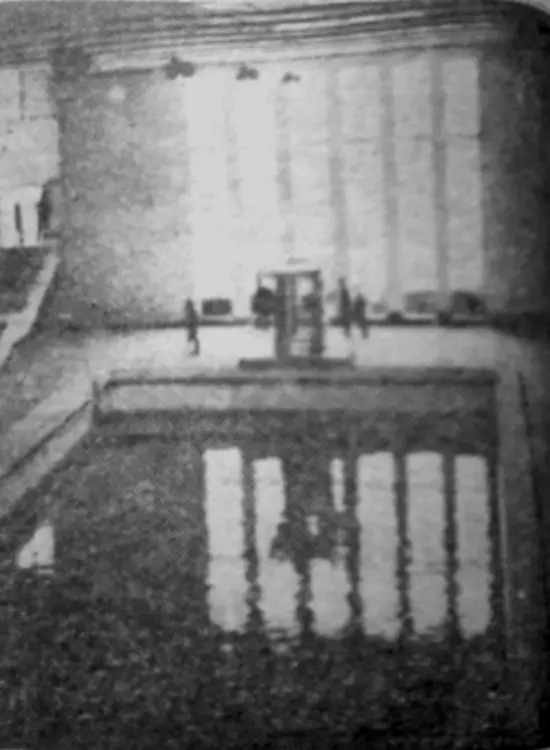
According to several informative articles by the well-known sports journalist and commentator Skifter Këlliçi, sports leader Kozma Grillo, and military personnel such as Major N. Deveja and A. Kuka, in the newspaper “Sporti Popullor” during 1962 and 1963, according to the project, the Sports Palace would be divided into three halls: 1) The central hall, the largest for handball, mainly for basketball and volleyball, but also for gymnastics, wrestling, weightlifting, etc. 2) On the right wing, the hall with the modern swimming pool, the first indoor one in Albania. 3) On the other side, the hall that served as a gymnasium all covered with parquet. Outside the palace, sports fields for training were built, such as basketball, volleyball, football, two tennis courts, a running track, and other sports annexes.
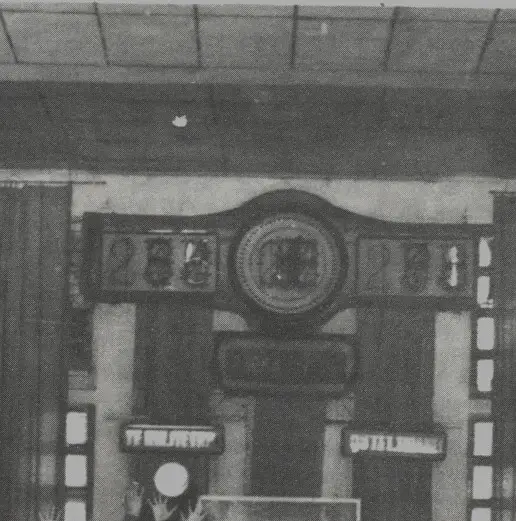
The palace had 20 steps for each grandstand, laid with prefabricated material, with about 3,500 seats, while 500 could follow standing. Large spaces, functional bathrooms, changing rooms, an electronic scoreboard (with Chinese bulbs) for game numbers. This sports facility would be covered by a metal roof and the external facade would be clad with polished stone tiles. The palace had a length of 110 m and a width of 44 m. It had a volume of 40,000 m³, a central heating system, etc. Even tennis could be played there. It was called the Sports Palace for Handball, but many sports disciplines were held there: weightlifting, wrestling, gymnastics, etc. Some of its directors were Ali Kastrati, as well as administrators A. Prodani, S. Foci, V. Xhindolli, etc.
An Olympic pool as well…!
One of the multifunctional, modern, and special sports environments for its time, not only in Albania, was the indoor swimming pool, where many activities were held, such as swimming, water polo, etc. With a grandstand of 500 seats, 25 meters long, with a diving board, it was a work of the Institute of Military Studies and Projects. According to the architects, the underwater part was designed with glass so that competitions could be followed by coaches and specialists, as well as with lights under the water surface. But over the years, due to some negligence, not being well insulated, the waterproofing began to fail, letting water in. For this reason, the pool managed to survive until the mid-1970s, and due to amortization and humidity, it was no longer used. Later it was transformed into a hall for handball and training for capital city teams, various national teams, and for official championship matches in volleyball, basketball, gymnastics, wrestling, weightlifting, table tennis, etc. All the parquet is laid and rests on a metal structure.
The Volleyball Championship of Friendly Armies of Socialist Countries
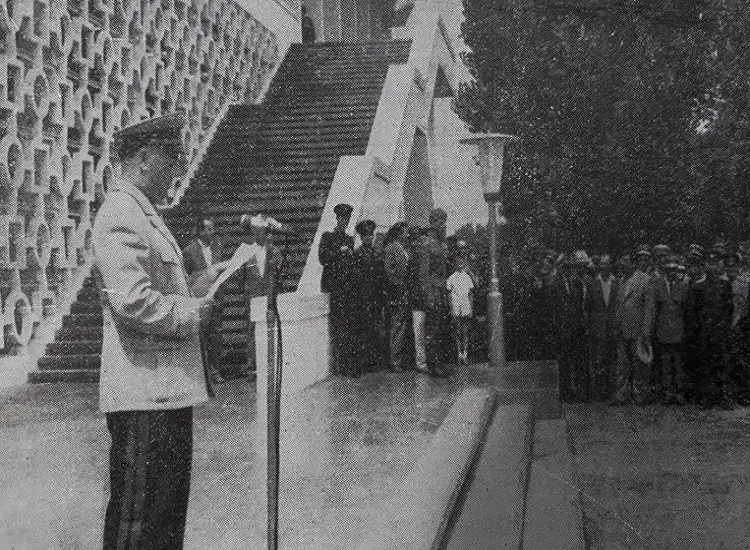
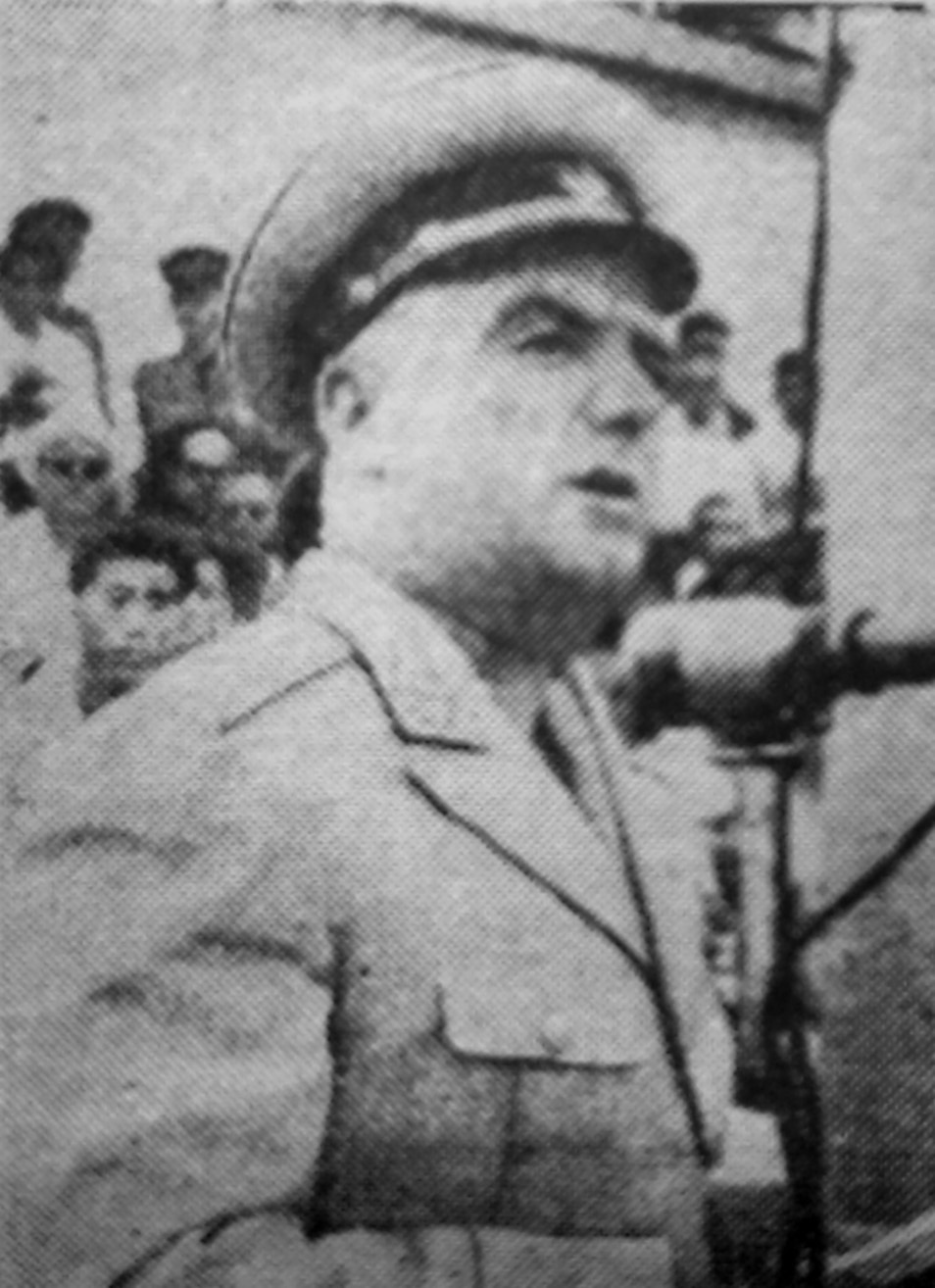
This tournament started at noon on July 4, 1963 (only volleyball), at the “Studenti” handball stadium, filled with flags of the People’s Republic of Albania, the People’s Republic of China, the Democratic People’s Republic of North Korea, and the People’s Republic of Romania. At 16:55, greeted by the 3,000 spectators present, led by the flags of the respective countries, the volleyball teams lined up in front of the central grandstand. Lieutenant-General Petrit Dume approached the microphone, who on behalf of the Ministry of People’s Defence of the People’s Republic of Albania, greeted the participating athletes and declared the volleyball championship open. Then, to the sounds of the national anthem performed by the military brass band, Masar Aga went to the southern corner of the field to raise the flag of the People’s Republic of Albania as the host country. Then the participating teams paraded and the matches began. Match results: “I P’HAL” – “Steaua” 3-1 and “PA – I” – “Partizani” 3-0. “Partizani” played in this tournament with: Masar Aga (captain), Lullolli, Jorgji Kona, Prifti, Meka, Pelivani, Sharofi, Petrit Murzaku, and Coach Andon Kona. Meanwhile, other matches, according to the schedule, were also held in Durrës and Shkodra, while Dilaver Cara was the Albanian referee in this activity.
Inauguration, on the eve of the 20th anniversary of the creation of the People’s Army
Referring to the newspaper “Sporti Popullor”, we learn that the “Partizani” Sports Palace was inaugurated on July 10, 1963, on the eve of the 20th anniversary of the creation of the People’s Army. The inaugural ceremony was attended by the Minister of People’s Defence and at the same time Deputy Prime Minister, and member of the Political Bureau of the PPSH, Lieutenant-General Beqir Balluku, member of the Political Bureau and Minister of Education-Culture, Manush Myftiu, member of the Political Bureau and Secretary of the Central Committee of the PPSH, Ramiz Alia, Minister of Internal Affairs, Lieutenant-General Kadri Hazbiu, Chief of the General Staff of the Army at the Ministry of Defence, Lieutenant-General Petrit Dume, Chairman of the People’s Assembly, Dr. Medar Shtylla, as well as members of the Central Committee of the PPSH, the government, etc.
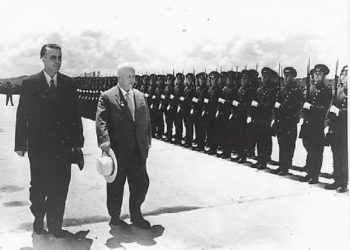
Also participating were the military delegation of the Democratic People’s Republic of Algeria, as well as the volleyball teams of the People’s Republic of China and Hungary. The keynote speech was given by the First Deputy Minister of Defence, Lieutenant-General Petrit Dume. Then, the First Deputy Chairman of the Council of Ministers and Minister of People’s Defence, Beqir Balluku, cut the ribbon and the attendees visited the Palace. Meanwhile, these were the years of the break in relations with the Soviet Union, which also influenced its construction, and many pieces of equipment came from China, including the scoreboard. There were difficulties in its installation, and it was engineer Vathi, the brother of Bule Vathi (former national team footballer who escaped to Turkey after a match played in Hungary), who managed to make it work.
The first match against the Chinese: “Partizani” – “PA-I” 0-3
This activity was also widely covered by the press, where, among other things, on Saturday, July 13, the newspaper “Sporti Popullor” wrote: “On July 10, the matches of the second phase of this army championship began. The first match, the first applause of the first spectators of the new sports palace, were received by the volleyball players of the ‘Partizani’ and ‘PA-I’ teams of the People’s Republic of China, who were the first to start the first sports activity in this work. The match ended 3-0 for the Chinese. The tournament lasted several days and was won by ‘PA-I’, which in the decisive match defeated ‘IP-Hal’ of the People’s Army of the Democratic People’s Republic of Korea 3-2.” There is another detail: It was precisely in the Sports Palace that a friendly match with Korean boxers took place, which marked the last boxing activity in Albania, because this sport was banned.
The Balkan Games of ’65, another major tournament
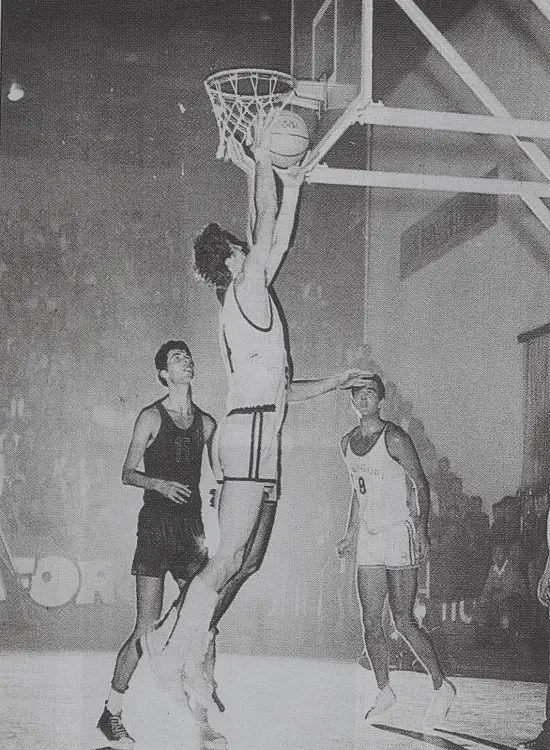
At the end of 1965, precisely in the “Partizani” Sports Palace, built only two years earlier, the Balkan Games for men’s national basketball teams were organized and held. Participants: Albania A and B, Yugoslavia, Romania, Turkey, and Bulgaria. The tournament lasted several days and ended with the victory of the Yugoslav team. For a week, the steps of the Sports Palace were filled beyond capacity, and those present experienced great emotions in that environment. The 101 points of Vaso Shaka and the extraordinary Albania-Yugoslavia challenge, won by 4 points (64-60) by the opponents at the end, left a mark, evaluated as the most spectacular match in the history of the Albanian national basketball team against a formation composed of world-renowned champions.
The environment of Shaka, the Fagu brothers, Rusi, Tase, but also the Americans…!
These were years of great sports sensitivity, to follow rival matches, especially the unforgettable challenges of the “Partizani”-“17 Nëntori” boys in basketball, “Dinamo”-“Partizani” in volleyball, etc. To see up close Asllan Rusi (deceased), the two Fagu brothers: Agim and Dashamir (Dashi deceased), Vaso Shaka, Renato Radoja, Kujtim Kasmi, Bujar Shehu, Hysen Domi, Enis Terihati, Kiço Lena, Ali Bushati (deceased), Nikolin Pal, Kushtrim Zaçe (deceased), Leonard and Ela Tase, Moza Duka, Moza Ibrahim, Kastriot Mushi, Gazmend Çaçi, Pjerin Bushati, Ilir Trebicka, Refik Vorfa, Viktor Papavangjeli, Ndue Ndoja, coaches Vangjel Koja, Astrit Greva, Kreshnik Tartari, Njazi Lleshi, Qemal Shalsi, Feti Borova, Andon Kona, referees Virgjil Karaja, Vangjel Shundi, Shpëtim Bozdo, etc. Champions like Ymer Pampuri, Faruk Kalleshi, Ndriçim Spahiu, Stefan Gjenerali, gymnast A. Marko, an endless list of names…!
There, gymnasts, weightlifters, wrestlers, boxers competed over half a century of that palace’s existence. On its parquet, teams with athletes from European-famous clubs have stepped down, such as “Virtus” of Bologna in men’s volleyball, the Italians of “Oransoda” with Burgess and Lyn, among the first Americans to play there, in the unforgettable 73-73 draw and the 48 points beyond imaginary and unrepeatable limits of Agim Fagu…! Then the Yugoslavs of “Zadar” with Gjergja, “Jugoplastika” with Shollman, “Partizani” and “Crvena Zvezda” with Stanković and Simonović, “Sinudine”, “Scavolini”, “Banco Roma”, “Ruini”, etc.
Not only sports, but also entertainment
The modern spirit of the changes of the 1970s across Europe also affected the Albanian youth of that time. The high frequency of visits to the Sports Palace was one of the ways to convey to that generation the enthusiasm coming from “Beatlemania”, the clothes and songs of Elvis Presley, which had become a vital part of the passionate boys and girls of the 1970s. Going to and staying at the Sports Palace was not only about a match or seeing up close the champions and well-known sports personalities of the time, but also a display of social modernization. As a meeting place for demonstrating passions, fashion, acquaintances, clothing, famous loves, etc., the weekend at the Sports Palace had turned into a systematic entertainment for the capital’s residents, but not only.
The Palace of Congresses, spectacle, and the first broadcasts on Albanian Radio-Television. Even RTSH (Albanian Radio-Television), among its first experimental transmissions, included sports ones from the “Partizani” Sports Palace. Skifter Këlliçi, Vladimir Grillo, or radio broadcasters Vangjel Shundi, Ahmet Shqarri, Kujtim Trajse, etc., with interviews during and at the end of matches, are some of the voices that informed directly from the “Partizani” parquet. But its premises were also used for political demonstrations, such as those with the Chinese, the famous congresses of Youth and Women, or sports and Albanian-Chinese friendship events. Even for giant spectacles, such as the musical “4000 Applauses”, a big show for the 1970s, directed by Bujar Kapexhiu, etc.
Shkodra, the Catholic Cathedral, transformed into a Sports Palace…!
With the construction of the “Partizani” Sports Palace and the demolition of the “Studenti” Handball Park (at the former playground, at the head of “Elbasan Street”), Tirana was left with the “Konferenca e Pezës” park, known as “Xha Toni Park”, where athletes of the “17 Nëntori” club trained and some official activities were held. “Dinamo” in volleyball and basketball, for men and women, had fields behind the Prime Minister’s Office, while the complex near the student dormitories also functioned, as well as the premises adjacent to the University gymnasium, which also had a tennis court. These were the years when construction of sports palaces began in several cities of the country (such as the “Punëtori” Sports Palace in the city of Durrës in 1969, today named “Ramazan Njala”), whereas in the sporting city of Shkodra, a new sports palace was not built, but the Catholic Cathedral would be transformed into a Sports Palace. Until the 1990s, when it was returned to a religious institution, all national and international handball activities, as well as other sports activities, were held there.
Petrit Dume, a general also for sports!
A senior officer with the rank of Lieutenant-General, an admirer, connoisseur, and practitioner of sports. More closely associated with the “Partizani” Sports Club, he had the great merit of dedicating a part of his life entirely to sports, giving an extraordinary contribution and input to the development, transformation, and support of athletes and teams. Passionate about tennis and equestrianism, the history of the Sports Palace is also known with General Petrit Dume, as it was the product of his idea, persistence, and desire. That building, which he realized in just a few months, has served and continues to serve national sports for more than half a century. But not only the Sports Palace; the “Partizani” Club complex is also a work of his vision. With architect Stavri Bakllabashi and the contribution of Irfan Tërshana, it was also built with army forces, initially as the Pilots’ Hotel, then passing into the administration of the “Partizani” club after the 1970s. With unforgettable leaders Besim Fagu and Muhamet Sava, the modern complex had handball, tennis, and football fields, a giant gymnasium, a canteen, and auxiliary facilities. Over the years, it has served generations of club athletes.
Muhamet Përmeti: “I have been a witness”!
He had just returned from an international tour, in which the matches were held in halls and modern sports facilities for the time. While heading to training at the “Qemal Stafa” high school, near the Club, “Pata” happened to meet General Petrit Dume. “He saw me with the ball in my hand and asked me: ‘Where are you going?’ ‘Up here, to train at the basketball field,’ I replied. ‘What do you think, shall we build a sports palace here?’ he asked me. Surprised, I hesitated for a moment, then said ‘very well’,” recalls Përmeti, and adds: “I have been an eyewitness. To speed up its construction, many work forces were taken, soldiers from the Diko Zeqo unit. With intensive work, in shifts, the hangars were demolished, the pit was opened, and work began. I remember that athletes also contributed, especially those of us from ‘Partizani’ because it was close to the Club. In fact, a plaque was placed at the entrance, which was removed in the 1990s”!
Sulejman Zela: “Half a century, I have lived there”!
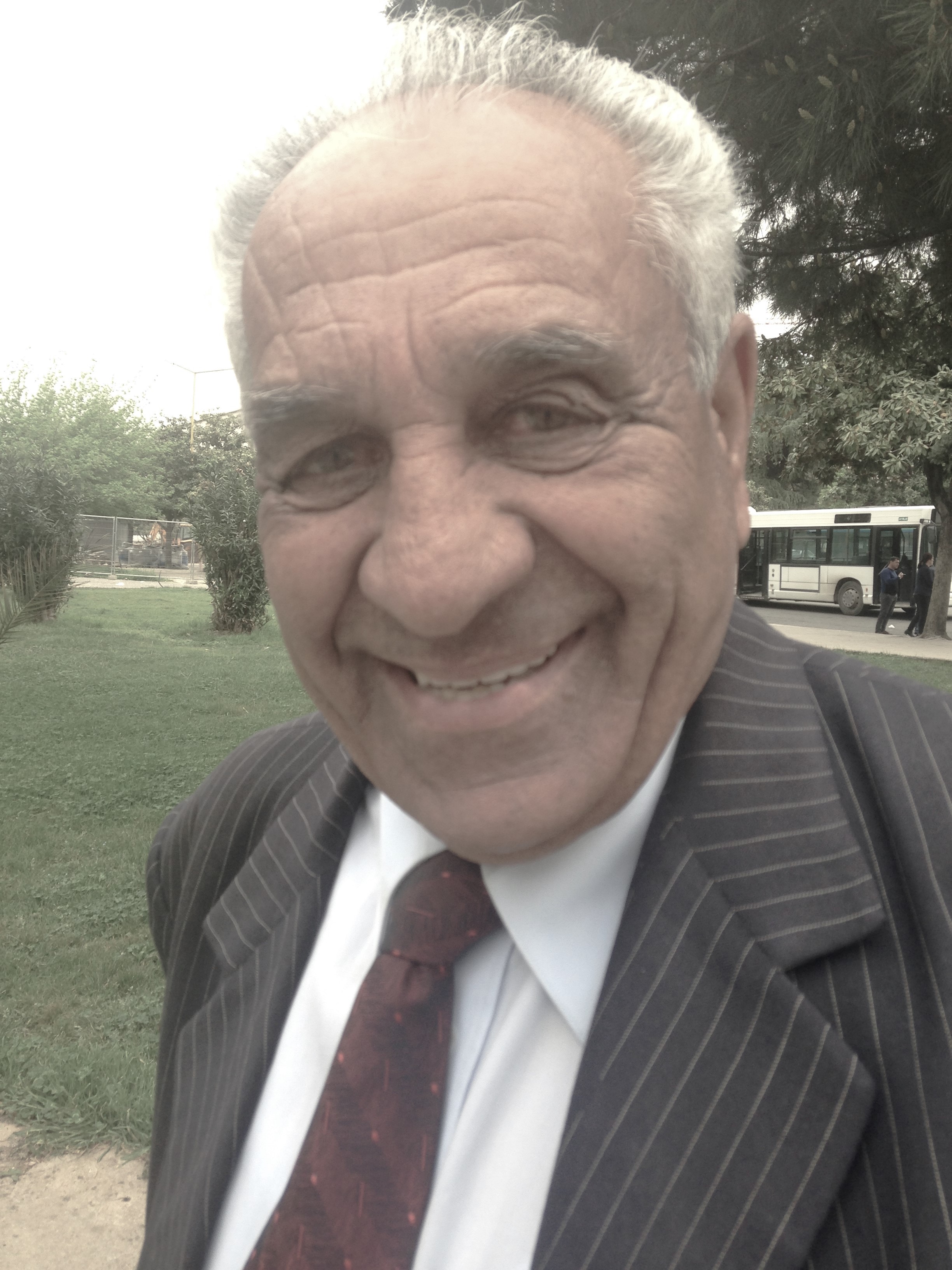
“Tall Sula”, or “Sula of the Sports Palace”, this is how he is still known today, the mythical character of that environment. A life connected to the “Partizani” Sports Palace, and later “Asllan Rusi”. His name is Sulejman Zela, from the villages of Tirana, and he came to the capital in the mid-1960s, taken to perform military service, initially as an athlete in throwing events, then for handball, as he had a height admirable for basketball. But his sports career would not last long, and the Sports Club leaders placed him as a worker in the sports palace administration. For more about this, he informs us in this short interview, which we are publishing below in this article.
Mr. Zela, how many years have you worked here?
From ’68 until when I retired a short while ago, nearly half a century, I worked there, slept there; the palace also served as a home for me. While now, I live in an apartment nearby. I have unforgettable memories. I maintained the indoor environment, cleaned the changing rooms, I was the main responsible.
Do you remember the demonstrations with the Chinese, the congresses?
I was the organizer of the central hall, together with the other workers, and it was a great responsibility. For the rallies with the Chinese, various congresses, or such activities, the palace was locked down, no national or international matches were held. On one occasion, the “Partizani”-“Dinamo Bucharest” basketball match was played in Shkodra, because in Tirana a congress was to be held. The Palace was taken and was under police care, and for the preparation of the podiums, work was done for months. For security, everything was checked by the State Security before the start of the congress.
Bellova: “The Sports Palace, a desire of Petrit Dume”!
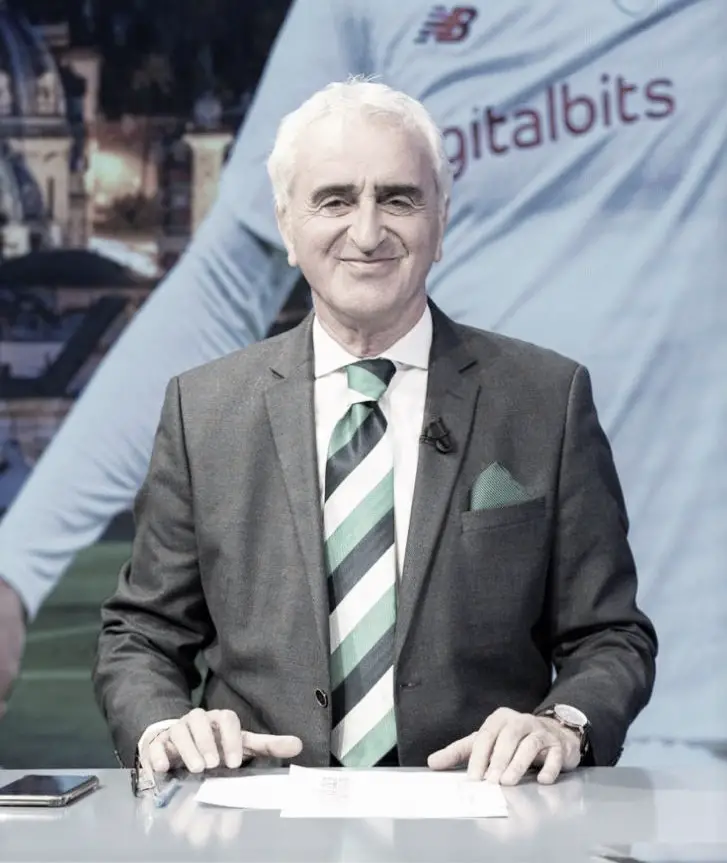
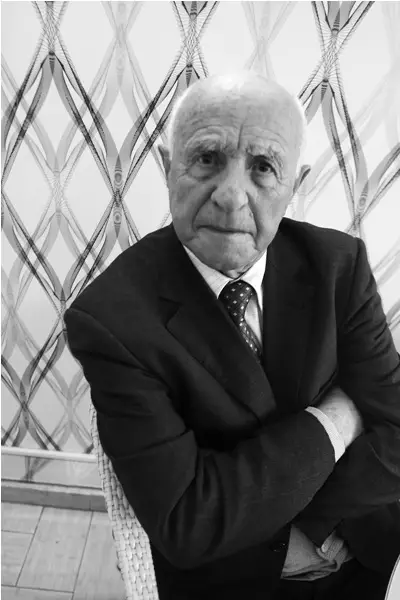
Ismet Bellova, a major figure, a personality not only of sports and the microphone, but multidimensional, regarding the figure of General Petrit Dume, the originator and main contributor to the construction of that sports palace, expresses: “The special thing about Petrit Dume was that he had a rare character and great humanity. Everything he had in his hands, he dedicated to sports, to his people. The Sports Palace is his work, the result of his desire that even in Tirana an international activity would be held, such as that of the Championships of the Armies of Eastern European and Far Eastern Countries in volleyball. Likewise, the ‘Partizani’ Club complex. It is a moral obligation to speak and treat the great positive figure of Petrit Dume. It is up to everyone to create an appreciating symbol, a special annual prize in his name, to be awarded for merit to athletes and great figures. At least it is a way to remember, respect, and honor his greatness.” Memorie.al