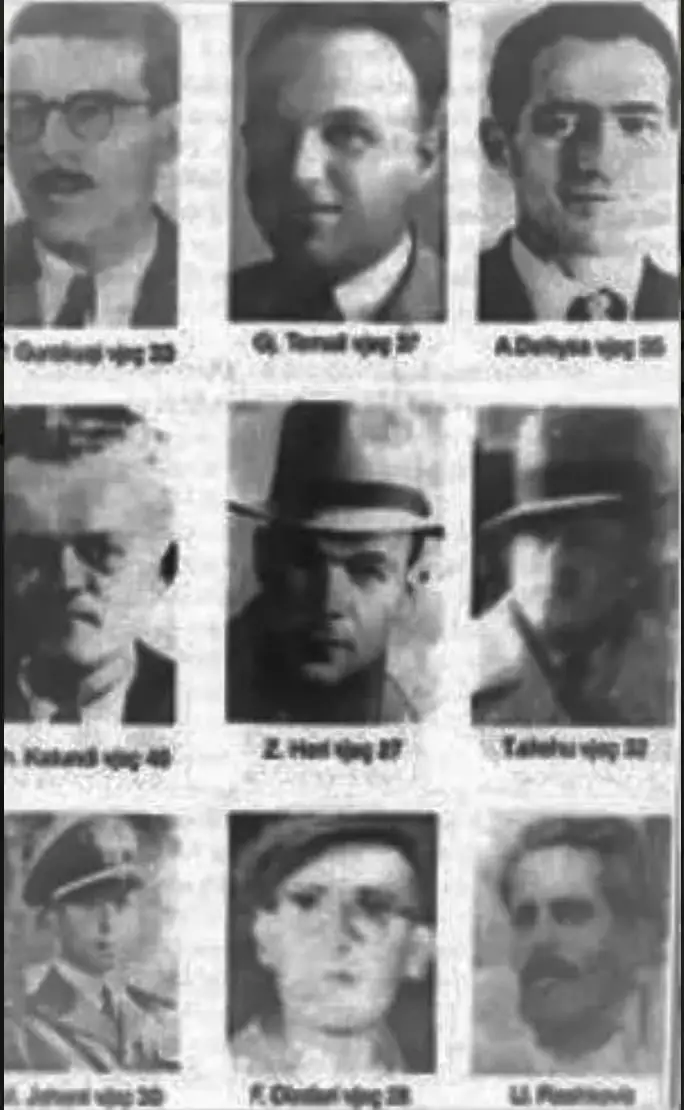
Memorie.al / Osman Kaceli, the son of one of the victims of February 1951, after the so-called “Incident of the bomb at the Soviet Legation in Tirana,” recalls the macabre event, also publishing the biographies of the innocent people who were shot on the night of February 26, 1951, ‘80 years ago.’ One of them was the young merchant Hekuran Troka, who on the evening of February 20, 1950 [sic – should be 1951], when they arrested him, taking him by force from his home, could not even give a final embrace to his wife, Anica, his 3-year-old eldest daughter, and the youngest, only 1 month old…?! The tragic story where on February 26, 1951, shortly before midnight, somewhere on the outskirts of Tirana, 22 well-known intellectuals, tied together barbarically with barbed wire, were shot and thrown into a common grave, dug two days earlier, among whom was Hekuran Troka, whom Pilo Shanto and Zoi Themeli had marked with a green pencil cross, as well as a young woman, the renowned scientist Sabiha Kasimati, whom the criminal Rasim Dedja had marked with a red square! On February 27, 1951, the Chairman of the Military Court, Shuaip Panariti, and one of the members of that Court, Vangjel Kocani, signed decision number 64 of that court, sentencing to death by firing squad 22 persons, well-known intellectuals and ardent patriots, who had fought and worked for the Albanian cause! The other member, Nonda Papuli, as well as the secretary of that Court, Hydai Bejo, did not sign the decision, as their signatures are missing from the archival documents that were found and published after the 1990s, with the fall of the communist regime of Enver Hoxha and his successor, Ramiz Alia!
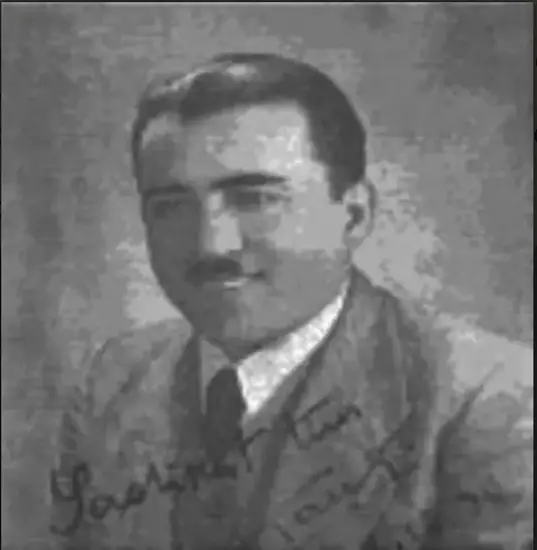
Hekuran Troka was born in 1919, in the small town of Kuçova, into a middle-class urban family. From an early age, he was distinguished by his simple and curious nature, which he manifested with good results in school. In Hekuran’s early youth, Kuçova became the center of the oil extraction and processing industry. At this time, he benefited from contact with Italian specialists and perfected his Italian, which he had learned very well from his school days; thanks to his abilities, the latter offered Hekuran a request to work for them.
He continued for a long time in various jobs, from which he gained not only material benefits. Later, after he had created a good material base and after he had made friendships with merchants from Durrës, such as those of the Dovana, Fani, Shijaku families, etc., he moved to that city, where he opened a shop and developed fruitful commercial activity: after the end of the Second World War, Hekuran, who had also established business relationships with the father of the one writing these lines, Jonuz Kaceli, and with other merchants such as: Këllezi, Tugu, Shijaku, etc., settled in Tirana. His activity was mainly in manufactured goods and hardware. He was always distinguished by his correctness and honesty. Hekuran had his shop on “Mbretnore Street” (today Barrikadave Street), until the beginning of 1951.
Throughout this period of commercial activity, he voluntarily and without any payment assisted the state trade bodies, for example, together with other colleagues, in assessing and determining the prices of manufactured goods, helping to eliminate as much as possible speculation by unscrupulous speculators. During this time, in his neighborhood on Durrës Street, behind the Officers’ House (today the Ministry of Culture), he was an activist of this neighborhood, where according to the testimony not only of his wife Anica Troka, but also according to the testimonies of the residents of that block, he had solved many problems that normally arose among citizens.
Meanwhile, Hekuran had married Anica, whom I mentioned earlier, born on July 20, 1920, a very beautiful, handsome, and well-educated young lady, of Yugoslav origin. He adored Anica, who gave him two wonderful daughters who brought him immense joy: Liljana, born on October 20, 1947, and Zhaneta, born on January 15, 1951. Even in the simple family of these exemplary citizens, on the night of February 20, 1951, a “bolt from the blue” struck. Shortly before midnight, the wild beasts with human faces of the State Security (Sigurimi) stormed the house door with a furious assault.
They did not wait for the master of the house to open it, but pushed it open by force, shouting: “You, Hekuran Troka, are an enemy of the people, and as such, you will be arrested.” You do not need a particular imagination to picture the terrifying state of the 30-year-old Anica, whom Hekuran tried very hard to calm, but also to convince the monsters that he had committed no crime, without success. Meanwhile, they had fastened iron handcuffs on the soft hands of the 30-year-old Hekuran Troka, and they left him no possibility not only to embrace his wife and 3-year-old Liljana, but not even to cast a final glance at his newborn daughter, Zhaneta, only 1 month old!
Thus, a young woman who was a 35-day postpartum mother was attacked in her marital nest by the forces of the State Security and the Ministry of Internal Affairs, who, without applying the most elementary rules of laws sanctioned by a consolidated constitution – and even more so in a self-proclaimed People’s Republic – brutally massacred her, simply because she tried to embrace her husband with her newborn baby in her arms, who was crying incessantly…!
But it was not over. I do not know if the poor Anica had heard the wise Albanian folk saying: “When evil enters, it clears the path”? Unfortunately, even without knowing it, that’s what happened to her! There is no precise testimony of how that poor woman with two tender little ones spent her days and nights, until Thursday, March 1, 1951, when the wild beasts of the State Security returned and communicated to Anica with mockery and hatred: “Your husband, we have executed as an enemy of the people, and you, together with both daughters, on Saturday, March 3, 1951, will be interned in Berat”!
These events, which shook the very foundations of the family of Hekuran Troka, about whom we are speaking in this writing, originated on February 19, 1951, when around 7:30 PM, in the courtyard behind the Soviet embassy in Tirana, two sticks of dynamite were thrown by unidentified persons, without causing any significant damage. This caused an unprecedented “earthquake” in all the structures of the Enverist-communist dictatorship state, especially in the three directorates of the State Security, led by the murderous criminals: Pilo Shanto and Zoi Themeli of the First Sector, the merciless criminal and bloodthirsty man, Rasim Dedja, of the Second Sector, and the other criminal, Edip Cuci, of the Third Sector.
On February 20, that is, the next day, at the urgent meeting of the Political Bureau, the First Secretary of the Central Committee of the Party of Labor of Albania, Enver Hoxha, or the so-called “Commander” at that time, opened the meeting, where only the members of the Bureau remained, with the words that Mehmeti, supposedly, would make a proposal, which in fact was a direct order from himself. The Minister of Internal Affairs, Lieutenant General Mehmet Shehu, after describing the event of the previous night, continued: “To this terrorist act, we will respond with terror, regardless of the laws in force. We will arrest 100 or 150 intellectual individuals, and 10 or 15 of them, of the type of Qemal Kasoruho, we will execute by firing squad. Then, within a month, we will intern their families. We have the lists ready, and if you agree, we will begin the arrests tonight…”, whereupon all the others unanimously approved his proposal.
Also on February 20, shortly before midnight, the arrests began and continued until February 23. About 220 people were arrested, well-known intellectuals; most of them graduate of Western universities or military academies from various European countries! On February 26, Fadil Kapisyzi and Mehmet Shehu signed the proposals for the arrestees, which the prosecutor Siri Carçani supposedly authorized that same day.
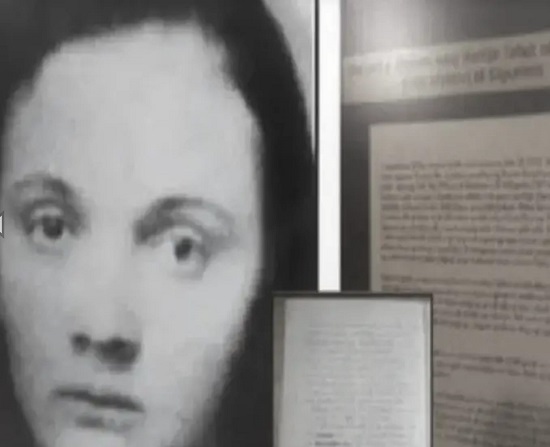
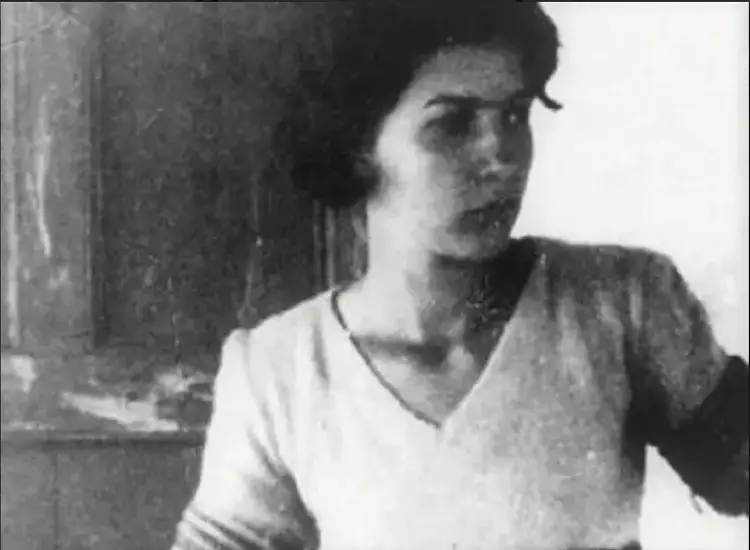
Also on February 26, shortly before midnight, 22 well-known intellectuals, tied together barbarically with barbed wire, were shot and thrown into the common grave, dug two days earlier, among whom was Hekuran Troka, whom Pilo Shanto and Zoi Themeli had marked with a green pencil cross, as well as a young woman, the renowned scientist Sabiha Kasimati, whom the criminal Rasim Dedja had marked with a red square!
On February 27, 1951, the Chairman of the Military Court, Shuaip Panariti, and one of the members of that Court, Vangjel Kocani, signed decision number 64 of that court, sentencing to death by firing squad 22 persons, well-known intellectuals and ardent patriots who had fought and worked for the Albanian cause! The other member, Nonda Papuli, as well as the secretary of that Court, Hydai Bejo, did not sign the decision, as their signatures are missing from the archival documents that were found and published after the 1990s, with the fall of the communist regime of Enver Hoxha and his successor, Ramiz Alia!
The Minister of Internal Affairs, Mehmet Shehu, thus “did not keep his word”: he arrested about 220 people, all well-known intellectuals and patriots, executed 22 of them, and interned their families within three days! The ratio of 1 to 10 – was it fatal or premeditated?!
On March 3, 1951, Anica Troka and her two babies were forced onto the truck of the families designated for internment in Berat, where they arrived on the evening of that day, spending the night provisionally at the “SKRAPARI” Inn, and the next day, the police put them in a basement in the old castle of Berat…! Whoever has an imagination, let them continue the course of events, as to what happened further with them…! Memorie.al