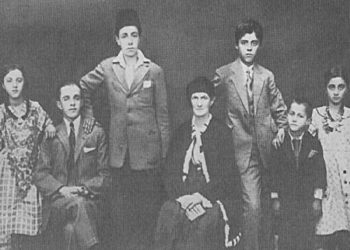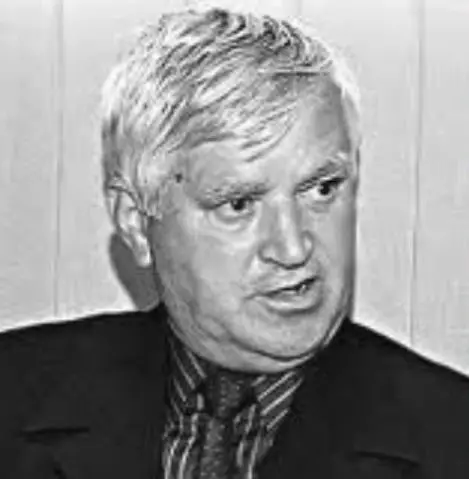
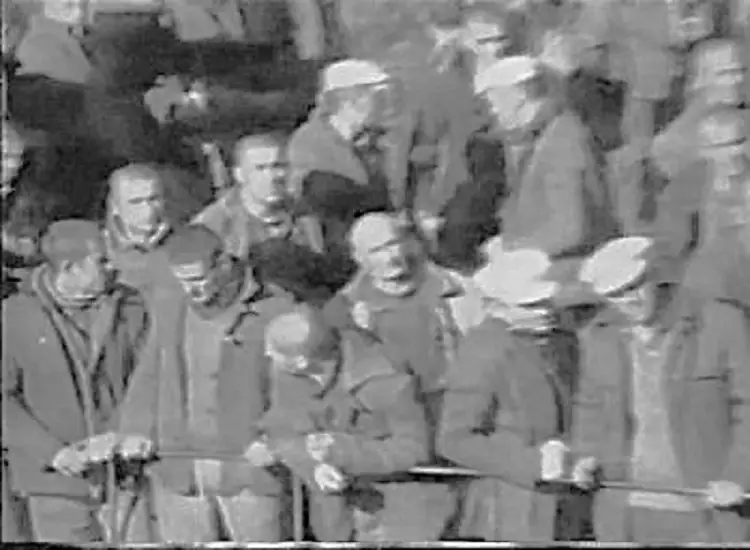


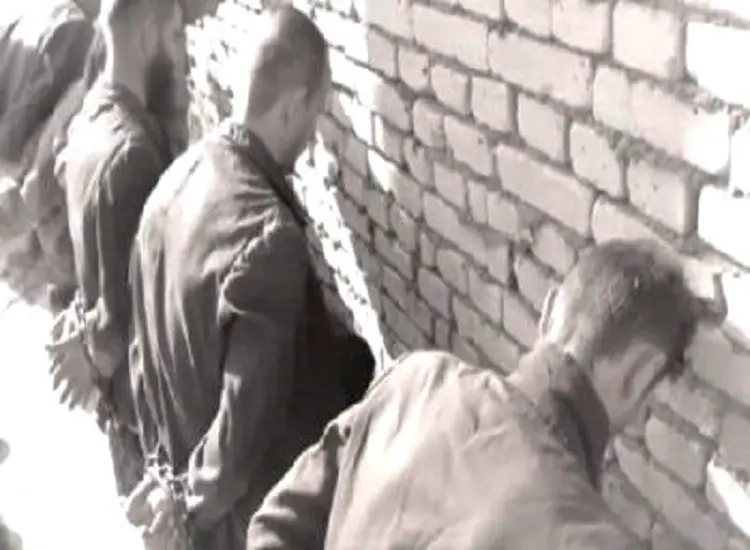
Memorie.al / One of the rarest testimonies, which also serves as evidence of what happened in the Spaç prison camp on May 11, 1985, when the official news of the death of the communist dictator, Enver Hoxha, was given, is that of Bedri Blloshmi. After the execution of his brother, the poet Vilson Blloshmi, and his cousin, Genc Leka, Bedri was already under strict surveillance. For the first time, in a book he presents the file, complete with archival documents and unpublished letters, including the event of April 11, the reaction of the prisoners, and the tightening of measures by the State Security. Because of the joy he openly expressed on the morning of April 11, 1985, Bedri was spied upon and wiretapped by Security operatives and their people inside the prison, which led to his re-sentencing to 30 days of isolation in a dungeon.
Regarding this event, etc., we are publishing excerpts from the book published several years ago by the Institute for the Study of Crimes and Consequences of Communism, where Bedri Blloshmi recalls the day of April 11, 1985, in Spaç prison, as well as a letter, a service report on his behavior after the death of the “leader,” also published on the official website of the Institute for the Study of Crimes and Consequences of Communism.
Memories of Bedri Blloshmi – April 11, 1985, Spaç
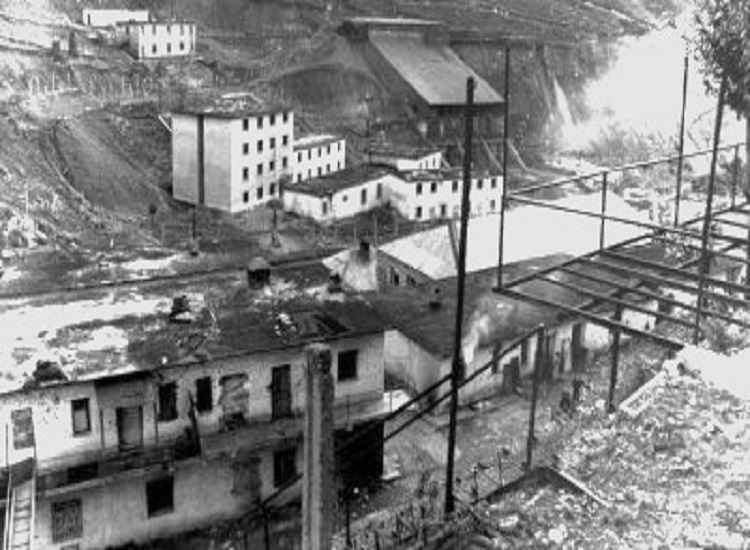
It is almost a year since I came from Qafë – Bari (exactly on July 5, 1984). This prison of Spaç, which used to be for politicians (or “enemies”), I now found filled with ordinary prisoners. So, for us “enemies,” they have built some barracks in the creek, next to the buildings.
In Qafë – Bari we had a different mineral. Now we have to re-learn pyrite, mixed with lots of acid and with temperatures of 40-45 degrees. Now, when we go out to work, we line up at a cage-bridge that connects our barracks with the buildings and the command.
After two incidents in both camps, 11 years apart, the guards upon our return would say to us: “You from Qafë – Bari, will you behave, or do you want to try it again?”
All of us, as many as we were, did not answer. And so, frightened, under this pressure from the police, days, weeks and months passed in a boring monotony. On April 11, this happened: We were the first shift. I was working in gallery 20, the old one. After cleaning the workface, I got ready and waited for the air (from the compressors) to come, to make the blast holes.
I waited and waited; saw that time was passing, and went out of the gallery to see what was going on. Up on the hill I see a lot of movement, many police and civilians. It was an unusual situation. I called the guard to ask him about the air, why it hadn’t come?
He was 10-15 meters away, when he lunges at me: “Get back, get inside the gallery!” Next to gallery 20, there was a casemate where soldiers stayed (outside the fence). As soon as I turned back to enter the gallery, I notice that above the casemate, the flag was lowered to half-mast!
I froze on the spot; I understood that something had happened. I hurried and went inside, went to the workface of a fellow inmate and told him what I had seen. “Your eyes are playing tricks on you,” he replied in disbelief.
“Ymer,” I say to him, “someone has died, because there is no other reason for the flag to be lowered to half-mast!” “Alright, alright,” he says to me, “hopefully it is as you say.” Soon after, they notified us to leave the work and go outside.
Little by little we all gathered and it was clear that the guards were in tears, the civilians even worse. After counting us, they sent us to the camp. As soon as we approached, we saw that in the camp there were over 20-30 police and civilians, the loudspeaker hanging from the branch of a poplar tree was mourning with funereal music.
No matter how much we tried to hide our joy, it was impossible. We could not control ourselves. We met with some comrades and advised each other not to draw attention, because what we had always prayed for had happened. The dictator was dead. We thought about how events would unfold.
I say to a friend: “Go to the warehouse, take the sugar, flour and oil we have saved for this day and stir us up some halva.” Mehmet scolded me: “Stop, or they will kill you, can’t you see they’ve gone mad, go lie down in your bed and sleep.” “Met,” I say to him, “how can I sleep, today is the happiest day of my life.”
In the camp, the guards and civilians walked around with their heads down and teary eyes. I couldn’t sleep at all that night. I lay there, covered with a blanket. Many of us lay still and didn’t say a word out of fear, because the police were present all the time.
Spaç 11.4.1985
Service report no. 36
Date 10.5.1985
Today, on 12.4.1985, in unit 303 Spaç, in the residential area for crimes against the state, around 6:00, the convict Bedri Blloshmi, while he was having breakfast in the mess hall and when the other convicts had their heads down and were eating bread, expressed himself with the words: “Congratulations, comrades.”
This statement of his was heard by the chairman of the Council himself, Dhimitër Stefa, who informed immediately. This convict said these words at a time when the entire people was in mourning for the death of comrade Enver Hoxha. This convict represents a danger. For this, I think he should be isolated and prosecuted.
Commander of the Police Platoon
Josif Sadikaj
Notes of the guard officer: To be isolated for 30 days, documents to be prepared and to be prosecuted. Memorie.al
Guard Officer
Refat Shkëmbi
Notes of the command: To be isolated for 30 days.