
By Visar Zhiti
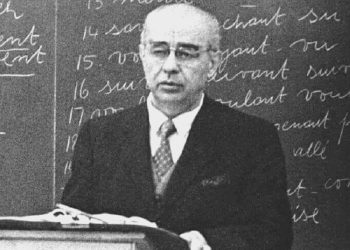
Memorie.al/ I feel inclined to grant him the title of “Count” whenever I utter the name Uran Kostreci. Not only because we have a Count Uran in the glorious history of Gjergj Kastrioti – Skanderbeg – that man of great faith who stood by the National Hero, remaining uncorrupted even when Sultans Murad I or II offered mules laden with gold to betray him – but because my Uran, too, remained faithful to his suffering, his prison years, and his ideals. He was never corrupted; he was unyielding to the point of harshness for the sake of justice, yet compassionate to the point of tears for the sake of goodness. He was a poet, specifically of the sonnet – that Albanian chime which he wrote without ceasing. Rhythms flowed from him in a wealth of rhymes, making the sonnet his weapon, like a martial silver sword adorned with precious stones. With it, he struck the evil that crossed his path and, like a knight, honored the virtues and noble names of nationalism. To each of the most prominent, he dedicated a sonnet, bestowing them like medals of Honor.
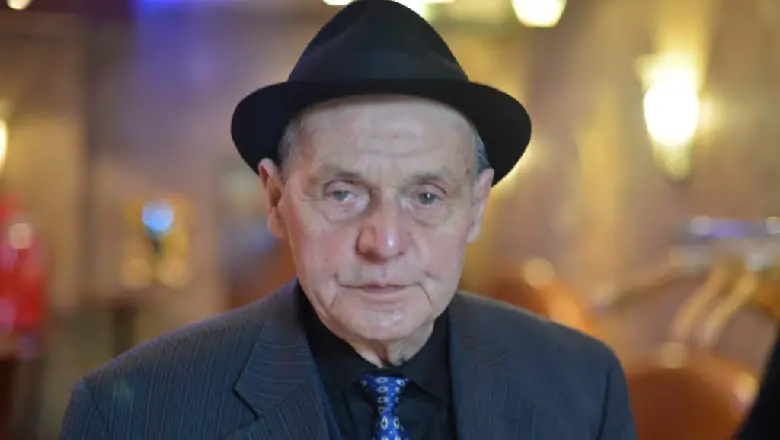
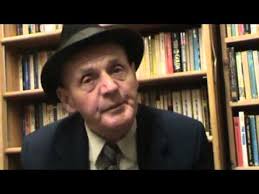
Truly, Uran Kostreci possessed something knightly, a count-like essence – a noble solitude surrounded by many friends; a wanderer yet steadfast; unforgiving yet forgiving; loud-voiced yet wise; dignified and graceful. Tall, wearing a trilby (republike) hat upon his head like an enigma with a purpose. He held republican and conservative thoughts, always with a cigarette on his lips like a taunt; some smoke was needed, it truly was.
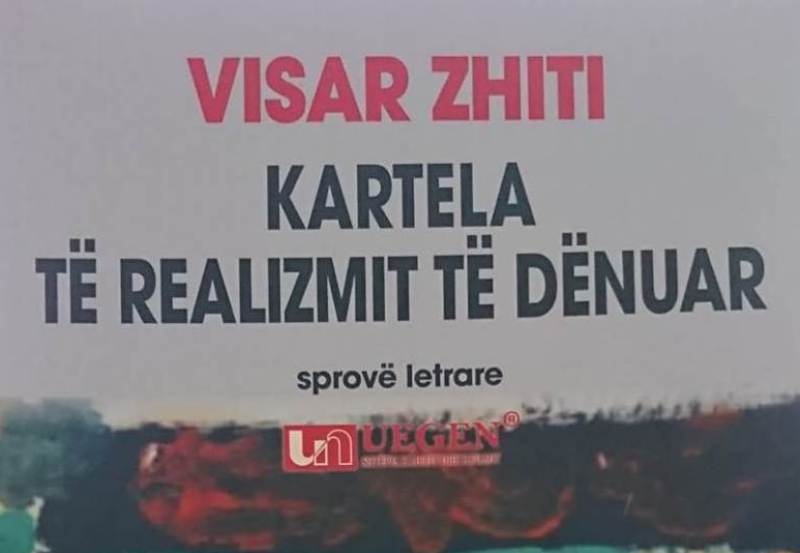
He had the portrait of a poet, and that is what he was. He belonged to that “other” literature – the one that emerged from prisons and internment camps. In my book, the essay “Files of Condemned Realism,” there is an entry for this master of sonnets, this stalwart of prisons who once said: “Prison did nothing to me.” All that suffering for such a challenge…
The Painful Ledger of Uran Kostreci
…a passionate devotee of classical sonnets, those chimes seemingly created in the 13th century to sing of love and joy, which in modern Albanian poetry – in that “other” literature – were transformed into apocalyptic screams.
From a young age, Uran Kostreci became acquainted with communist persecution. His father was arrested as an anti-communist nationalist, and the family was evicted from their home. As he grew, so did his desire for education. He managed to graduate from the “Normalja” of Elbasan and became a teacher. However, he wrote a poem critical of Enver Hoxha; only escape could save him. He was captured at Lake Pogradec, sentenced to prison, and locked away in Burrel…!
The prisoner Ejëll Çoba taught him Italian and Dante; Koço Tasi taught him philosophy; Kudret Kokoshi reinforced his mastery of the sonnet and nationalism – but the rebel spirit was already in his blood.
During his 15th year of imprisonment, he was sentenced again to another 8 years on charges of insulting Enver – revenge for the poem they could not find years earlier. After 20 years in prison, he was released, according to him, due to the “Movements in Kosovo.” He worked as a porter (hamall) but was arrested again and sent back into internment. Again, he attempted to escape; he was arrested on a train but managed to flee again… when he regained consciousness after being struck on the head with an iron bar, he found himself in handcuffs. Following swift torture and a summary trial in Elbasan, he was sentenced to another 3 years in prison.
“The Epic of the Grasshoppers” (Epopeja e karkalecave), a poem by Uran Kostreci, emerged from prison with him – not written down, but held in his memory. It became famous as a satire. It was not about the grasshopper plague that occurred when the communists took power, but rather a literary clash with another socialist-realist satire found in school textbooks, which mocked patriots and their struggle by distorting historical truths.
Uran of the sonnets, also elected as the chairman of the Democratic Party in Elbasan, threw himself into anti-genocide work. He investigated those responsible for communist persecutions, preparing cases for about 30 of them to face justice. However, they were quickly released during the chaos of 1997, leaving Uran – the man of prisons – at risk once again. This time he succeeded in leaving; he went to the USA, sought political asylum, and was sheltered by the Albanian-American Association “Vatra.” In 2007, he returned to his homeland, publishing a book of sonnets and a novella. He wrote sonnets continuously, even now at the age of 80, sitting there among people at a table in the “Piazza” cafe in the center of Tirana, never removing the borsalino from his head.
Some “Red” artists, for fear or for gold,
Licked the tyrant’s boots while the Motherland was hell:
They sold their souls to the devil, as in stories of old!
Dragging themselves… on all fours, they fell.
They made those films and lied in plain sight,
Claiming the “Reds” gave the Germans their blow…
Though they killed Albanians for Dushan’s delight!
Of what happened yesterday, no one wants to know.
But even today… films with “kulaks” appear,
American spies and priests portrayed in a trance,
Still shown… confusing the youth, it is clear,
Who know nothing of communism, nor of the chance
Of how the “Red” jailed the Land, shed blood and fear,
And in internment, even children died by his lance.
That was the sonnet “Confusion” (Çoroditje). But do you know why he wears the borsalino? He does not want the deep scar of a bullet wound on his head to be seen. He has had it since the time the prison guards shot him as he threw himself over the hellish barbed wire to be killed. His prisoner’s jacket was shredded by bullets, scattering bits of black cotton like raven feathers, and he fell as if dead. When they dragged his corpse toward one of the cells, God knows what angel came and revived him…! “So that he appears neither as a hero nor a victim” writes researcher Uran Butka, “he wears that republican hat.”
So many times he cheated death and feared it not. He would leave the hospital smiling after every operation; he even mocked Covid-19. Let it come again, he would say. He loved life, but loved its honor more. Tireless, he finally decided to rest. At 83, he closed his eyes forever—today, yesterday, tomorrow, it matters not. What matters is that he saw both hell and paradise, and his eyes sparkled the same for both.
In fact, it was in him that most people saw…! He would light a cigarette and, under its smoke, write another sonnet. He truly became a sort of late Count of the forgotten sonnet. A patriot above all. He wrote for Kosovo, for Chameria, for democracy, for the USA, for great men, and for daily politics… sonnets of morality. Like commandments. Without effort. As if they were his last breath. As a poet, he has many “last breaths.”
The news was given that tributes would be held in his honor. And where? In the Building of the Formerly Politically Persecuted. There… another sadness; persecuted even in death. Segregated. There…. It felt as if tributes could just as well have been held in the prison cells of Burrel.
Did the state not have halls in cultural institutions where, under the shadow of the National Flag, wreaths of flowers could be brought? For Uran Kostreci became a renowned name in contemporary poetry, a media presence through his interviews, and emblematic as a man of resistance – a voice of the memory of great suffering that unites rather than divides the people./ Memorie.al