By Ali Buzra
Part Forty-One
– LIFE UNDER PRESSURE AND SUFFERING –
(EVALUATIONS, COMMENTS, NARRATIVES)
Memorie.al / At the request and wish of the author, Ali Buzra – as his editor and first reader – I will briefly share what I experienced during my encounter with this book. This is his second work (following the book “Gizaveshi through the years”) and it naturally continues his established writing style. The sincerity and candor of the narrative, the simple and unadorned language, the precision of the episodes, and the absence of deliberate, subsequent imaginative processing or its non-utilization, have, in my opinion, served the author positively. He reaches the reader in his original form, inviting us to at least recognize unknown human fates and sorrows – whether by chance or not – leaving us to reflect as a beginning of awareness toward a catharsis so necessary for the Albanian conscience.
Bedri Kaza
Continued from the previous issue
The man before me, who relieved me from a state of intense tension, was Andon Shkëmbi, originally from the villages of Prespa and of Macedonian ethnicity. Within the leadership bodies of the communist state, there were also men of value, despite the bloodthirsty system installed by the dictator Enver Hoxha. One of them was Andon Shkëmbi. I went to my office and stayed a while, just to recover, as I was unable to write. I opened the drawer where I kept ready-made youth membership cards with signatures and stamps, and I filled one out with the name of Hyqmet Dosku.
The next day, I planned to go to Dorëz. I contacted the brigadier Tafil Mema, who was a party member, and explained the problem. He gathered the brigade. In their presence, we declared that Hyqmet Dosku was accepted into the Youth Union Organization. I shook hands with Hyqmet and his mother, who was moved to tears for her son. All this work for a piece of red cardboard – but without it, you would be alienated from the community and society.
In 1994, Gani’s mother passed away, while in 2003, his wife followed. The situation had already changed. The dictatorial system had been overthrown. Present at the family’s condolences were members from all the families of Dorëz village, and not only that, but from the entire region. Thus, it was not the villagers of Dorëz who refused to have relations with “kulak” families, but rather the party-state that isolated these families from the village and the community. Ganiu, in the first years after the overthrow of the dictatorship, held the position of village chairman in Dorëz. With his skills, vitality, and dedication, he solved many problems and carried out much work in the village. Today, he is 84 years old.
Despite his age, he never stops taking an interest, communicating with local government leaders, particularly regarding irrigation system issues, which remain a concern for our villages. He is a devoted believer and has contributed greatly to Gizavesh, occasionally serving as the imam of the mosque. The sons of Nebi and Gani are well-settled, working both inside and outside the country. After 25 years, following the collapse of the communist system, Ferit also returned from the USA. Today, he is 89 years old and continues to reside there. He has returned to his birthplace several times, while he has taken one of his daughters from his first marriage to America along with her entire family.
11.1 Pressure on Key Figures in Dorëz to Realize Collectivization
In the 1945 elections, the Albanian Communist Party ran without opposition competitors. What could be called the opposition had been annihilated, both during the war and immediately after the country’s liberation. Oppositional elements were declared enemies. Some fled abroad, while the rest, who constituted the nation’s intellectual elite, ended up in internment, imprisonment, or death sentences. Thus, after securing political power through anti-democratic elections, the Party began undertaking economic reforms.
In 1946, the Agrarian Reform was enacted, which expropriated large and medium land owners without compensation, giving land to peasants with little or no land. In fact, this was a pure deception of the peasantry, as the peasant had no right to either sell or buy the land.
A year later, in 1947, the first cooperative was established in Krutje, Lushnje. Thus began the process of agricultural collectivization, the most drastic measure against the peasantry, gradually stripping them of the only property they had inherited. This radical reform in agriculture was carried out in stages over a 20-year period. It began with the lowland and hilly areas and later extended to the mountainous zones, concluding nationwide in 1967.
This process was propagandized as being voluntary, by the peasant’s own wish, but in fact, for the majority of the peasantry, it was a completely coercive action. To achieve collectivization, helpful factors were exploited, and various forms of deception and coercion were used against the Albanian peasantry, who at that time were mostly uneducated.
For this purpose, first: as a support base, that part of the peasantry that before liberation was landless or had little land served as the foundation. This class, which received land “for free” without the right to buy or sell, could not truly believe the land was their own property since it had previously belonged to an owner. Thus, this category accepted collectivization almost voluntarily, as they were neither owners of the land nor felt like they were.
Second: for this purpose, many leading district cadres were instructed and utilized, being distributed to every village, along with peasants who were party members, who would be the first to set an example by joining the cooperative.
Third: it was accompanied by a broad propaganda campaign in villages, neighborhoods, and every family, regarding the “benefits” that collectivization would bring as a phenomenon of equality and well-being for all. For some, this propaganda took hold, as a good portion of the Albanian peasantry was long-suffering and economically ruined.
Fourth: the propaganda developed by Party leaders was also accompanied by pressure from Sigurimi (State Security) officers, escalating to arrests and sentences for those who most strongly opposed joining the cooperative. This instilled terror and fear among the peasants.
Fifth: during the process, the government increased the tax burden, making it unbearable for families that still remained individual [farmers].
The cooperatives in the villages of Dorëz and Gizavesh were established in 1957, with a small group of families for each village, while the rest, who constituted the majority, had refused. Under these circumstances, facing resistance from the majority of families, arrests and imprisonments of several influential persons in the village were used to instill fear and panic in others. These were carried out under the motivation of “agitation and propaganda against the state,” considering them hostile acts.
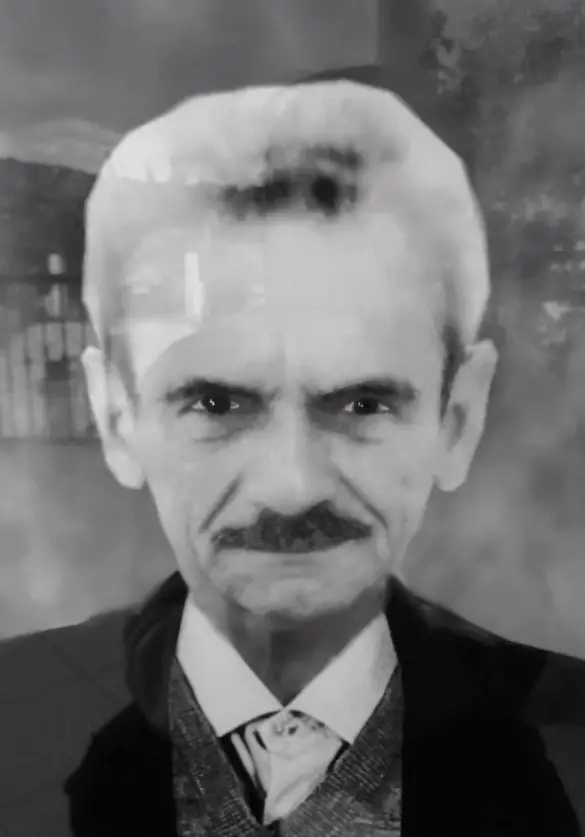
In 1962, Ramadan Kurti, Shefqet Alla, and Murat Dosku were arrested in Dorëz, while in Gizavesh, Osman Gjata and Daut Kumara were arrested. Ramadan Sali Kurti, born in 1900, was one of the most influential and authoritative persons in the village of Dorëz. The Kurti family possessed patriotic and freedom-loving values. His brother, Bajram Kurti, was a participant in the Battle of Shkodra in 1913, where he was killed in action against Montenegrin forces. His brother Ramadan was also noted from a young age for his intelligence and loyalty (besa). In 1943, he was elected Chairman of the National Liberation Council in the village.
Together with Shahin Dosku, he facilitated aid and shelter for the partisans during the war, while sending several boys from Dorëz to join partisan formations. Ramadan even sent his eldest son, Ganiu, as a partisan in the First Assault Brigade. During the fighting at Qafë-Shmil, Ganiu was seriously wounded. They brought him home, but he could not survive and passed away three days later. Unjustly, he was never granted the status of “Martyr of the Fatherland.”
Even after the country’s liberation, Ramadan remained at the head of the village People’s Council for several years. Ram Kurti, as he was briefly called, saved people from arrest and houses from burning. He acted as a guarantor for Abdulla Hunçi from Gizavesh, who was a fugitive after being reported to the State Security organs by his cousin Rexhep Hunçi, who was their informant.
Under Ram Kurti’s word of honor (besa), Abdulla surrendered, staying for several days at Rama’s house, and then went home. But the communist state was not satisfied with Rama. As an authoritative person in the village, he was not working hard enough to increase the number of families included in the cooperative. Thus, on November 23, 1962, he was arrested in Rrapun. He was held for 4 months under interrogation, facing pressure and coercive measures, accused of treason against the fatherland and as an agent of the Yugoslav UDB.
This accusation was as false as it was ridiculous, as the UDB could not possibly communicate with a person like Rama, who was illiterate. Furthermore, they accused him of having sheltered, aided, and supplied the fugitives Isak and Kamber Alla during the years 1945–’47. Testimonies were given that, together with Shefqet Alla, he had sent 1 quintal of corn to their families when they returned to Zgosht from internment.
“He agitated that one cannot live under this power, and that only an outside intervention could save the country. He influenced several villagers not to join the cooperative.” These and other testimonies, which might even have been true, were considered crimes against the state. From today’s perspective, we can say that he was far-sighted and that he did very well.
The Military Court of Tirana, operating in Elbasan with the participation of the Military Prosecutor of Durrës, on February 21, 1963, sentenced him to 12 years in prison and confiscation of personal property for the crime of treason against the fatherland, as well as agitation and propaganda. Ram Kurti was 63 years old, a father of 6 children, whom he left in a miserable economic state. He served his prison sentence in Ward 313, Tirana, as well as five years in Burrel. His son, Xhelal, recounts that once every two months, he would go with his mother to the prison to bring him a quantity of food, which they secured with difficulty from their work in the cooperative.
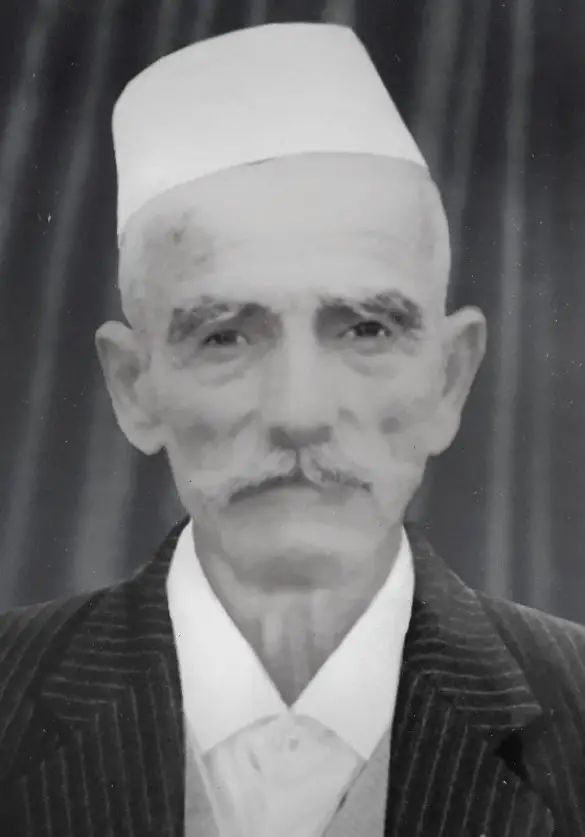
He was released after completing his years of sentence in 1975, at the age of 75. No one dared to visit their home. His family members, like many others of political prisoners, were deprived of the right to continue higher education. We used to see Rama below the house on the road, where he went out almost every day. I remember him as I walked toward Librazhd – so proud, dressed elegantly, with his long white mustache, reflecting manhood and dignity.
He passed away a few years later. Despite their desire to participate in the funeral of Ram Kurti, the noble man of the village, the people of Dorëz were unable to attend. He was buried with only 12 men present, all close relatives. Regarding this, Xhelal recounts: “after the funeral, in the following days, several villagers from Dorëz, as well as cooperative officials Sali Hidri, Gani Hoxha, and Ismail Buzra, came to offer condolences in semi-clandestine circumstances.”
Shefqet Kasem Alla
The Alla family in Dorëz arrived from Zgosht before the Declaration of Independence. The elder Liman Alla lived there. They had bought land and a house. His sons were Kasem, Ymer, Tafil, Muharrem, and Emin. They inherited an average economic level, engaging in agriculture and livestock. Kasem Alla, born in 1900, received education in this field during his military service. At a young age, he bought a house in Struga and was employed there, where, as mentioned above, the Allas inherited significant areas of land.
His son, Shefqet, was born in 1918 in Dorëz. Kasem took his son and wife to Struga around 1919–’20. Two daughters were born there. In December 1924, Kasem, with a unit of military forces composed of Albanians, set out from Macedonia and became part of the military forces that helped Ahmet Zogu retake power in Albania, toppling the government of Fan Noli.
Being an admirer of the King, he returned to Albania and served as a gendarmerie officer, initially in Tirana and later in the Vlora district. Around 1930, Kasem fell ill and was discharged, returning to the village. Zogu, appreciating his contribution to the military forces, granted him a pension and allowed him to keep his weapon. He passed away in 1933 at a very young age. His son Shefqet was 15–16 years old when his father died. Later, he married the daughter of Hysen Dosku and was mainly engaged in agricultural work.
He maintained close ties with his cousins in Zgosht, particularly with the brothers Isak and Halil Alla. During the war, he joined the Balli Kombëtar (National Front), participating in the Ballist unit of Shahin Dosku. Shefqet was distinguished for his bravery and courage. It is said that in 1944, dressed in the Balli uniform, he entered the German command post and, intervening there, saved his fellow villagers, Zylyf Rama and Mehmet Rama, from execution. Shefqet had friends everywhere; meanwhile, he valued and respected his father’s friends as well.
Shefqet Berberi, who was the Chief of the Internal Affairs Branch in Librazhd, liked Shefqet Alla because he considered him a friend through Bim Miraku, a merchant from Elbasan. Relatives recount that at one point he told him to leave Dorëz for Elbasan, because a “wave” might catch him here. Thus, as seen, the State Security records for Shefqet Alla were problematic. He was the son of a former gendarmerie officer of the Albanian Kingdom and was suspected of having helped the Alla brothers and their families, with whom they were close cousins. Although years had passed, the communist state would strike the wise and proud man of the Alla family in Dorëz. Shefqet was arrested on September 17, 1962, in Rrapun.
It was a time when the process of agricultural collectivization was the primary commitment of the Albanian communist government. Despite the difficulties, it had to be achieved at any cost. But individuals like Shefqet Alla were viewed with suspicion in the realization of this process. On the other hand, he had been designated for arrest; only a pretext was needed. They also held Shefqet for nearly five months in interrogation, using various pressures and machinations. Like Ram Kurti, he was accused of collaborating with the group of fugitives – the Alla brothers from Zgosht – as well as collaborating with the Yugoslav UDB.
The fact that he had helped Isak Alla’s family with 1 quintal of corn when they returned from internment was also mentioned. He was accused of having re-met Isak Alla in 1957 and going with him to Struga, where he stayed for 24 hours. According to them, with Veli Biçaku and Murat Dosku, he had even raised the issue of escaping abroad, which they would carry out at the right moment. For this, the weapon found – a “Beretta” type pistol with five bullets in the magazine – and a hand grenade were used as arguments, which, according to them, would be used during the escape. / Memorie.al