• Rreth Nesh
  • Kontakt
  • Albanian
  • English
Thursday, September 17, 2026
Memorie.al
No Result
View All Result
  • Home
  • Dossier
  • Interview
  • Personage
  • Documentary
  • Photo Gallery
  • Art & Culture
  • Sport
  • Historical calendar
  • Others
  • Home
  • Dossier
  • Interview
  • Personage
  • Documentary
  • Photo Gallery
  • Art & Culture
  • Sport
  • Historical calendar
  • Others
No Result
View All Result
Memorie.al
No Result
View All Result
Home Art & Culture

“For more than 25 years in New York, he succeeded in forming and mobilizing his own ‘saze’ (traditional musical ensembles) and company, producing records in the Albanian language and…” / The unknown history of Ajdin Asllan Leskoviku.

“For more than 25 years in New York, he succeeded in forming and mobilizing his own ‘saze’ (traditional musical ensembles) and company, producing records in the Albanian language and…” / The unknown history of Ajdin Asllan Leskoviku.

By Vasil Tole

Memorie.al / The passing of the master of the Epirotic clarinet, Petroloukas Chalkias, prompted us to present a very significant detail of Albanian-Greek relations, inspired by the life of Master Petro. In his autobiography, among other things, he states: “…after the wedding, in the early 1950s, I returned to Athens. I released other songs and they caused a great sensation. Then I received a letter from America, with an invitation to go there to record a ‘long play’ (LP). Twelve songs, six on one side and six on the other. They offered me the tickets and 1,000 dollars – a lot of money. So, I went to America shortly before 1960 – I even had time to meet Kennedy!”

The question arises: who invited the young master Petro – son of the great clarinetist Pericles “Klis” Halkias, grandson of the singer, lutenist, and tambourine player Lazaros Charisiadis, and brother of the violinist Achilleas Halkias – to America? In other words, which record label was to promote the master and his recordings?

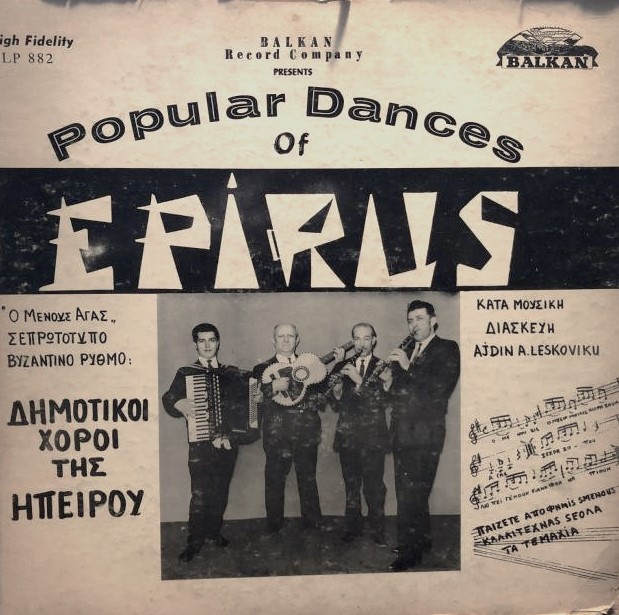
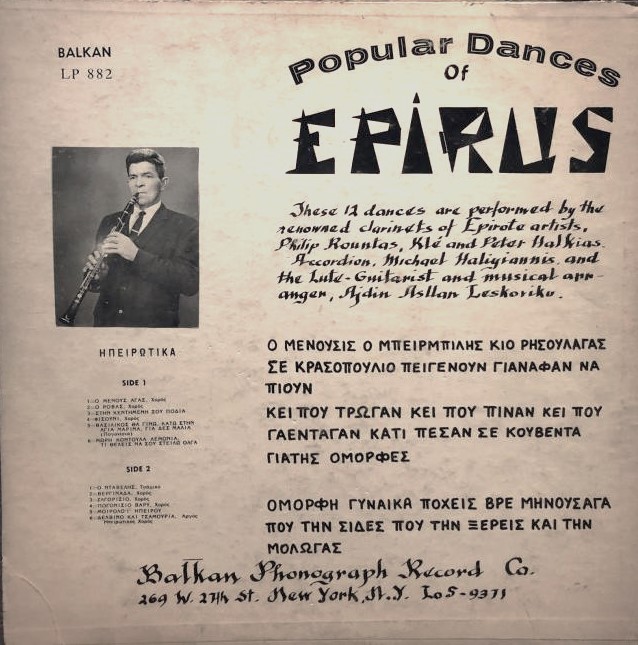
The Chalkias family of musicians arrived in New York around 1960, where his father and uncle settled permanently, while Petroloukas and his brother Achilleas stayed for nearly 20 years. It was precisely in America that he and his family recorded music with the record label “BALKAN MUSIC RECORDS,” founded and directed by the great Albanian musician and patriot, Ajdin Asllan Leskoviku. The LP record produced in the 1960s by the “Balkan Record Company” marks the first international promotion of Petroloukas as a master and of the Epirotic folk music performed by him and his family.

Gjithashtu mund të lexoni

“During the inauguration of the exhibition, Enver Hoxha also met the two Chinese artists who accompanied him, the painter Lao Chun Pin and the sculptor Chan Su In, but they were not the authors…”/ Testimony of Kujtim Buza

“When it rained and people locked themselves in their homes, from the neighborhood of ‘New Tirana’, he would go out hand in hand with his 17-year-old bride, wandering the streets and under the darkness of the pine trees of the Theater…”/ The sad story of the famous actor

But who was Ajdin Asllan Leskoviku?

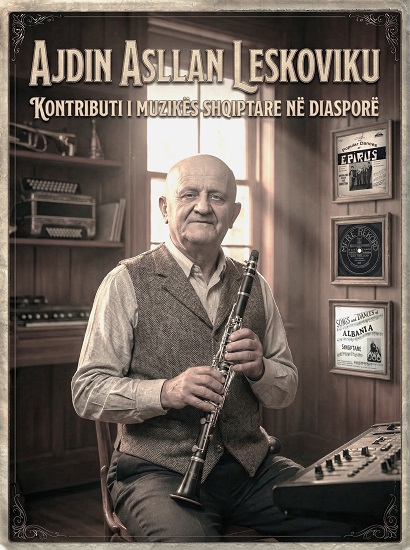
He was born in Leskovik on March 12, 1895, into the prominent musical family of Asllan Leskoviku, the founder of Southern Albanian saze (traditional ensembles), and was the brother of Selim Leskoviku, the unique master of the Leskovik saze, about whom I published the book “The Saze of Selim, Hafize, and Ajdin Leskoviku” in 2017. He completed his studies at the Turkish and Greek schools of his hometown, as there was no Albanian school available at the time. According to his biographical notes, Ajdin received his Albanian lessons and patriotic sentiments from his parents, who passed down a national consciousness and a love for the Albanian language. Meanwhile, he took formal Albanian language lessons from the patriot Stefan K. Postenani.

After the Balkan Wars, Ajdin Asllan and his family settled in Istanbul, Turkey. Once established there, his parents decided to educate their son. His passion was music; therefore, his parents enrolled him in a music school that provided both theoretical knowledge and practical training. The boy was talented, and his parents supported him. In 1915, Ajdin, now 20 years old, left Turkey for Bucharest, Romania, where the Albanian diaspora was larger, highly organized, and decisive in shaping the national cause, alongside the Albanian communities in Turkey and Egypt.

Ajdin continued his music studies in Bucharest as well. In his notes, he writes: “…in Bucharest, I worked in variety shows to cover my expenses and to complete the practical training I so desperately needed.” In Bucharest, he was encouraged and greatly assisted by fellow Albanians, particularly highlighting the help from the “Korça Brotherhood,” Peço Korça, and Themistokli Bozhani. Ajdin heard that the National Band created by “Vatra” in the USA, along with volunteers trained in America, was heading to Albania.

He set out for Albania and joined the band. Ajdin himself describes this moment: “…in 1920, when the ‘Vatra’ band went to Albania along with the volunteers, with the fire I felt for our nationality and my birthplace, I went to Albania, where without losing time, I joined the ‘Vatra’ band, which at that time was named the Presidential Band.”

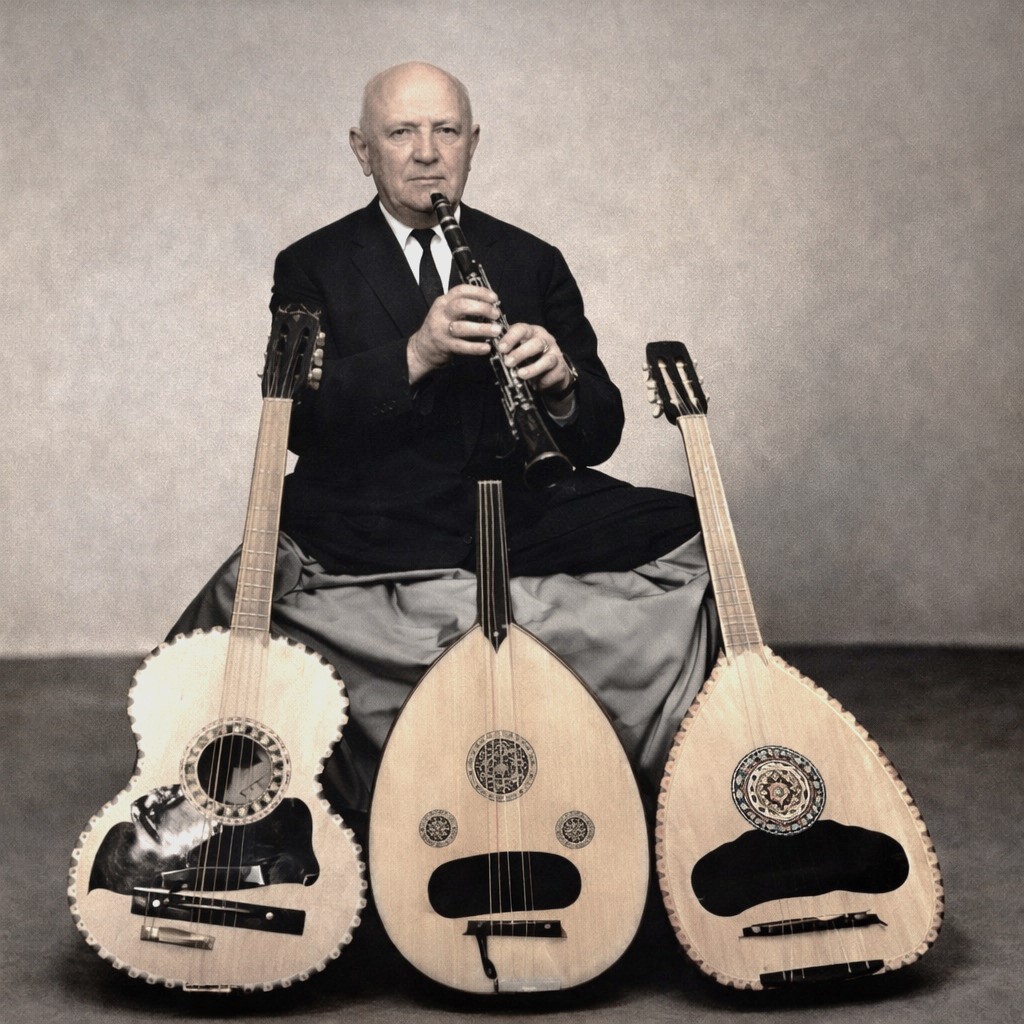
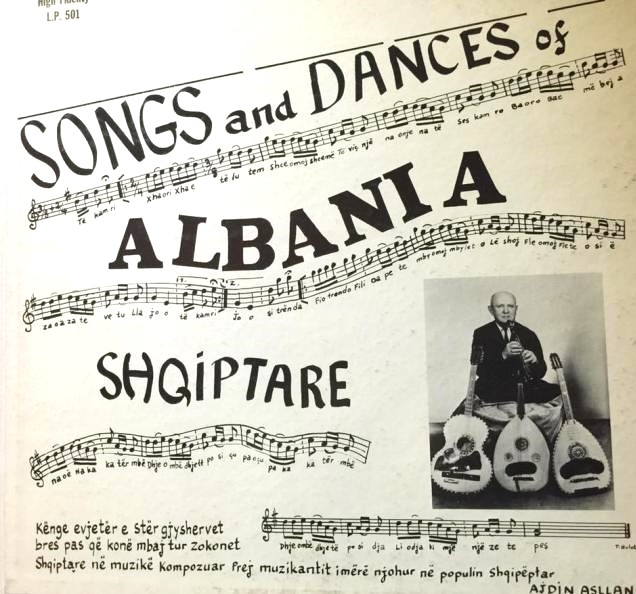
Ajdin Asllani remained in the ranks of the “Vatra” band until 1926, the moment he took the long journey to return to America, where he stayed for the rest of his life. There, he also composed the anthem of the “Vatra” Federation with poetry by Refo Çapari (1844–1944). For more than 25 years in New York, after opening a café-restaurant, he succeeded in creating and activating his own saze and commercial company, through which he produced and marketed records in the Albanian language and other Balkan languages. He named his company the “Balkan Phonograph Record Co.” It is documented that he was a master of many instruments, such as the Clarinet, Oud, and Lute (llautë), and was simultaneously an instructor and an independent owner.

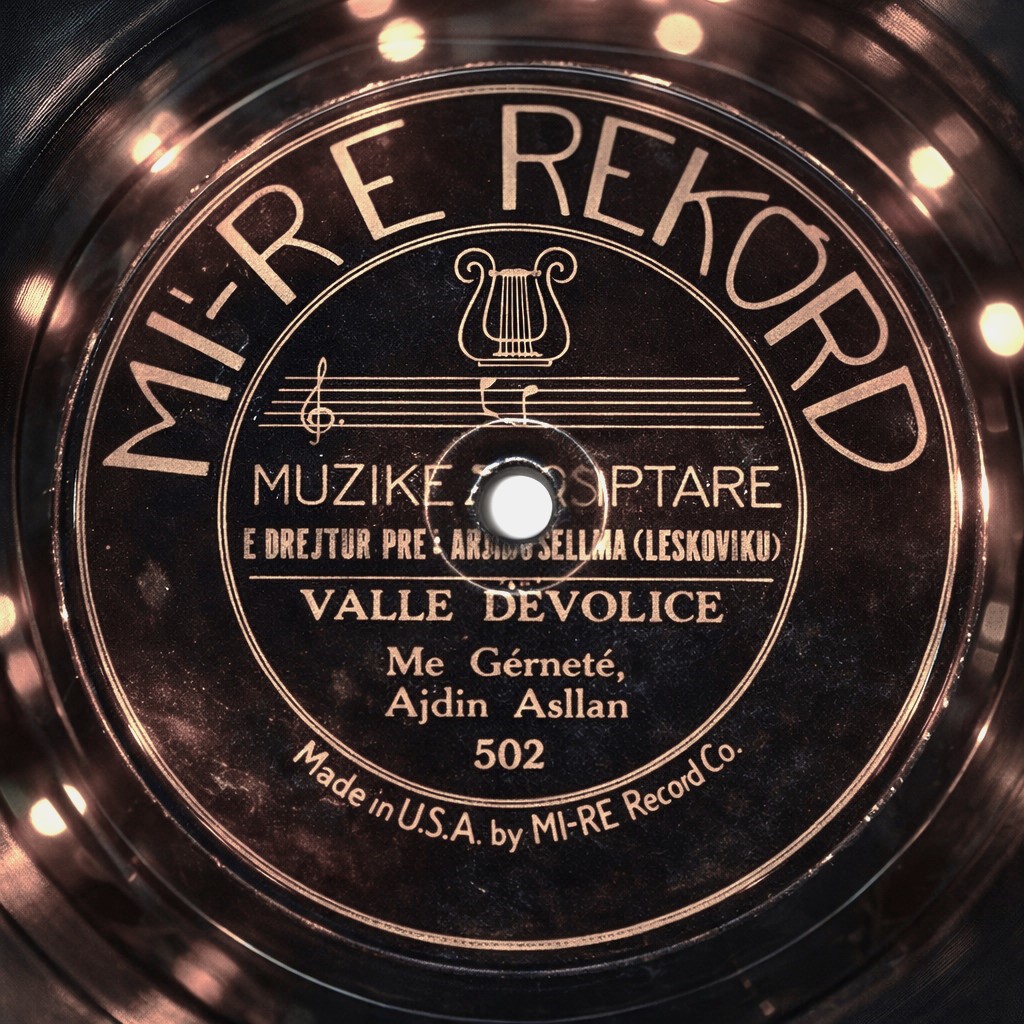
His transcriptions of folk songs and dances are also of great value, many of which he popularized through his publications for the public. At one time, he owned a well-known shop that sold Balkan music records. The shop was located at “42 Rivington” on the Lower East Side and was later permanently moved to “27th Street,” between 7th and 8th Avenue. His productions were marked with initials and the labels: “Mi-Re-Rekord Shqiptare” and “Balkan Phonograph Record Co.”

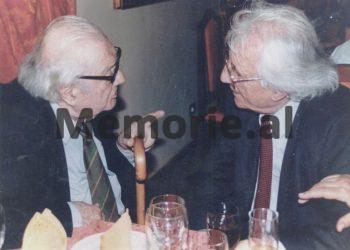
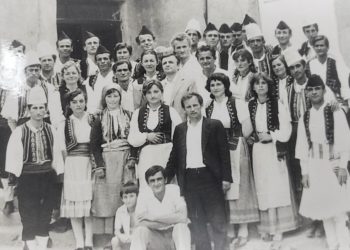
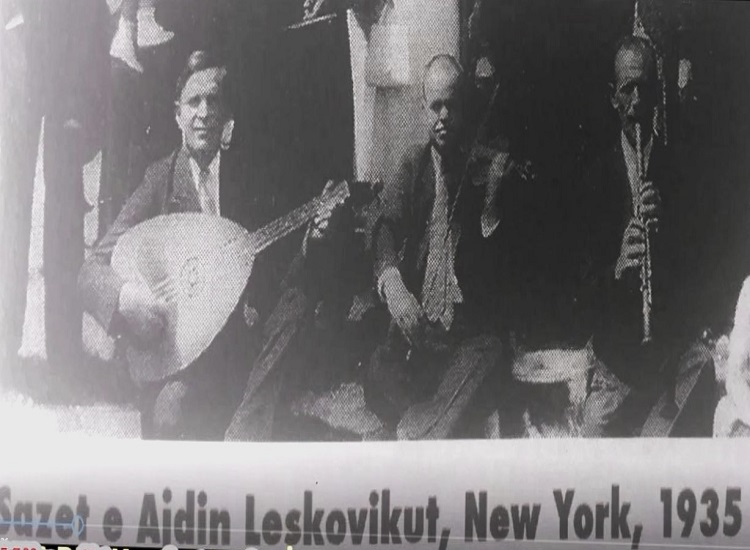
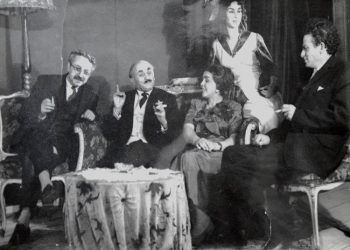
Unfortunately, Ajdin left no descendants. He was a multi-instrumentalist who left a significant mark on the musical life of immigrants from many Balkan countries, including the Chalkias musical family from Ioannina, Greece, for whom he published a record with 12 folk musical numbers in 1960. In the accompanying photos, we find Ajdin Asllan Leskoviku with a lute, alongside Master Petroloukas and his family members, as well as Asllan Leskoviku in the promotional materials of “Balkan Phonograph Records.” / Memorie.al
ShareTweetPinSendShareSend
Previous Post

"Zylyftar Ramizi in the Saranda camp met Hasan Basha, the well-known doctor of Ballsh, convicted with the group that praised Mehmet Shehu after his death, whose..."/ The rare testimony of Agron Aranitas

Next Post

"The shepherd of Luma and Tropoja, the skeleton of Mirdita who was never satisfied with bread, the woodcutter of Puka, or of Dukagjini, with the skin of a ram as his only garment, this was the enemy..."?!/ Memories of a former political prisoner, from the USA

Artikuj të ngjashëm

“During the inauguration of the exhibition, Enver Hoxha also met the two Chinese artists who accompanied him, the painter Lao Chun Pin and the sculptor Chan Su In, but they were not the authors…”/ Testimony of Kujtim Buza
Art & Culture

“During the inauguration of the exhibition, Enver Hoxha also met the two Chinese artists who accompanied him, the painter Lao Chun Pin and the sculptor Chan Su In, but they were not the authors…”/ Testimony of Kujtim Buza

September 13, 2026
“When it rained and people locked themselves in their homes, from the neighborhood of ‘New Tirana’, he would go out hand in hand with his 17-year-old bride, wandering the streets and under the darkness of the pine trees of the Theater…”/ The sad story of the famous actor
Art & Culture

“When it rained and people locked themselves in their homes, from the neighborhood of ‘New Tirana’, he would go out hand in hand with his 17-year-old bride, wandering the streets and under the darkness of the pine trees of the Theater…”/ The sad story of the famous actor

September 7, 2026
“Shuteriqi created opportunities for us to meet and talk, and in 1974, while I and my Piluri band were in Tirana with the song ‘Nga kjo baltë e këste toke’, he…”/ Memories of “Lasgushit të Bregut”
Art & Culture

“Shuteriqi created opportunities for us to meet and talk, and in 1974, while I and my Piluri band were in Tirana with the song ‘Nga kjo baltë e këste toke’, he…”/ Memories of “Lasgushit të Bregut”

September 5, 2026
“Professor Shuteriqi was a talented personality; he carried an inexhaustible universe in several academic fields, a writer with a broad national and European culture…”/ Memories of “Lasgushi të Bregut”
Art & Culture

“Professor Shuteriqi was a talented personality; he carried an inexhaustible universe in several academic fields, a writer with a broad national and European culture…”/ Memories of “Lasgushi të Bregut”

September 4, 2026
“While Qamili was entering and leaving his studio with paintings in his hands, the police would accuse him of being a madman who was engaged in secret work against the party and…”/ The unknown story of the famous painter
Art & Culture

“While Qamili was entering and leaving his studio with paintings in his hands, the police would accuse him of being a madman who was engaged in secret work against the party and…”/ The unknown story of the famous painter

August 28, 2026
“Remembering the prisons, persecutions and violence of the Serbian ethnic genocide against Kosovo, his poetry expresses the wounded soul…”/ Reflections of a renowned publicist from the USA, on the poet Agim Gjakova
Art & Culture

“Remembering the prisons, persecutions and violence of the Serbian ethnic genocide against Kosovo, his poetry expresses the wounded soul…”/ Reflections of a renowned publicist from the USA, on the poet Agim Gjakova

August 27, 2026
Next Post
“Mark Çuni was tied with his hands behind his back and the head of the branch brutally punched and kicked him in the stomach, so much so…”/ The sad testimony of the ex-prisoner from Shkodra

"The shepherd of Luma and Tropoja, the skeleton of Mirdita who was never satisfied with bread, the woodcutter of Puka, or of Dukagjini, with the skin of a ram as his only garment, this was the enemy..."?!/ Memories of a former political prisoner, from the USA

“Historia është versioni i ngjarjeve të kaluara për të cilat njerëzit kanë vendosur të bien dakord”
Napoleon Bonaparti

Publikimi ose shpërndarja e përmbajtjes së artikujve nga burime të tjera është e ndaluar reptësisht pa pëlqimin paraprak me shkrim nga Portali MEMORIE. Për të marrë dhe publikuar materialet e Portalit MEMORIE, dërgoni kërkesën tuaj tek [email protected]
NIPT: L92013011M

Na ndiqni

  • Rreth Nesh
  • Privacy

© Memorie.al 2024 • Ndalohet riprodhimi i paautorizuar i përmbajtjes së kësaj faqeje.

No Result
View All Result
  • Albanian
  • English
  • Home
  • Dossier
  • Interview
  • Personage
  • Documentary
  • Photo Gallery
  • Art & Culture
  • Sport
  • Historical calendar
  • Others