
By Sokol Parruca
Part Four
Rare testimonies of the well-known jurist Sokol Parruca regarding Shkodra’s football icons over the years – such as Halepiani, Hasa, Rragami, Rakiqi, Bizi, Dani, Zhega, etc. – and artists like Vasija, Tërshana, Aliaj, Ljarja, as well as other emblematic characters of that city.
Memorie.al / It is difficult to write about the former players of the “Vllaznia” team of Shkodra over the years without being a researcher or a football specialist, but I am putting down my impressions of those I knew, touched, and saw… undoubtedly, I judge it impossible not to mention Ernest Halepiani. I was about 9 years old when I first went to the “Pioneers’ Park” to start training. The coach for the children was a short man with fine curly hair and a face that shone with kindness.
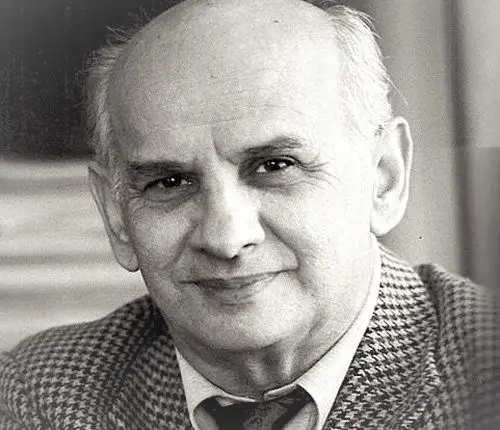
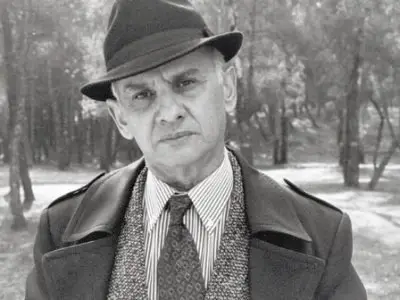
A CONVERSATION WITH RIKARD LJARJA
Good morning, Rikard!
How quickly two years have passed without you, yet you come to my mind almost every day. What nostalgic memories you have left me. I don’t know what to say first – all the days, weeks, months, and years with you were a miracle.
I’ll start with March 1997. Chaos, gunfire everywhere, day and night; a bullet, even a stray one, could take your life. Marjeta and the children left for Athens. You did not. When I asked you, “Why don’t you leave too?” you told me: “Never! I have no life away from Albania; I’d rather die from the uncontrolled bullets of my fellow Albanians than from the longing for my country.”
And yet, that time was difficult for you. You stayed alone, sad – partly from the turbulent situation gripping the country, partly from the loneliness of missing your family. We spent time together every day. Truth be told, I was worried about you; I knew your sensitivity, and oh God, I prayed that nothing would happen.
Do you remember that day when I came to your house? I knocked on the door repeatedly, my strikes getting louder and more insistent, but you wouldn’t open. I called your cellphone, but it was off. I knew you were inside. This sudden, alarming, and persistent noise – which surely would have led to the door being forced open – made you finally open it. When you saw my visibly shaken face, you began to comfort me.
We went inside. I was astonished… several paintings, a canvas that showed you were in the middle of working. The smell of paint and everything around created the impression that the room had turned into a studio. You were painting… I didn’t know. Seeing your finished works, I realized you weren’t an amateur, but a professional painter. We stayed a long time that day, talking about painting.
You taught me how to look at a painting from a professional perspective; you introduced me to art movements and their most worthy representatives. I knew five or six of them; you named twenty, one by one. You spoke so much to me about Picasso, Matisse, Chagall, and especially Salvador Dalì, so much so that you prompted me to read more about the latter.
I learned that he was not just a painter, but also a writer, filmmaker, theorist, and author of a dozen books. He seemed so similar to you – so close in professions, knowledge, and culture – except that in painting, he was a genius, unreachable. When you were alone, you invited me to lunch at your house. You knew I liked “stuffed peppers”, and you took pride in how well you could cook them.
The table was set with such taste – the tablecloths, napkins, plates, and glasses made it look like an aristocratic Viennese lunch. A platter filled with steaks, various salads, and a bottle of “Napoleon” wine. Suddenly, you pulled the tray of peppers from the oven, cooked specifically for me.
I began to eat slowly. I felt your scrutinizing gaze, as if you wanted to sniff out whether I was enjoying the peppers, while I quietly continued, expressing nothing through facial expressions or words. Finally, you couldn’t stand it and asked:
-“Do you like the peppers…?”
I raised my head and looked you straight in the eye. That look of yours was almost pleading, waiting for me to say how much I loved them, but I gave you a Spartan answer:
-“Scandalous. I have never eaten more disgusting stuffed peppers.”
Only then did I hear your roaring laughter, which seemed endless. Oh, how hard you laughed! How we both laughed!
And do you remember that night at the “Piano Bar”? We were four friends, and in the late hours, we were left alone. There was a piano in a corner. You went straight to it, sat on the stool, and began to play classical music.
-“It’s Johann Sebastian Bach,” said Tos Baxhaku.
We all took our glasses and stood near you. You played with sensitivity for every nuance of timbre and with an exhilaration that made you’re playing seem fantastic to us. You played with an astonishing respect for the music, focused and self-forgotten, while we followed you with melancholy – partly from the wonder of Bach’s music, partly from the midnight hour, and partly from the vapors of alcohol.
We had a favorite café; the owner was our friend. When 11:00 PM arrived, the owner and staff would leave, and only we remained – you, Mond Laçi, Rezi, Baxhaku, Lad Myrtezaj (or Xakja, as we called him), and others. One late night, the great singer Lukë Kaçaj joined us. We were all there by the bar. Luka, in his long black coat, tall as an oak, with thick blond hair that hadn’t lost its shine despite the many years on his shoulders.
As he stood up, he took a solemn stance like a lyric singer and began to sing. Oh God, his voice had not lost its power despite the long suffering and imprisonment! That small part of the bar was suddenly transformed into a magnificent stage. The power of his world-class bass voice could not be contained by the windowpanes or the glassware. The glass began to vibrate and creak; glasses were falling and breaking, while Luka’s voice echoed like thunder.
Indeed, it was not for nothing that the Moscow newspaper Pravda had called Luka the “Albanian Chaliapin” when he sang at the Bolshoi Theater! I knew it could happen, but I saw it concretely that night. You, Rikard, began to explain it to me as a phenomenon, using scientific and physical terms like a true physicist, but it went in one ear and out the other – I understood nothing.
Do you remember that afternoon at the café with the whole group? Bert Shvarci used to come there, and as soon as he arrived, the music would be turned down to a minimum because Bert couldn’t stand it. Only the loud and joking voice of Çim Daja could be heard. He came to us – noisy, yet warm, friendly, even essential, because he created an atmosphere of joy even in moments of gloom.
-“I’ve been stuck for three hours on a translation,” said Shvarci, the great translator, “because I can’t remember the synonym for this Albanian word.” We all suggested a word, and you, Rikard, were the last to speak.
-“That’s the one,” Bert said, standing up abruptly to continue his work.
I don’t remember if it was morning or afternoon when we went together to the inauguration of the book “For Love One Writes after Death” by our friend, Zija Çela. Oh, what an inauguration! It felt like a painful requiem. Our friend had lost his only son. They weren’t just father and son; they were best friends. At a table, during warm conversations between friends over a glass, the hours would pass unnoticed; then, either Dritan would come looking for Zija, or Zija would look for his son, Dritan. They always found each other.
While Zija was speaking, you felt ill, Rikard; your breathing became heavy, your chest was heaving, and you couldn’t get enough air. I felt your groan deep inside your soul; I was frightened, watching you from the corner of my eye. A few tears slid down your face, Rikard. I called your name, as if to bring you back to yourself. You didn’t turn your head; you breathed deeply, as if releasing the entire weight of a pain you could no longer carry. At the end, we hugged Zija and left, carrying the sadness with us.
I called Rrok on the cellphone, and we ended up at a restaurant with Ylli Dylgjeri. The conversation and humor began to somewhat calm your spiritual state. I knew you had written two screenplays, but I only learned you were a writer later, when I encountered the six books and novels you wrote in recent years. I say with conviction that you didn’t become a writer; I think you were one from the beginning of your life.
Perhaps you yourself realized this gift in the years when you left the rolls of filmmaker, actor, and director, and sat down to write simply to fill the time – because your mind was full of subjects and events that nudged you to write them. It seems these books grew inside you. I don’t know how long you remained a prisoner of these thoughts until finally; the word “novel” took shape within you.
You understood clearly that you had the desire to write a novel; at least you were trying, having no idea how you would achieve it. Being filled with ideas, you intended to conceive an entire world, to give life and voice to dozens of characters. You didn’t say a word to anyone about what you planned to do. Who knows how many magical hours you spent when you began to put on paper what you had kept so deep in your heart and mind.
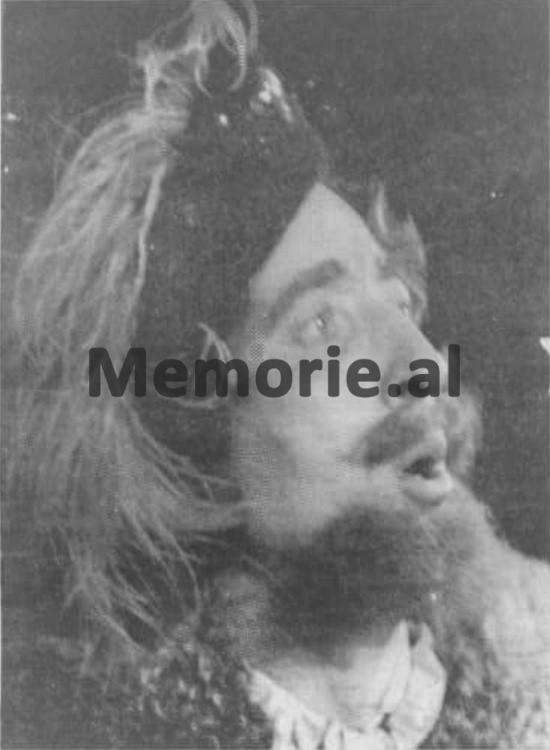
And so, between persistence and difficulties, you finally finished the novels. But, my dear friend, even if you had written “War and Peace,” “Arc de Triomphe,” or “Les Misérables,” to your fellow countrymen, you will always remain that “Deda at the top of the pole,” or “Dritani of the Eagles”… because you are etched into their minds through your roles. You made them love you dearly; for them, you are like that first love that never leaves the mind or heart.
That is why you are still with them, and so you will be from generation to generation. Blessed are you to be accompanied by this eternal love! It makes me feel so good! You deserve it, for besides being an artist; you possessed one of the rarest and most precious qualities a human can have. What I know is that it shone in you with such a strong radiance, and for those who did not know you closely, I tell them: Kindness. Above all, kindness. You, Rikard, were kindness itself.
You had a loathing for vulgarity in the literal sense of the word. You could forgive civilization for its cruelties, hypocrisy, stupidity, and senseless contradictions, but you could not forgive the fact that this civilization mistakes comfort for happiness, a secure life for spiritual peace, and spiritual lethargy for virtue, or advertised popularity for greatness.
You did not forgive the mockery of human personality by suppressing all possibilities, even the ability to revolt. You could not accept the “mixing,” you couldn’t endure the decay, the dregs. You were born to be class, and you remained so until your last breath, for you were the son of Karlo, with an Austrian education, and your mother was Angjelina Logoreci, a daughter of the great Logoreci family.
Oh God! You are only two cubits under the earth, and I cannot shake your hand even though I have reached out toward you; I cannot hug you even though I have come so close. I know you would tell me:
-“Go now, enough…!”
I am going; I’ve gone, for I don’t want you to see me drowned in tears while I write these lines for you. / Memorie.al