By Sokol Parruca
Part One
-The rare testimonies of the renowned jurist Sokol Parruca, regarding the icons of Shkodran football over the years, such as Halepiani, Hasa, Rragami, Rakiqi, Bizi, Dani, Zhega, etc., as well as some of the “crazy” fans of “Vllaznia”! –
Memorie.al / It are difficult to write about the former players of the “Vllaznia” team of Shkodra throughout the years without being a researcher or a football specialist. However, I am sharing my impressions of those I knew, those I met, and those I saw – the youth coaches – without claiming to say everything they deserve. Undoubtedly, I believe it is impossible not to mention Ernest Halepiani.
I was about 9 years old; I don’t remember which neighborhood friend I went with for the first time to “Parku i Pionierëve,” near the former “11 Janari” school, to begin training in the sport of football. The coach for the children there was a short man, with fine curly hair and a face that shone with kindness.
100 YEARS OF THE “VLLAZNIA” FOOTBALL TEAM
ERNEST HALEPIANI
Ernest Halepiani trained us so sweetly. With his fatherly behavior, the gentleness and warmth he showed toward every child, he knew – and was able like no other – how to influence us to love football. Especially at that age, only a man like him knew how to draw children toward the game. He was always on the field at every hour of the day; and when he wasn’t there, you would see him at the shack, sitting on a stool, sewing torn balls with a needle and twine just to give us the chance to continue training, even though we lacked basic materials.
Ah, how human he was! Though years have passed since you left us, you remain in my memory as the man who gave everything for football, who dedicated himself to it with his soul! There, at “Mr. Ernest’s park” (as everyone called him), the city’s youth championship was organized. That is where the talents who would define an era were born.
For the first time, I saw Sabah Bizi, Din Zhega, Zan Rragami, and Paulin Ndoja there. Youth coaches, side by side, would point their fingers, identifying and selecting talents. I saw how focused and dedicated the coaches were: Muhamet Dibra, Hasan Hasa, Rexhep Laçej, and Zushi – who, though hampered by crutches, discovered the greatest Albanian talent, Sabah Bizi.
We could mention many other coaches and how these talents were guided step-by-step, year after year, until they reached the hands of the “Usta” (Master), a grandmaster like XHELAL JUKA, who possessed a fantastic instinct for selection. He was so dedicated to training the youth that even in his older age; he trained with us, played, and fell with us in the rain, snow, and ice.
He got as muddy as we did, remaining perhaps the most important coach in Shkodran football. All the greats of Shkodra passed through his hands. It was he who, after perfecting them, sent them ready to another great coach, Xhevdet Shaqiri, at Vllaznia’s first team.
If Shkodra is called the “granary of Albanian football,” where stars and phenomena have shone, they all had youth coaches who, hand in hand, made them what they were – the peak and the cream of Albanian football. They reached this thanks to their talent, but also the dedicated and passionate work of their coaches. These coaches, from the youth level to the first team, deserve special gratitude.
Their recognition and honor should be institutionalized and not left to the whims of well-meaning individuals. By this, I mean that the Municipality, and especially the “Vllaznia” Club, should identify and commemorate the coaches and athletes who made us proud on every anniversary. Under no circumstances should we allow them to fade away in poverty and loneliness.
HASAN HASA
Prof. Hasan Hasa, as all of Shkodra called him out of respect, was a “Vllaznia” footballer in the early 1960s. In 1962, while Vllaznia was playing in Lushnjë, a Lushnjë player named Gogoni was ready to strike the ball to score. Suddenly, Hasan Hasa dove in headfirst to clear the ball, saving the goal but… oh, he lost his eye!
Gogoni didn’t hit the ball; he hit Hasan’s eye, and from that day on, Hasan remained without it. I do not know if, in the history of Albanian football during an official National Championship match, any player has been as severely injured as Hasan Hasa. What sacrifice, courage, and dedication to the Vllaznia jersey! He left football as a 26-year-old invalid.
Years later, he returned to his old passion as a youth coach. I recall how seriously he took the training of children. I didn’t have much talent for football, so I didn’t go to training regularly. When I was absent, so was Fatmir Paçrami, my close friend. Prof. Hasani would search until he found me and tell me bluntly: “I don’t care that you are missing, but when you don’t come, Fatmir doesn’t come either – and I see great potential in that boy.”
I had to go to training, partly for Prof. Hasan and partly for Fatmir. Time proved Prof. Hasan right; Fatmir became a brilliant footballer for Vllaznia. In 2016, I went to visit the Professor, who was very ill. He was bedridden and had lost sight in his other eye – he was completely blind. When they told him I had come, those eyes that could no longer see began to weep. He hugged me and said: “I am stuck in bed… I miss the friends I played with… I miss the boys I taught to play…”
He pushed through life with that longing – one of the most self-sacrificing figures of Albanian football. I don’t know if he was honored enough while alive, but at least let the honors be given now.
ZAN RRAGAMI
I was a child when I first saw you. We grew up with your name. Everyone wanted to see you, greet you, and talk to you. You were among the most important people in the city. At age 18, I finally met you. I was with the youth team then, and every Thursday we played a scrimmage against the first team.
I wasn’t focused on the match; I was watching you, Zan, along with Bizi, Zhega, and Paulin. You were my idols. I followed every move. Only your voice could be heard as you oriented your teammates, and they did exactly as you said.
Two matches against “Besa” of Kavaja remain etched in my memory. One was the Republic Cup final, where you converted 7 penalties. When Paulin saved the final penalty, I ran toward you and found you and Paulin embracing. You were crying. Every player had tears in their eyes. A stadium that roared like a lightning strike – thousands of people crying, but they were tears of joy and happiness.
The other match was in Kavaja in 1972. You were playing as a striker. I saw you sprint from half-field, passing the entire Kavaja defense like a storm. You were alone with the goalkeeper: “Gooool!” I screamed at the top of my lungs. The Kavaja fans didn’t insult me; they looked at me with kindness, as if to justify my wild enthusiasm, for they too were mesmerized by your wonder, Zan.
Zan Rragami, you were the magic that captivated an entire people. I never understood how you played on muddy fields and yet never seemed to get dirty. You would emerge clean, while others were unrecognizable from the mud. And you never played dirty; you never pushed or fouled. I don’t remember you ever receiving a card. You played so masterfully. You were the captain, the “Chief General.” You were the Beckenbauer of Vllaznia. You are more than a medal; you are the title itself.
RAKIQI, DANI, RRAGAMI
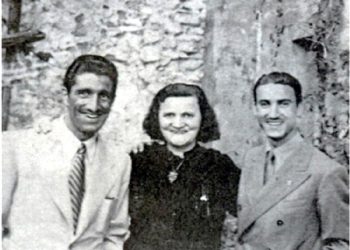
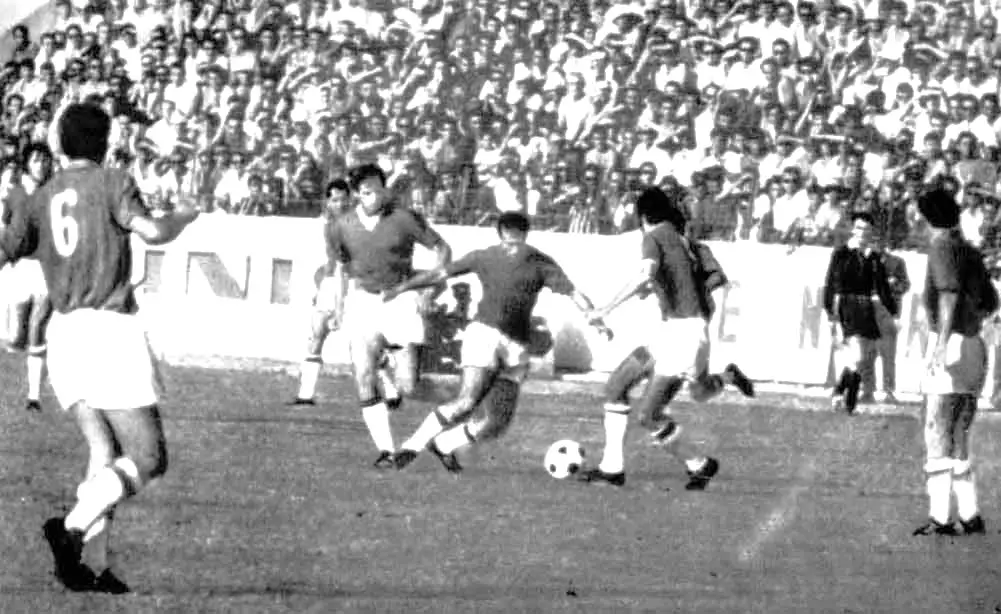
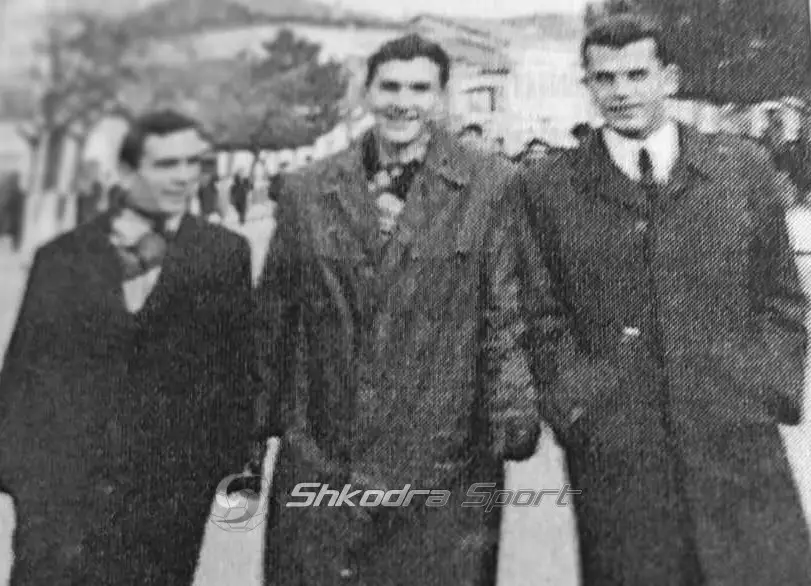
Look at this photo: three close friends, almost the same age, which started their careers together in the first team: Esat Rakiqi, Selami Dani, and Ramazan Rragami. Those of us who knew them knew they were never separated in life. Recently, alongside Master Dani, we saw Zan off to his final resting place. Dani’s chin trembled with pain. He wanted to visit Esat’s final resting place as well – the code of a precious friendship never dies as long as one of them remains.
MEDIN ZHEGA (1946–2012)
I think of the first time I saw you at Mr. Ernest’s park. You were no more than 14 – a blond, elegant boy with a way of handling the ball that was different from your peers. You were born for football. You became an undisputed starter for the national team, but Vllaznia was your weakness.
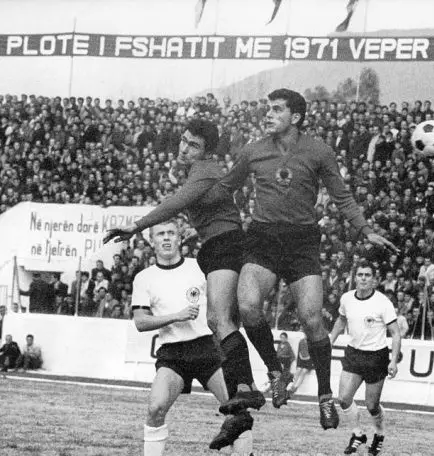
Ah, the goals you gave us! You would put your head where others wouldn’t dare put their feet. You risked yourself for the goal. How many times did you collide with the goalpost, not caring if you were hurt as long as the ball was in the net? We would hold our breath in anxiety until you stood up, and then the cry of “Gooool!” would burst from the souls of the Shkodran fans.
You were the “King of the Air.” Crosses from Halil Puka on the left and Lekë Koçobashi on the right always found your head. You were the terror of defenders and the nightmare of goalkeepers. In today’s world, the names of Din Zhega, Panajot Pano, Sabah Bizi, and Zan Rragami would be carved in gold in European football.
Later, you became a perfect coach. I will never forget the national team match in Germany. Even though it was pouring rain and your suit was soaked through, you refused to take shelter. You wanted to be near your players. It was one of the most beautiful matches our national team ever played.
Then, the bitter news from Canada: an accident. You were bedridden. Back in Tirana, you stayed motionless for months. Only your eyes had not lost their sparkle. Your smile, though forced, expressed the kindness that accompanied you throughout your life. It was heartbreaking to see our idol, the King of the Shkodran attack, unable to move.
Eight years ago, on a June day, you left us. Once you made us cry with the joy of your goals; now we weep from the weight of your departure. You rest peacefully now, angel, for you performed your duty in our world perfectly. To our dear, unforgettable DIN ZHEGA – we express our gratitude and love./Memorie.al