



By Dimitry Okunev
– 55 years ago, Albania withdrew from the ‘Warsaw Pact’ –
Memorie.al / Exactly 55 years ago, Albanian authorities announced their withdrawal from the Warsaw Treaty Organization. The official reason was the entry of troops into another member country of the socialist bloc, Czechoslovakia. However, in fact, the Albanians had ceased active work in the Department of Policy since 1961, when Nikita Khrushchev’s Soviet government severed diplomatic relations with this country. Another split occurred within the socialist camp.
The USSR (Union of Soviet Socialist Republics) had to leave the Pashaliman naval base near Vlora. A significant portion of military equipment, technology, and submarines went to the Albanians. Soviet positions in the Adriatic and the Balkans suffered heavy damage. The Warsaw Treaty was created as a response to the admission of the Federal Republic of Germany into the North Atlantic Treaty Alliance (NATO), drafted at the suggestion of the United States of America in 1949 by 12 countries concerned about the growth of Soviet influence in Europe.
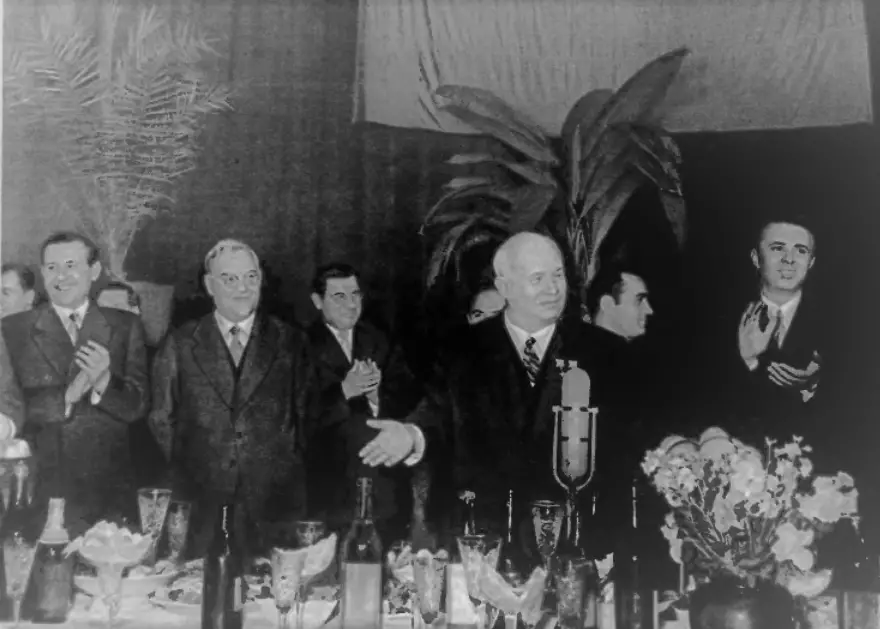
The statutory act of the Department of Internal Affairs was an agreement for friendship, cooperation, and mutual assistance between Albania and the USSR. On May 14, 1955, in addition to the Albanian, Soviet, and Czechoslovak delegations, it was signed by representatives of Bulgaria, Hungary, East Germany, Romania, and Poland. Under the collective system, joint exercises and maneuvers, exchange of experiences, and joint military operations were carried out, such as the suppression of anti-communist uprisings in Hungary in 1956 and later in Czechoslovakia in 1968.
The announcement of the creation of the Warsaw Treaty finally established bipolarity in international relations. But that Treaty suffered its first strategic loss even then; the Soviet Union, the initiator and leader of the Warsaw Pact, failed to draw Yugoslavia into its sphere. Its President, Josip Broz Tito, while remaining a verbal proponent of the socialist system, played his own game.
Despite the restoration of state relations with the USSR after the death of Joseph Stalin, Marshal Tito and his associates still had fresh memories of the atmosphere of mutual hatred following the break in relations in 1948. Tito’s independence resulted in the creation in 1961 of the “Non-Aligned” Movement (Third World), a third force in world geopolitics, inviting states that were between NATO and the Warsaw Pact.
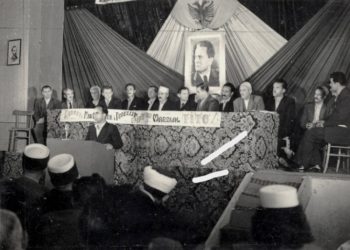
Unlike the relatively mild regime in Yugoslavia, where they willingly established contacts with Western capitalists, in Albania, its communist leadership chose a course of alienation from the outside world, which later resulted in an extreme phase of isolation. After the liberation of the country’s territory from the Nazis, at the head of the party and state apparatus was the First Secretary of the Albanian Communist Party (later the Party of Labour), Enver Hoxha.
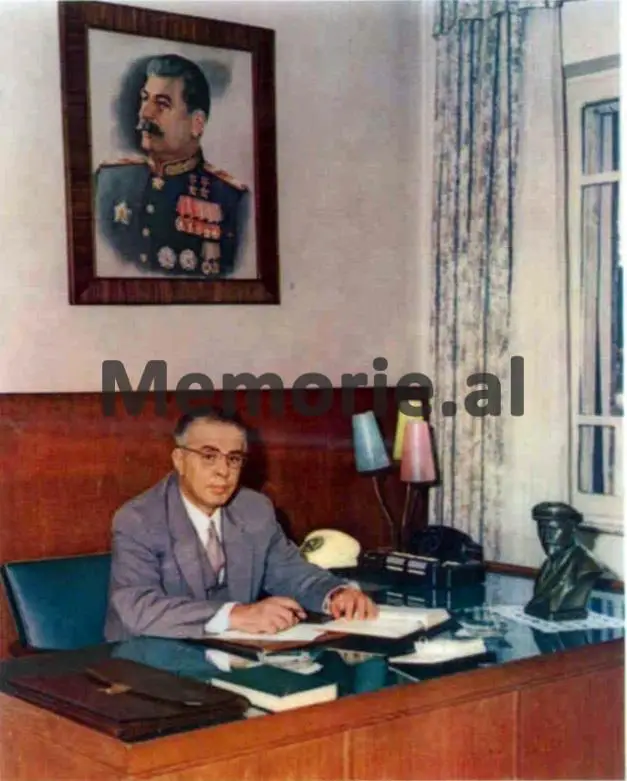
He followed Moscow’s political line and admired the personality of Joseph Vissarionovich Stalin, whose teachings and work he had as a guide since before World War II, promising the “Father of Nations” the construction of communism in Albania as early as the 1940s, when Albania was occupied by Italians and Germans. In fact, the Albanian communist leader, Enver Hoxha, never hid that he considered the Soviet dictator his mentor and idol.
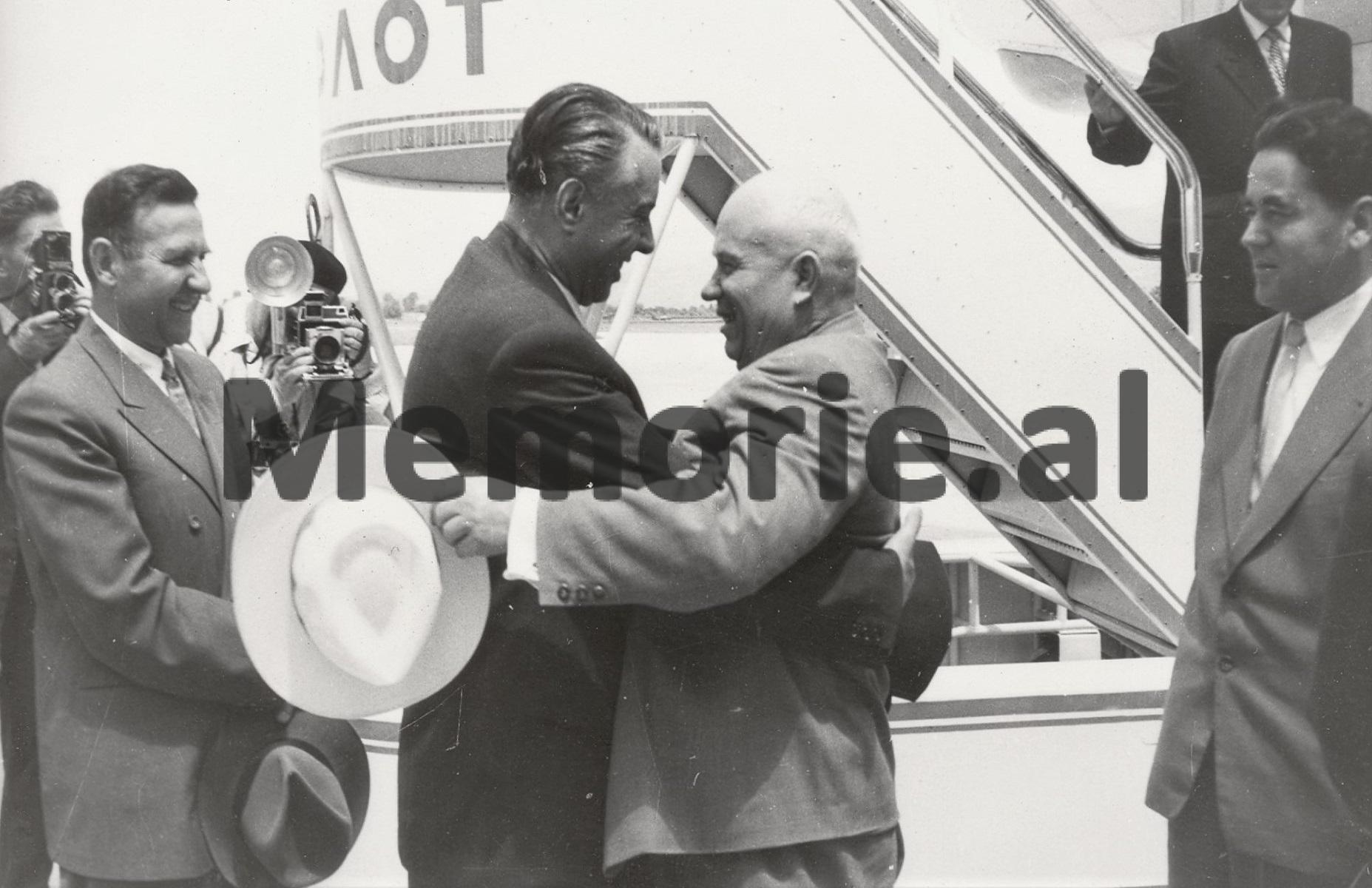
In response, the Soviet Union played a decisive role in the development of the Albanian economy. Hoxha’s regime was given loans on favorable terms and free aid in food and technology. Soviet engineers built industrial enterprises and power lines in a backward agrarian country.
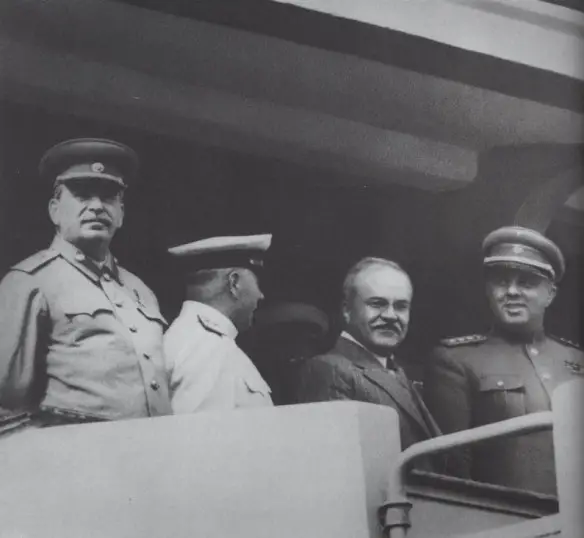
“Stalin and the USSR are our saviors and comrades. We, Albanians, swear to you eternal friendship and devotion,” Enver Hoxha said at one of the solemn receptions held at the Kremlin. Years later, he would achieve the debt settlement by announcing that the plants and factories were transferred “as a gift to the Albanian people.”
In domestic policy, Enver Hoxha adhered to harsh repressive measures. Members of the state and party apparatuses who were found to be sympathetic to Titoism or disloyal to the Stalinist line, as well as ordinary citizens, were subjected to arrests and executions. In all of Europe, and perhaps the world, there was no leader more loyal to Stalin than Hoxha.
Everything changed radically after the leader’s death. The almost familial, but for the most part one-sided, ties between the USSR and Albania began to collapse. The disagreements of the Communist Party of the Soviet Union with the Communist Party of Albania grew with each subsequent attack of the Soviet leadership on Stalin, reaching its peak after Khrushchev’s report at the 20th Congress of the Soviet Communist Party in February 1956.
Henceforth, Hoxha called the Soviet leadership nothing more than “imperialists and revisionists” who, “opening their mouths against the great Stalin,” dared to launch a campaign against Marxism-Leninism and communism.
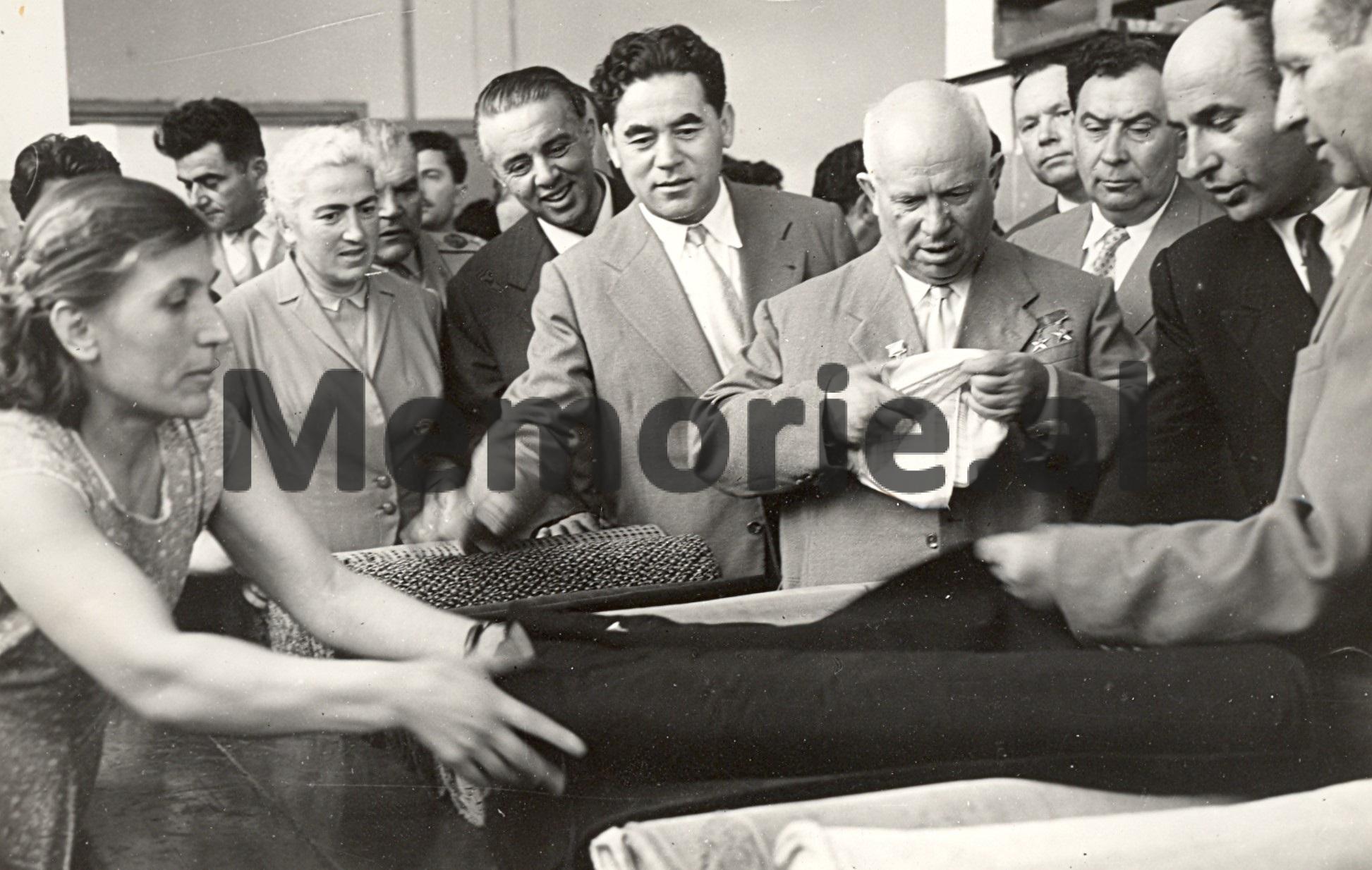
On one occasion, Khrushchev appealed to Enver Hoxha to rehabilitate the members of the Albanian Communist Party who suffered for their support of Yugoslavia and the decisions of the 20th Congress of the Communist Party of the Soviet Union, with the following words: “You are like Stalin, who killed people.” To this, the Albanian leader replied calmly: “Stalin killed traitors, we kill them too.”
However, the creation of the Department of Internal Affairs a year earlier removed the hope of maintaining the Balkan state in the Soviet sphere. As Hoxha noted at the time, the Warsaw Treaty placed Albania “on a level with the most important and powerful countries.” Membership in the Warsaw Treaty undoubtedly strengthened the position of the Albanians with entry into the UN in December 1955, which had previously been actively prevented by the United States of America and Great Britain.
The final break between Albania and the USSR was preceded by several scandals, as Enver Hoxha accused Khrushchev of economic pressure and refusal to supply grain, which was completely the opposite of Stalin’s stance. Albania’s reaction after this was the withdrawal from the Council for Mutual Economic Assistance (COMECON) in 1962: this had the most negative impact on its trade. In this situation, Hoxha chose a course for a sharp rapprochement with the People’s Republic of China.
During 17 years of partnership, the Albanians received $1.4 billion in aid, but then they began conflicts with the Chinese, accusing and condemning their “comrades-in-arms,” which had emerged from international isolation, for “alliance with American imperialism.”
A sharp-tongued Khrushchev shouted at the “traitors” from the podium of the 22nd Congress of the Soviet Communist Party. In his speech, the main leader of the Kremlin was horrified by the “dizzying speed with which the heads of the Albanian communist leadership moved from eulogies and oaths of eternal friendship to unbridled anti-Soviet slander.”
“They raised the cult of Stalin’s personality as their shield, began a fierce struggle against the decisions of the 20th Congress of the Soviet Communist Party, trying to pull socialist countries away from this right course,” Nikita Khrushchev expressed indignantly.
“This, of course, is not accidental. All that aggravated climate we had in the period of the cult of personality, all this is manifested in the worst form in the Albanian Party of Labour. It is no longer a secret to anyone that the Albanian leaders hold power by resorting to violence and arbitrariness,” Khrushchev concluded.
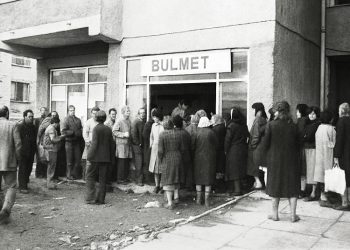
After the final split with the People’s Republic of China, Albania’s isolation in the international arena became absolute. Albania’s economic development, for a period of almost 20 years, stopped in time, and as a result, in the early 1990s, it remained in many areas of life as it was in the late 1950s.
After Albania, the armed forces of the Warsaw Treaty also left the German Democratic Republic in 1990. A year later, the remaining countries terminated their membership in the Warsaw Treaty, leading to the suppression of the Communist Bloc alliance of Eastern European countries.
Already, all former members of the Warsaw Treaty, with the exception of Russia, are members of NATO, as are the three former Soviet republics of Estonia, Latvia, and Lithuania. / Memorie.al