• Rreth Nesh
  • Kontakt
  • Albanian
  • English
Thursday, February 26, 2026
Memorie.al
No Result
View All Result
  • Home
  • Dossier
  • Interview
  • Personage
  • Documentary
  • Photo Gallery
  • Art & Culture
  • Sport
  • Historical calendar
  • Others
  • Home
  • Dossier
  • Interview
  • Personage
  • Documentary
  • Photo Gallery
  • Art & Culture
  • Sport
  • Historical calendar
  • Others
No Result
View All Result
Memorie.al
No Result
View All Result
Home Dossier

“On the evening of August 1, ’84, Isabela, along with Zamira and Klement, set off swimming toward Corfu; however, in the morning, they saw that their brother…” / The mystery of the escape of the Islami sisters, the [voices] of “Voice of America”!

“Kur takova Isabelën dhe Zamirën në Kongresin Amerikan, ato më treguan se vëllain e tyre, Klementin, e kishin…”/ Misteri i arratisjes së motrave Islami, në gushtin e ’84-ës, në Korfuz

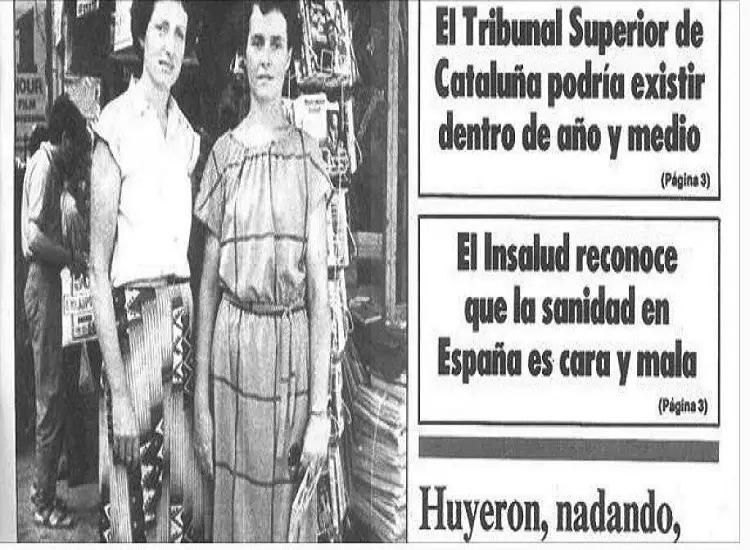
Memorie.al / The fate of a family and their escape from dictatorial Albania filled the front pages of Western newspapers of the time. Isabela Islami, whom everyone called Bela, her brother Klement, and sister Zamira, are three individuals who left a mark on the history of the years of Enver Hoxha’s dictatorship and his successor, Ramiz Alia.

Bela and the others were in the prime of their youth. They lived in Tirana. Their parents hailed from families that opposed the regime and had suffered the consequences of the dictatorship and class struggle. But with time, the old wounds caused by state police repression seemed to have closed. Like all Albanian families, they led a modest life: the parents worked, while the children went to school – at least until high school. Due to their “biographical problems,” they were denied the right to university studies.

The Story Begins with Their Brother, Klement

In 1975, at age 19, Klement was a senior at the “Petro Nini Luarasi” high school in Tirana. One April day, among friends, he had the “wrong” idea to make a joke against the regime. Almost all the children of the high-ranking party leadership – the “Blloku” children – studied there. For “revolutionary vigilance,” as the universal surveillance was called, it was natural for types like Klement to be under constant watch.

Gjithashtu mund të lexoni

“When one of their friends – a retiree or an elderly man – was missing, they would worry: ‘Why hasn’t he come out to the Bazaar?!’ Alizoti would tell them: ‘Go take a look at the electric poles, at the death notices, because…’ / The untold stories of the Gjirokastra bookseller”

“The Lura meeting on August 27, ’43, attended by Mit’hat Frashëri, Abaz Kupi, Muharrem Bajraktari, Fiqiri Dine, Hysni Dema, Miftar Kaloshi and…”/ The unknown history of the “parliaments” of Dibra

Klement was handcuffed in class, before the eyes of his peers. During the investigation, despite being just a boy, he did not escape physical and psychological torture. However, the judges – perhaps out of mercy or the realization they were sentencing an innocent – did not send him to the Spaç mine camp (a place Dante would have described as Hell). Instead, he had “luck”: he was confined for three years in the Elbasan Psychiatric Hospital.

In Elbasan, patients were tortured in “scientific” ways, experimented on with various sedative doses and electroshock therapy. When he was released in 1978, weakened and exhausted, he joined his family, who no longer lived in Tirana. Because of him, they had been declared “undesirable” and interned in the village of Çermë in Lushnjë. Çermë was a “Gulag” where the regime isolated opponents. They lived in a shack and worked as laborers from dawn till dusk for a pittance.

The Dream of Escape

For years, Klement worked in agriculture alongside his sisters and parents, enduring humiliation and the fact that they could not leave the village even for a medical visit without permission. They were consoled by the thought that their 8-year internment would eventually end. When it finally did, their request to return to Tirana was denied indefinitely.

For over a year, Klement tried to convince his sisters to escape. At first, Bela and Zamira thought it was madness. But Klement insisted their fate was in their own hands. Their elderly father supported the idea; their mother, who had herself, experienced political prison, hesitated only out of fear that they might be caught, but eventually agreed.

The Impossible Border

Escaping by land was nearly impossible due to checkpoints, the “forbidden zone” (20km from the border), and the vigilance of local villagers. There was also the Kloni – a 3-meter-high barbed-wire fence. Touching the wires tripped an electric alarm in the border post. Parallel to it was the “soft belt,” a 4-meter strip of tilled earth designed to catch footprints.

“We will go by sea,” Klement told his sisters. “We are all strong swimmers.” They chose Saranda, the southernmost city. From school maps, they knew Corfu was about 10km away. If they reached Ksamil, the distance dropped to 2-3km, but Ksamil was a restricted military zone.

August 1, 1984: The Long Swim

They chose August 1984, calculating that the Los Angeles Olympics would distract the guards. Having been “de jure” released from internment, they obtained permission for a short holiday. Their father saw them off at the village square with only a wave to avoid suspicion.

In Saranda, they found a small rocky bay known as “Pllakat.” At 9:30 PM, after the powerful coastal searchlight went off (they had timed its intervals), the three siblings hugged and entered the sea. Bela was 30, Klement 28, and Zamira 27. Under the moonlight, they swam toward the lights of Corfu. Bela swam in the middle, with the others on either side to encourage her.

In the open sea, powerful currents separated them – a variable they hadn’t foreseen. They stayed in touch through vocal calls, shouting a long “Ooooo!” to locate one another. As dawn approached, exhaustion turned their heads to lead and their eyelids to stone. Bela began to hallucinate, seeing a man with a dog walking on water.

Tragedy and Freedom

At 9:00 AM on August 2, 1984, an exhausted Bela approached an anchored yacht. The owner, an Italian, pulled her aboard. Minutes later, they found Zamira, half-dead and nearly drowning. But Klement was gone.

The yacht and port authorities searched for hours, then days. The sisters screamed his name, hoping he had just fallen asleep or was too weak to shout. But Klement – who had survived prison, the asylum, and internment – could not survive the final challenge. The sea never gave up his body.

The Aftermath

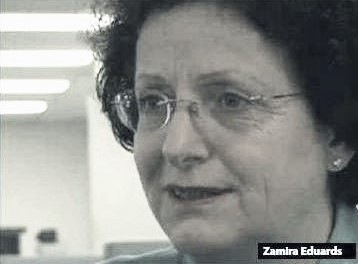
While the Western press hailed their heroism, official Albania remained silent. In December 1984, the sisters gained political asylum in the USA and settled in Detroit. Once they mastered English, they joined the Voice of America (VOA) Albanian section. Their voices became the “Voice of Freedom” for Albanians back home.

Two months after the escape, the regime retaliated by interning their elderly parents in the remote mountains of Puka. Every evening at 6:00 PM, the parents would lock their shack and huddle around a radio to hear their daughters’ voices on VOA. Their father died in internment in 1988. Their mother finally reached America in 1990, just as the regime was collapsing.

Legacy

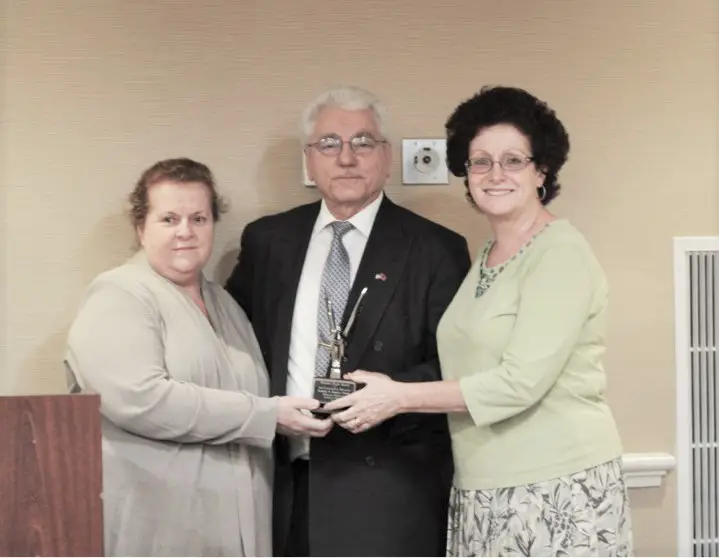
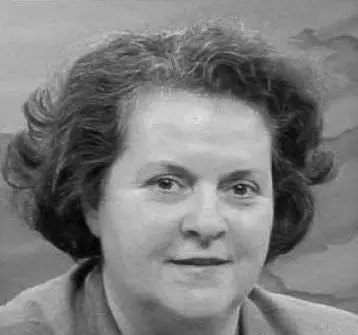
Bela Islami returned to Albania in 1993 as a journalist accompanying former US President Jimmy Carter. Zamira, however, has never found the strength to return to the land of her trauma. Every August 2, the family celebrates their freedom and mourns the brother who gave his life for it./Memorie.al
ShareTweetPinSendShareSend
Previous Post

“When one of their friends - a retiree or an elderly man - was missing, they would worry: 'Why hasn't he come out to the Bazaar?!' Alizoti would tell them: 'Go take a look at the electric poles, at the death notices, because...' / The untold stories of the Gjirokastra bookseller”

Artikuj të ngjashëm

“When one of their friends – a retiree or an elderly man – was missing, they would worry: ‘Why hasn’t he come out to the Bazaar?!’ Alizoti would tell them: ‘Go take a look at the electric poles, at the death notices, because…’ / The untold stories of the Gjirokastra bookseller”
Dossier

“When one of their friends – a retiree or an elderly man – was missing, they would worry: ‘Why hasn’t he come out to the Bazaar?!’ Alizoti would tell them: ‘Go take a look at the electric poles, at the death notices, because…’ / The untold stories of the Gjirokastra bookseller”

February 26, 2026
“The Lura meeting on August 27, ’43, attended by Mit’hat Frashëri, Abaz Kupi, Muharrem Bajraktari, Fiqiri Dine, Hysni Dema, Miftar Kaloshi and…”/ The unknown history of the “parliaments” of Dibra
Dossier

“The Lura meeting on August 27, ’43, attended by Mit’hat Frashëri, Abaz Kupi, Muharrem Bajraktari, Fiqiri Dine, Hysni Dema, Miftar Kaloshi and…”/ The unknown history of the “parliaments” of Dibra

February 25, 2026
“Despite the insults and verbal abuse, ‘Enver’s volunteers’ continued moving forward with his portraits; the small group lost their patience, and…” / February 1991, when the boys of “Skela” clashed with the Enverists of Vlora.
Dossier

“Despite the insults and verbal abuse, ‘Enver’s volunteers’ continued moving forward with his portraits; the small group lost their patience, and…” / February 1991, when the boys of “Skela” clashed with the Enverists of Vlora.

February 25, 2026
“When they told him that his house was burning, Ilia screamed; what do you say, son!? The boys would be my great pain, but the library, the whole of Albania would feel…” / The unknown history of the Dilo dynasty
Dossier

“In October 1956, the US delegation of the ‘National Front’ sent Jani Dillon to the Congress of the Agrarian International in Paris, where he…”/ The tragic story of the famous family from Sheperi Zagoria

February 25, 2026
“When Enver was once going to Gjirokastra, he asked: ‘what are these graves here?! And when they told him that they belonged to those in the camp, he…”/ Rare testimony from the US, of a former internee in Tepelena
Dossier

“Like hundreds of other girls, Fatime endured hunger, contempt, and the agonizing life of the macabre camp of Tepelena, where one day in 1951…” / The sad stories of “reactionary” families under communism.

February 25, 2026
“As Ibrahimi and his friend, Sejdo Tartale, were boarding the bus for the Pioneers’ Camp in Libohovë, a man told him: ‘Not you, get off, because your father…’ / The unknown story of Gjirokastra’s famous bookseller.”
Dossier

“As Ibrahimi and his friend, Sejdo Tartale, were boarding the bus for the Pioneers’ Camp in Libohovë, a man told him: ‘Not you, get off, because your father…’ / The unknown story of Gjirokastra’s famous bookseller.”

February 26, 2026

“Historia është versioni i ngjarjeve të kaluara për të cilat njerëzit kanë vendosur të bien dakord”
Napoleon Bonaparti

Publikimi ose shpërndarja e përmbajtjes së artikujve nga burime të tjera është e ndaluar reptësisht pa pëlqimin paraprak me shkrim nga Portali MEMORIE. Për të marrë dhe publikuar materialet e Portalit MEMORIE, dërgoni kërkesën tuaj tek [email protected]
NIPT: L92013011M

Na ndiqni

  • Rreth Nesh
  • Privacy

© Memorie.al 2024 • Ndalohet riprodhimi i paautorizuar i përmbajtjes së kësaj faqeje.

No Result
View All Result
  • Albanian
  • English
  • Home
  • Dossier
  • Interview
  • Personage
  • Documentary
  • Photo Gallery
  • Art & Culture
  • Sport
  • Historical calendar
  • Others