Part One
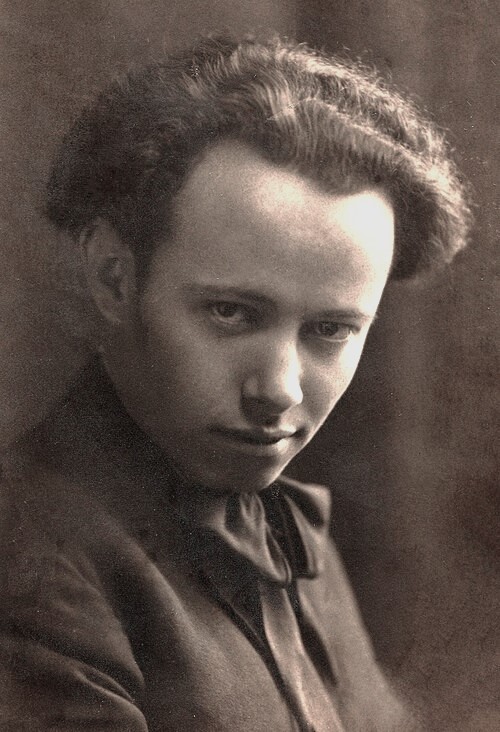
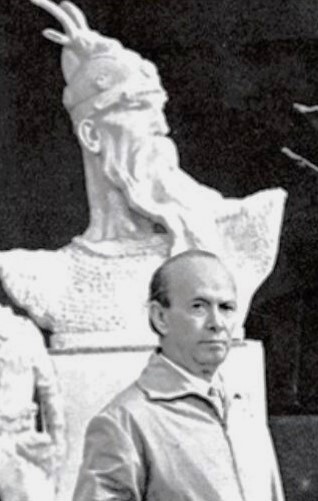
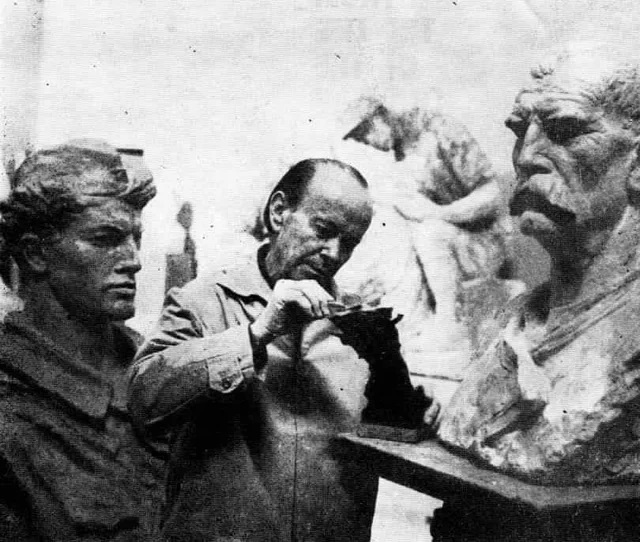
Memorie.al / Odhise Paskali are undoubtedly one of Albania’s mythic artists. His talent caught the attention of the authorities of the time, who sent him to Italy for studies. Paskali emerged as a versatile, multidimensional artist. We find his name in the early 1920s in many newspapers of the period – within Albania, Italy, Romania (Bucharest), and in America in the newspaper “Dielli” (The Sun). He appears as a poet, a storyteller, an essayist (having written more than 800 essays), a critic, and a translator, all while exploding onto the scene as a sculptor. “The Hungry One”, “The Man”, and “The National Fighter” are the true pearls of Albanian sculpture, created in the 1920s. To bring a complete picture of this mythic figure, we invited the artist’s daughter, Floriana Paskali, for an interview.
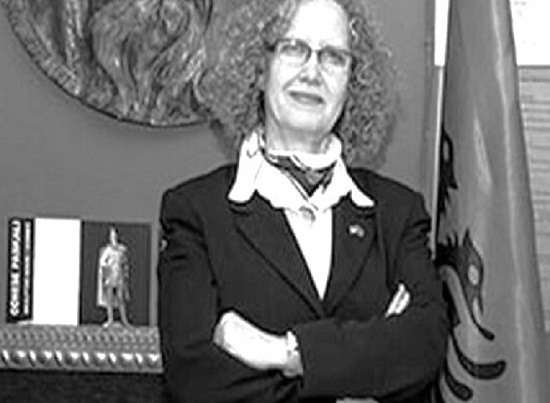
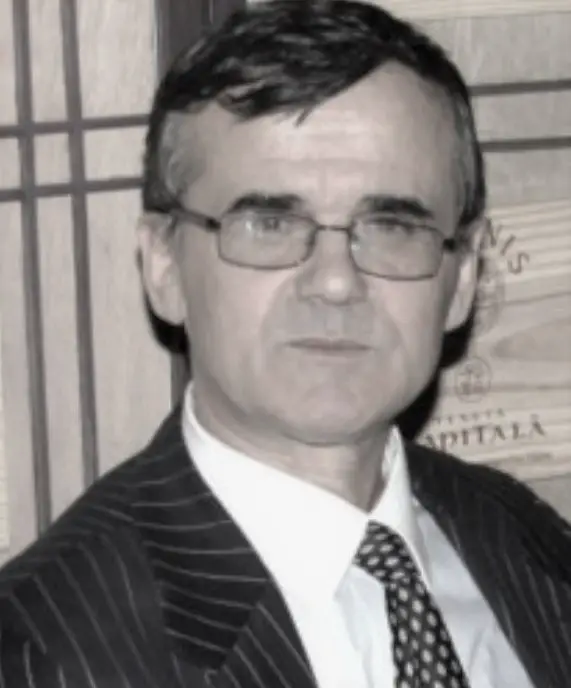
But who is Floriana Paskali? She graduated from the Academy of Arts in Tirana in music criticism and subsequently worked at Radio Tirana for 11 years in the language department. She made a special contribution to programs featuring Albanian music, including light music, folk, and classical genres.
After the fall of the communist system, she moved to Greece, where she was contacted by the renowned Greek musicologist and critic, Giorgos Leotsakos, who invited her to collaborate on a book regarding the history of Albanian music from antiquity to 1990. She worked with Professor Leotsakos until the end of 1993. The project was a success.
Later, she collaborated with the newspaper “Egnatia.” When its editor-in-chief, Kolec Traboini, immigrated to the USA, the Greek owner, Doukakis, offered Floriana the position of editor-in-chief. It was the only Albanian newspaper in Greece published with European Community funds. Meanwhile, she maintained her ties with Radio Tirana, where she hosted the show “Messages of Longing” (Mesazhe malli), as well as with the magazine “Teuta.”
She collaborated with “Egnatia” until 1997. In January 1998, she received an offer from the Ministry of Culture, working on several European Community projects. Later, she served as the director of the Children’s Cultural Center. In 2000, she moved to the USA. After an English language course, she attended New York University, graduating in Arts Administration and the business of art. Upon returning to Albania, she was appointed director of the Army Cultural Center. After three years of work in military art and press, she decided to publish the three-volume album, “About Paskali, by Paskali” (Për Paskalin nga Paskali).
The Interview
– Ms. Floriana, welcome to the “Illyria” editorial office. This isn’t the first time you’ve been interviewed by “Illyria,” is it?
Floriana Paskali: It is the second time I have been interviewed by the respected “Illyria” newspaper, which has a very good reputation not only in America but also across the Albanian diaspora on other continents, and certainly in the motherland. The first time was in 2000. The focus of that interview seven years ago was the creation of the “Paskali” Foundation. I remain dedicated to my father’s work and will never stop in the future.
– Seven years have passed between the first interview and this one. What have you been able to do for the legacy of your father, the myth of Albanian art?
Floriana Paskali: I have published the three-volume album “About Paskali, by Paskali,” which is an academic publication of 450 pages.
– How and when did the idea for such a publication arise? What was the spark?
Floriana Paskali: Initially, the idea was born from the void – the gaps I noticed regarding my father’s legacy. I saw that the Art Gallery, the Higher Institute of Arts, and other artistic environments felt the absence of Paskali. In the National Art Gallery, Paskali’s archive was empty. Surprisingly, there was nothing in the archive. Meanwhile, at the Academy of Arts, where the periods of the Renaissance and Independence were studied (which included Odhise Paskali), there were significant deficiencies. Under these conditions, I started the project, as I did not lack materials. I had worked hard on collecting and organizing them.
Being very close to my father, I, better than anyone else, could succeed in such a project. I thought that by publishing an academic-level book – as the album has indeed been described – I would serve not only my father but also Albanian culture. The Academy of Sciences, where the promotion took place, described the publication as an achieved scientific work. I believe it is also a service to Albanian culture.
– Was the title of your publication simply a “find,” or something more?
Floriana Paskali: I thought about the title for a long time, and finally, it seemed to fit my project. I wanted to bring to the reader’s attention – especially those interested – what has been said about Paskali and what Paskali himself said; what his contributions were to the world of letters and arts. My father’s contributions are not limited to sculpture but extend to other fields of art, literature, and journalism.
Chronologically, the material covers the years 1922-2005. I stated at the beginning of the published work: I believe this three-volume collection of published journalistic writings, “About Paskali, by Paskali,” spanning from 1922 to 2005, will serve readers to further appreciate the contribution my father, Odhise Paskali, gave to his nation for over 62 years, granting Albanian culture the eternity of his works.
– You have divided your father’s work into three volumes. What were the criteria for each book – historical, thematic, or otherwise?
Floriana Paskali: The chronological timeline of creativity was considered most. Specifically, the first volume includes materials layered between 1922 and 1944. The first volume opens with a poem dedicated to the monthly organ of the society of Albanian students in Italy, published in the third issue of that magazine. The poem is titled “Hope of the Fatherland” and begins with verses evoking the time of the hero Gjergj Kastrioti Skanderbeg. Later, there are materials published in the “Dielli” newspaper, the organ of the “Vatra” Federation in America.
Of great interest is the publication of a commentary on a song that “Dielli” had published regarding the “Dance of Garentina” (Vallja e Garentinës). Following Odhise Paskali’s commentary are 165 verses that tell the story, honoring the muse of the Albanian people. This was published in “Dielli” on April 19, 1924. There are other poetic materials Paskali published in “Dielli,” as well as proper studies continuing the tradition of literary criticism, such as the article “Albanians and Art” published in “Dielli” on May 29, 1924. Meanwhile, in 1926, an interesting story by Odhise Paskali was published under the pseudonym “Gjerq Golemi” titled “The Inheritance” (Trashëgimia).
The first volume also includes creativity published in “Shqipëria e re” (New Albania), which was published at the time in Romania, such as “The Wounded Spirit,” “Under the Mask of Happiness,” and “The Song of Bajram Curri.” This volume also contains essays dedicated to great composers and artists, such as “The Life and Death of Mozart,” Leonardo Da Vinci, or other global figures, published in the Korça Bi-weekly. Meanwhile, there are dozens of writings dedicated to his talent as a sculptor, alongside some of his creations that, despite being created early, remain masterpieces, such as “The Hungry One” (I urituri).
Created in Rome in 1924, or “The Man” (Njeriu), monuments of the time, as well as those dedicated to King Zog, or the project for the monumental tomb of Ismail Qemali, “Albanian Honor,” “The Flag Bearer,” “The Mountaineer” (1928), “The National Fighter” (1932 in Korça), etc.
– Is everything your father wrote, or what others wrote about him, included in this publication, or was the findings selected?
Floriana Paskali: No, the most important materials written and created by Paskali are included, as well as what others wrote about Paskali; naturally, a selection was made. This is where the idea for the book’s title originated – what Paskali wrote and what was written about Paskali.
– Your father gained eternity in art starting with “The Hungry One” (1924), “The Man” (1926), or “The National Fighter” (1936); does it not seem that your publication serves memory more than eternity?
Floriana Paskali: Naturally. I told you at the beginning of the interview that I felt the void created – the absence of legacy in artistic environments – which is why I brought it forward. Furthermore, I am not hanging medals or orders on my father; he has them all because his powerful art gave them to him. He is a “People’s Artist” and the “Honor of the Nation.” But this book fills that need felt in the Academy of Arts, the National Gallery, and other artistic institutions where he cannot be absent.
Moreover, for students who need to know the legacy coming from an artist of such great caliber, researchers in this field now have Odhise Paskali’s legacy compiled.
So, I have managed to bring the artist Odhise Paskali closer to them. Also, the perspective is broad; my father does not emerge simply as a great sculptor, but as a multidimensional artist with numerous talents, high cultural interests, and rare creative tendencies. He was also an essayist who left behind about 810 essays, which I will bring to readers in a future publication.
In this publication, Paskali also emerges as a translator and a poet – a man of art with broad creative interests. I don’t say that his friends, colleagues, or the art elite didn’t know him in this light, but through this publication, ordinary people get to know him too. My father, Odhise Paskali, besides the eight languages he spoke, possessed an extraordinary culture that spanned many fields of philosophy, literature, and the arts as a whole./Memorie.al