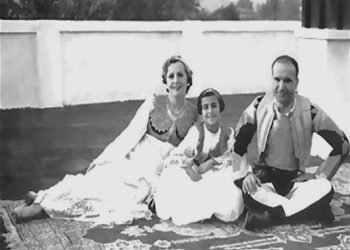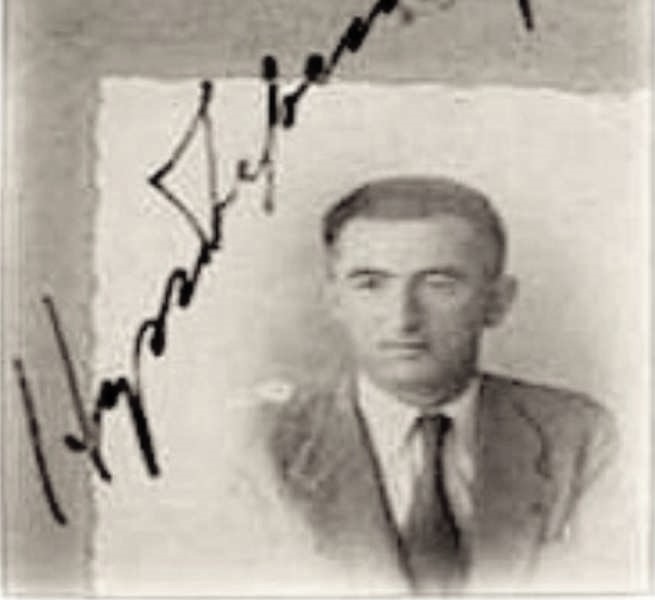
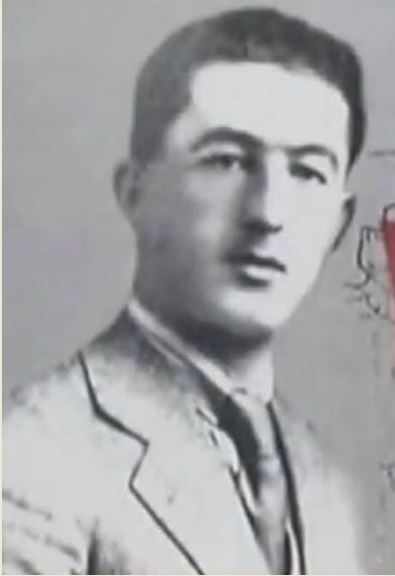
Memorie.al / On September 14, 1943, at the age of 43, Hysni Lepenica fell fighting against fascism in Gërhot, Gjirokastra. Hysni Lepenica (1900–1943) was a commander and a significant leader of the Anti-Fascist War, a signatory of the Mukje Agreement (August 1–2, 1943), and a member of the “Committee for the Salvation of Albania” that emerged from said agreement. He served as the Commander-in-Chief of the Balli Kombëtar (National Front) forces for Southern Albania. Recognized as a “Martyr of the Fatherland,” he was posthumously honored after 1990 by Presidents Sali Berisha, Alfred Moisiu, and Bujar Nishani with the high medal: “Honor of the Albanian Nation.”
Hysni Lepenica was a man of deep patriotic sentiments, which he transformed into actions, eventually giving his life for his country. He was a leader followed by the masses, primarily the peasantry, who bore the heaviest burden of that war. As a historical figure, Lepenica was a republican democrat, anti-monarchist, anti-Zogist, a sworn anti-fascist, and a convinced anti-communist, demonstrating a courageous character in defending his convictions and democratic ideals until his last breath.
A Visionary Patriot and Politician
A visionary patriot and politician, he quickly abandoned communist ideas, opposing the placement of the star on the military cap and rejecting cooperation with Serbo-Montenegrins, accusing the Communist Party of being under Serbian command. Hysni Lepenica was a product of historical circumstances that demanded heroes, and he was a hero. The greatness of his work will be transmitted to future generations.
He was born, lived, and died sacrificing for the freedom of his people. At every moment of his life when the fatherland was endangered, he proved to be a worthy soldier, becoming a symbol of liberty. From the age of 20, he spent his entire life with a weapon in hand or in prisons for the high interests of his nation. He was a freedom fighter who translated love for the country into numerous battles against the occupiers.
Command and Military Prowess
During the Anti-Fascist War, he participated in or commanded more than 16 battles, more than anyone else. Isuf Luzi remarked that he was a brave man who fought on his feet. Until the end of his life, Lepenica worked and fought for agreement and cooperation with the National Liberation Front (LNC). He belonged to the group of European-educated youth – alongside Safet Butka, Abas Ermenji, Zef Pali, Vasil Andoni, and Skënder Muço – who favored uncompromising war against the occupier.
Lepenica’s human dimension was shown during the war, especially in his treatment of prisoners of war. He belonged to the republican current, which believed that “Solutions do not come from columns of soldiers, but from trucks of corn” (alluding to the social-democratic philosophy of Branko Merxhani). As a visionary politician, he was an initiator of the Social Democratic Party. He was the armed wing of Balli Kombëtar that had no implication with the fascist occupiers. His elimination resolved a major strategic problem for the Communist Party, which was leading the people toward civil war.
The Impact of His Death
The killing of Hysni Lepenica liquidated the armed branch of Balli Kombëtar that advocated for uncompromising war against the foreign occupier. His fall left the National Front without a commander in Southern Albania to continue the struggle, clearing the path for the Communist Party to seek power by any means and at any cost. I am convinced that the figure of Hysni Lepenica will withstand the judgment of history with dignity and will be read with great interest in history books.
Ultimately, we can say that Hysni Lepenica, through the services he brought to his country – to which he gave his life – has earned the right to have his name immortalized in the glorious pages of our nation’s history. The future belongs to Hysni Lepenica. You can learn more about his full life and work through the books of historian Mr. Enver Memishaj (Lepenica): “Hysni Lepenica, Commander-in-Chief of the National Front Forces” and “Hysni Lepenica, His Place in the History of the Albanian People.“/Memorie.al