By Astrit Kola
Part One
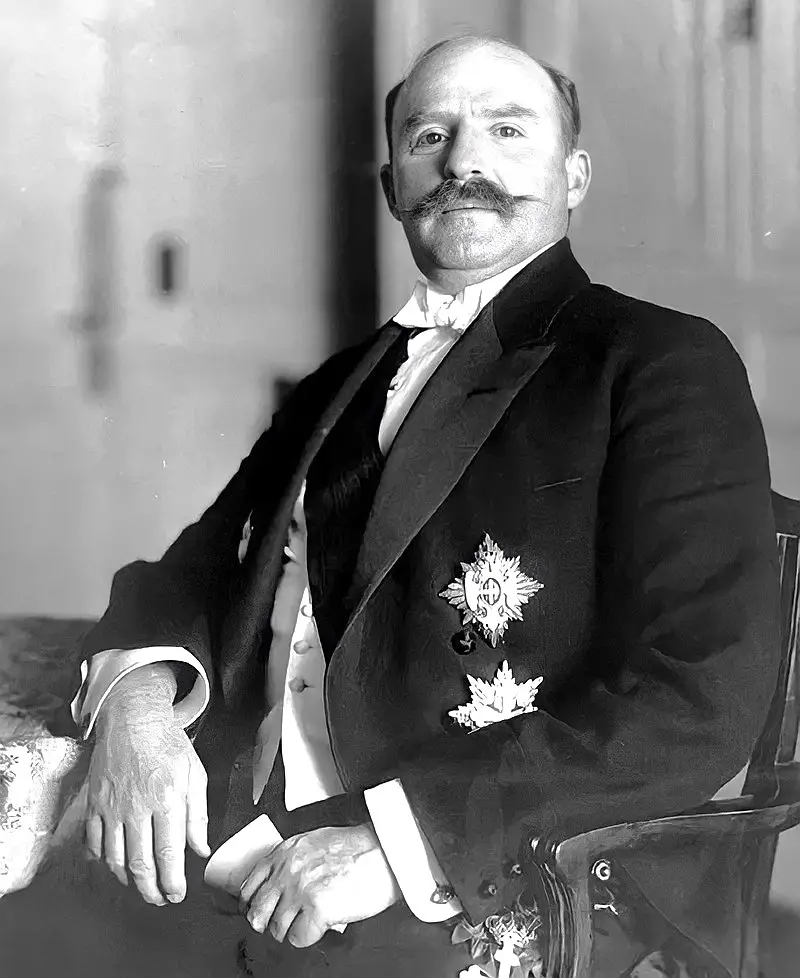
Memorie.al / Historical sources have clearly shown the close relations of Essad Pasha with Serbia during the First World War and the Royal Yugoslavia of Versailles, led by the same emblematic figure of Serbo-Yugoslav politics of the last two decades of the 19th century and the first quarter of the following century, Essad’s friend, Nikola Pašić, founder and chairman of the Radical Party of Serbia. These relations, only in a short time interval, have been a partnership, mainly during the years of the First World War, while in the rest of the time; they have been vassalage relations, as Essad was paid for his “services.”
Consequently, they were also relations of mutual interests, among which the most decisive was the acceptance of the restriction of Albanian administrative lands, in favor of the expansion of the territorial spaces and vital interests of Serbia and, later, of Royal Yugoslavia.
It is no coincidence that in his letter to the French Prime Minister, Millerand, Pašić describes Essad as “the head of the government of the Principality of Albania,” whose administrative authority extended only to Central Albania, while the annexationist demands of the Serbo-Croatian-Slovenian Kingdom in Paris extended over all of Northeast Albania, touching very few areas of Essad’s “Principality,” with its residence in Durrës.
In the archival documentation used for this dossier, the Yugoslavs openly admit the fact of the “services” that Essad had performed for them, without hiding his systematic financing that of his supporters on the ground, and even of his phantom government, composed of people who were pages and major-domos in the suite of the famous Pasha. The Serbs and Pašić, it is no coincidence that they were so generous and financed Essad with dizzying sums, reaching 120,000 gold francs per month.
Although on the political-diplomatic level, Essad and his non-existent government had and played a modest role, which was marginalized by the very insignificant weight of the Albanian factor on the Balkan stage and beyond, on the military level, within the Albanian territory and the Albanian space outside the borders, Essad’s supporters were numerous and powerful enough to disturb the peace of any government within an Albania exhausted by wars and invasions.
Essad’s followers formed entire units, best led and armed. They were avant-garde detachments that caused riots, panic, and disorder, and were always incited and exploited by the chauvinist neighbors. It was precisely in these Essadists that Essad’s power play.
It was precisely from them that his political card was potentiated. So there is no doubt why Essad’s payroll cost so much and consumed almost the entire fund of Prime Minister Pašić’s “special budget.”
Otherwise, it cannot be explained that, even after his death, Essad’s “services” remained the crown jewel on the Pasha’s grave. They remained the “key” that opened the budget of the Serbo-Croatian-Slovenian Kingdom and forced Pašić’s government to reward or grant perpetual pensions to Essad’s family and the entourage nicknamed “Essad Pasha’s Government in exile.”
In any case, his value even after his death was as great as to cause trouble with the “treasure” that he, as a seasoned “collector” of politics, deposited in the metal box, which he kept close to him, with the consent of the Serbs themselves.
In this box that alarmed Belgrade, Serbian archival sources say that secret documents and all the correspondence of the “head of the Principality of Albania” were deposited, and where naturally, the most valuable was the correspondence with Pašić and the Serbs.
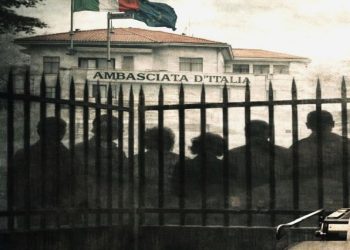
Therefore, Ninčić from Belgrade, (who was promoted from Deputy Foreign Minister to chairman of the Council of Ministers of Yugoslavia at that time), almost ordered Pašić, to whom he addressed the telegram titled; “For Mr. Pašić,” to go immediately to “Essad’s personal bodyguard, – a young man named Pashk, – before it’s too late”!!!
But why would Essad, this “head of the Principality of autonomous Albania, recognized as such by the London Conference in 1913,” have to “give this box” to “our embassy in Paris for safekeeping,” that is, the Yugoslav one?!
Ninčić himself gives the answer, as he closes his highly secret telegram No. 3173, with the paragraph; “In no way should this box remain in the hands of Essad’s Foreign Minister (Terka), because this would be discrediting for us (the Yugoslavs – author’s note).”
The Serbs were not only worried about covering up the truths of Essad’s box, the contents of whose documents, perhaps, will never be known to the Albanians.
However, all the natural assumptions and versions related to the contents of the box cannot overshadow the stubborn fact that an important part of Albania’s history was hidden in Essad’s box and that this part is so painful and tragic that, by no means, should it have come and should come to light.
Therefore, the Serbs, Pašić and Ninčić, ran to snatch it from the hands of a certain Pashk and a certain Terka, who, although they were so close to the treasure, did not help us, but deprived us of the great truths that the Serbs, Pašić, Essad, and others concocted at the expense of Albania and the Albanians.
Pašić’s letter in favor of Essad, addressed to Millerand and how Pašić supported Essad Pasha?
“To His Excellency Mr. Aleksandër Millerand (Prime Minister of France), president of the Peace Conference, Paris
January 30, 1920
Mr. Chairman
“At the beginning of the letter of August 9, 1919, I drew the attention of the Supreme Council to the damages that the Principality of Albania and the head of its government suffered during this war, so I have the honor and the duty to now address the Conference of Ambassadors, with the overview of the losses that Essad Pasha Toptani, the head of the Albanian government, and his family have personally suffered.
I consider that Albania in the course of this war, remained on the side of the Entente and Serbia, under the command of Essad Pasha, and to a large extent contributed to the triumph of the united Powers, with its military actions and moral resistance.
The help that the Albanian people under the leadership of Essad Pasha, gave the Serbian army during its withdrawal along the Adriatic coast, also testifies to the loyalty to the united Powers.
Essad Pasha to a large extent exploited all his opportunities by bringing victory over the common enemies, during the four years of the holy war against them.
He and his troops held the weight of the front lines of the war on the Salonika Front, on a front line 30 kilometers long, acting as part of the French division. Essad Pasha personally covered the expenses of the military resistance in their entirety.
But the contributions he made in favor of the Entente Powers, in the capacity of a commander and head of the Albanian government, had dire consequences for him.
At the time of the double bombing of Durrës from the sea, the heavy cannons of the Austrian army, destroyed many properties of the government led by him.
Later, united enemies attacked his house, destroyed all his property, robbed a number of warehouses with goods, cut and robbed his forests, robbed all his provisions, and plundered everything.
In addition to these, during the 4 years of the War, he was deprived of all the income that was made possible by his governing position and private property.
During the entire War, all civil and military expenses, except for food and armament, were covered by Essad Pasha himself. In military operations, many Albanian fighters died and many others were wounded and mutilated, while Essad Pasha took it upon himself to support their families and paid them regular pensions.
Later, after the political reconciliation (the end of the First World War – author’s note), by a decision of the Allies, who asked him not to return to Albania until the Peace Conference decided on the bases of the future Status of the Albanian state, Essad Pasha was forced to live abroad, in the most difficult material conditions.
Taking into consideration the above facts, for moral reasons, as well as due to his difficult material situation, I consider Essad Pasha’s request to be fair, as the head of the Albanian government and the right of the Albanians who followed him, and to whom he has obligations, that he be given compensation for a sum of about 10 million francs.
It would be unfair to question the role that Essad Pasha played during the war, and that he remains unrewarded for the damages.
Not only because he needs to be compensated for the property damages, especially now that he is in extremely difficult circumstances, but above all because he has remained loyal to the Allied Powers, so I have the moral right to beg the Conference of Ambassadors not to lose sight of the great damage that the head of the Albanian government suffered during the course of the war, for which he has the right to receive compensation.
The order of the French government to Essad Pasha, not to return to Albania, until the Peace Conference decides on the bases of the future Status of Albania, makes it impossible for him to repair the damages and manage his assets, so I consider it appropriate to beg the Conference of Ambassadors to take administrative measures for the immediate protection of his property interests in Albania.”/Memorie.al
Accept Mr. Chairman my deepest respects
Nikolla Pašić
(AJ-336-27-V-VII/9-5504).