• Rreth Nesh
  • Kontakt
  • Albanian
  • English
Saturday, April 25, 2026
Memorie.al
No Result
View All Result
  • Home
  • Dossier
  • Interview
  • Personage
  • Documentary
  • Photo Gallery
  • Art & Culture
  • Sport
  • Historical calendar
  • Others
  • Home
  • Dossier
  • Interview
  • Personage
  • Documentary
  • Photo Gallery
  • Art & Culture
  • Sport
  • Historical calendar
  • Others
No Result
View All Result
Memorie.al
No Result
View All Result
Home Dossier

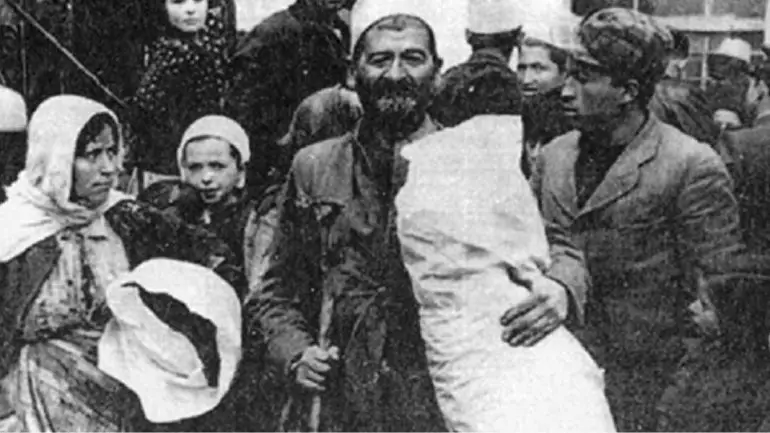
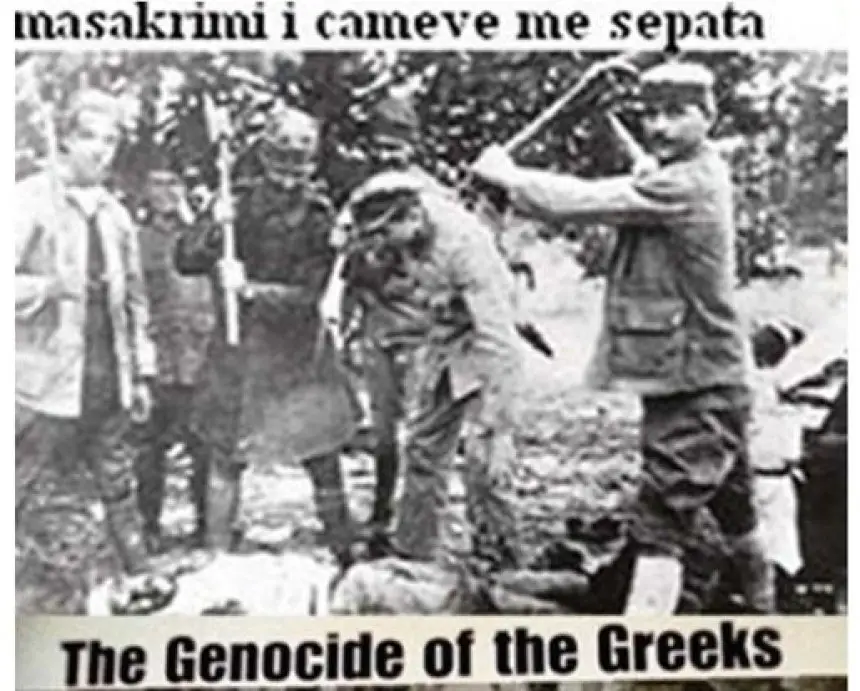
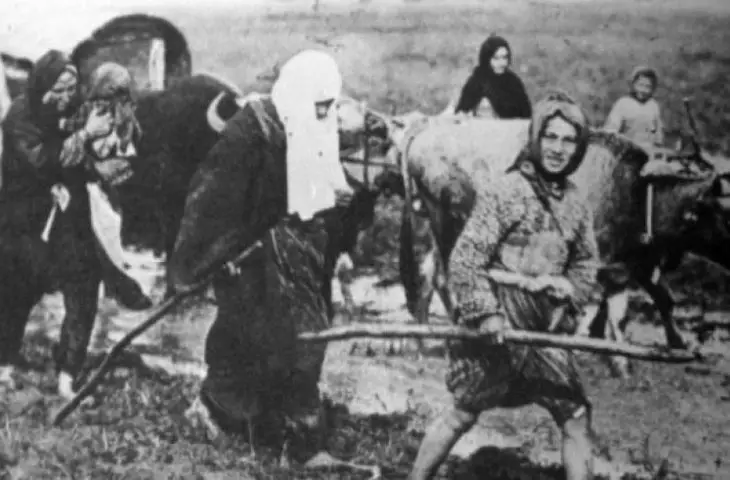
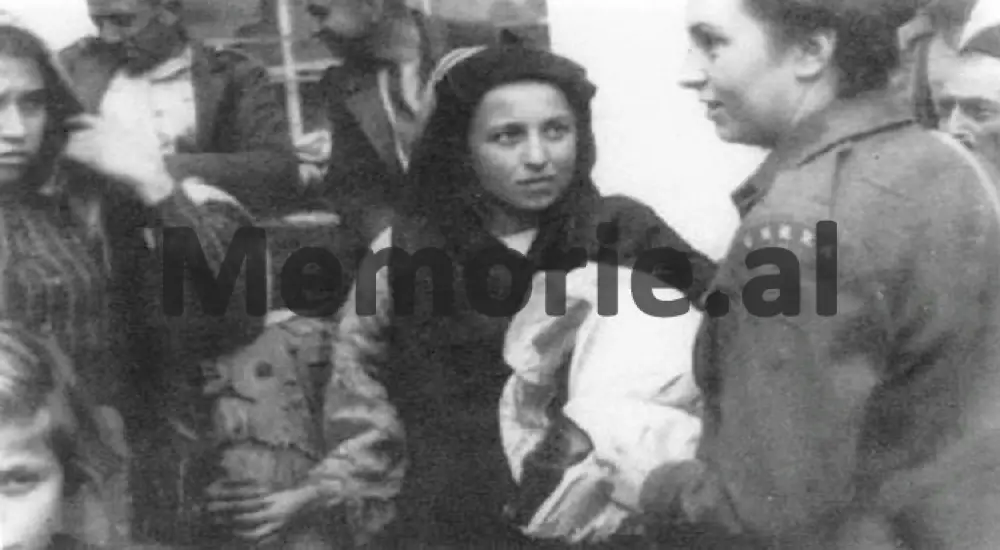
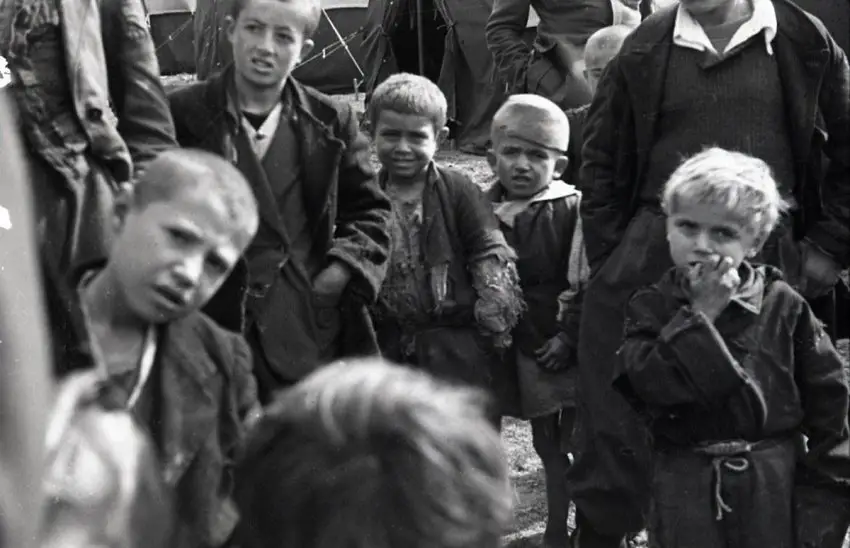
“The Greek historian Margaritis, in his book, ‘Undesirable Compatriots,’ writes; ‘Paramythia turned into a slaughterhouse, 500 people were inhumanly killed, and the women were captured and…’ ” / The Massacre of June 27, 1944, against the Chams.

Viti 1994: “Kur Kuvendi vendosi që 27 qershori të njihet si: ‘Dita e genocidit ndaj Shqiptarëve të Çamërisë nga shovinizmi grek’…”/ Kush e morri nismën dhe diskutimet e deputetëve
Çameria Memorie.al
Çameria Memorie.al
“Në Paramythia, kushërirën tonë, Sanije Bollati e dogjën të gjallë, plakut Osman Murati, mbasi i rropën për së gjalli lëkurën, i’a…”/ Rrëfimi tragjik i studiuesit, dëshmitar okular
“Prej politikës anti-amerikane që ndiqte Enver Hoxha, mbeti pa zgjidhur çështja çame nga UNSKOB-i në ‘47-ën në Greqi dhe…”/ Dëshmia e rrallë e ish-zëvendësit të Koçi Xoxes
Viti 1994: “Kur Kuvendi vendosi që 27 qershori të njihet si: ‘Dita e genocidit ndaj Shqiptarëve të Çamërisë nga shovinizmi grek’…”/ Kush e morri nismën dhe diskutimet e deputetëve

By Enver Kushi

Memorie.al / These days, while searching in the files of my modest archive on Chameria, I found a photocopied poem; “Sanije Bollati”, written by Gjergj Komnino and published in the newspaper Zëri i Çamërisë (The Voice of Chameria). The newspaper in question was the organ of the Anti-Fascist Committee of Cham Emigrants in Albania and was published only for a few months, starting from the second half of 1945. On the pages of this newspaper, Gjergj Komnino published some of the most painful poetic creations dedicated to the Cham tragedy, such as; “Paramithi, Paramithi”, “The Road of Return”, “Sanije Bollati”.

A special study would be needed, dedicated to the life and work of Gjergj Komnino, who, as the writer from Durrës, Shpend Topollaj, writes, “was a graduate abroad, where he brilliantly defended his diploma with a study on Luigi Pirandello.”

This intellectual, in whose veins “flowed the blood of princes and even emperors,” this early anti-fascist, the communist regime would imprison.

Gjithashtu mund të lexoni

“Ahmet Jegeni died in custody, without being convicted, while by order of Kadri Hazbiu and Feçor, even after conviction, Kiço Ngjela and Rrahman Pëllaku were held…”/ Letter from former general Nevzat Haznedari, in 1982

“The prisoners I had in my room, a waiter, a farmer, a bricklayer, an officer, a brigadier, a shepherd, an accountant and an ambassador, could not help me, because…”/ Pjetër Arbnor’s letter from prison, in ’86

Agim Musta in the book “Mandelët e Shqipërisë” (The Mandelas of Albania), among other things, recalls Komnino’s words: “They sentenced me to death in 1956. Six months eating like a dog in a trough, six months with my hands and feet tied with iron, six months urinating on my clothes, six months…!”

Let me return to Gjergj Komnino’s poems dedicated to the Cham tragedy. Their common feature is extreme pain and tragedy verging on a scream. The poet seems to have become intimately familiar with the Cham wound and the tormented body of Chameria. He has become part of this tragedy, and it seems as if his body, too, is wounded and still bleeding.

I think the poem “Sanije Bollati” is the most tragic. The atmosphere is Dantesque. She seems to speak into a void, somewhere between earth and sky. It has 37 verses and at the end, a clarification for the reader: “Sanije Bollati is a victim of the Greek monarcho-fascists, who burned her little by little and terribly massacred her.”

Who is Sanije Bollati? She was born in the city of Paramythia, the daughter of one of the ancient tribes of this city (where the Bollati Tower still stands) and married in the same city, into the Nuri family.

It is of interest to the reader to make known the notarized statement of Fadil Nuri, dated January 26, 2005, born in Paramythia in 1935 and the son of Sanije Bollati.

I quote a part of his testimony, taken by Mr. Ilmi Saqe and certified by the notary Ruko Soko: “My mother had my 6-month-old sister, Dilena, in the cradle and went to the bathroom to get my sister’s clothes, but the criminals burned her. The mother came out of the bathroom all in flames.

I started to cry loudly, seeing my mother’s whole body burning in flames. A Zervist shot me and pushed me from the second floor, throwing me down the stairs, resulting in injuries and fragmentation. I was covered in blood from the wounds I received. This scar on my forehead is from these criminals. My mother continued to burn until she lost consciousness.

She was completely scorched, her body’s flesh was blackened and in places, it was oozing blood…! Her lips were burned, her teeth were exposed. From the burning, her body had wrinkled and shrunk. It was a terrifying sight. That sight has accompanied me and will accompany me as long as I live…! The Zervist criminals also killed my sister, 6-month-old Dilena, in the cradle…!”

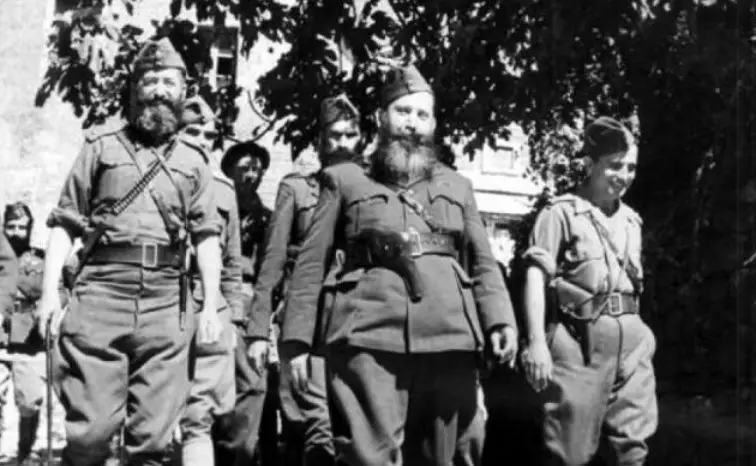
The aforementioned testimony, unparalleled in the cannibalism of the Zervist bands against the innocent Cham population, brings to mind, among other things, the saying of the objective Greek historian, Niko Zhangu: “We must look at our face in the mirror of history and be ashamed of what was done (in Thesprotia), because it is not in the character of our people.”

The contemporary Greek historian Giorgos Margaritis holds the same opinion, writing in his book “Undesirable Compatriots” about Paramythia, which on June 27, 1944, “the city turned into a slaughterhouse…! About five hundred people were killed in the most inhuman ways. The general mistreatment of women and the looting of property completed this picture.”

Gjergj Komnino’s poetry is republished on the pages of the Albanian press after 66 years, within the framework of June 27, the Day of Genocide against the Albanians of Chameria by Greek chauvinists.

Returning to the pain as a screaming memory and the innocent victims, we take this opportunity to appeal to the sensible Greek opinion, historians, and intellectuals of our southern neighbor that the time has come for the solution of the Cham issue and for the rebuilding of bridges of understanding between our ancient peoples.

“No law of the world,” wrote our great writer Ismail Kadare, “no cultural formation, can make people not have memory, much less not have nostalgia.

It is a pain that does not go away just because someone declares it illegal. Not by pretending not to know, and even less so when one acts without respect towards it.

Your great ancient fathers, those who later gave another dimension to world culture, in the extraordinary tragedies they wrote, knocked hard on the conscience of contemporaries and generations, creating catharsis.”

The ashes of Sanije Bollati’s dead body in martyred Paramythia are still outside, unburied in the earth. Also unburied in the earth are the bones of the elderly, men, women, and children, barbarically massacred by the infamous bands of Napoleon Zervas.

In their name, the souls that find no peace, at least allow us to place a rose where they are, in the tragic lands of our Chameria.

This poem speaks to you! The voice coming from the ashes of Sanije Bollati’s burned body speaks to you. Listen to this voice and that of the poet Gjergj Komnino. Memorie.al
ShareTweetPinSendShareSend
Previous Post

"With a cannibalistic pleasure, the soldiers shot at every convict and rejoiced over the decorations, commendation letters, and the 15-day leave, which the command applied as a stimulus...”/ The rare testimony of a former political prisoner.

Next Post

"When the partisans started to mistreat the people of the house, Father Anton came out from where he was hiding and told them..."/ "The unknown memoirs of Hitler's former minister in Albania, Neubacher, in 1944"

Artikuj të ngjashëm

“Kadri, Teme Sejko’s plot, was conspired by Mehmet and Beqiri, to tell us not to joke with the Soviets, because… / Enver’s accusations in the Political Bureau, October 8, ’82
Dossier

“Ahmet Jegeni died in custody, without being convicted, while by order of Kadri Hazbiu and Feçor, even after conviction, Kiço Ngjela and Rrahman Pëllaku were held…”/ Letter from former general Nevzat Haznedari, in 1982

April 23, 2026
“The prisoners I had in my room, a waiter, a farmer, a bricklayer, an officer, a brigadier, a shepherd, an accountant and an ambassador, could not help me, because…”/ Pjetër Arbnor’s letter from prison, in ’86
Dossier

“The prisoners I had in my room, a waiter, a farmer, a bricklayer, an officer, a brigadier, a shepherd, an accountant and an ambassador, could not help me, because…”/ Pjetër Arbnor’s letter from prison, in ’86

April 24, 2026
Photograph of the city of Korça in the years 1910-1940
Dossier

“The Greek government started giving salaries to the religious leaders, so that they would speak well of Greece, and they took them, because otherwise they would take…”/ The unknown side of the Greek massacres in Korça in 1914

April 24, 2026
Enver’s accusations: “It has spread all over Albania, as if Hysni Kapo did not die of cancer, but he was killed by order of ..…” / 5th V Plenum, October ‘82 when Kadri Hazbiu was “crucified”
Dossier

“The work for the Mjeks military plant has been sabotaged and Mendu Backa and Nuro Brati are responsible, while the Swedish specialists…”/ Letter to Minister Kadri Hazbiu, in ’82

April 23, 2026
Memorie.al
Dossier

“In the courtyard of Sali Qarri in Has, Zogu’s gendarmes forced the owner of the house to give coffee to Bajram Curri so that he wouldn’t die, but…”/ The story of the well-known researcher from Hasi

April 23, 2026
“When Koco Tashko introduced me to Enver at the Flora store, the only thing that stood out was the appearance and …” Testimony of the famous lawyer
Dossier

“Teme Sejko, even though he was tortured, did not say anything and, tied with a rope, almost dead, he was taken in a car with driver Jorgo Bimo, and taken to the Dajti road, where…”/ Letter from General Nevzat Haznedari, in ’82

April 23, 2026
Next Post
“When the partisans started to mistreat the people of the house, Father Anton came out from where he was hiding and told them…”/ “The unknown memoirs of Hitler’s former minister in Albania, Neubacher, in 1944”

"When the partisans started to mistreat the people of the house, Father Anton came out from where he was hiding and told them..."/ "The unknown memoirs of Hitler's former minister in Albania, Neubacher, in 1944"

“Historia është versioni i ngjarjeve të kaluara për të cilat njerëzit kanë vendosur të bien dakord”
Napoleon Bonaparti

Publikimi ose shpërndarja e përmbajtjes së artikujve nga burime të tjera është e ndaluar reptësisht pa pëlqimin paraprak me shkrim nga Portali MEMORIE. Për të marrë dhe publikuar materialet e Portalit MEMORIE, dërgoni kërkesën tuaj tek [email protected]
NIPT: L92013011M

Na ndiqni

  • Rreth Nesh
  • Privacy

© Memorie.al 2024 • Ndalohet riprodhimi i paautorizuar i përmbajtjes së kësaj faqeje.

No Result
View All Result
  • Albanian
  • English
  • Home
  • Dossier
  • Interview
  • Personage
  • Documentary
  • Photo Gallery
  • Art & Culture
  • Sport
  • Historical calendar
  • Others