
From Skifter Këlliçi
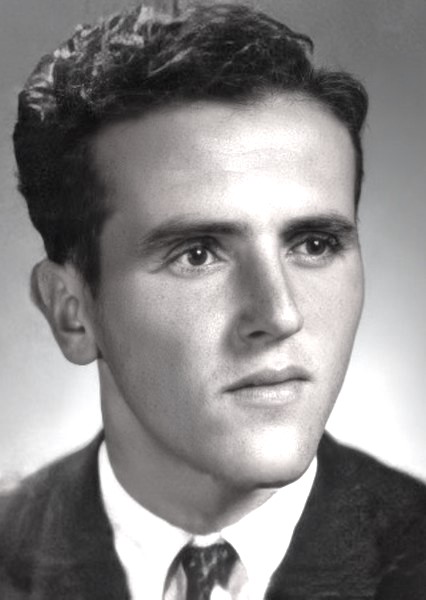
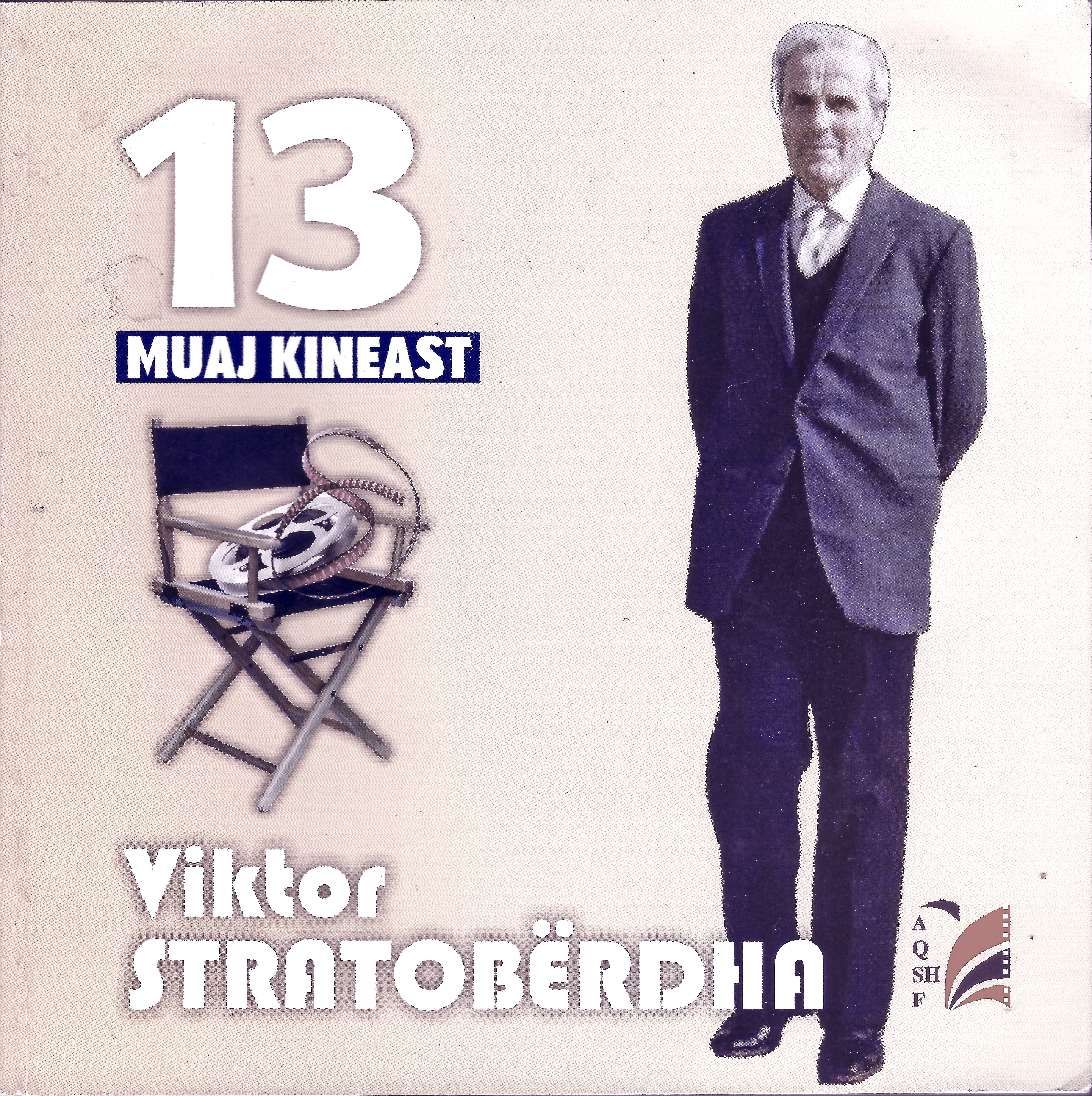
Memorie.al / One summer day in 2010, at my home in Boston, where I have lived and worked for 24 years, I received a book in the mail sent by my friend, the renowned director Kristaq Dhamo, who at that time lived in New York, near his daughter, together with his wife Dhorka, an art historian. The book, written by him, was titled; “Viktor Stratobërdha, 13 months as a filmmaker”. It was a very pleasant surprise, because, as I will recount below, I also kept some memories of Viktor, this talented filmmaker, on whose shoulders the cruel weight of the communist-Enverist dictatorship lay for several decades, with internments and imprisonments.
Browsing through the book, which also included photos from his very meager creative activity in the field of cinematography, a few sparse but significant memories came to mind, related to the meetings I had also had with him during the time Viktor was sentenced in Berat in the 1960s of the last century, when I worked as a teacher in that city, and which I will recount below, along with my impressions of this book.
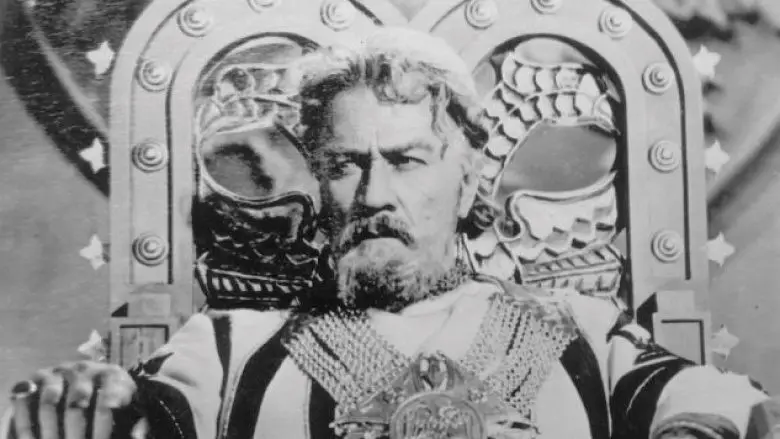
One afternoon, around the beginning of 1953, I was 15 then, together with other children, we learned that a group of Soviet filmmakers and actors had arrived from the Soviet Union to shoot scenes for the film “Skanderbeg”, in which Albanian actors also played. We were curious to see, especially the great Georgian actor Akaki Horava, whom we had seen in the Soviet film “Giorgi Saakadze”, a hero of medieval Georgia, who would play the role of our Gjergj Kastrioti.
We learned that the members of the group were staying at the “Dajti” hotel, so one afternoon we rushed over there. We were lucky because, in the meantime, we saw some of the actors talking in the small square of this hotel. We also recognized Horava, or rather a young man who accompanied the actors showed us who Horava was, because he had neither a beard nor a shield and sword, as we had seen him in the film. Moreover, the young man said something to Horava, who turned to us and greeted us cordially.
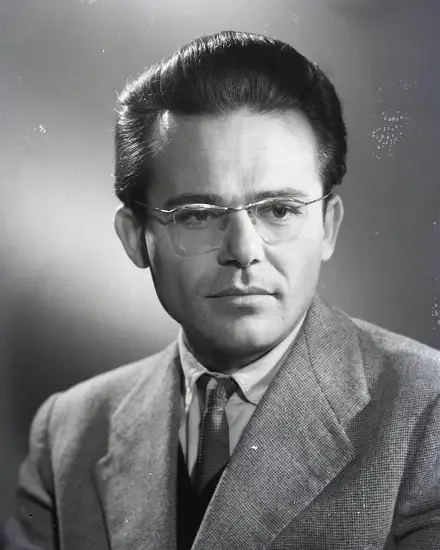
We learned that this man was Viktor Stratobërdha and worked with the great director Yutkevich, whose name we had also seen in other Soviet films. In other words, we learned that he was his assistant on the film “Skanderbeg”.
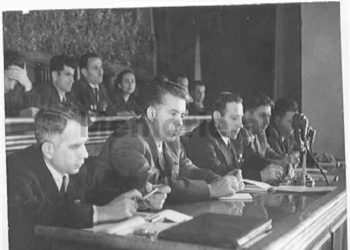
This was my first meeting with Viktor, whose name would become known only through three other documentary films and nothing more, because after the infamous Tirana Conference in April 1956, he, together with Nesti Zoto (then director of the “Shqipëria e Re” Film Studio) and about 200 other intellectuals, former communist partisans, leaders of important high party and state institutions, specialists in various fields, journalists, professors, were directly condemned by the dictator Enver Hoxha, because with courage and frankness, as will be noted below, they raised their voices against the leadership of the Party of Labour, which was detaching itself from the broad masses of the people, who were becoming increasingly impoverished.
Reading the aforementioned book by Kristaq Dhamo, we learn that among them was Viktor Stratobërdha, who, from a former partisan, became a communist, went full of enthusiasm to the Soviet Union to become a film director, returned with that same enthusiasm after six years of study, with some of the most renowned directors in the world: Pudovkin, Dovzhenko, Rom, Gerasimov, Yutkevich. Although he was not a delegate at this conference, he openly supported the aforementioned discussions, just as he had supported them in the meeting of the Party organization of the Film Studio, and expresses himself thus on the pages of the book:
“The Tirana Conference was the first clash of all former communist partisans, idealists, with a reality that had disappointed our youthful dreams, which made us take to the mountains for the liberation of Albania. There, all those who did not want the lofty aims of their freedom-loving and democratic war to be trampled upon, made the first ‘assassination attempt’ on the cult of the individual, the polarization of life, the dogmatism, and the sectarianism of Enverism.”
Among the first victims punished by Enver Hoxha after this conference was Viktor Stratobërdha, also because after its proceedings, he had frankly said to a communist colleague: “There they broke Enver Hoxha’s nose.” Expelled from the party, he was banished from the Film Studio and sent off as director of the only cinema in Berat. “I think it must be a special and unique case on the face of the earth, that a director, being mentally and physically perfectly fine, has such a short lifespan,” notes Stratobërdha, in a letter sent to Kristaq Dhamo on December 21, 1998, when he was exiled in Greece, which is included in the book.
– “Only in a dictatorship like ours, which the world cannot understand, do such phenomena occur.”
Summer midday of the year 1960. A journalist for two years at Radio Tirana, together with Petro Kita, then its deputy director, I am in Berat. He for a political conference and I for a report. And then, after lunch, when we are in a café, we see a still young man approaching us. He greets Petro Kita. I barely recognize him. It is Viktor Stratobërdha. (It was the time when the communist dictatorship had not yet tightened the “screws” further, so they talked cordially, inevitably without mentioning the Tirana Conference, after which Petro had also been criticized from above, as a liberal member of the Party Bureau of Radio Tirana, who had approved the frank discussion of journalist Njazi Demi at this conference.)
Then Viktor showed us the cinema he had transformed into a pleasant hall. No word between them about that cursed Conference, nor, as was learned years later, about the most terrible question he had suggested to Nesti Zoto to include in his discussion at the conference: “Is the Central Committee aware of the poverty in the country and what is the cause of this poverty”?! With that we parted from him.
Three years later, Viktor managed to become director of the Estrada (Variety Theater) of Berat, which, from one of the weakest, under his direction became one of the best in the country. “What could have happened?! Rehabilitation? Softening of the Party line? Pity? None of these. Everything in line with the known policy of ‘tightening and loosening the screws a bit'” – notes Kristaq Dhamo in his book.
But, while waiting for his term of banishment from Berat to end and for him to return to the Film Studio, Viktor is informed by the Party Committee of Berat of another five-year stay in this city. There is a reason. In one of the most successful performances of the Berat Estrada, he staged a sketch, taken from the Elbasan Estrada, where the famous end-of-year targets that are not met are turned into a parody.
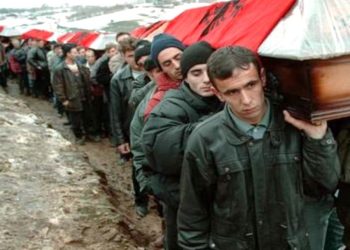
But Viktor adds a very sharp detail: The tasks are materialized in a coffin, carried on the shoulders of four actors, accompanied by a funeral march. Moreover, those days, Berat had been honored with the ‘Flag of Socialist Competition’, when in fact the data, as always, were inflated, unlike the truth. “The party leaders of the Berat district,” writes Kristaq Dhamo in his book, “considered this sketch as a deliberate denigration of ‘socialist successes’. And as a result, here begins the long calvary of manual labor in quarries, forests, construction, agricultural enterprises.”
With the so-called cadre rotation, in 1966 I was appointed as a teacher in Berat. And in this city, which at that time had only one pedestrian street, it was impossible not to run into Viktor Stratobërdha one day. It happened quite by chance. One winter day in 1967, at the Berat cinema, where years earlier he had been director, the film “Skanderbeg” was being shown, in which, as I mentioned above, he had been assistant to the Soviet director Yutkevich. The film was shown only in the districts, not in Tirana, because it was a … Soviet production, even though it was made in 1952-53, during the Stalinist period, and the assistant director was Viktor Stratobërdha. A ridiculous paradox…!
When the film ended, as we were leaving the cinema, I suddenly found myself next to him. I thought he wouldn’t recognize me. But two of his friends, who accompanied him, remembered who I was. He remembered me. We had a short conversation, but when I thought of leaving, the two friends, who from their appearance seemed to be workers he worked with, invited me to have coffee with him. I accepted. He told me that he had followed my literary programs on Radio, which I prepared, and asked me if I was writing a book. I answered that in a few months, a volume of my short stories would be published. He wished me to write a film script later, as happened years later.
I had other occasions to talk with Viktor, who, as far as I remember, had married a girl from a noble Berat family, but “touched”. Nevertheless, I felt some concern that these meetings, which I wished to have more often, would not be viewed favorably by the party officials in Berat. But something happened that worried me even more. Usually, I had lunch at the “Berati” restaurant, where the head of the Internal Affairs Branch and his deputy, both from Tirana, also lunched. In conversations with me, they seemed sincere.
And then, after a few days, the deputy chief, with whom I was alone at a table in the restaurant, told me in a low voice to be careful about two things: to avoid conversations with Viktor Stratobërdha and to keep the volume of the Radio low in my room when listening to news and music from RAI.
“So-and-so came and met me on purpose in the office,” he continued, mentioning the name of a retired former officer who lived in the entrance opposite the entrance where I lived, “and reported to me that you listen to that ‘degenerate Italian Radio’. Besides that, he told me that you also meet the enemy Viktor Stratobërdha, and he has even happened to be in front of the building where I lived. So once again, be careful.”
So from that day on, I could no longer meet Viktor, especially since he was assigned to work in a quarry far from Berat, from where he returned home very late. Moreover, at the end of 1969, I returned to Radio and then to Television and never had the chance to meet him again. However, in 1972, when a small spring began in our art and culture, as a result of the softening of the so-called “class struggle” (for example, the 11th Song Festival on RTSH), I learned that, unexpectedly, Viktor had been reappointed director of the Berat Estrada.
I thought with friends that his troubles and sorrows were now over. But this lasted a short time, because after the 4th Plenum of the Party Central Committee, as is known, Enver Hoxha began a crusade against culture and art, then against high army and economy cadres, which resulted in Viktor Stratobërdha, in 1975, after a exposing meeting as an enemy of the people, being arrested and sentenced to 10 years in prison for … agitation and propaganda.
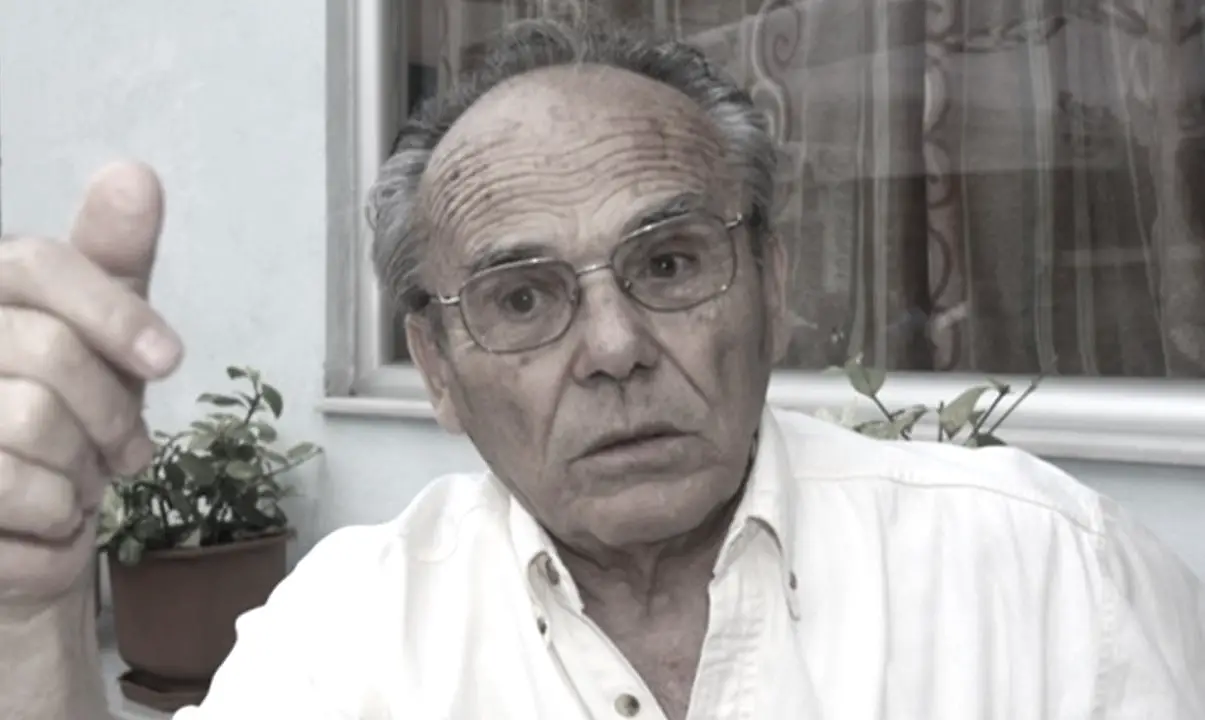
“I am released from prison after nine years,” he writes in the letter to Kristaq Dhamo cited above. “After serving my sentence, a hermit’s life. During the events of entering the embassies (July 1990), I couldn’t break through. I was late. In ’91 I escape, wherever I can, but it doesn’t work out. Not even with the March ferries. Then, on foot to Greece.”
In 1992, when I was writing the “History of Albanian Radio-Television (1938-1990)”, published in 2004, I got acquainted in the State Archive with the file of the Tirana Conference (April 4-8, 1956), about 400 typewritten pages, which included all the discussions of the participating delegates at this conference, the vast majority of whom harshly criticized the leadership of the party and the state for problems discussed above in this article.
Based on these so shocking discussions, in February 1995, in a daily newspaper, I published a dossier of about 20 pages, which had a great impact. And this, because it was the first time that the tragedy of this conference was publicly shown with facts, labeled by Enver Hoxha as a “plot prepared by the Yugoslav Embassy in Tirana and its renegade agents, enemies of the party and the people”. And then, a few weeks later, a stranger stopped me on the street. I thought he would ask me about sporting events and results, as often happened to us radio and television football commentators.
But no. He told me: “You have many greetings from Viktor Stratobërdha, who is an emigrant like me in Greece. He remembers you with great longing and congratulates you for the so well-aimed dossier on the Tirana Conference. He also congratulates you for the two films by Xhanfise Keko and Gëzim Erebara, with your scripts, which he has seen on Albanian channels. When you come to Albania sometime, he very much wishes to meet you.” But this unfortunately did not happen…! In 1999, I also moved with my family to America. I didn’t know how to get in touch with him. And then, in May 2000, after he had settled as a political emigrant in Canada, I learned with great regret that Viktor Stratobërdha had passed away forever. What a strange coincidence! He was born in May 1925 and passed away in May, 75 years later.
“He would have been one of the greatest figures of our cinematography,” Kristaq Dhamo told me in telephone conversations, him in New York and me in Boston, in which we talked mainly about cinematography. “But I will write about him.” And so it happened. Kristaq wrote a small book about him, but of great value, accompanied by interviews published in newspapers and magazines dedicated to him, as well as impressions, first from his daughter, Flutura, a psychologist, and from writers and artists who had known him closely, Dionis Bubani, Arian Myrto, and Xhovani Shyti…!
He wrote as an artist about an artist, driven and inspired by the love and respect for what Viktor Stratobërdha had been able to do only for 13 months as a director, as he titled his book. Last August, Kristaq Dhamo also passed away, at the age of 89, but among other things, I believe, also with the satisfaction that, after his impressive films, he also left us a very significant book in the library of Albanian cinematography, about Viktor Stratobërdha. Memorie.al