Memorie.al / A while ago, during a televised debate in which historians loyal to the old line of history, who defended the thesis that there was no fierce civil war in Albania or Italy, participated alongside younger historians who said that here too, as in Italy, the civil war was very harsh, it brought to my mind a debate that took place a few years ago. On Bruno Vespa’s show “Porta a Porta,” between Fausto Bertinotti, former president of the newly founded Communist Party, and Giampaolo Pansa, author of several works on the civil war in Italy that took place during the years 1943–1945.
At the time, Pansa had published the historical essay “Il Sangue dei vinti” (‘The Blood of the Vanquished’), in which he detailed the terrible communist crimes aimed at exterminating all opponents who did not accept their plan, which was the creation of a Soviet republic like in the Soviet Union. Faced with Pansa’s undeniable documents, Bertinotti, who denied the existence of the civil war in Italy, found himself in a difficult position and chose silence in the face of truths he could not deny.
Pansa’s book recounts murders and crimes committed by communist partisans before and after April 25, 1945, the day of Italy’s liberation. Without any trial, criminal fascists were killed, but also those suspected of having been such. Likewise, prominent democratic opponents of communism, clerics, landowners, industrialists, and cultural figures were massacred. The accounts state that among the killed were persons responsible for military and civilian crimes, but also persons who, although linked to fascism, had not committed crimes.
Among those killed without trial in those days, various murders of non-communist partisans were also carried out, as well as of journalists because they had written about the crimes, violence, and abuses perpetrated in the so-called “Triangle of Death” (the area between Bologna, Ferrara, and Reggio Emilia), where the communist presence was very large.
Numerous murders began immediately after April 25, 1945, the day of liberation, even within the same military grouping (since the fighting formations of the Italian resistance were formed with partisans from all political parties, but the overwhelming majority were communists) of non-communist partisans individually, as well as in groups, by communist partisans, as well as the murders of many commanders who were followers of non-communist parties, or communist commanders who were against the killing of innocents—murders that were also carried out from behind and later they fabricated all sorts of lies, initially to cover up these crimes so that they would then fade into oblivion over time.
Until recently, the author said in an interview, speaking about the civil war was not very well received, because one had to speak only of the liberation of the country, because for the communists, the war for the liberation of the country was the work of the communists and no one else. This book, rich in documents, is not only a tale of terrible stories and revenges covered by silence, but also brings to light the true goal of the Italian Communist Party, the strongest and most organized in Italy at that time, which was that liberation from the fascists and German occupiers would be the beginning of the communist revolution that would make Italy a communist state.
The truths shown in this book and in two others that were published later, were met with very harsh criticism from the Italian left and from the veterans’ association, as well as with threats and violence against the author, because they brought to light the naked truth of communist crimes that until then had managed to conceal with what in Italy was called the “Great Conspiracy of Silence on Historiography,” thanks to which, after the war ended, they had managed, with their tools spread throughout the entire Italian state bureaucracy, to keep communist ideas alive and went so far as to ensure that in history textbooks in Italian schools, one would never speak of the crimes of communism during the war, but only of the crimes of the anti-communists who were called traitors, because they were fighting for a free Italy and not for an Italy that would pass from fascist dictatorship to a harsher dictatorship, such as the dictatorship of the proletariat.
Even now that the political legacy of the communist party is dying out, university chairs with old academics, seized by communists and passed from father to children, from uncles to nephews, as well as the heirs of the communist party who have given themselves the exclusive right to judge the history of the war, remain unshaken in their former convictions, whereas what non-academic historians, who with documents refute the theses of the old academics, write, these latter call dilettantes of history and use every means so that the truth hidden until now does not come to light, because with the revelation of this truth, the tower of deception collapses.
If we remove the words Italy and Italians written above and replace them with the words Albania and Albanians, the framework of communist crimes in our country would become clear to us, which began with the murder of Besnik Çano and Qeramudin Sulo, two university students who left their studies to fight against fascism, but because they were part of the ranks of Balli Kombëtar, they were treacherously kidnapped and taken to Peza where, after inhuman torture, they were killed and their bodies were left unburied on the bed of a stream, to continue afterwards, without interruption, throughout all the years of communist rule, with the extermination, through trials and without trials, of all those they considered dangerous to the dictatorship—murders that did not stop even when their regime was breathing its last; even then they would show who the communists were by hanging the poet Havzi Nela and leaving him hanging for three days in the square of Kukës, the poet who was hanged because in the verses of his poems he sang to his homeland and freedom.
The crimes of the communists during the civil war in Italy and the conspiracy of silence on historiography during and after the war, are the same as the crimes of the civil war and the conspiracy on historiography during and after the war in our country, because communists wherever they are, are all the same, both in their fanaticism towards the communist doctrine which they call unquestionable and whoever dares to oppose it is called a traitor, and therefore must be eliminated, as well as in washing their hands of all the evil they do by accusing others of it, as in terrorist acts that instill terror in the people, to continue then with mass crimes indiscriminately against enemies and non-enemies, in order to achieve their goal, which was the establishment of the communist dictatorship according to the model of the Soviet Union, which unfortunately was established in our country.
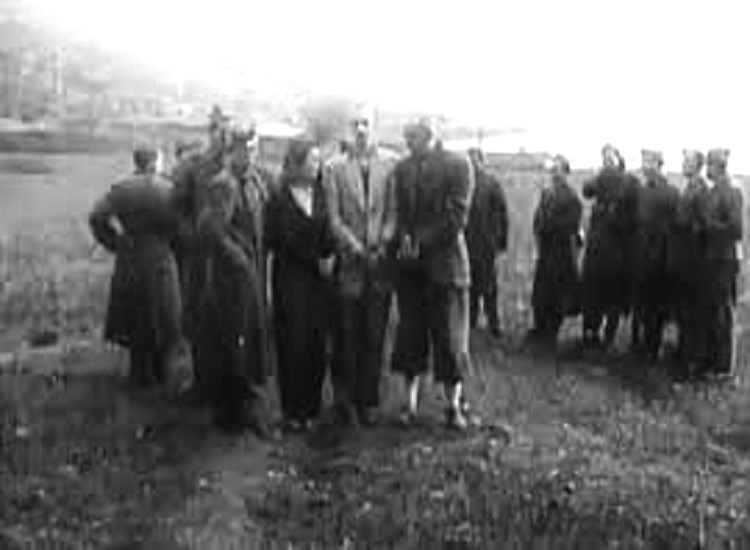
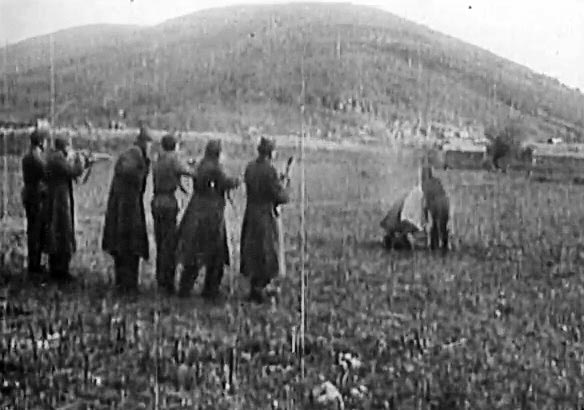
What happened after the publication in Italy of the book “The Blood of the Vanquished,” as I said above, also happened here with us, after the then President of the Republic awarded the martyr’s decoration to each of the 65 young Ballist fighters killed by Mehmet Shehu. The nostalgics once again brought out the resentment of the years of communist rule, while the historians justified that massacre by declaring that it was a state of war, although they knew very well that prisoners are not killed; they also know that even those sentenced to death, before execution, have never been stripped naked and made a spectacle of, as Mehmet Shehu acted according to the orders of the Yugoslav master, Dushan Mugosha!
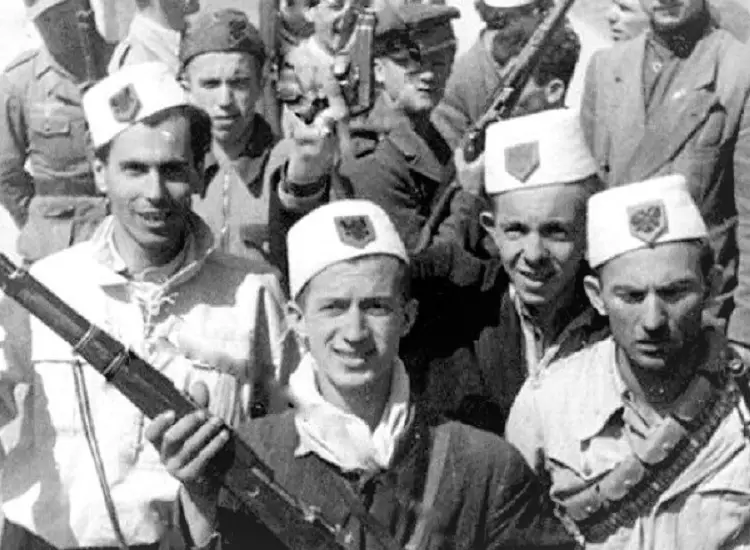
But, said the old historians, they are not martyrs. The word martyr is a Latin word of Greek origin that is deserved by anyone who consciously accepts torture and death and does not deny his ideal. The church, after Christ’s death, called all those Christian believers who sacrificed themselves in defense of the Christian faith, which was their ideal, martyrs. The 65 young patriotic Ballist fighters from Myzeqe, fighters in the ranks of Balli Kombëtar, also preferred death rather than deny the ideal for which they had taken up arms, in exchange for sparing their lives by Mehmet Shehu.
This is the truth that some historians and some politicians do not want to acknowledge, but time, which does not stop, takes everyone along with it indiscriminately, to make way for the new generations who, taking into account the basic criterion of history, which is the truth and only the truth that they have learned in the universities they have attended, will cleanse our history of all the falsifications that have been made to it during communist rule and which, unfortunately, continue even today./ Memorie.al