
By Sven Aurén
Part Two
Translated by Adil N. Bicaku
Memorie.al/ publishes a report by the well‑known Swedish journalist Sven Aurén, originally printed in the Stockholm newspaper *Svenska Dagbladet*, concerning his four visits to Albania, starting in 1938 when he came for King Zog’s wedding and ending in September 1968, when he visited Albania for the last time.
Continued from the previous issue
LIFE IN TIRANA
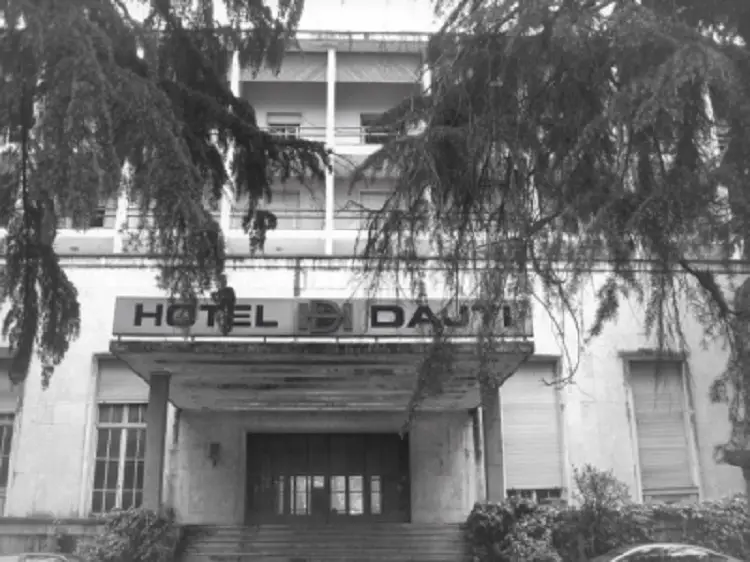
The best hotel in Tirana and Albania is called “Dajti”, after one of the highest mountains surrounding the capital. From the outside the building is somewhat magnificent, separated from the wide boulevard by a curtain of pines. But it was not the Albanians who built it – it was the Italians. The latter did surprisingly much during their short time as masters of the country.
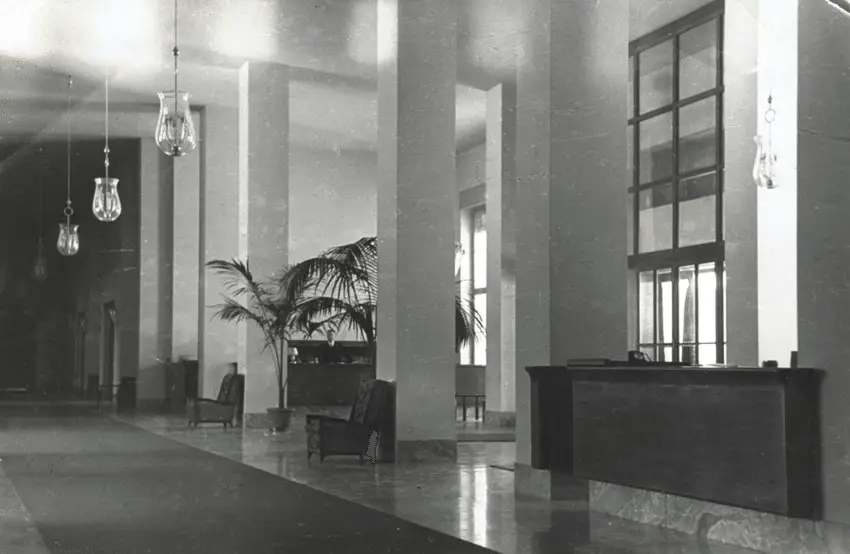
The entrance hall is very large, clad in marble and very formal; the rooms are pleasant, hygiene leaves something to be desired. The lift – Albania’s only hotel with a lift – is out of order, but chambermaids in black dresses, white aprons and hair in buns carry the guests’ luggage up and down the stairs, while the male staff looks on. The Turkish occupation that lasted 500 years has left traces even today.
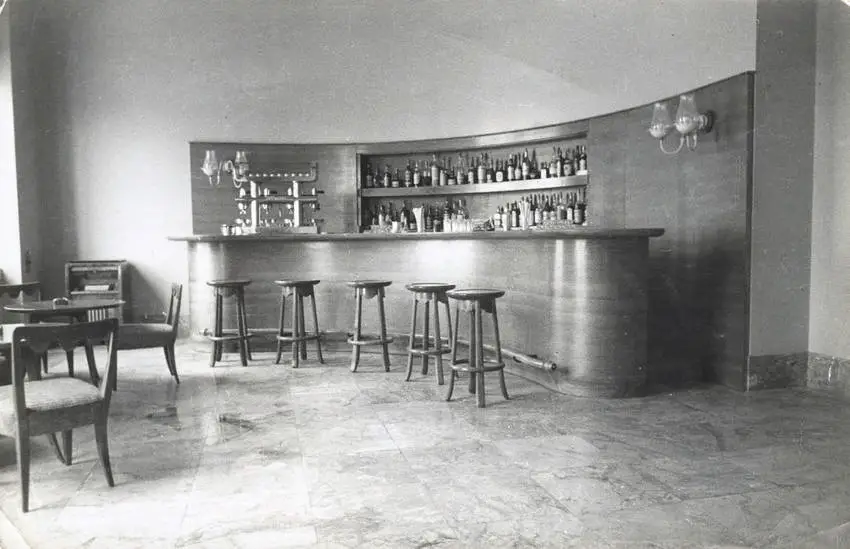
Hotel “Dajti” is reserved for foreigners, while the country’s own inhabitants are not allowed in. The Albanians who are sitting in the lobby or leaning against the sad bar are plain‑clothes policemen, and on their faces you cannot read anything. The atmosphere is generally heavy and characterises the People’s Republic entirely. The receptionist greets new guests without any attempt at a smile; no gleam is discernible in the waiter’s eyes.
The barman, a middle‑aged man, looks as if he buried a close relative this morning; on the shelf a row of bottles like urns in a columbarium. They serve only as decoration. You cannot order drinks properly (whisky, cognac, sherry, etc.); customers are forced to choose between raki and lemonade. And with a glass of raki in front of you – the best Albanian raki, by the way, made from mulberries – you leaf through some brochures that come with the room key. Advertising for the hotel? Tourist propaganda for Albania? Nothing. One talk about “Russia’s betrayal of communism”; another call the socialist world to vigilance: “The capitalist dragon raises its head in Czechoslovakia”.
I turn my back on this cheerful barman and set out into the beautiful‑named city. What a traveller finds in Tirana today – whereas before the war, when he left the hotel, there was the noise of the street.
Taxis and private cars honked their horns non‑stop, but there was also another kind of traffic noise: a great many rattling horse‑drawn carts fitted with car horns, and the drivers sounded them as zealously as motorists; a multitude of donkeys used for transport contributed to the great braying of the “concert”; various four‑wheeled wagons and carts; ambulant merchants ringing bells; street musicians. Besides that, the bad automobile roads did their part to make the cacophony reach its maximum. The noise was perhaps irritating, but at the same time it reflected a joyful life in a capital that was a very large Balkan village.
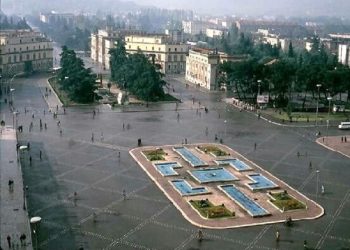
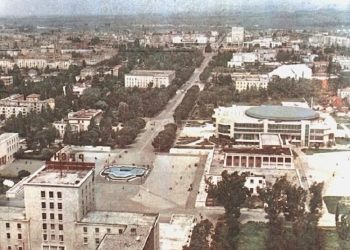
What does one encounter now? Silence. It is strange and unimaginable. Hotel “Dajti” is located on the main street, which during the Italian occupation was renamed from “Zog Boulevard” to “Mussolini Boulevard”, and now is called “Stalin Boulevard”. It is as wide as the Champs‑Élysées and very well kept: no rubbish, the asphalt shines like a mirror. On one side stands a monument depicting Stalin; on the opposite side Lenin is seen; otherwise the boulevard is surrounded by new and rather pompous houses combined with parks.
In the distance a large space, a round square, where Albania’s National Hero, Skanderbeg, with his famous helmet, surveys the situation from a bronze horse with its front legs in the air. One cannot deny that Tirana has been beautified. But if the bar of Hotel “Dajti” has an atmosphere like a burial chamber, on “Stalin Boulevard” the true quiet of a cemetery prevails. I am not exaggerating. The silence is linked to the traffic situation – or rather the lack of traffic. The boulevard is empty: no cars, horse‑drawn carts, wagons or donkeys, and hardly any people either. It was a weekday, around four in the afternoon when I first observed it.
A woman pushes a pram in the middle of the road, where a few children play undisturbed; one solitary man stands motionless reading *Zëri i Popullit* – Albania’s *Pravda*. Like a tourist in the Sahara I waited a long time for a car to appear, and finally I could see a lorry and an elegant Mercedes with drawn white curtains – behind them some high communist official was hiding. No motorcycles, two or three bicycles.
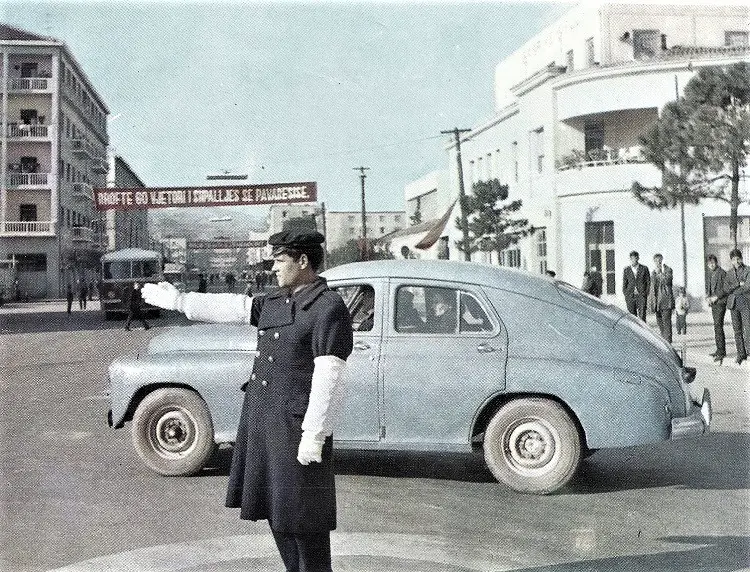
In Skanderbeg Square another experience awaits. In the square a policeman was on duty, with a white rubber truncheon. He is the only traffic policeman in Albania, and the poor fellow has nothing to direct. I feel the need to help him, just as Chesterton tells how an English tourist helped a German railway ticket‑seller who seemed very melancholic – by buying a ticket to the nearest station and giving it to him to punch, making the despairing official rejoice.
A notice in the hotel says that bicycles are for hire. If I had followed that notice and ridden a bicycle through Skanderbeg Square, I too would have performed a good deed. It is easy to be ironic, but the absence of traffic has a natural explanation.
Red Albania is a nation in penury, lacking almost everything, especially foreign currency. Cars, motorcycles and bicycles are not produced at home; they must be bought abroad and paid for with foreign money, not with leks, the Albanian currency. In this situation they prefer to buy essential machinery – i.e. buses and Lorries (plus a few cars for the country’s masters) – and reduce the import of bicycles to a minimum. Meanwhile, horse‑drawn carts, wagons and donkeys are considered to give a backward impression and are banned from the city centre for reasons of prestige. The result: emptiness and silence.
The communist broom has swept away many other things. Quite a lot of construction has been done in Tirana during these last twenty years, and new modern residential areas have been built. The tangle of alleys and paths on the outskirts of Skanderbeg Square is almost the same as before. But everything that gave the city its colours and charm has disappeared: the countless small shops and their owners sitting outside smoking beautifully crafted long pipes; the veiled women standing bashfully against the walls; the villagers in their colourful costumes coming from the high mountains; the wretched beggars and the proud chieftains on their fine horses; the swarm of begging children; the sweet smell of Turkish coffee wafting from hundreds of little cafés…!
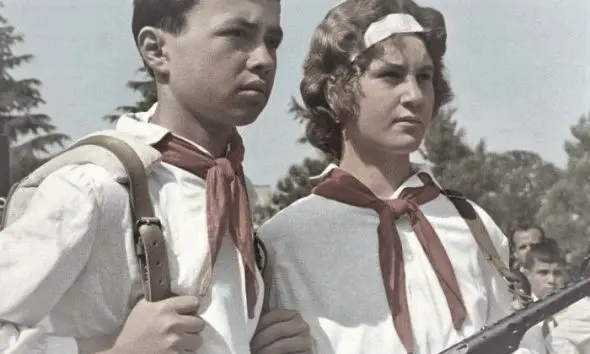
In those days all of Tirana smelled of coffee. Now the city has no smell at all. All the people look the same: men are dressed in dark trousers and white shirts, women wear cotton dresses; but it must be said that, judging by clothes, there is no marked poverty. One is no longer followed by a crowd of begging children. Not because children are missing. On the contrary. In present‑day Albania, the birth rate is encouraged in every way, and thanks to this policy the population has increased from one million to one and a half million since the war. The capital has 135,000 inhabitants compared to 35,000 in 1945. You see children everywhere, and also pregnant women. With red scarves around their necks and a red flag at the head of the column, the young march in military formations singing anti‑imperialist songs; they are called “Red Pioneers”.
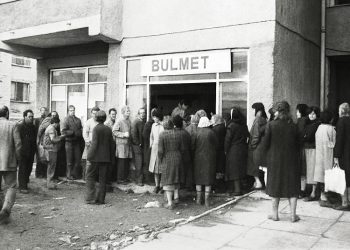
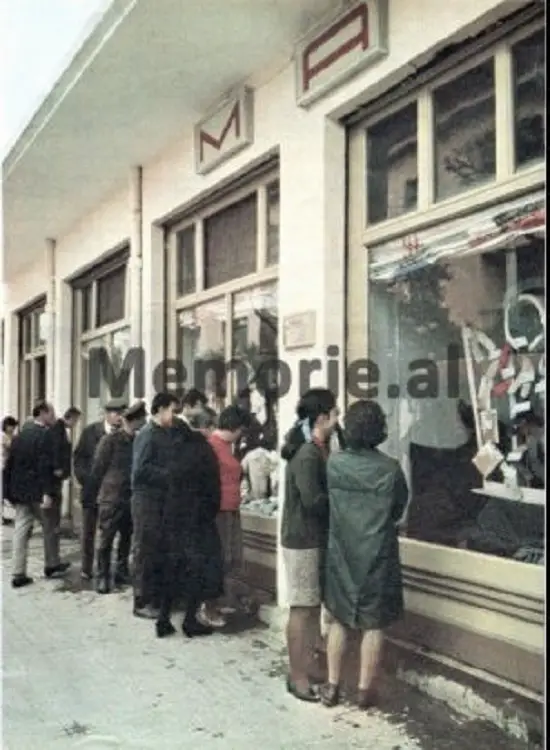
Of the many small shops of that time, only a few remain, and even they do not have much to offer. I remember a watchmaker on the main street who sold watch straps, but no watches. Commercial life is concentrated in state‑owned stores called MAPO, which means “People’s Store” – large, dreary premises with dark fittings, reminiscent of the same kind of, stores in Beijing, and there is a lack of goods on the shelves. The prices are astonishing. The average worker’s monthly wage is between 250 and 500 kronor, the latter only in exceptional cases.
Shoes cost 50–60 kronor, shirts 50 kronor, a woman’s handbag 70–100 kronor. And all of them plain or, to be honest, primitive. Which Albanians can afford to buy in these MAPOs?!
As for the people, there are other questions that cannot be silenced, even if perhaps they may be considered tragic. Before the war you saw cripples everywhere. On this journey I have not seen a single gypsy. When the war ended, the official statistics of Albania’s war‑disabled numbered tens of thousands. In the war museums found in all the country’s large cities, these figures are constantly repeated. Where are they now? During two weeks of travelling, I have not seen a single disabled person here. What has become of the old? The elderly can be counted on the fingers of one hand.
I have the impression that the country consists only of the working‑age population and children. It is possible that unproductive subjects are in concentration camps or interned in isolated villages, but any question about visiting a home for the disabled or an old people’s home is immediately answered in the negative. In a communist state that is in the Iron Age and where everything is valued according to its degree of usefulness, these observations seem disturbing.
This Tirana, washed clean and with only one alternative – where the rich no longer exist and the poor seem less poor – is a new city. Nonetheless, there is something that is exactly the same and shows that the Oriental traits among Albanians are still alive: nepotism. If in the past you took a walk after dark, you had to be careful not to go near a large area surrounded by a concrete wall.
It was strictly guarded: sentries watched all passers‑by suspiciously; here and there you saw the muzzle of a machine gun in an embrasure. Inside the walls lived King Zog, together with his mother and six sisters, all active in politics. The high positions were usually occupied by relatives of the royal family, who, for fear of assassination attempts, did not wish to be seen outside their well‑kept reserve. The state was run like a family enterprise, with the monarch as executive director, family members as management, and the clan as shareholders.
The system has not undergone any deep change. Today’s Albania is a communist family enterprise. The new masters have built a quarter of villas for themselves, which, it seems, are inspired by the forbidden city of past times – Beijing. It is isolated, like a military stronghold in wartime. If you approach, you are driven away by well‑armed guards, who seem even more numerous than in Zog’s time, and besides, they also have police dogs (German shepherds). In this Forbidden City live the three families that co‑govern: Hoxha, Shehu and Kapo. The most dominant figure is, of course, the General Secretary of the Communist Party, formerly a schoolteacher in Korça, Enver Hoxha; then come the two party veterans, Shehu, who is Prime Minister, and Kapo, who is the party’s number two. All three are married to each other’s sisters or kin.
The wives of Hoxha, Shehu and Kapo are super‑active as communists and prominent members of the Party’s Central Committee, which in Albania and the other People’s Democracies constitutes the base of power. In the other key posts we again find brothers, brothers‑in‑law and cousins. Hoxha alone has taken care to place one son‑in‑law and six cousins in important positions. This world, which is like a clan, lives for itself. Now and then Enver Hoxha, together with his associates and surrounded by police, comes out to inaugurate something or give a speech, and then returns to his quarter like a fortress lord in his castle.
How life goes on behind the wall with its sentries, nobody who lives outside that block of villas knows! Do the country’s masters live as simply as ordinary Albanians are forced to do, or is their standard of living such that it must be kept secret? Rumours are whispered within the diplomatic corps in Tirana, where every head of mission considers his post a form of punishment, and foreign Western representations are limited to two: the ambassadors of Italy and France. But for the ordinary Albanian, who is still a piece of Orientalism, the matter is not of great interest.
Communist or not, what could be more natural than that he who succeeds in seizing power arranges things for his own clan, places family members in key positions on which his own position depends, and enjoys the best of life…! That Enver Hoxha, twenty years ago looking like a fun‑loving playboy, now looks like a fat bey, surprises nobody. From the Albanian point of view, the opposite would be unnatural.
When night falls, Tirana looks like a dead city. Strong lamps light the deserted streets. But the oil lamp that once burned so peacefully on the coffin of Suleiman Pasha in the mosque – said never to have been extinguished, like the eternal flame under the Triumphal Arch – no longer exists, nor does the coffin.
Suleiman Pasha was a landlord who founded the city around the year 1500, and Enver Hoxha apparently thinks that capitalist graves of the past need not be preserved. The opera, unfortunately, gives no performances, and if I have to spend the evening, only the night club in Hotel “Dajti” remains. In fact there is a night club, even equipped with a lighted sign. The inhabitants of Tirana cannot visit this club. The place is only for foreigners, in the hope that they will exchange some banknotes of their own state. All the tables are empty except for one, which serves as an observation post for two policemen. The five musicians, half‑heartedly, begin the strains of a Viennese waltz, and the waiter puts a cloth on the table and wants to know whether I will order raki or lemonade! /Memorie.al