By Prof. Dr. Ardian Ndreca
Part Three
– The Historical Sensibility of Albanians –
Memorie.al / It is not very easy today, when graves are being opened and memories are being buried in Albania, to present a figure as “controversial” as that of Mustafa Kruja. He belongs to that rank of men – such as Lef Nosi, Dom Lazër Shantoja, Kol Tromara, and Mark Gjomarkaj – of whom almost nothing is said, even though they occupy a place of honor on the altar of our nation. Today in Albania, the tendency to rehabilitate those figures that the communist regime had condemned prevails. This is very just. However, the first ones emerging as persecuted patriots are precisely those who were eliminated in the internal struggle between the communist factions in power. Today’s writers attempt to evoke public sympathy by recounting the unjust fate that befell the likes of Koçi Xoxe and Mehmet Shehu, intentionally silencing the fact that thousands upon thousands of graves of worthy and innocent people were sown in every corner of the country by their very hands.
Continued from the previous issue..
Mustafa: The Beloved Parent
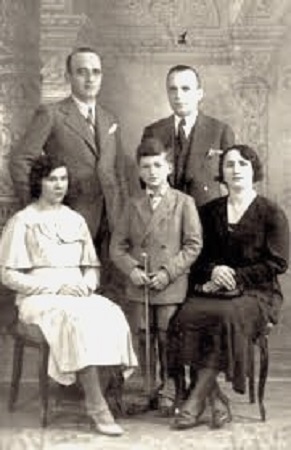
When I once asked Mustafa’s son: “Was your father strict with you?” – he immediately tried to find synonyms to characterize this aspect of his parent’s character. He settled on a foreign word: “severo” (severe/stern), which in Albanian is not quite captured by the term “strict.” Dissatisfied with the explanations he gave me, he finally added: “stern, but just.”
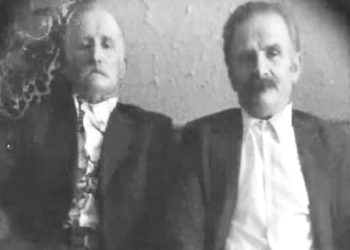
In those words, I saw the respect and honor the son nourished for his father – feelings that only personal example can transmit from one generation to the next. I recalled the words Ernest Koliqi wrote about Mustafa: “Before being a citizen, a man is a son and a parent. I had the fortune of knowing Mustafa’s father – a simple man from Kruja, clever and wise – whom his son, having reached the highest ranks of Albanian personalities, surrounded with a loving reverence that filled me with wonder. It seemed to me he wanted to gift his father all the respect the world held for him.
And what of the sweetness without indulgence with which he led his family? What of the humanity, rare among us Albanians, which he showed toward his spouse and children? Mustafa, whom many describe as a harsh man, I know to be patient and gentle within the family circle, staying for hours over his sons as they completed their daily school assignments. When he corrected them, he spoke in a way that did not bruise their developing personalities.”
What Mustafa wanted for his children’s future, he also strove to realize for the future of Albania; his private life is contained within a single frame: the “moral frame” (Koliqi). In his family, as Koliqi – who knew them closely in Zara – testifies, one breathed “a healthy and reviving human spirit; the deep spirit of our customs moved in that atmosphere, which, when interpreted by an enlightened head of the household and exercised with a measured yet sweet rhythm, gave the development of daily life an unparalleled grace.”
For him, fatherland and family do not exist without one another, and both share a single moral axis. The family is the child’s first fatherland, and there a person begins to learn to love their Country; this is the continuity Mustafa sought to transmit unceasingly to his sons.
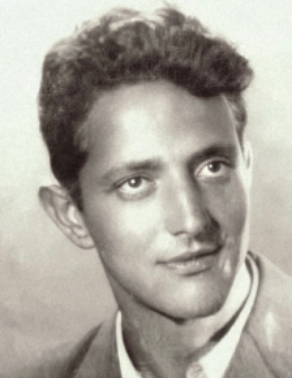
Even his departure from Albania is linked to a tragic moment that touched his hearth. In September 1944, he was forced to leave for Vienna, where his youngest son, Besim, who was studying in the Danubian capital, was gravely ill. Doctors believed the father’s presence would help the boy overcome the danger. Sadly, on November 21, 1944, the boy passed away; a few days later in Albania, the very freedom of the fatherland would also expire, leaving the fifty-seven-year-old man without a home and without a family! But it is better to let Mustafa speak for himself, as he described those moments in a piece that is among the most moving in modern Albanian literature:
“The Calvary Lasted Ninety-Eight Days!”
“But you, oh tender lamb, consolation of the hardest days of your wretched father, even during the calvary, even with that heavy cross upon your back, poured only honey from your mouth to everyone. You became more of an angel than you already were; your face, laid upon that cold iron bed, was no longer the face of a man who in a few weeks would become ash – it was the face of an eternal god. Even the hag [the disease] that left not a shred of your lungs ungnawed, had not dared to touch it. You, oh unparalleled youth, even though the tortures of that body wasting away like a candle day by day, never once forgot your loved ones; your care for them never left you, not a day passed that you did not mention them.
For the knives piercing your body, your mouth never uttered a groan, but for others, it did. The very last words that left your mouth were ‘our families’ and ‘Albania.’ You asked about them, and your father answered you with a merciful lie. He told you: ‘In Albania, by sea and by air, the Anglo-Americans have landed; therefore our fatherland, the Albanian people, our families, our friends and well-wishers are saved’ – and he continues:
‘In exile you were born, in exile you grew, and in exile you gave the very last breath of your youthful life, oh my son. In Your country, which you loved so much, they let you live only five years – five years that should have been the sweetest of your age, but which the enemy made the most bitter for you. You had as a life principle to become a man to serve family, nation, and humanity; to live not for yourself but for others. But you left us young, too young, my dear son. You wanted to become a man, but you were born a man and as a man you died; you passed into the infinite to become perfect. You did not die, you were reborn; it is the rest of us who have died, my dear son, not you: our hearts have died, my son!'”
Cultivator of the Albanian Language
“Shpend Bardhi” was the pseudonym under which Mustafa Kruja would publish his linguistic studies in the journals Hylli i Dritës of the Franciscan Fathers and Leka of the Jesuit Fathers. Perhaps more than anything else, he was a linguist, and philology was the field in which he joined his steel will with sharp intelligence and an astonishing memory.
Convinced that the central forms of the Albanian language – specifically the Elbasan dialect – represented the most organic development of the two dialects toward a future unification, he sought through scrupulous research to crystallize the original marrow of Albanian into grammatical rules, uncovering the laws of the language as they live in the speech of the people.
A polyglot and scientist, he poured all his strength into working on the Albanian dictionary. His correspondence, until the end of his life, served as a means of communication to understand the language of the specific region or village of his correspondent. In places, the letter becomes a true questionnaire, where he inquires down to the smallest nuances of word usage in the mother tongue.
The dictionary mentioned above consisted of “2400 large-format pages, with 30,000 words explained in Albanian” (K. Gurakuqi); this wealth of words was “equipped with precise definitions, always in Albanian, and with phraseology, terms, and sayings from the mouth of the people and literary expressions drawn from ancient authors. Generously, he donated the precious manuscript in Tirana to the Institute of Albanian Studies, which began its publication. Events halted the printing. That unparalleled material remained in the hands of the communists.”
It is well known that this highly precious material was exploited by officials in Tirana, without ever citing the source or giving credit to the author of that colossal work. Mustafa left a volume ready for publication titled Linguistic Criticism, which includes all his linguistic studies, published and unpublished during his lifetime.
He also translated the first volume of L. von Thallóczy’s Illyrisch-albanische Forschungen, wrote about Alexander the Great and the history of ancient Macedonia, left a study on the Pelasgians, a Balkan chronology, a study on our origin and name, another on Frang Bardhi’s Dictionary, and many masterful translations. Recently, a very interesting collection of his titled Historical Anthology (Sejko, Elbasan 2001) has been published.
According to Koliqi, Mustafa’s epistolary style “is agile and dense,” not lacking a “satirical tone,” “the language gushes pure and rich,” the phraseology is natural “used with masterful skill,” and his letters have a “linguistic glaze.” His prose is “expository,” the language thus becoming a “tool of reasoning,” where the logical structure is deconstructed and “precise Cartesian forms” are built; the style remains scientific and “geometric” – yet everywhere one feels a “pure Albanian spirit and a crystalline, defining clarity.”
But, as seen in the fragment dedicated to his deceased son, Mustafa’s style is not only austere and scientific; it can also be lyrical and polished, depending on the subject. And once again we read what the other Master of Albanian letters, Ernest Koliqi, recalled:
“When he wrote on an argument that touched his soul, his style became colored and inflamed, but without slipping into the indulgence of a tenderness (tendresse) that did not suit his manly nature. He expresses himself with a restrained, noble (delicate), and warm expansion, but never a soft one. One can see in the writing dedicated to the city of Kruja, how he manfully sweetens the word when touching upon things he holds dear.”
The Albanian language for which Mustafa Kruja worked his entire life (“In service of a national language” – was the title of a series where he published his Linguistic Gleanings), was not unified according to the laws of linguistic science, but by the orders of those who only knew how to cut languages short. And those who remained, the “standardized and blunt pens” (Karl Gurakuqi), along with their scribblers outside Albania, knew only how to hosanna and exalt this shameful regression to the heavens.
Unification or union is only an abstract value if the criteria upon which it is performed are political rather than scientific. History does not cease showing us that states composed of peoples united by force against their will eventually disintegrate. This happens not because union itself is bad, but because that kind of union is artificial and contrary to the nature of peoples. The same thing happens with language, but here the reactions are more sluggish, as our sensitivity – when it comes to the spiritual goods of the nation – bows its head in a strange way, extinguishing itself in the numbness of a lazy reason.
Exile in Life and Exile in Death
In the year 1951, from the platform of Shéjzat (The Pleiades), which in the second half of the twentieth century was one of the few authoritative voices in the universe of Albanian letters, a piercing cry was issued:
“The people of Arberian blood find themselves at a point in their life that causes shudders in those who feel something for their birthplace and for Albanianism. As a nation, we have fallen into dire straits, and our miserable condition cannot be solved by man: today only God holds it in His hand. As individuals, we have fallen even harder because we do not know what direction to give to the feelings and thoughts boiling in our hearts and senses; nor do we know anyone in this age to tell us a clarifying word!” (Shéjzat, 1959, pg. 81).
Fortunately, after nearly half a century, Albania has been freed from communism, but without being able to free itself from the consequences that this disease – which exalted the flaws of the Albanian and stifled his values – has left on the exhausted Albanian person. Therefore, there is nothing left but to look with a different, clearer eye at Mustafa and his comrades. They tried to spare us fifty years of suffering. Did they make mistakes? Holy Scripture says that even the righteous man errs seven times a day. And turning our heads back, to learn from mistakes and condemn faults:
“We are forced to tell Albanians, whoever they may be and whatever principles they nourish, that none of them emerged as a winner – as an Albanian – from the Second World War, the consequences of which ruined the work of the patriots of the National Awakening (Rilindja). We are all defeated. Whoever thinks otherwise is lying to them. Defeated, not destroyed. (…) We are entirely alone before a giant problem. With a cold mind, without romantic delusions, we must look at reality. The Albanian Babel is framed by the global Babel. Unexpected events may harm us even further, but they may also open a path to salvation. We must remain ready to benefit from the turns of history.”
Rereading these lines, anyone can draw their own conclusions; the consequences are real, and their cause is the lack of historical consciousness. To the man of Kruja, the measured and clever man who participated in the raising of the flag in Vlora, the Paris Peace Conference, the Fan Noli movement of 1924, and the events of the Second War – like many others – Albania granted one life: exile in life and exile in death. Mustafa Kruja died in Niagara Falls (USA) on December 27, 1958, having spent most of his life in migration.
“He,” – wrote the pen of Koliqi – “nourished faith in the power of work, nourished faith in the civilizing power of culture, fighting prejudices and freeing the brains of his compatriots from the fog of ignorance; he exercised, without deviation, the noblest norms of Albanian manliness.”
“Mustafa,” – concludes Koliqi:
“Knew how to sacrifice on the altar of Albania the dearest human and Albanian goods: fame and popularity. The noise of the detractors never drowned out the voice of his conscience, which pushed him to take positions often in opposition to the desires of the masses. He loved Albania more than his own popularity. And this example is very rare, both in Albania and in the world.” / Memorie.al