By Ndue Ukaj
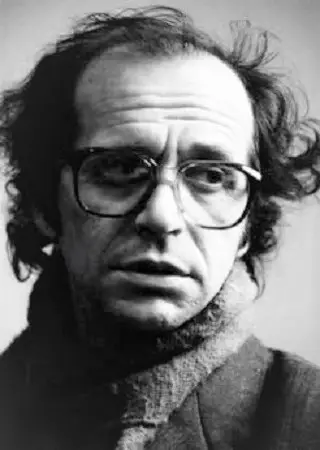
Memorie.al / It is good that there is talk about Ibrahim Rugova and his figure, for in this great mental and intellectual gloom, he shines as an unrepeatable leader and intellectual. Just as the crystal stones he used to give as gifts shone. Yes, gifts. Because he understood the weight of the gift and of friendship, and the role they had played in European mental life – more precisely, in the cultural unity of the continent. It is good that there is talk about Ibrahim Rugova, even when there are negative tendencies toward his work as an intellectual and leader, for there is talk of a missing model – one that our political and indeed even cultural history rarely has.
It is good that there is talk about Rugova, even when it is done haphazardly, for Rugova’s political and cultural legacy is a counterweight to this gloomy time we are living in; his thoughts and actions are crystal-clear like the stones, compared to today’s thoughts, full of mud, that clash among us and likewise language against our friends and allies.
It is good that there is talk about Rugova, for he reminds us of the man focused on common work, as opposed to leaders focused only on personal interests. It is good that there is talk about Rugova, for he reminds us of a time when Kosovo was understood and mutually understood, as opposed to today’s Kosovo which few understand and which in all likelihood no one mutually understands.
It is good that there is talk about an intellectual and creator, in this climate of mental Siberia, as an Albanian illuminist would say. Because to speak of him means to speak of a good man, an intellectual leader and an extraordinary scholar. Yes, in this climate, his work has the meaning that medicines have for the sick.
To be completely clear: his intellectual and political work, if truly read, has the effects that medicines have on a sick body, to process our worsened cultural health; therefore, it is good that everyone deals with it – all of them. Even those who do not know him and have not read him speak about him, as do those who have read him and have not understood him, as do those who have hated him and in time may have repented, as do those who have exploited him and in time have betrayed him.
Because in his figure, times, interests, and successes have intersected. Because Rugova is great today, as he was great yesterday, and as he will be great in the future; an unsurpassable reference for understanding the courses of Kosovo’s developments.
Therefore, I am firmly convinced that he and his work are most needed by his opponents, the crooked-minded, by those who once did not understand him, and mocked and despised him, for in this way, through him; they can experience the necessary catharsis.
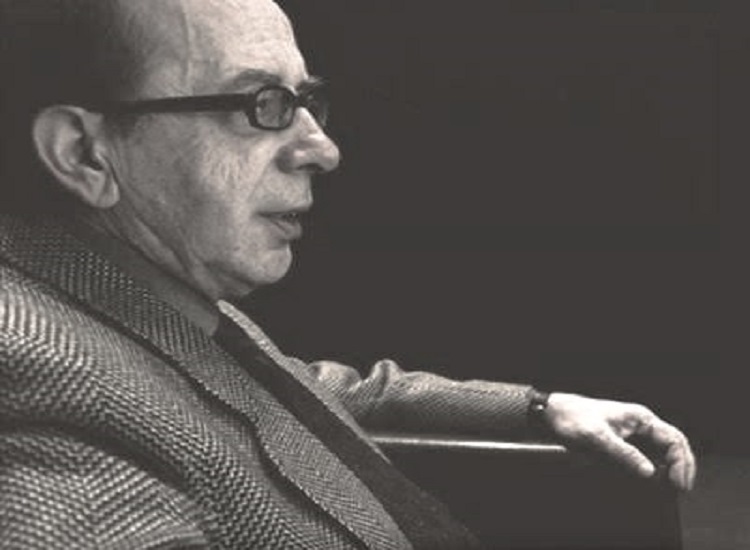
In essence, Rugova seems unrepeatable; he is precisely as the writer Ismail Kadare described him—a president who “stood far and high compared to all the other leaders who have turned the Balkans today into a den of rage and blackness.” And two decades after his death, he is at these same heights, indeed, I would say, growing ever more and becoming daily clearer and brighter.
Therefore, no description of him can degrade his figure, nor diminish the dimension of his work. Because the weight of his work, more than in the books written about him, the photographs hung on walls, the sterile political declarations made about him, is in the truth he planted in the conscience of this country, in the capital he left to this nation: the state of Kosovo, full of friends and allies.
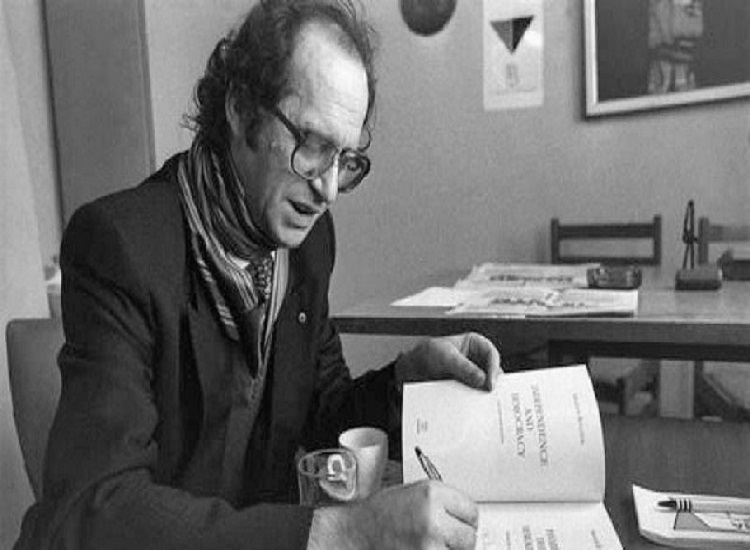
And whenever we speak of his legacy, political and cultural, I wish to repeat a sentence I said on an anniversary of Rugova’s death, in the premises of the “Ibrahim Rugova” Foundation, as we were promoting his book, “Power and Intellectuals.”
“Ibrahim Rugova was more than a man, he was an epoch,” would say a Victor Hugo of ours, as this writer had said of Voltaire on the centenary of the death of the great philosopher and thinker. In truth, Rugova was an epoch and left behind a rich intellectual legacy, with representative and identifying works, and a political legacy, with unrepeatable and monumental results.
Yes, I like to repeat it for essential reasons, because time, the fairest and most accurate judge, proves that Rugova was more than a man – he was an epoch. In essence, he was a man of art, and consequently an atypical leader, who did not think of power as the Balkan peoples do – as an opportunity for domination, division – but as an opportunity to create connections, friendship, and human understanding. Positive words were the essence of his language; symbols, his messages; while careful behaviors were his manner of manifesting his language and thoughts.
In extremely difficult times and circumstances, when violence and weapons whistled in the troubled sky of the region, he chose peace as a value, non-violence as a method, the language of understanding as a weapon, culture as behavior, ethics and aesthetics as form and content. And throughout his colossal work, which was not only liberation and democratization, he had another longing: the return of Albanians to Europe, in the civilizational sense, into the bosom of this civilization from which they had been accidentally detached.
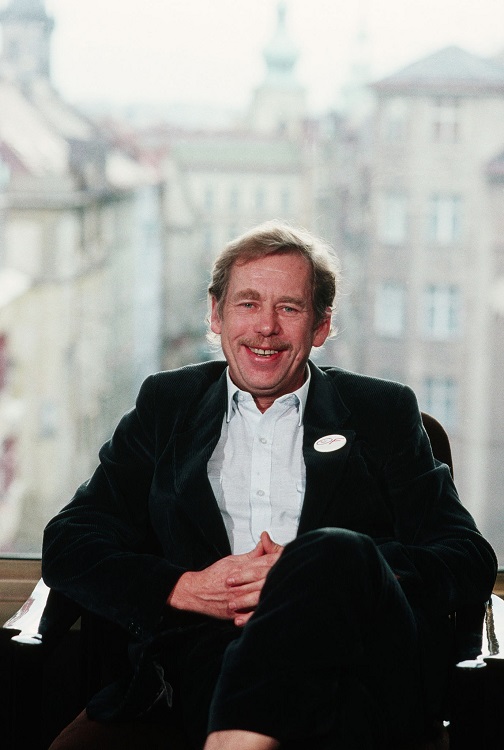
Therefore, it is a great mistake whenever it is said that Rugova was pro-European; no, he was a great European, as was, say, Vaclav Havel, who thought of Europe as the homeland of common values. In this sense, Rugova did not think of the European identity of Albanians as a choice, but as an unchangeable historical fate, a natural condition, just as Kadare thought of it.
In very difficult times, he was a president “sui generis,” who did not stop seeking salvation for his people, although such presidents, wrote Ismail Kadare in the preface to the book “The Kosovo Issue,” he “without weapons, without an office, without an army, can be mocked and mistreated by those who have all these things, just as they mocked and later crowned Christ with thorns. And in truth, Serbs like to mock in that way. And yet, this president is received by heads of state, which gives hope that the world has learned something, at least from the history of Christ.”
So, by speaking of him and returning to his legacy, we recall the gentle voice of the man who spoke wisely, intelligently, and with the proper clarity, amid a great noise, often ominous.
We hear the voice that with wisdom and knowledge dismantled Serbia’s negative strategy toward Kosovo, early on, when he confronted fellow writers, to whom he spoke of the values of freedom, of the responsibility they had toward Serbian hegemonic politics, without his eye flinching, until he took the fate of the nation into his hands, becoming their leader, with non-violence as form and content.
Yes, in his philosophy, the effort of the humane man dominates – that problems be treated with understanding, a quality so sublime, rare in our entire region, where it often happens that leaders, chiefs, and intellectuals kneel before evil, praising it. Rugova never did such a thing.
And two decades after his death, his portrait crystallizes ever more, while his contribution becomes ever clearer, reminding us at once that his lessons of politics, art, and culture are authentic and universal values, necessary for the health of Kosovo and of Albanians – an indispensable spiritual nourishment – that sustains our health. / Memorie.al