

Part Four
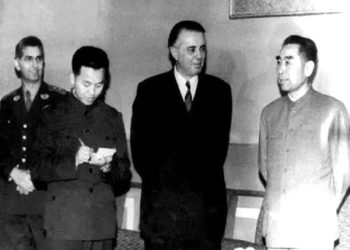
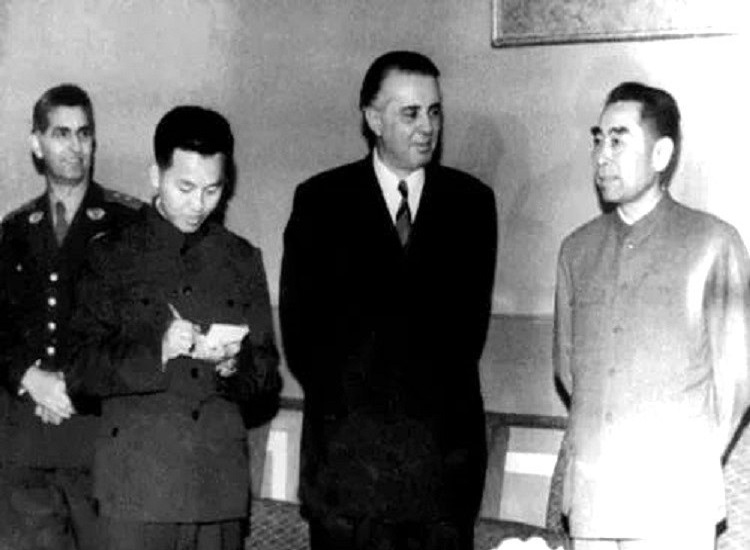
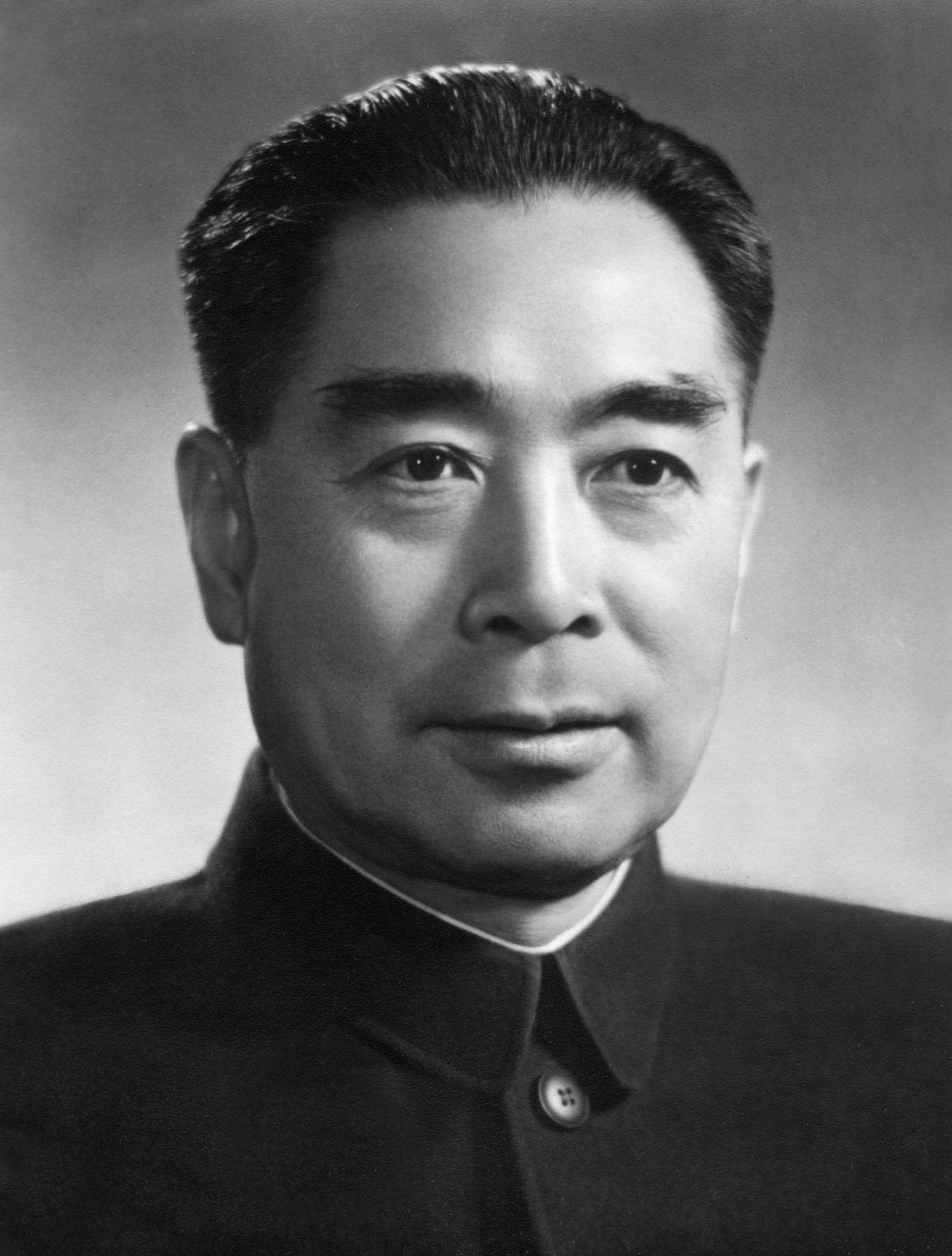
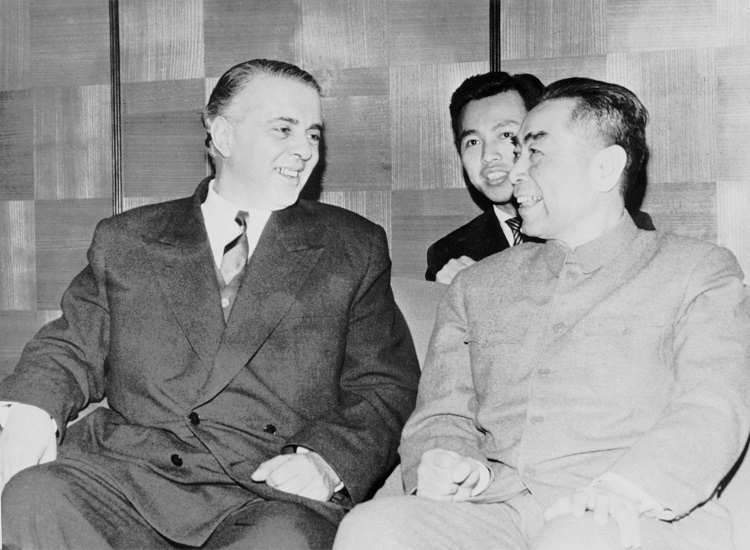
Memorie.al / In March 1965, a high-level Chinese delegation headed by Prime Minister Zhou Enlai arrived for an official visit to Albania. It was his second official visit to the small Balkan communist country and took place from March 27 to 29, 1965, in Tirana, where he was welcomed by the top leaders of communist Albania, starting with Enver Hoxha, Mehmet Shehu, Beqir Balluku, Haxhi Lleshi, and others, who came out to greet the Chinese guest right at Rinas Airport, to the sounds of the marching band and the military honor guard. The official meetings were held at the headquarters of the Prime Minister’s Office, where, in addition to Enver Hoxha and Mehmet Shehu, other members of the Politburo and the Albanian government also took part, such as: Beqir Balluku, Hysni Kapo, Spiro Koleka, Adil Çarçani, Gogo Nushi, Haki Toska, Manush Myftiu, Ramiz Alia, Rita Marko, Spiro Koleka, Koço Theodhosi, Abdyl Këllezi, Behar Shtylla, and the Albanian ambassador to China, Nesti Nase, etc.
But what was discussed in the meetings with the Chinese prime minister, what were the priority requests made by the Albanian government for aid and loans from the People’s Republic of China, and what was Zhou Enlai’s response regarding what was requested of him? Regarding these matters and more, we learn from archival documents containing the minutes of the meeting in question, which have been extracted from the Central State Archive (the fund of the former Central Committee of the Party of Labour of Albania), which we are publishing with some abridgments.
March 1965
Minutes of the talk between Comrade Zhou Enlai and the leaders of the Albanian party and state, March 27–29, 1965.
Comrade Zhou Enlai and other leaders of the Chinese Communist Party met with the Albanian leaders at the headquarters of the Prime Minister’s Office.
The Albanian Side: Enver Hoxha, Mehmet Shehu, Adil Çarçani, Beqir Balluku, Gogo Nushi, Haki Toska, Hysni Kapo, Manush Myftiu, Ramiz Alia, Rita Marko, Spiro Koleka, Koço Theodhosi, Abdyl Këllezi, Behar Shtylla, and the ambassador to China, Nesti Nase.
The Chinese Side: Premier Zhou Enlai, Central Committee members Xie Fuzhi, Zhang Hanfu, Zhao Jimin, Zhou Jianguo, and Li Xiannian.
The first meeting began on March 27, 1965, at 16:30. After all participants took their seats, Comrade Enver Hoxha asked Comrade Zhou Enlai to open the meeting according to the agenda for such meetings.
Continued from the previous issue
COMRADE ENVER HOXHA: The Americans are trying to undermine the French objective of reviving old alliances with the Eastern, Central, and Southeastern European countries, and at the same time closely linked with Bonn, for the “fight against communism.” In reality, however, France is trying to create a dominance of its own. This is also the reason for Gaullist advances toward the People’s Democracies, through the granting of loans and the development of cultural relations with them.
On the other hand, the Americans are trying to protect and strengthen the Bonn–Washington axis, to strengthen relations with the Soviet Union so that the USSR follows the American course and does not become an ally of France. In this situation, the opinions of the other NATO countries will not be taken into consideration at all, with the exception of London and Bonn. Whichever party is in power in Britain will continue its traditional balancing of policies, which as usual will tilt toward favoring the USA.
Tradition, history, or the interest of old alliances has always made Britain an ally of the USA, even though contradictions between them exist and will continue to exist. At the same time, the aims of the revanchist government in Bonn are well known: it fights for dominance in Europe, for the sophistication of its nuclear weapons, and to appear as the foremost ally alongside the USA in NATO. West Germany seeks to swallow the German Democratic Republic and restore the borders of the Third Reich. It seeks new alliances and threatens the outbreak of nuclear conflict whenever its partners consider it necessary.
Therefore, Bonn is the main supporting weapon of the USA and tries not to spoil relations with other countries, including De Gaulle, or the socialist democracy countries. As far as we can judge the situation, the imperialist coalition in Europe is not yet ready to go to war. First, the French issue has shaken the balances and it will take some time to restore them; and second, the capitulation of the Soviet revisionists and their satellites in Eastern Europe is creating a new landscape for the imperialists.
They now have more hope and opportunities for coalitions. They will not leave these moments unexploited and will launch new adventures or armed conflicts. We have reached the conclusion that a black cloud has risen over Europe, over the continent that has already been turned into a playground for the imperialist-revisionists and their intrigues. Yet, nevertheless, there are deep contradictions among them, even though these cannot lead to a revolutionary atmosphere. As for the situation inside the revisionist camp, it can be said that politico-economic unity has weakened, even though it exists formally.
The Warsaw Pact is still in force, but we think it has already been turned merely into a formal “shield.” The Soviet revisionists will continue to use the Pact first and foremost to strengthen their military hegemony and to keep the armies of their partners under control, dominating them with the help of the perceived threat toward the unarmed members of the Pact. They will use it to intervene as a group if any of the partners changes its policies.
The USSR also uses the alliance as a market to sell its armaments, and above all to keep them under control. This unstable political situation, at a time of multiple diplomatic relations with the USA, is regarded by the other countries as protection against external threats, but we think there is no harmony and unity among them, only dissatisfaction and distrust.
In their relations with the imperialists, the Soviets have a tendency to make sure that everything achieved gets their stamp and that the rest of the camp accepts it in silence. But there is also another tendency (in almost all revisionist countries) not to accept the Soviet diktat and to view matters from their own point of view or act at the national governmental level – that is, in other words, to refuse or sabotage Soviet orders, undermining their hegemony.
Germany
The German question has been raised high as something of great political and military importance. They pretend to have a unified opinion on it, but this is not true since each seeks to solve it in its own way. All these maneuvers fall on the back of the German Democratic Republic. The calls of the German party secretary, Walter Ulbricht, for Warsaw Pact meetings are not being taken into account. No one thinks about the defense of East Germany, but everyone is afraid of the battle of war.
Gomułka tries to impose capitulationist conditions on Berlin, insofar as the imperialist countries accept the line of division. The Soviets and others are interested in resolving the German issue, but our opinion is that Germany is being used by the Soviets for deals and blackmail between the imperialists and the modern revisionists. This is another factor that deepens the contradictions among the revisionists and weakens their position.
They are being exposed continuously. Meanwhile, relations between the revisionists and the bourgeois countries of the world are not following a unified course. Each of them tends to work according to its own national interests. Each seeks to secure its own economic, political, or prestige gains, trampling over the principles of the alliance. In other words, in these countries the law of the jungle prevails. Naturally, this deepens the contradictions and exposes them.
Economic relations among the revisionist countries are dominated by the Soviet Union, though not as before. The USSR dominates the weaker economies of its partners, which for the moment cannot free them to break away from it. This is also the source of the USSR’s pressure on them, in a relationship that is in fact capitalist and enslaving. Everywhere one sees pressures, blackmail, and threats.
With the exception of the Soviet Union, which is now guarding its rubles better, none of the other revisionist countries is guided by the international principle of economic aid. On the contrary, in a capitalist manner they think about how to profit as much as possible from one another. Every economic move of theirs is seen only through a capitalist lens. The economic crisis that has gripped the Soviet Union does not allow it anymore to help the allied countries, which are also in deep crisis.
Therefore, the only way for them is to accept foreign capital – American, French, British, or German. Their loans have begun to penetrate and multiply like leeches inside the economies of the Soviet Union and the other Eastern countries. Along with this comes political influence, the degeneration of the system, and the political and military subversion of the countries, which little by little become dependent on various imperialists and turn into their spheres of influence.
Naturally, this deepens the contradictions and reduces the economic and political dominance of the USSR. This impoverishes the countries and polarizes the reactionary forces, favoring the conditions of revolution. Their hostility toward Marxism-Leninism and toward our two parties is settled. The imperialist and revisionist leaders have crystallized their anti-Marxist path.
It seems that their lines of orientation come from the 20th, 21st, and 22nd congresses of the CPSU. They are implementing the Soviet line in unity to destroy Marxism-Leninism. Along this line there are certainly different tendencies, which are becoming increasingly visible. This comes from the leanings of the leaders, the pressure of the bourgeoisie, resistance against the party, and other factors.
The Tactics of the Revisionists
In the struggle to achieve their anti-Marxist objectives, the modern revisionists are displaying several specific characteristics. The Titoists are following a defined and open path toward capitalism, in unity with the bourgeoisie and with American imperialism. But in fact the Titoist clique cannot be considered the peak of modern revisionism. Perhaps the most extreme revisionists now are the Italian communists, or otherwise the “Togliattists.”
Since they are not in power in their own country, they have assigned themselves the role of implementing revisionism to the letter, which leads to the total liquidation of the democracy of the proletariat and of revolutionary effort. They are trying to erase contradictions with the social-democrats and unite with them and with the bourgeoisie.
The Italian revisionists want to go beyond the Titoists in violating principles and accelerating their degeneration, thinking they can achieve poly-centric political results more quickly.
Meanwhile, the approach of the Polish revisionists is a demagogic strategy that tries to convince us to tone down the polemics, and that they are independent of the Soviets. But they are in fact the most brutal enemies of Marxism-Leninism.
The other European revisionists, with all their different nuances – which stand out more with Ulbricht and Kádár – follow in varying degrees the Soviet course, declaring war on Marxism-Leninism and our two parties. The only attraction for them is the ruble, which finances their anti-Marxist and anti-socialist activities.
The Soviet revisionists are suffering numerous defeats. Our principled stands have harmed them and blocked their subversive activities. We have hindered their traitorous revisionist path and have become a guiding beacon for the communist masses so that they may see the truth about the deals between the Soviet revisionists and the American imperialists.
Ever since their 20th congress, the Soviets took the reins in hand and were convinced they would encounter no obstacles in their betrayal and that their path would triumph. But revisionism carries its own evil within it, since it has weakened the Soviet Union by placing it at the mercy of the new bourgeois class and increasingly dependent on international capitalism.
The Accusation Against Khrushchev
When the Soviet revisionists are confronted with great defeat, they chose the lesser evil and a year ago eliminated their ideologue Nikita Khrushchev, throwing all the blame onto him. By strengthening their relations with the Americans, they are capitulating more and more each day. Nor has Khrushchev’s removal strengthened them; on the contrary, it has discredited them.
Now they are trying to gather together what Khrushchev broke, creating a kind of unity to face the catastrophe awaiting them. This was seen also at the Moscow meeting, where they were trying to draft a common ideological platform for the new situation, but their allies have already become independent. No one believes anymore in the old Soviet notions of “peaceful coexistence” or a “world without wars and arms.”
This is seen in the wars in Vietnam, the Congo, and Laos. The Americans have forced the Soviets to support diplomatic measures of an imperialist nature. The Soviets are playing with fire when they think they can draw China into a war by surrounding it with enemies, such as India; therefore, we must destroy these plans while they are still early. The principled stand of the Chinese party toward the Soviets at the upcoming Moscow meeting will have colossal effects in the world. We must use every opportunity so that the ground burns beneath the feet of the imperialists.
It is clear that the main objective of American imperialism and Soviet revisionism is starting a war in Asia, in order to transfer it afterward toward China and other socialist countries. They are using all means with the Indian reactionaries so that they repeat the armed attack against China. On the other hand, American imperialism is strengthening ties with Japan, in order to keep it under control and, when necessary, push it toward aggression.
For this, the Americans are cooperating with Britain, whose former colonies in Asia are at risk. In this situation, we look with admiration and confidence in its success upon the right policies of China, which have brought closer to it countries such as Indonesia, Pakistan, Nepal, Burma, Afghanistan, and others, especially those where American imperialism has committed aggression. We believe that on our part, we must intensify the campaign of propaganda and exposure of warmongering American imperialism and of the modern Soviet revisionists.
We must intensify attacks against every alliance and agreement they reach, calling upon their peoples to stop American aggression, this new Hitlerism that threatens the world with fire and steel. We admire the heroic resistance of South Vietnam, which with your help is fighting against imperialism with unequal means. We will help you with everything we have, since your fight is our fight, it is the fight of socialism against imperialism and its lackeys.
The fraternal Vietnamese people deserve every possible support. American imperialism has even used poison gases against the fighters in South Vietnam, while continuously bombing the North. Therefore, it is the revolutionary duty of all peoples to defend the cause of the brotherly Vietnamese people, so that they emerge victorious.
In closing, I want to repeat that, just as you too have declared, we must strengthen defense and armaments for the battles that await us. All Marxists of the world appreciate the great effort of the party and government of China, and should explain this to others as well—namely, that our victory and that of Comrade Mao Zedong’s China is the victory of Marxism-Leninism and of the international proletariat.
These were our final words on the subjects, for you brotherly Chinese people, for your party, and for Comrade Mao. Thank you, Comrade Zhou Enlai, and the other Chinese comrades for the attention you showed, and I also apologize for the long speech. I tired you out.
COMRADE ZHOU ENLAI: Thank you for your all-around opinions; it is you who tired yourself out.
COMRADE ENVER HOXHA: I propose that we close this session and have something to eat, off the record.
COMRADE ZHOU ENLAI: First, I want to say that we feel very happy coming for the second time to Albania. I want to thank the Albanian party and your people for the warm hospitality. This hospitality made a great impression on us and is an indicator of the friendship between our two peoples, parties, and countries, which is becoming ever stronger and more unbreakable.
I take the opportunity to thank the Central Committee and Comrade Enver Hoxha for demonstrating this friendship between us. I also want to thank Comrade Hoxha for the demonstration he made yesterday in explaining the opinions and activities regarding the problems in your country and in the international arena. Today we want to present our views on the issues, although I will change their order slightly. At first I will cover international issues and afterward those of cooperation between our two countries. The opinions of our two parties and governments on the main issues of the international arena are in complete agreement. Here I mean the struggle against imperialism headed by the American one, against modern revisionism headed by the Soviet one, and against the reactionaries of other countries, with the aim of forming a common front of the revolutionary peoples of the world.
There is no doubt that this front must have at its core the left groups of the socialist countries and of the communist movement, that is, the Marxist-Leninist parties. The forces of socialist endeavor seek peace and democracy in the world, in favor of socialism and the peoples of the world, at the expense of the imperialists and revisionists. / Memorie.al
Continued in the next issue