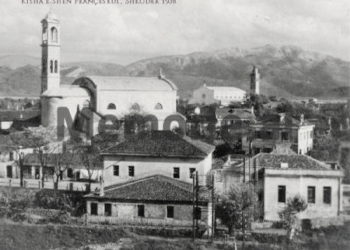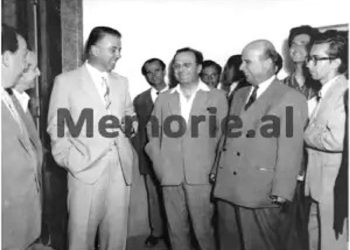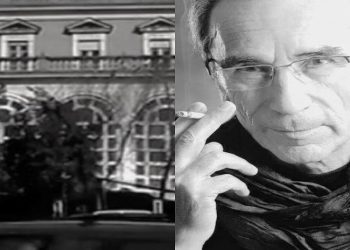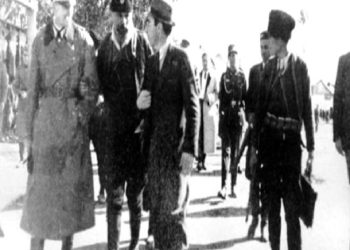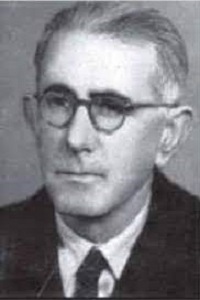
Memorie.al / The “Leaf House” building, once much talked about in hushed tones during the communist period before the 1990s and also during the Albanian transition, becoming a topic of debates, has its own history before it was nationalized from its owners, the Basho family. The first of them, Jani Basho, was born in the city of Pogradec in 1892, into a poor family. His father (Kozmai or as he was otherwise called; Komi), hailed from the Basho tribe, which had settled in this place many years earlier. His mother (Anastasia) was from the Kuteli-Ekonomi tribe, daughter of Risto Kuteli Ekonomi, who was the eldest son of Nikolla Risto Kuteli, the founder of the old church “The Dormition of Saint Mary” in Pogradec.
Komi Basho’s family had eight children, five daughters and three sons. The eldest son was Gjoka. Jani was the fifth child. Komi had a small house and a garden, he grew and sold vegetables, a job with which he barely managed to keep his large family alive.
But at the beginning of the year 1900, one of the beys of Starova, known throughout the region for his attacks and cruelties, started a quarrel with him. Komi did not bow down, and one day, the bey’s soldiers took his house and land, leaving him out on the main road.
A relative sheltered them in his house, renting them one room. Without land or house and with a flock of children, Komi rented a mill in Selca e Poshtme of Mokra, along with one or two dynyms of land around the mill. At this time, the eldest son Gjoka was 17 years old, while Jani was 8. In 1900, he was killed in the mill where he worked.
Little Jani, 8 years old, the only one present at the mill next to his father, was also hit by a bullet in the calf of his leg. A few weeks later, his little brother, Thomo, also died. In this way, the family of eight people was left stranded in the middle of four roads. Now it consisted of: the mother, Gjoka, little Jani, and five sisters.
In 1913, when Jani was 21 years old, together with some other Pogradec residents, he was denounced as a “Greek spy” by the beys of Starova, was captured by the Serbs in Ohrid and sentenced to death. He escaped by chance, when, one night before the execution, the Serbian forces were defeated by the men of Dibra.
Education
Jani began his studies in the Greek primary school of Poradec (Pogradec), where he stood out for his diligence and intelligence. His sisters recounted that in the morning he could barely wake up and was often late for school. Since he was ashamed of the teacher, his mother was forced to take him all the way to the classroom, but the teacher always told her: “Don’t trouble yourself, mother, let him come whenever he wants, because he is always the first.”
After finishing primary school in his hometown, Gjoka sent him to the Greek high school in Bitola (Manastir). His fellow students from Pogradec… have recounted that in this high school, Jani was onsidered one of the best students in the school. After finishing secondary school excellently, he had many offers from Greek teachers and Greekophiles who were in Bitola, to take Greek citizenship and then, with a Greek scholarship, to continue his studies wherever he wished in Athens.
Jani proudly rejected these offers and, with his high school diploma in his pocket, returned to Pogradec. A few months later, to learn Turkish, he enrolled in the Turkish high school of Bitola. He also finished this high school with excellent results. Dr. Basho recounted that when he enrolled in the Turkish high school, they completely disregarded the fact that he had finished the Greek high school excellently, and since he was the only Orthodox in the class, they placed him in the fourteenth place.
The rule of the Turkish high school at that time was that the top student of the class sat in the first desk, the second next to him, and so on. After a test in mathematics by the Turkish Ministry of Education, which was incidentally given to this high school, they definitively placed him in the position of the top student of the class, a position he held until the completion of high school.
During the time he was in Bitola, in the summer, he would return to Pogradec, but he spent his holidays more near his brother in Homaçan of Lower Mokra. In the family, especially from his brother, he only heard bad words against the beys who had left the family stranded on the main road.
Having finished both secondary schools, with the help of his brother and some friends of his brother from Homaçan who had gone to Istanbul for work (kurbet), where they sold goods, Jani went there and enrolled in the Faculty of Law.
After about a year, the Balkan War began…! Thus, in 1914, on the eve of the outbreak of World War I, Jani enrolled in the Faculty of Medicine at the University of Vienna, but he started his studies a year later…!
Dr. Basho recounted that he started his studies in difficult economic conditions, as emerges from his many letters sent to the family in Pogradec. He had no money, and as for all other students, the scholarship was small. On one hand, the great desire to become a good doctor, and on the other hand, the great economic difficulties forced him to spend most of his time in the hospital.
He finished his studies in the summer of 1921, but according to the Austrian rule at the time, a newly graduated doctor was not allowed to start working in Vienna without first working elsewhere, regardless of the results achieved. But an exception was made for Dr. Jani.
He went and replaced a doctor for one month in a mountainous area outside Vienna. Then he began a general 3-year specialization (9 months of Internal Medicine, 9 months of General Surgery, 9 months of Obstetrics-Gynecology, and 9 months of Ophthalmology and Dermatology).
He returned to Albania during the 6 months of Fan Noli’s government. After the overthrow of this government, Basho went back to Vienna in January 1925. There he specialized again for nearly another three and a half years (1 year of Surgery and 2 and half years in Obstetrics-Gynecology).
During these specializations, he earned the right to practice the profession at the University Hospital of Vienna, where he was appointed chief assistant and then deputy to the chief surgeon of Vienna. They told him that the position of chief surgeon was only for him; they also proposed marriage to a girl from a great Austrian family, but both of these conditions were tied to his staying forever in Vienna. But he refused.
Patriotic Activity in Vienna
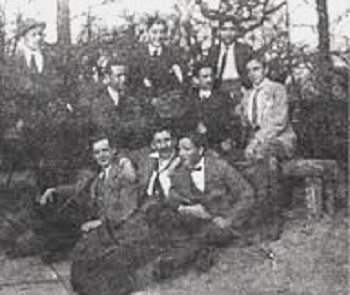
On March 10, 1918, Albanian students in Vienna founded the Albanian student society, which they called “Albania”, a society that played an important patriotic role outside Albania.
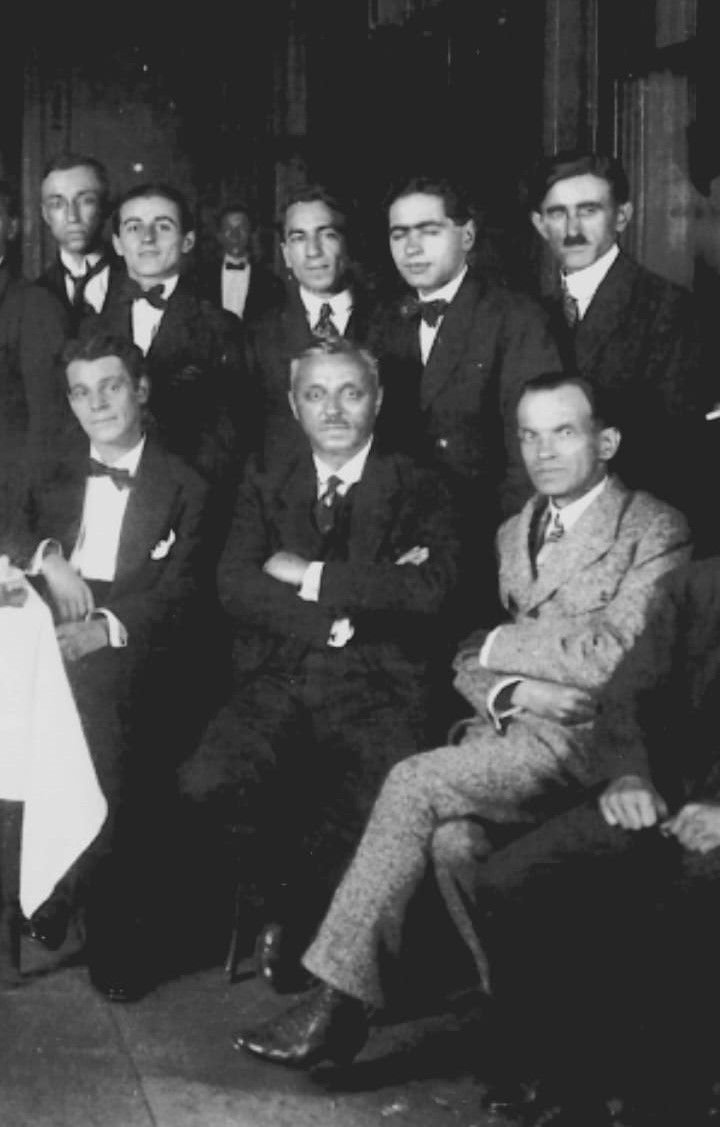
Jani Basho was one of the most active students of this society, alongside other students such as: Fuad Asllani, Irakli Buda, Gjovalin Gjadri, Ndoc Naraçi, etc. The Albanian student society also had its own magazine “Djalëria” (Youth), the first issue of which appeared in April 1920. Many Albanian patriots also collaborated here, such as: Bajram Curri, Hasan Prishtina, Rexhep Mitrovica, Gjergj Pekmezi, Faik Konica, etc.
Jani Basho wrote many articles in this magazine, and he was always of the opinion that Albania should finally orient itself towards the West, towards countries with true culture, throwing away the past and the backwardness left by the long Ottoman occupation…!
Here is how the student Jani Basho addresses Alexander Moissi, the greatest European actor of that time: “Oh, how I wish I could spread this truth throughout the world, how I wish I could show everyone that this brilliant star, our Moissi, springs from that people, from which a majority of autumns (?) Has taken its heroes, from the people of Pyrrhus and Skanderbeg, from the Albanian people…”!
Return to Albania
Dr. Jani Basho returned for 6 months to Albania, in the second half of 1924. At this time, he was working at the University Hospital of Vienna. In June of that year, when Fan Noli’s government was in power, Bajram Curri and Hasan Prishtina, old friends of his, went to Vienna and told him: “Doctor Basho, there is no more sense in you staying in Vienna, you must return to Tirana as soon as possible, to organize Albanian medicine.”
Jani accepts and immediately upon arriving in Tirana, he was appointed municipal doctor, where he was told that: “… you will stay in this position until the situation stabilizes, and then you will be the person responsible for Albanian healthcare; whatever you say, the government will do in this sector.” In Fan Noli’s government, it was not possible to organize the General Directorate of Health. In 1924, Noli’s government was overthrown and Jani Basho decided to return again to Vienna.
Where he stayed for another three and a half years and began specializing again in Surgery and Obstetrics-Gynecology. In November 1927, he returned to Tirana, bringing with him projects for the construction of hospitals; he was appointed general head of the Health Section in the National Defense Command and director of the Military Hospital, where, according to the memories of Pasko Milo Pasko: “He established order and strong discipline.”
His other, undeclared function was: personal doctor to King Zog. He made efforts for the construction of many hospitals, the construction of the General Hospital Center, and provided scholarships for medicine, where many students finished their studies abroad. Many of these doctors never returned to Albania, even though he expressed his satisfaction towards those who returned, to serve the country.
At this time, Jani made efforts to bring the water of Selita to Tirana. Around 1929, when Faik Konica came to Tirana, he proposed that Jani return with him to America, to settle at the “Rockefeller” Institute in New York, because he was interested in making his proposal official. Jani refused and told him that he had decided to stay permanently in Tirana, since it had been decided that the hospitals would be built.
In 1945, the Albanian state expropriated both of his houses “for state needs”
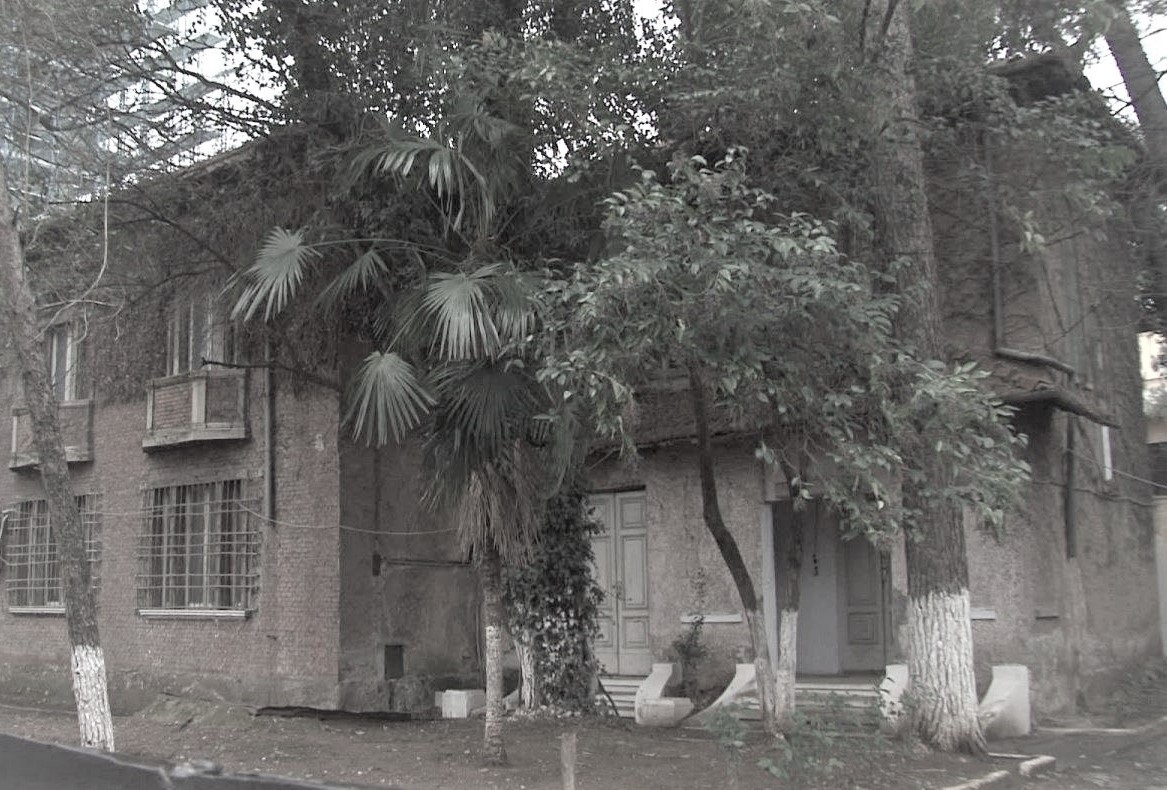
In 1935, when Jani Basho left all official functions, he opened in his house the first private clinic in the history of the Albanian state. Dr. Jani had had the idea of building a private medical clinic early on. For this purpose, he bought from the Albanian state a land area of 2400 square meters in the center of Tirana (Decree-Law No. 155, June 28, 1929). The construction of the building began in 1929 (Austrian project) and was completed in 1931. In this clinic, organized with more than 30 beds, Dr. Basho performed the duties of an obstetrician-gynecologist, internist, and surgeon.
The clinic had a fully equipped delivery room and an operating room (the operating table of his private clinic, after nationalization, served for a long time in the Maternity Hall of Tirana). In this clinic, various interventions were performed, such as: gynecological, obstetrical, abdominal, etc. There he also worked with the help of Dr. Osman Jonuzi. At the same time, Dr. Basho also worked in the Obstetrics and Gynecology Pavilion of the Civil Hospital.
He worked in his clinic until the invasion of Albania by Italy. During the first period of the invasion (1939-1942), he accepted to be appointed General Director of Health, but he did not accept nor ever have any Italian advisor. At this time, the Tirana Maternity Hospital was built, to which he made an indisputable contribution.
After the war, the then Albanian state expropriated “for state needs” both of his houses, the private “Basho” clinic and the house where he lived (the two buildings next to each other located on “Dëshmorët e 4 Shkurtit” street, behind the Ministry of Defense, between the Central Post Office (Telecom) and the Supreme Court). They assigned him a very small house to live in, near the building where Radio Tirana used to be.
At that time, he wrote thus to his brother: “… Until recently, I was mobilized in the local Military Hospital, where I worked for three months treating wounded partisans. Now I have been released and I am in the house that the government assigned to me.
It is true that the house I live in now is small and not suitable for my profession, given that I had built both my houses as a clinic, but now I will manage as I can, and later, after the war, I hope the government will release one of the houses for me, where I can reopen the clinic again and practice my profession properly, so don’t worry about me…”.
The government not only never remembered, not only expropriated his houses, but for Dr. Basho began a difficult period; only thanks to the fact that he was a doctor and they needed doctors, was he not condemned by the communist regime under some fabricated pretext, like many other intellectuals.
From December 1944 until the spring of 1945, he served as a surgeon doctor in the Military Hospital, then as a surgeon-gynecologist at the Tirana Maternity Hospital. At the beginning of 1948, he was appointed director of the Obstetric-Gynecological Hospital, a position he held until the end of 1952.
During this period, he trained the first doctors and the first midwives who served the entire country. From this year until he died in February 1957, although elderly, he continued to work as a doctor in this maternity hospital. Six months before his death, they retired him. He was fought against at the time; they even put him on trial in this institution, labeling him as “anti-Soviet”, as a man who “did not respect or use Soviet methods of treatment.” / Memorie.al