• Rreth Nesh
  • Kontakt
  • Albanian
  • English
Wednesday, June 17, 2026
Memorie.al
No Result
View All Result
  • Home
  • Dossier
  • Interview
  • Personage
  • Documentary
  • Photo Gallery
  • Art & Culture
  • Sport
  • Historical calendar
  • Others
  • Home
  • Dossier
  • Interview
  • Personage
  • Documentary
  • Photo Gallery
  • Art & Culture
  • Sport
  • Historical calendar
  • Others
No Result
View All Result
Memorie.al
No Result
View All Result
Home Personage

“His father, a former officer of King Zog and commander of Ballist gendarmes during the war, fought against the partisans and, after liberation, was killed as a war criminal by…” / The unknown history of Musa Sina

“Babai i tij, ish-oficer i Mbretit Zog dhe komandant i xhandarëve ballistë gjatë luftës, ka luftuar kundër partizanëve dhe pas çlirimit, si kriminel lufte, është vrarë nga…”/ Historia e panjohur e Musa Sinës
“Në kasafortën e kreut të Sigurimit të Shtetit, u gjetën monedha e dhëmbë floriri, unaza, bizhuteri dhe…”/ Historiani dhe studiuesi i njohur, publikon dokumentin e rrallë
“Hane Sina dhe i biri, Beqiri, janë dy ‘ikona’ të kalvarit të vuajtjes në regjimin komunist të Enver Hoxhës dhe Ramiz Alisë, pasi ajo familje…”/ Refleksione të gazetarit të njohur nga SHBA-ja
“Ganimete Avni Fratari (Gjilani), e datlindjes 1907, lindur në Kosovë të Jugosllavisë, me banim në Tiranë, shtresë e pasur, e ëma e Hajredinit…”/ Vendimi i Komisionit Internim-Dëbimeve, viti 1967
“Hane Sina dhe i biri, Beqiri, janë dy ‘ikona’ të kalvarit të vuajtjes në regjimin komunist të Enver Hoxhës dhe Ramiz Alisë, pasi ajo familje…”/ Refleksione të gazetarit të njohur nga SHBA-ja
“Historitë e zonjave shkodrane që me strajca në krah, shkonin në këmbë në burgun e Burrelit, ku…”/ Rrëfimi i Fatbardha Mulleti Saraçi

By Kastriot Dervishi

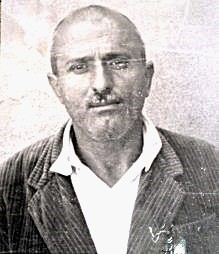
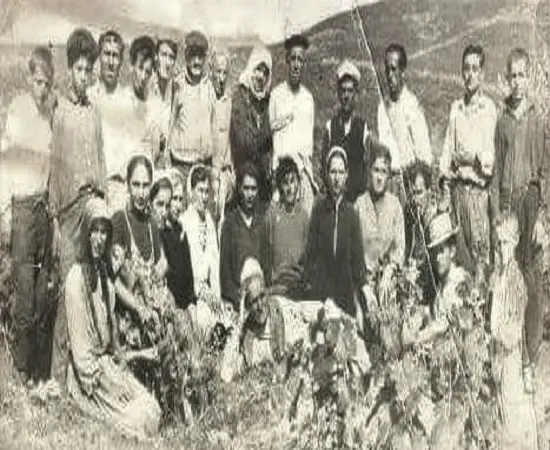
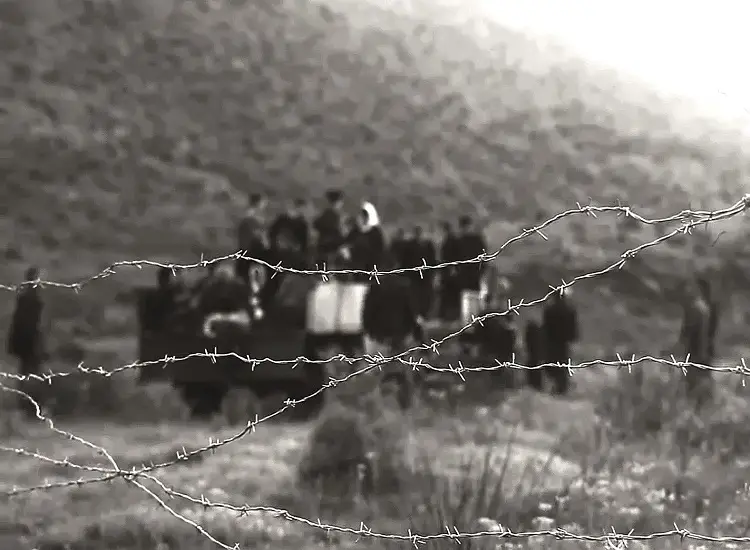
Memorie.al / Musa Beqir Sina, born in Rrethkala, Dibër in 1932, was interned due to the escape of his two brothers in 1945, initially in Berat, Tepelenë, and finally in Kamëz. With his father killed by the communists, he was interned at the age of 13. In 1953, he was interned in Camp No. 3 (barbed wire) at the Brick Factory in Kamëz. The camp gathered all the able-bodied internees who could work, as the other camp, No. 4 in Tepelenë, not being a forced labor camp, had no work object.

Among other things, from the process of his conviction, we also receive additional information on the numbers of the barbed wire internment camps, about which there is some ambiguity in a document concerning their closure.

About two months before the barbed wire camps were closed, on 24.8.1953, Musa Sina attempted to escape. He was stopped by the police without being able to get far from the camp. Nevertheless, even though he was captured in the border area, the communist regime was determined to accuse him of treason against the homeland.

Gjithashtu mund të lexoni

“The terrible sorrows and cruelty those Albanian mothers, wives and daughters endured, seeing the blood of…”/ Unknown letter from Mrs. Lejla Dino, addressed to American President Woodrow Wilson, in 1913

“After Professor Xhemal Broja asked me if I was satisfied with the nine he had given me on the exam and I told him; yes, he added; the tenth belongs to him…”/ Timo Flloko’s rare testimony

He was tried by the Military Court of Tirana. With Decision No. 202, dated 28.12.1953, the court declared him guilty based on Article 64 of the Penal Code and sentenced him to 10 years in prison and deprivation of civil rights. The court did not order the confiscation of property as it did not have an inventory of assets. In the court’s decision, where the class character is evident, it is stated, among other things: “The reasons that prompted the defendant to escape are because he comes from a family opposed to the National Liberation Movement.

His father was an officer of Zog and commander of Ballist gendarmes during the war, fighting against the partisans until the liberation of Albania. After the liberation, as a war criminal, he was killed by the Pursuit Forces during an encounter. His two brothers have fled to Yugoslavia, etc. For these reasons, the defendant has been interned in internment camps since 1945. As such, he has nothing to tie him to the popular democratic government, which is why he decided to escape to Yugoslavia, committing the crime of treason against the homeland.”

He was released from imprisonment, as a dangerous enemy, from Prison No. 321 in Burrel, on 19.8.1961. After his release, Musa Sina was interned. While residing in Savër, Lushnjë, he was arrested again on 27.10.1980. With Decision No. 25, dated 23.2.1981, the Lushnjë District Court declared him guilty, based on Article 55 of the Penal Code for agitation and propaganda, and sentenced him to 10 years of political imprisonment. He was released from prison on 16.8.1989, having served a total of 16 years, 9 months, and 15 days. / Memorie.al
ShareTweetPinSendShareSend
Previous Post

"When it became known that we, the wives of foreign embassy personnel in Tirana, had organized a lottery, the 'big boss' summoned me to his office and..." / The history of the clandestine lotteries, which the state knew about but could never stop!

Next Post

"At the 'Father Gjergj Fishta' Lyceum, my classmates included Androkli Kostallari, Vasil Kati, etc., who were connected to the communist group, while Injac Toni and Hamdi Sokoli were connected to 'Balli Kombëtar' (National Front)..." / The rare testimony of Sami Repishti

Artikuj të ngjashëm

“The terrible sorrows and cruelty those Albanian mothers, wives and daughters endured, seeing the blood of…”/ Unknown letter from Mrs. Lejla Dino, addressed to American President Woodrow Wilson, in 1913
Personage

“The terrible sorrows and cruelty those Albanian mothers, wives and daughters endured, seeing the blood of…”/ Unknown letter from Mrs. Lejla Dino, addressed to American President Woodrow Wilson, in 1913

June 16, 2026
“After Professor Xhemal Broja asked me if I was satisfied with the nine he had given me on the exam and I told him; yes, he added; the tenth belongs to him…”/ Timo Flloko’s rare testimony
Personage

“After Professor Xhemal Broja asked me if I was satisfied with the nine he had given me on the exam and I told him; yes, he added; the tenth belongs to him…”/ Timo Flloko’s rare testimony

June 15, 2026
“Skender Daja, who was to be shot a few days later, on the first day of the revolt, secretly talked with a soldier of the National Guard, with whom…”/ Testimony of the ex-prisoner about the Spachi Revolt
Personage

“Among the most brutal tortures we suffer in Burrel prison, the first is the smoke from the wood or charcoal that burns in the brazier and…”/ Unknown letter from Simon Juban to the Central Committee, December ’71

June 15, 2026
“After the military revolution in Egypt in 1959, despite being in family and friendly relations with King Farouk, he was forced to leave and…”/ The unknown story of Arslan bey Libohova
Personage

“After the military revolution in Egypt in 1959, despite being in family and friendly relations with King Farouk, he was forced to leave and…”/ The unknown story of Arslan bey Libohova

June 15, 2026
“Enver Hoxha taught us the subject of ‘Morality’ and he never sat at the teacher’s desk, but in the first benches, with the boys and girls, as he…”/ The rare testimony of the former lyceum of Korça
Personage

“From Lushnja we would go to Burrel to see our imprisoned father, a grueling journey, as we would drop him off at Bulqiza, but the guards would take our food, open it…”/ The rare testimony of Bujar Nepravishta

June 8, 2026
“For the former Navy officer, old Dauti said; ‘Stay away from that spy, he is a State Security informant, don’t go near him, because ever since he came to prison, he has only wandered from cell to cell! The shame of Berat and…'” / The memoirs of a former political prisoner
Personage

“The Post Office officer grabbed the soldier’s automatic rifle and emptied all the cartridges on Haxhiu’s body. Haxhi Llëçi, chairman of the Executive Committee of Bilisht, took it from the victim..”/ The tragic story of the Barolli family

June 7, 2026
Next Post
“At the ‘Father Gjergj Fishta’ Lyceum, my classmates included Androkli Kostallari, Vasil Kati, etc., who were connected to the communist group, while Injac Toni and Hamdi Sokoli were connected to ‘Balli Kombëtar’ (National Front)…” / The rare testimony of Sami Repishti

"At the 'Father Gjergj Fishta' Lyceum, my classmates included Androkli Kostallari, Vasil Kati, etc., who were connected to the communist group, while Injac Toni and Hamdi Sokoli were connected to 'Balli Kombëtar' (National Front)..." / The rare testimony of Sami Repishti

“Historia është versioni i ngjarjeve të kaluara për të cilat njerëzit kanë vendosur të bien dakord”
Napoleon Bonaparti

Publikimi ose shpërndarja e përmbajtjes së artikujve nga burime të tjera është e ndaluar reptësisht pa pëlqimin paraprak me shkrim nga Portali MEMORIE. Për të marrë dhe publikuar materialet e Portalit MEMORIE, dërgoni kërkesën tuaj tek [email protected]
NIPT: L92013011M

Na ndiqni

  • Rreth Nesh
  • Privacy

© Memorie.al 2024 • Ndalohet riprodhimi i paautorizuar i përmbajtjes së kësaj faqeje.

No Result
View All Result
  • Albanian
  • English
  • Home
  • Dossier
  • Interview
  • Personage
  • Documentary
  • Photo Gallery
  • Art & Culture
  • Sport
  • Historical calendar
  • Others