• Rreth Nesh
  • Kontakt
  • Albanian
  • English
Tuesday, January 20, 2026
Memorie.al
No Result
View All Result
  • Home
  • Dossier
  • Interview
  • Personage
  • Documentary
  • Photo Gallery
  • Art & Culture
  • Sport
  • Historical calendar
  • Others
  • Home
  • Dossier
  • Interview
  • Personage
  • Documentary
  • Photo Gallery
  • Art & Culture
  • Sport
  • Historical calendar
  • Others
No Result
View All Result
Memorie.al
No Result
View All Result
Home Art & Culture

“Enver Hoxha’s communist dictatorship took the paintbrush from his hand and gave him the painter’s roller, thinking they had disarmed him, but he…” / The unknown story of the scenographer of the Durrës Theater, Zef Ujka

“Diktatura komuniste e Enver Hoxhës i hoqi nga dora penelin dhe i dha furçën e bojaxhiut, duke menduar se e çarmatosën, por ai…”/ Historia e panjohur e skenografit të Teatrit të Durrësit, Zef Ujka

By Gëzim Kabashi

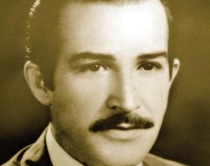
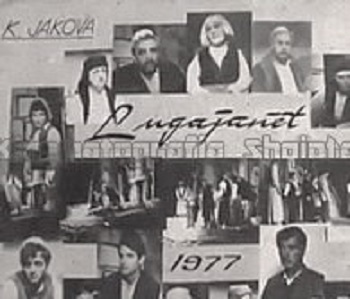
Memorie.al / Some time ago, the Durrës stage artists celebrated the 61st anniversary of the establishment of the “Aleksandër Moisiu” Theater in the coastal city. Along with it, they commemorated one of the people who contributed the most to the growth of this artistic institution, the scenographer Zef Ujkaj. Zef died on January 18, 1990. I was very young when the scenographer of the “Aleksandër Moisiu” Theater in Durrës was banished to another job that had no connection to his training and abilities.

Zef Ujkaj would spend the rest of his life working as a house painter. It was 1975, and the dictatorial system that transferred or “circulated” him, as the milder term was known then, struck Zef Ujka severely. Only 39 years old, at the peak of his creative energy, he was removed from the stage where he “built” dozens of views of the reality he lived in and the one he wished to live in.

Fellow actors and directors, as well as the employees of the Goods Park (Parku i Mallrave) who worked with him, continue to respect the memory of the cultured man who contributed to the artistic life of Durrës, not only as a scenographer and painter but also as a visionary of cultural thought. We, his younger fellow citizens, remember him moving around the city with his overcoat tied around the waist and his thick mustache, which tried to hide his sadness.

Gjithashtu mund të lexoni

“Driven away from the People’s Theater by rumors and jealousy, he sought refuge at the Higher Institute of Arts…” / The untold accounts of his peers; how the legendary actor Naim Frashëri was “destroyed.”

“Xhevahir Spahiu’s article about me in ‘Zëri i Popullit’ brought me to Tirana, but when I painted Enver Hoxha with long hair, I was summoned to the Central Committee, where…” / The rare testimony of the “king” of watercolor

The Passion for Painting

Zef was born in Tirana on March 16, 1936. “Painting was his passion, and all his free time he spent painting, from the tree stumps in the yard to his grandmother and us brothers,” his late brother, Gjergj Ujkaj, once wrote. “Grandmother would tell him: ‘Give up that trade, no one has seen any good from it,'” Gjergji recalls.

But the passion was stronger. During high school, Zef began visiting the studio of the well-known sculptor Sabri Tuçi in Durrës. The young man’s works attracted the attention of specialists, and although he was 20 years old, he attended classes at the Artistic Lyceum in Tirana. It would not last long.

After a few months, he was called to perform military service, certainly in a labor brigade, as he came from a “declassed family.” But Zef did not give up. He finished the Lyceum, and his classmates remember the success of the work with which he defended his diploma, “The Kosovar Bride.”

A painting that even enthusiastic his distinguished professors Nexhmedin Zajmi, Abdurrahim Buza, and Sadik Kaceli. Zef Ujkaj became the official scenographer of the “Aleksandër Moisiu” Theater thanks to a fortunate circumstance. His predecessor retired.

A period of creation would begin, in which the painter’s muse was not enough. Theater, as a collective art, required the ideas of everyone from the director and actors to the lighting and sound. With Zef, scenography became one of the strongest points of the Durrës Theater.

“Zef was not only a first-class scenographer, but he also cast his eye on the actors’ performance and the director’s art,” recalls the “Artist of the People” Gjergj Vlashi. “He did not acquire that deep knowledge in school because it was denied to him, but through persistent work and serious commitment. As a genuine intellectual, Zef was formed at the work table with a book and a paintbrush in hand,” writes the well-known director Vlashi.

The Formed Artist

But despite the great contribution he had made to scenography, Zef was removed from the theater exactly at the time of his maturity and when he could have given the most. His wife, the well-known actress Filika Ujkaj, was also removed from the theater, worsening the family’s economic situation. Zef was sent to work as a… house painter. Even there, as always, he was dignified and hardworking.

“At the Goods Park, the respect for him was legible and widespread,” says Kujtim Plangarica, one of his close work friends. “They called him ‘Baca Zef’ (Uncle Zef),” Plangarica recalls, continuing: “Naturally, outside the official organizational structure, a job was created for him as a designer, even though some isolated voices would call out: ‘Ehh, that house painter you call a painter.'”

The dictatorship took the paintbrush from his hand and gave him the painter’s roller. “It thought it had disarmed him, but you could break Zef’s paintbrush, yet you couldn’t defeat his unyielding spirit, his manhood, his strong character, and his spiritual and mental integrity,” states director Gjergj Vlashi.

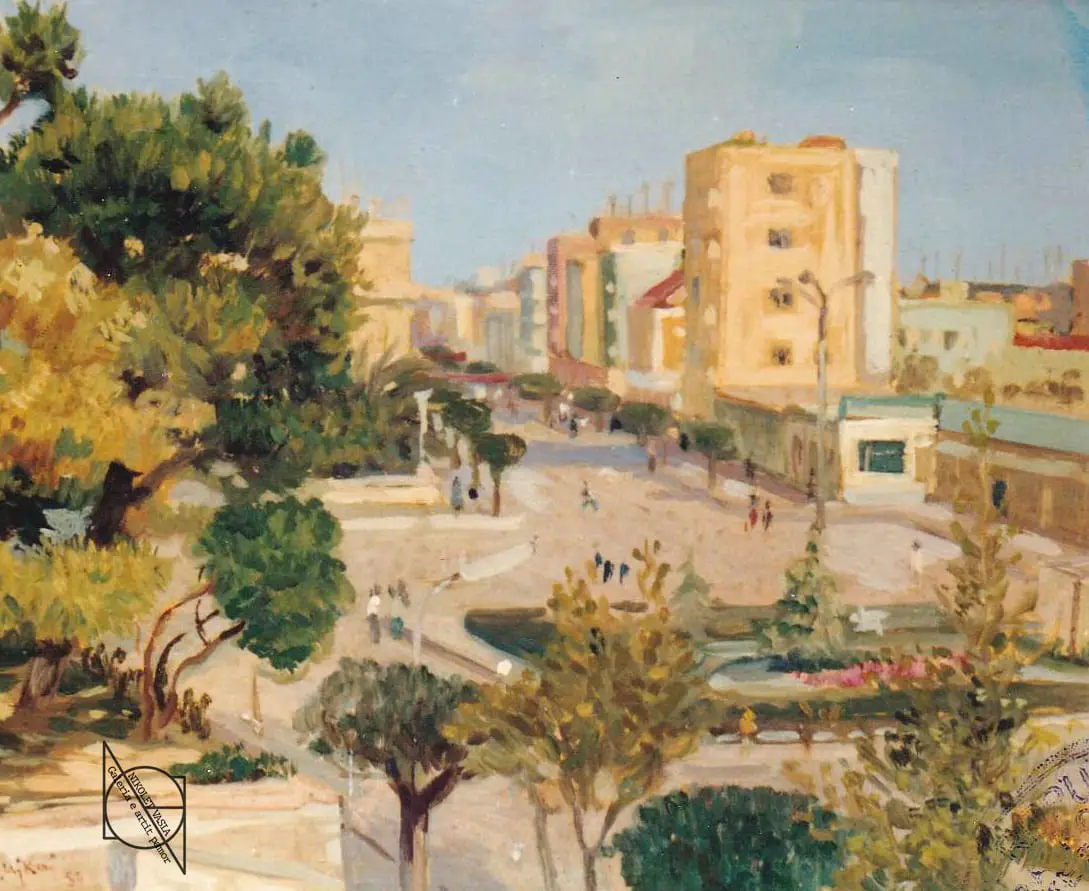
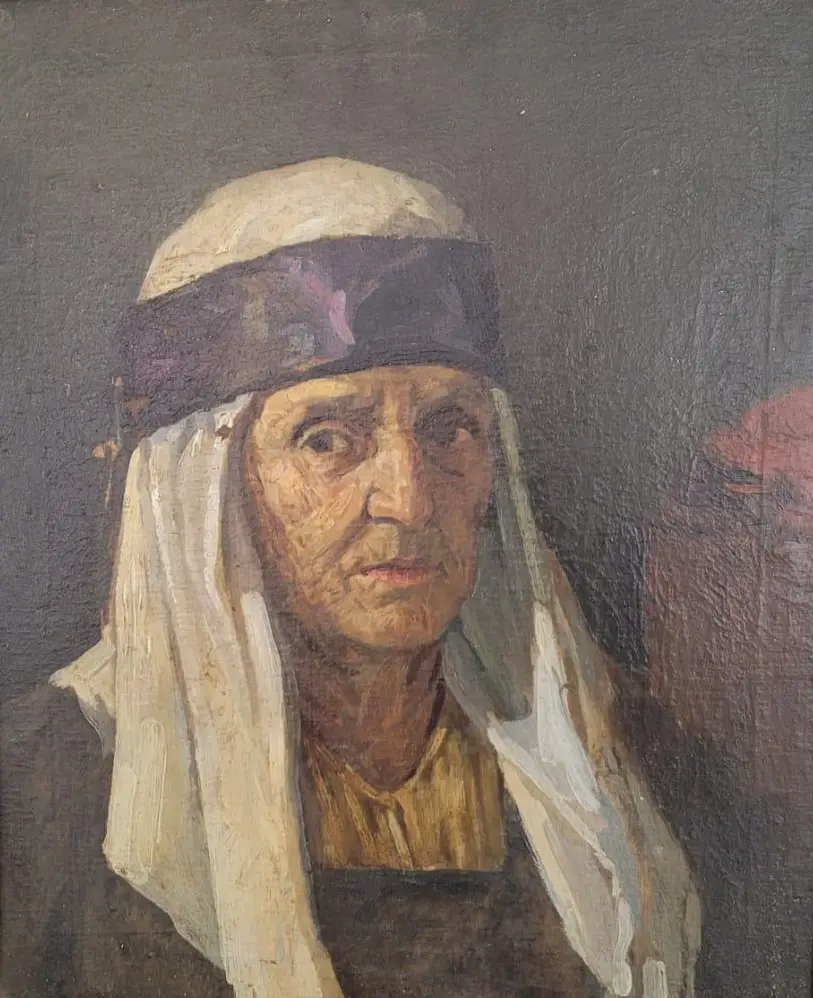
He continued to work on the easel as a painter with outstanding abilities, as seen particularly in “Portrait of the Grandmother,” “a psychological investigation that is marvelous,” as Gjergj Vlashi writes.

“Zef worked on the last painting of his life on the balcony of his house and dedicated it to his two wonderful daughters, Xheini and Silvi, whom, along with Filika, he raised with complete parental care.

Zef Ujkaj was among the first to feel the warm currents of democracy that began to blow in the frost of the dictatorship; he discerned the first signs of a new dawn rising after the long night. Exactly 35 years ago, he passed away after a serious illness, at the age of 54. / Memorie.al 
ShareTweetPinSendShareSend
Previous Post

"Even Turkish researchers, who are more interested in this point, have not, to this day, focused on Hasan Tahsini's role in the establishment of Istanbul University..." / Reflections of the well-known Ottomanist

Next Post

"In the case of the exhumation of Enver Hoxha in 1992, which I directed, to refute the slander published at that time,..." / The study of the well-known Professor of Forensic Medicine

Artikuj të ngjashëm

“Driven away from the People’s Theater by rumors and jealousy, he sought refuge at the Higher Institute of Arts…” / The untold accounts of his peers; how the legendary actor Naim Frashëri was “destroyed.”
Art & Culture

“Driven away from the People’s Theater by rumors and jealousy, he sought refuge at the Higher Institute of Arts…” / The untold accounts of his peers; how the legendary actor Naim Frashëri was “destroyed.”

January 16, 2026
“Xhevahir Spahiu’s article about me in ‘Zëri i Popullit’ brought me to Tirana, but when I painted Enver Hoxha with long hair, I was summoned to the Central Committee, where…” / The rare testimony of the “king” of watercolor
Art & Culture

“Xhevahir Spahiu’s article about me in ‘Zëri i Popullit’ brought me to Tirana, but when I painted Enver Hoxha with long hair, I was summoned to the Central Committee, where…” / The rare testimony of the “king” of watercolor

January 15, 2026
“Fatos Arapi had something fatherly, something good, while Kasëm Trebeshina was angry with the entire homeland, with the living and the dead…!” / Reflections of the well-known poet and writer from the USA
Art & Culture

“‘The newspaper ‘Il Fatto Quotidiano’ wrote: Berte’s lower garden was destroyed, then, the best stadium designed in 1934, and now the National Theater…’! Reflections of the literary scholar on the work of Visar Zhiti.”

January 9, 2026
“Who was this man, a persecuted of the communist prisons, a lover of philosophers and a passionate connoisseur…”/ Reflections of the well-known researcher, for the former colleague, deputy and writer?
Art & Culture

“I wanted to escape a nightmare, only to surrender to a dream. They needed our suffering, our ideals, our allies, and what we represented—but not us, because…” / Reflections of the literary scholar on the creative work of Visar Zhiti.

January 9, 2026
“The Gheg Dialect and the Freedom of Association: A Specifically Albanian Paradox!”
Art & Culture

“The Gheg Dialect and the Freedom of Association: A Specifically Albanian Paradox!”

January 6, 2026
“Gjon Mili worked as a photojournalist and journalist, notably for the renowned ‘Life’ magazine, through which he visited various countries and…” / The unknown side of the famous master of Albanian origin.
Art & Culture

“Gjon Mili worked as a photojournalist and journalist, notably for the renowned ‘Life’ magazine, through which he visited various countries and…” / The unknown side of the famous master of Albanian origin.

January 5, 2026
Next Post
“In the case of the exhumation of Enver Hoxha in 1992, which I directed, to refute the slander published at that time,…” / The study of the well-known Professor of Forensic Medicine

"In the case of the exhumation of Enver Hoxha in 1992, which I directed, to refute the slander published at that time,..." / The study of the well-known Professor of Forensic Medicine

“Historia është versioni i ngjarjeve të kaluara për të cilat njerëzit kanë vendosur të bien dakord”
Napoleon Bonaparti

Publikimi ose shpërndarja e përmbajtjes së artikujve nga burime të tjera është e ndaluar reptësisht pa pëlqimin paraprak me shkrim nga Portali MEMORIE. Për të marrë dhe publikuar materialet e Portalit MEMORIE, dërgoni kërkesën tuaj tek [email protected]
NIPT: L92013011M

Na ndiqni

  • Rreth Nesh
  • Privacy

© Memorie.al 2024 • Ndalohet riprodhimi i paautorizuar i përmbajtjes së kësaj faqeje.

No Result
View All Result
  • Albanian
  • English
  • Home
  • Dossier
  • Interview
  • Personage
  • Documentary
  • Photo Gallery
  • Art & Culture
  • Sport
  • Historical calendar
  • Others