
By Uvil Zajmi
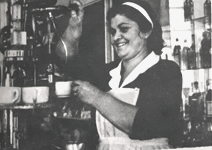
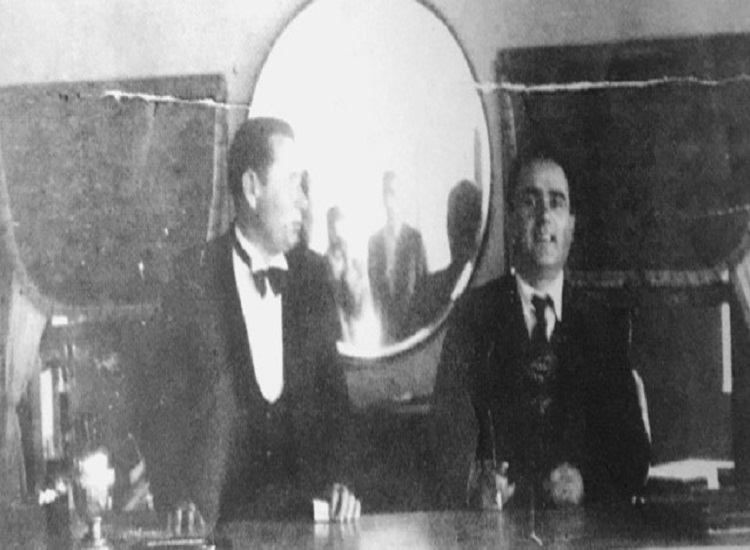
Memorie.al / It were not simply a café-patisserie like all the others. But a “Café-Patisserie” with the name Tirana, among the most well-known and most frequented in the capital of the ’50s – ’60s – ’70s. A point of reference, meeting and quite comfortable stay, a very suitable environment, in the center, with considerable space, low and wide armchairs, with waiters and waitresses of tradition, and who guaranteed correct service for clients, distinguished intellectuals, personalities of art, literature, researchers, academics, doctors, athletes, family members. Until, when that block, those buildings, together with the Executive Committee were demolished, with them disappeared without leaving a trace that famous “Café-Patisserie” as an important part of the history of Tirana, but not only. From that patisserie only photographs have remained and whatever the generation, those who experienced it, can remember.
A BOULEVARD WITH THREE NAMES
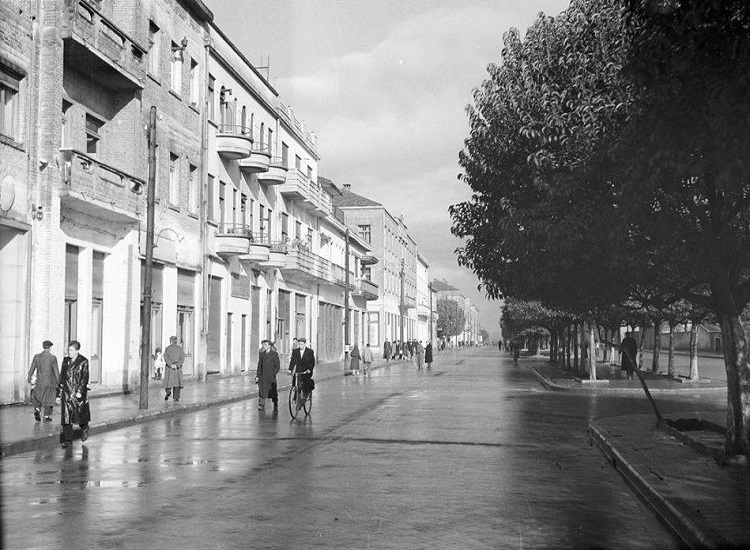
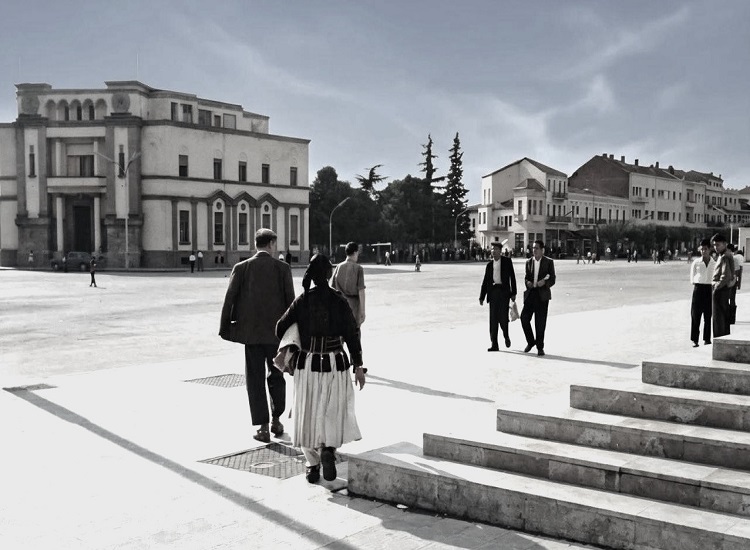
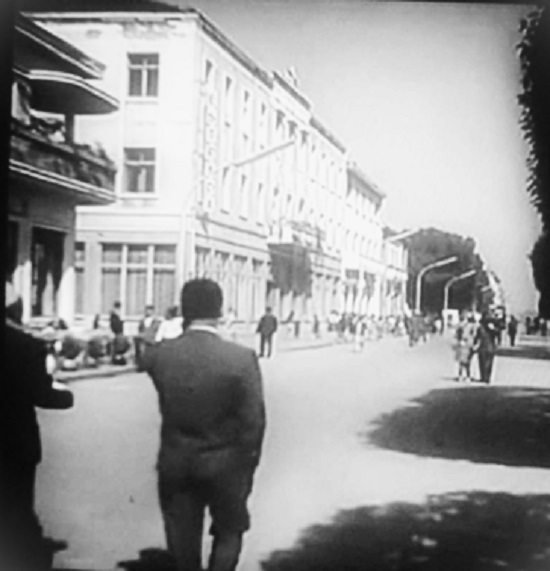
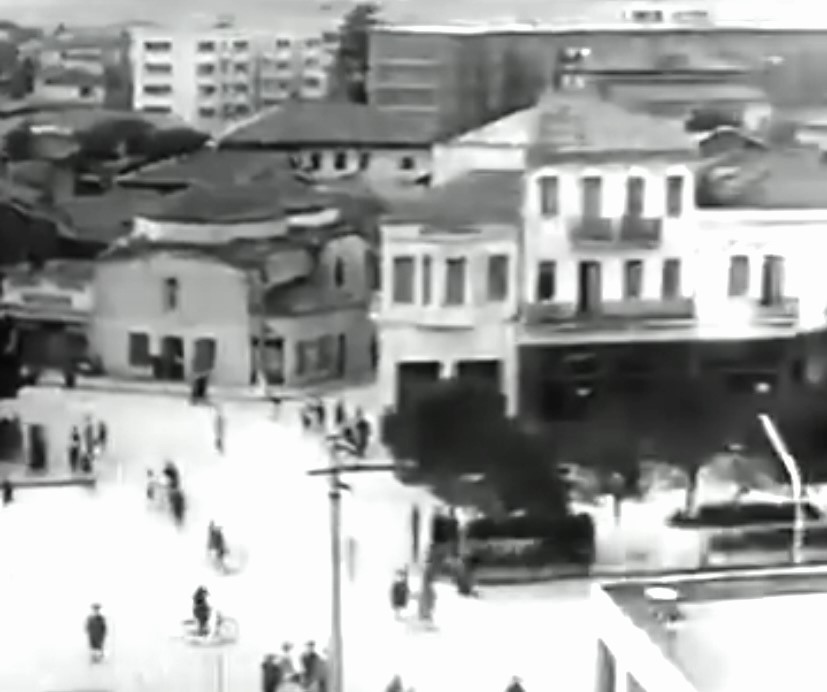
During the time of communism and friendship with the Soviets, that northern part of that main segment from the center toward the train station, after 1945, was known by the name “Stalin.” After the break with the Russians, it was called “Dëshmorët e Kombit” (Martyrs of the Nation) and after 1990 it was returned to “Boulevard Zogu I.” That zone and that boulevard I remember well: At the head the Executive Committee, an Italian building (former Municipality) and on the side, immediately after it, a street, then the advertisements with films at the cinema “Partizani,” “17 Nëntori,” on their side “Republika,” “Ali Demi,” “Agimi” and cinema “Dajti.” Behind the advertisements were the underground public baths, a small triangular park, without benches, with chestnut trees, and from the west, opposite the entrance of “Kursali,” was the bust of “Vojo Kushi.”
Adjacent to the advertisements, at the corner, with a vertical scale stood Shabani with his sister, always in black. In the evening they would take the scale to Hotel “Çajupi,” behind Pastry “Peza.” A small alley, where Rezart’s house was located, near the mosque’s cube, continuing the city Decor and the end of the alley led out to the State Estrada and Pastry “Tirana.” After the advertisements, a small intersection and if you took “Durrës Street,” there was the dairy shop, with saleswoman Dija, a small hardware store, the two brothers from Kukës who sold yogurt. After the yogurt seller, the Tirana Maintenance Enterprise, where many of its employees later became singers, well-known dancers, such as Rexhep Çeliku, the accordionist ……….Rexha, (the husband of Fitnete Rexha) Hajdar Golemi, the brother of the boxer, well-known journalist Met Golemi, etc.
Then a small environment, with a thin man who made panoramas with handmade paper, who while trading called out; “Come on Stalin, Lenin,” 200 lek a piece he shouted. Adjacent to him a shop, where a short man with a beret sat, who sold lottery tickets, with a bag on his side. Known for the expression: “Lottery tries your luck, with 5 lek buy the palace.” Then “Bicycle Repair,” with Ganiu the boss, with him also Hys Karapici. After them a tree seller, Kadriu, and above the shop, “Hotel ‘Beqir Banja,'” which occupied everything with the facade from the south. Another bicycle man, Petrit Kika, originally from the Kikas of Kruja who rented bicycles. With clients Fat Ferra, his close friend, the well-known footballers Loro Boriçi, Panajot Pano, Miço Papallopulli, Kolec Kraja, there you would find them, simultaneously both friends also of Ganiu and Hys Karapici.
Adjacent a three-story building: On the first “Students’ Canteen,” otherwise called “Odesta,” with a name for the time. On the upper floors lived families who had a room there: The musician Flamur Shehu with his sister, the chess player Agim Çuçka later ambassador, the writer Gaqo Bushaka, the Hungarian woman Marjana Laboviti who later left Albania. After it came a small alley, within which another bicycle man, Idriz Vrapi, as well as the house of the Karapici family. After the alley, continuing on “Durrës Street,” was Pastry “Agimi,” long, parallel to the sidewalk, unique for those years, the place where it was located and its popularity, always with citizens entering and leaving. In front of it the bus station for Laprakë and on the other side of the street, a gasoline distributor.
Meanwhile, from the Executive Committee to the train station, a distance of no more than 1 km and 100 m., designed by the Italians, very wide, had a sidewalk in the middle that started at the top and continued to the end. Only two were like this in Tirana: The one on that boulevard and the other on “Konferenca Peza” Street (“Kavaja Street”), from the Bank to 21 Dhjetori. With trees, low flower beds that accompanied it along, with some segments with interruptions, crossings for pedestrians, bicycles, vehicles and that created a different impact for citizens, the environment. Such have remained, they have resisted time. After the cinema advertisements, that small intersection, while you took the road toward the maternity hospital, on the left side were buildings of a structure, two and three stories, all with balconies, windows, north entrances. With a sidewalk, no more than 2 meters wide for passersby.
First “Pastry Peza,” a small two-story building, with a red roof, with two entrances, north-east, with the “Cantabriga,” the Italian ice cream machine, that was visible from outside it and that made noise. A cup of ice cream five lek, two ten. A patisserie that is also remembered for the boza it sold, preferred in summer time ice cream with boza, ten lek. Adjacent, at its back, was Hotel “Tomorri,” a three-story building, at the top two sloped roofs with red tiles, different from the others. Continuing the Dental Clinic, the stairs and on its upper floor, (there I had my teeth done), with those drills of the time. And when I came out, to cool the wound and reduce the pain, my mother would get me an ice cream. Then the “Pioneer’s Shop,” famous, with three counters, only women saleswomen, with the sector of clothes, shoes, etc., where all of us of that age were obliged to buy there.
On the eve of the beginning of the school season, a great flow and all of Tirana inside it, children, parents, I remember that; the pioneer’s scarf, the trousers, the black apron, there I got them. Nearby, the “Art Shop” with saleswoman Milika Nini, an open shop, allowed by the state where paintings were sold, which later was transferred to the palace with columns of Vaçe Zela. A pharmacy also, I am not sure “Night Watch” – or not, the “Big Bookstore” as they called it, tall and with space, where we also bought books, Albanian and foreign magazines for our age, among them “Uncle Stefi.” A small philately with stamps, a wide restaurant, with the name “Donika,” and as in the center always full of clients, not only for citizens but also daily arrivals. In the evening, there was an orchestra, as it was also used for family events, weddings; while we passed by there we heard the music.
Then Pastry “Tirana,” a passage street as an interruption, where a little further in was the State Estrada or the Tirana Estrada as it was known. Continuing, a tall building, the Palace of Culture “Ali Kelmendi,” well-maintained, unchanged even today (although with another function). Hotel “Donika,” another symbol of that time, that street, after it, Summer Cinema “Partizani,” Summer Circus. Opposite, on the other side of the boulevard: A candy shop, Hotel “Durrësi” (a two-story at the top of the street, once Café “Berlini”), with restaurant “Peshku,” on its first floor, then the entrance to the Orthodox Church, a sports betting office, a building, on the first floor a fabric shop, above a tailoring, and some houses. Years later there Hotel “Peza” was built.
FROM “BELLA VENEZIA,” TO PASTRY “TIRANA”
The history of that patisserie begins in the mid-years 1925-’30. Petraq Toka and Dhimitraq Papa, two businessmen, close to each other, decided to open such a one in Tirana, precisely there where it stayed for a long time. Petraqi, born in Melan of Përmet in the year 1988 [sic, likely 1898], had completed studies for patisserie. With the support of his wife, Flora Tasellari, by profession a patisserie chef, a family tradition, as she had been in Greece, Turkey, Egypt, where she finished a French patisserie school, they decide to come to Tirana, to practice the craft, and open a patisserie with the name “Bella Venezia.” A young man, Petraqi is not even 35 years old.
THE GOLD MEDAL AND THE WEDDING CAKE FOR KING ZOG
In the year 1935, at the International Patisserie Fair in Brussels, “Bella Venezia” of Tirana also competed with its products. In the end, by the jury, it was awarded a gold medal for confectionery, biscuits and its fame would spread rapidly in Europe. The first, who was surprised and then would be their client, was King Zog, whose family would place every order at “Bella Venezia.” As a frequenter with Western taste for sweets, among his most preferred was “Marron glacé.”
On the day of his marriage with Queen Geraldine, he asked the owners of “Bella Venezia” to prepare the cake. With gigantic dimensions, every part of it was special to be tasted and consumed. Much care the staff of “Bella Venezia” showed during the transport, as in the practice of this process, there had been cases that the cake was damaged, spoiled, because it was extremely delicate, since it lacked the supporting structure. Meanwhile, in that period, another “Bella Venezia” was also in Durrës, but the one of Tirana was special.
THE ONLY MODERN ONE IN THE CAPITAL
Bar Pastry “Tirana,” well placed, on a main boulevard, with flow, especially in summer time, when tables were placed on the sidewalk in front of the entrance, while on weekends, it was also preferred by families, when a good part of the clients knew each other, had friendships among themselves. I remember it very well as in my adolescence, I too with my parents, were admirers of it, for the pastas, ice creams, cassatas, compotes and the cakes known with rum, that were prepared, special for the time. With the counter, the shelves opposite, with crystal mirrors, the most beautiful patisserie, modern of Tirana, it did not serve for wedding ceremonies, something for an anniversary, ceremony, no orchestra, and among the only ones open until the late hours of the night. To open early in the morning.
There was sold, not only coffee, but also the cognac “Skënderbeu,” fernet, punch, or raki. Little frequented by women. In the mid-years ’60-’70, having come from Australia, an emigrant there, a descendant of the Papa family, at the door of Pastry “Tirana,” stood a man. Old in age, but elegant, with a sullen face, that contrasted with the function he performed. As it was said, based on his profession in Australia, they had done a plastic operation on his lip, intentionally so that he would always appear smiling. He organized the work, received and saw off people, even NTSHUS [Enterprise of Trade and Services for the City], for a time assigned him to serve also at pastry “Flora,” in those beginnings of it.
INTELLECTUALS, ARTISTS, ITS FREQUENTERS
Pastry “Tirana,” a mondain place, and for the mondain of Tirana. When you just entered inside, you understood that it was not your place there, but a locale of another level of certain people. Entering, and staying at Café “Tirana,” was a privilege, not everyone could frequent it. More intellectuals, a part of the elite, the artistic life of the capital, well-known personalities of art, culture, writers, poets, painters, sculptors, actors, conductors, composers, singers, athletes, etc. A Western locale, in the middle of the city, where foreign drinks were also served.
Special for the honored men of Tirana, among whom is remembered the writer Dhimitër S. Shuteriqi, the academic and chairman of the League of Writers and Artists, who lived above it, coming down, sitting, writing at a table of his own, undisturbed by clients. Even as he expressed; “they were an inspiring communication for him.” Then the inseparable friends, when two, three times a day, you could find them there, with tables reserved for them: The well-known translator Robert Shvarac, Pjetër Rodiqi, (the husband of Vaçe Zela) doctor Agim Tartari, the coach of 17 Nëntori, Myslym Alla, Sinan Tafaj, the actor Skënder Sallaku, etc.
THE RESIDENTS ABOVE IT
It was a two-story building: On the first was the patisserie, while above it comfortable living environments, with wide entrances, large balconies on the front facade. After liberation, the departure of foreigners who had lived there, among them an Italian general, in them were settled some well-known families, such as that of Fadil Pacrami, until 1964. With her departure, there the family of the general, military doctor Ibrahim Dervishi was placed. Adjacent to it, that of the writer Dhimitër Shuteriqi. Nearby, a three-story building, where another well-known personality lived, Vasil Prifti, over the years also director of the Dinamo club. Also the Marikaj family, also these residents in that building.
NOT LIKED BY THE COMMUNIST REGIME
After liberation, “Bella Venezia” would take, or they would place on it the name Patisserie-Café “Tirana.” Not typically popular, based also on its systematic frequenters, that in a certain way was not liked by the communist system. But, leaving it to function, to serve in silence, without being attacked by them. All the more when at the beginning of the ’60s, with the construction of the palaces on “Durrës Street,” the opening of Pastry “Flora,” beautiful, modern. Much preferred by citizens, artists, athletes, prosecutors, judges, officials, by the employees of agencies near it, by those just returned from the Eastern countries.
As well as students, young men, young women. Important for the zone, the residents, as a new locale, also for the service, the soups, the punch, an environment that has served also for nostalgic meetings, first acquaintances; the great loves of the time. Pastry “Flora,” competitive for “Kursali” and Pastry “Tirana” that had managed to preserve the tradition, until the demolition, when in 1980, all that zone, including also the Executive Committee, up to Pastry “Tirana,” were razed to build the National Historical Museum.
AGIM JANINA; “PASTRY ‘TIRANA’ FOR THE CAPITAL ELITE”
A definition of the time, which we find in the book “The Brush of a Time,” by the well-known publicist Agim Janina, where the author at a moment related to that locale, refers to the memories of the painter Nexhemdin Zajmi. “….Special was the friendship of the painter Nexhmedin Zajmi, with the writer Petro Marko and the sculptor Odhise Paskali. With Petro Marko he had become acquainted in Rome, at the time of the academy, an acquaintance which they continued and deepened even after the return to the homeland. He valued Petro greatly, as a man with culture, educated, humane, a wonderful pen as a writer, for his publications, his books of great value. Among them “Interview with Myself,” where he speaks about the first meeting with the student Zajmi. The acquaintance with Safo, painter, his wife, connected him even more. Likewise also for Paskali, his former teacher at the Technical School of Drawing, for whom Zajmi expressed that; the artistic figure of Paskali extended more than that of an artist, a sculptor, taking his artistic creativity as a model and example of national pride, dignified representative in contemporary world art.
“Often, with Paskali and Marko in the evening we met at ‘Pastry Tirana,’ on the boulevard, a locale near the Estrada and the Palace of Culture ‘Ali Kelmendi.’ Staying in those big armchairs, conversations until the late hours of the evening was a pleasure for us three. We remembered the common past conversing about artistic developments in figurative art and in literature. Then the parting, at the beginning of ‘Fortuzi Street,’ escorting each other. Petro for his apartment, in the palace opposite on the other side of the boulevard, while Paskali continued also some meters for his house, a two-story building, adjacent to the Faculty of Sciences, while I toward ‘Konferenca Peza Street,’ near the ‘Mihal Duri’ establishment where I also lived.”/ Memorie.al