• Rreth Nesh
  • Kontakt
  • Albanian
  • English
Friday, January 23, 2026
Memorie.al
No Result
View All Result
  • Home
  • Dossier
  • Interview
  • Personage
  • Documentary
  • Photo Gallery
  • Art & Culture
  • Sport
  • Historical calendar
  • Others
  • Home
  • Dossier
  • Interview
  • Personage
  • Documentary
  • Photo Gallery
  • Art & Culture
  • Sport
  • Historical calendar
  • Others
No Result
View All Result
Memorie.al
No Result
View All Result
Home Personage

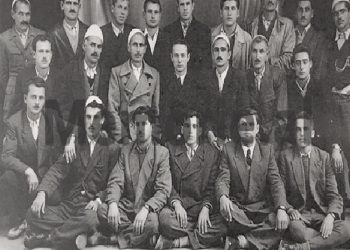
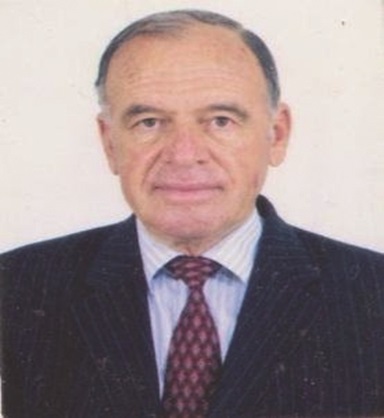
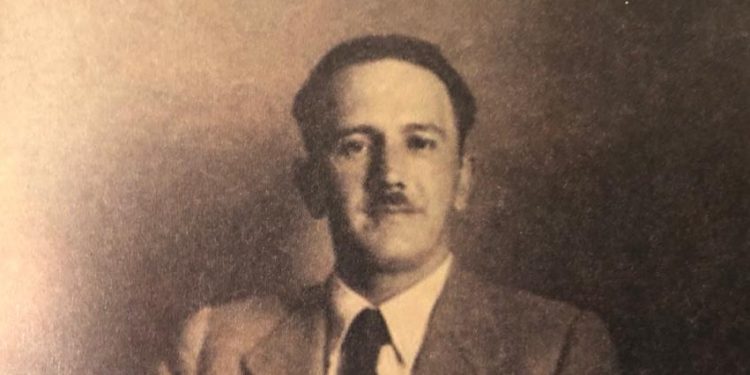
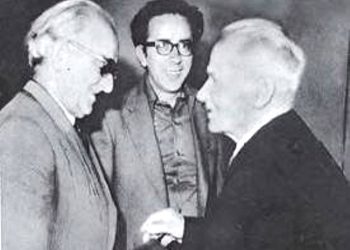
Hamid Gjylbegu, a graduate of the Istanbul Military Academy, the polyglot intellectual from Shkodra who never voted during the communist regime of Enver Hoxha  

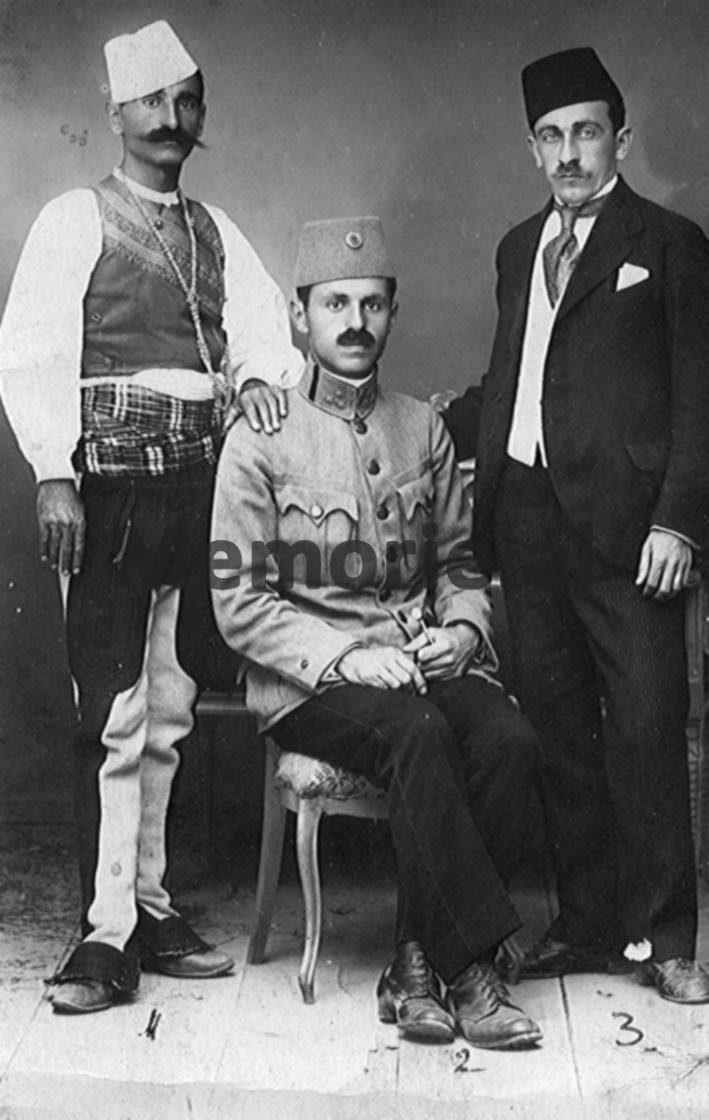
Hamid Gjylbegu
Hamid Gjylbegu, i diplomuar në Akademinë Ushtarake të Stambollit, intelektuali poliglot nga Shkodra që nuk votoi kurrë gjatë regjimit komunist të Enver Hoxhës

By Caf Jonuz Çulaj

Memorie.al/ To write about Hamid Gjylbegu, it is not an easy job, desire or good will is not enough. More and more complex studies are needed to perform such a task. What is true in the last ten years, something has been said. Someone wrote in his contribution in the field of children’s literature, someone else in organizational skills in the military field, someone in translations, others explain why he was a “non grata” person for the communist regime. For him, however, the day must come to be written, as far as he is concerned.

Hamid Gjylbegu was born in Shkodra in 1887, in that well-known and highly respected family. He completed primary and secondary school in his hometown, and high school in Istanbul, where he graduated in martial arts.

During his life he performed many military and civilian functions. He stood out especially, in the years 1918-1920, at a critical time for Shkodra. Assisted in the activity of the Committee “National Defense of Kosovo”. He also dealt with the progress of the Lushnja Congress in 1920.

Gjithashtu mund të lexoni

“As Hariton was being led to his execution, he quietly marked the page of the book he was reading and followed the officers… / The tragic story of the Bezhani family, founders of Vlore’s first bank in 1850.”

“In the book ‘History of Albanian Literature,’ there are many untruths, slanders, and insults regarding Faik Konica, labeling him as; ‘reactionary,’ ‘unscrupulous,’ ‘mystical,’ etc…!” / Reflections of the renowned publicist.

In Koplik’s fight against the Yugoslav incursions, he made a major contribution, with his military skills. There he fought alongside Ahmet Zogu, Sylço Bushati, Rexhep Shala, Taip Shkodra, etc. As always, the chronicler of the people, whose memory is infallible, would perpetuate it.

Hamid Gjylbegu, did not continue his military career. Being a man with deep intellectual preparation, he made friends and cooperated closely with personalities such as: Faik Konica, Mithat Frashëri, Lef Nosi, Father Gjergj Fishta, Father Vincens Prendushi, etc.

Correspondence with them, apart from personal meetings, was uninterrupted. Hamid was a polyglot and knew Italian, French, German and Turkish. As a patriot, he published in periodicals of the time, for various problems.

He also published children’s and religious books. Hamid Gjylbegu, has been a sworn enemy of any kind of dictatorship. He welcomed the Italian occupation of the country with the greatest hatred, calling for popular resistance. On the other hand, he was an enemy of communist ideas, which were introduced in Albania at that time. As a genuine intellectual, he felt the future of the country. He pointed out several times that communism brings terror and blood, poverty and deprivation, misery and degeneration.

This fierce campaign, according to him, would involve all segments of our population. From the intellectuals to the common people, who would carry on their backs the repression of the red emissaries.

The organized opposition after 1944 is known. The immediate response of the communists is known. “The country has been destroyed and is heading downhill,” he wrote to Enver Hoxha. With great courage and without fear, he criticizes the dictator for two big problems, for Kosovo and for the fight against the clergy.

He was arrested several times, but he was not impressed because he had been taught since the time of fascism. Hamid Gjylbegu is one of the only people who never took part in the elections that took place in communist Albania, be they for the local government or the local government. And everyone knew that.

He was under close surveillance and for this reason, he shunned society and entered into in-depth studies. He wrote two volumes entitled, “On Aesthetics” in 800 pages. He also translated many authors of antiquity.

He spent the last years of his life in Elbasan, with his daughter, where he died on February 24, 1979. Immediately after his death, in his house in Shkodra, which was controlled by the authorities, several tracts and magazines of Balli Kombëtar were found. Memorie.al
ShareTweetPinSendShareSend
Previous Post

Dr. Salvatore Petrota, President of the International Center for Albanian Studies at the University of Palermo, who in 1999, raised awareness throughout Italy on the issue of Kosovo

Next Post

"Rare photos of the Përmet Congress of May 24, 1944, which were never published, as…!

Artikuj të ngjashëm

“As Hariton was being led to his execution, he quietly marked the page of the book he was reading and followed the officers… / The tragic story of the Bezhani family, founders of Vlore’s first bank in 1850.”
Personage

“As Hariton was being led to his execution, he quietly marked the page of the book he was reading and followed the officers… / The tragic story of the Bezhani family, founders of Vlore’s first bank in 1850.”

January 21, 2026
“In the book ‘History of Albanian Literature,’ there are many untruths, slanders, and insults regarding Faik Konica, labeling him as; ‘reactionary,’ ‘unscrupulous,’ ‘mystical,’ etc…!” / Reflections of the renowned publicist.
Personage

“In the book ‘History of Albanian Literature,’ there are many untruths, slanders, and insults regarding Faik Konica, labeling him as; ‘reactionary,’ ‘unscrupulous,’ ‘mystical,’ etc…!” / Reflections of the renowned publicist.

January 22, 2026
“When the envoys from Tirana told Noli: ‘Very well; we can bury Konica in Albania, but first we must bring him before the people’s court,’ an inflamed Noli…” / Article from “Dielli” newspaper, October 20, 1965
Personage

“When the envoys from Tirana told Noli: ‘Very well; we can bury Konica in Albania, but first we must bring him before the people’s court,’ an inflamed Noli…” / Article from “Dielli” newspaper, October 20, 1965

January 22, 2026
“The leaders of the ‘Democratic Union’ led by Gjergj Kokoshin, were disappointed by the non-intervention of Enver Hoxha’s allies, for postponing the elections, and for this reason, in 1972, Musine Kokalari…|/ Reflections of the well-known historian
Personage

“At the Special Trial, while being accused by Koçi Xoxe for the lack of organized resistance on April 7th, 1939, Koço Kotta replied…” / The tragic history of the former Albanian Prime Minister who succumbed to torture in Burrel Prison in 1949.

January 20, 2026
“Even though the Head of the Political Office, Ugo Capialbi, summoned Avni Rustemi and Sali Hallkokondi to maintain order in the city and villages, November 28, 1918…” / The unknown history of the patriot from Vlora.
Personage

“Even though the Head of the Political Office, Ugo Capialbi, summoned Avni Rustemi and Sali Hallkokondi to maintain order in the city and villages, November 28, 1918…” / The unknown history of the patriot from Vlora.

January 19, 2026
“In Burrel prison, Koço Kota was tortured inhumanely, beaten with bayonets and his cracked wounds filled with…” / The horrifying testimony of the former prime minister’s nephew, who was abducted in Greece in ’45
Personage

“On January 21, 1920, Koço Kota attended the Congress of Lushnja representing Korça; among the 50 delegates present, he…”/ “The tragic fate of the former Prime Minister, who passed away in Burrel Prison in 1949.”

January 20, 2026
Next Post
“Rare photos of the Përmet Congress of May 24, 1944, which were never published, as…!

"Rare photos of the Përmet Congress of May 24, 1944, which were never published, as…!

“Historia është versioni i ngjarjeve të kaluara për të cilat njerëzit kanë vendosur të bien dakord”
Napoleon Bonaparti

Publikimi ose shpërndarja e përmbajtjes së artikujve nga burime të tjera është e ndaluar reptësisht pa pëlqimin paraprak me shkrim nga Portali MEMORIE. Për të marrë dhe publikuar materialet e Portalit MEMORIE, dërgoni kërkesën tuaj tek [email protected]
NIPT: L92013011M

Na ndiqni

  • Rreth Nesh
  • Privacy

© Memorie.al 2024 • Ndalohet riprodhimi i paautorizuar i përmbajtjes së kësaj faqeje.

No Result
View All Result
  • Albanian
  • English
  • Home
  • Dossier
  • Interview
  • Personage
  • Documentary
  • Photo Gallery
  • Art & Culture
  • Sport
  • Historical calendar
  • Others