Part Five
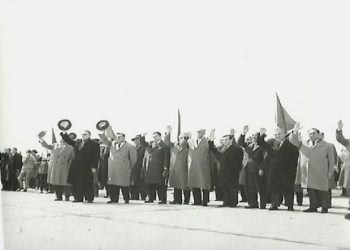
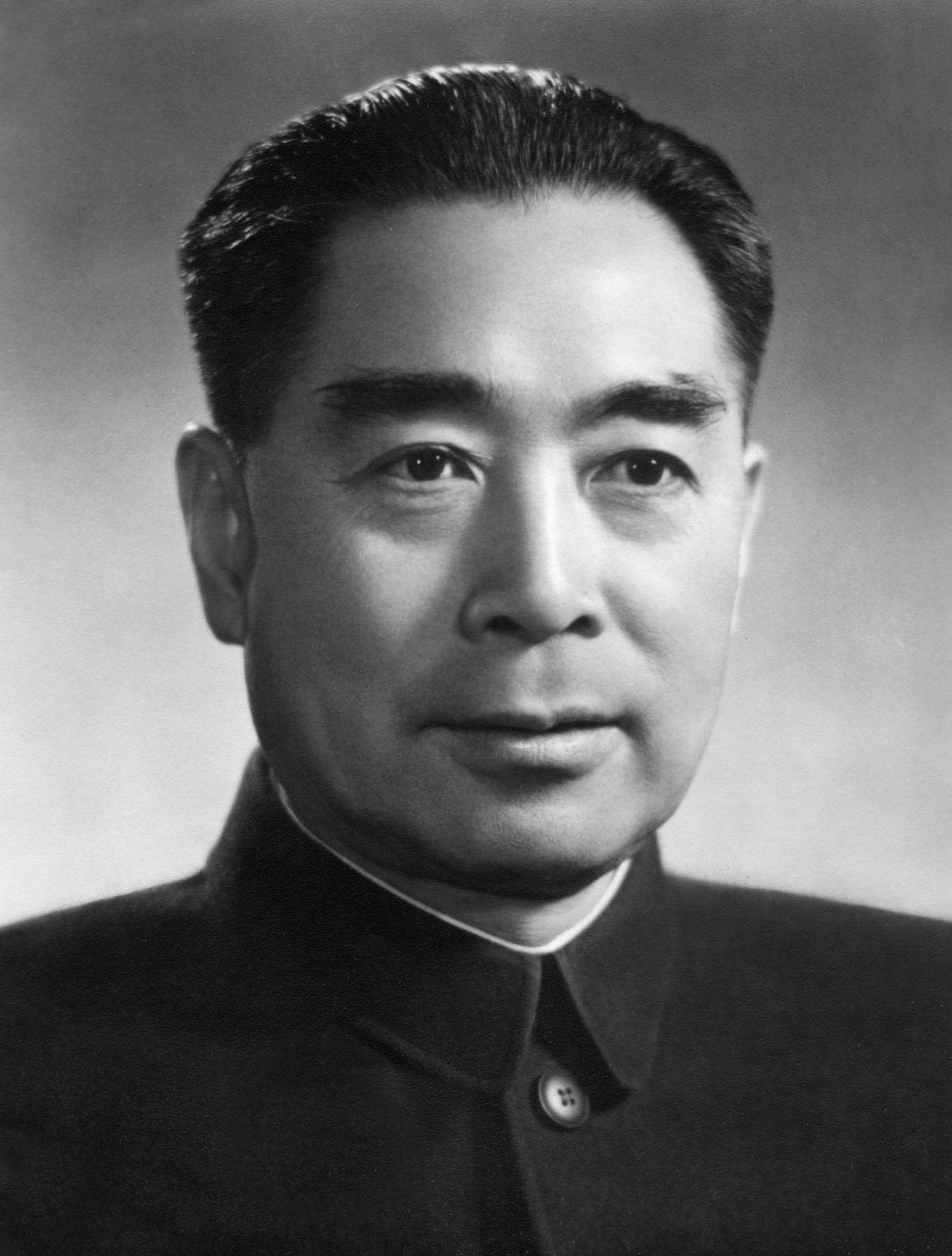
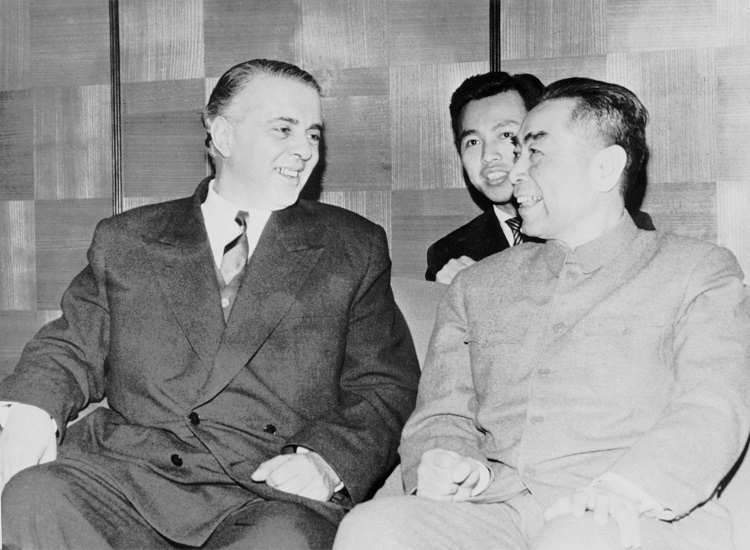
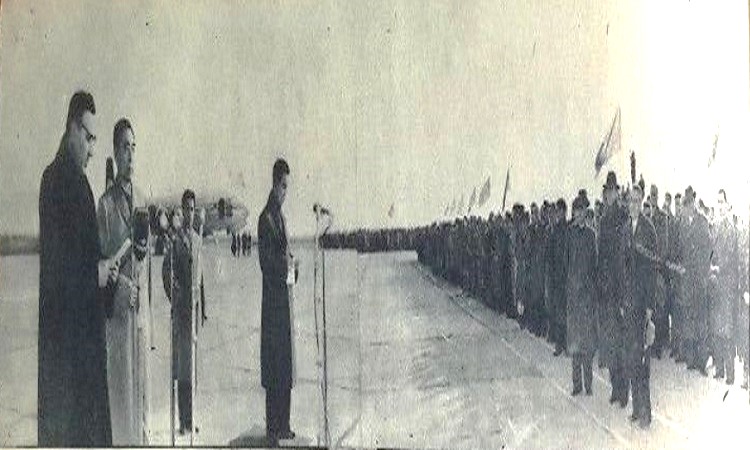
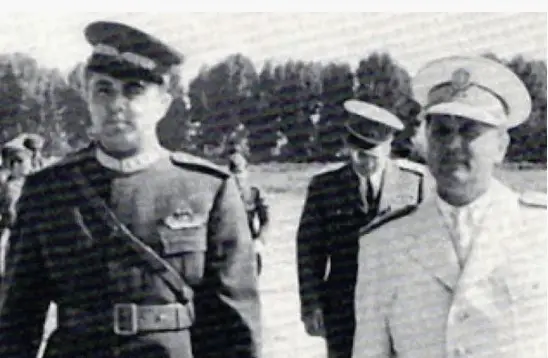
Memorie.al / In March 1965, a high-level Chinese delegation headed by Prime Minister Zhou Enlai arrived for an official visit to Albania. That was his second official visit to the small Balkan communist country and took place from March 27 to 29, 1965, in Tirana, where he was welcomed by the top leaders of communist Albania, starting with Enver Hoxha, Mehmet Shehu, Beqir Balluku, Haxhi Lleshi, etc., who came out to welcome the Chinese guest right at Rinas Airport, to the sounds of the military band and honor guards. The official meetings were held at the headquarters of the Prime Minister’s Office, where, in addition to Enver Hoxha and Mehmet Shehu, other members of the Politburo and the Albanian government also took part, such as; Beqir Balluku, Hysni Kapo, Spiro Koleka, Adil Çarçani, Gogo Nushi, Haki Toska, Manush Myftiu, Ramiz Alia, Rita Marko, Spiro Koleka, Koço Theodhosi, Abdyl Këllezi, Behar Shtylla, and the Albanian ambassador to China, Nesti Nase, etc..
So what was discussed in the meetings with the Chinese prime minister, what were the priority requests made by the Albanian government for aid and loans from the People’s Republic of China, and what was Zhou Enlai’s response regarding what was requested of him? Regarding these matters and more, we are informed by archival documents where the minutes of the meeting in question are located, which have been extracted from the Central State Archive (the fund of the former Central Committee of the PLA), which we are publishing with some abridgments.
March 1965
Minutes of the conversation between Comrade Zhou Enlai and the leaders of the Albanian party and state, March 27–29, 1965.
Comrade Zhou Enlai and the other leaders of the Chinese Communist Party met with the Albanian leaders at the headquarters of the Prime Minister’s Office.
The Albanian Side: Enver Hoxha, Mehmet Shehu, Adil Çarçani, Beqir Balluku, Gogo Nushi, Haki Toska, Hysni Kapo, Manush Myftiu, Ramiz Alia, Rita Marko, Spiro Koleka, Koço Theodhosi, Abdyl Këllezi, Behar Shtylla, and the ambassador to China, Nesti Nase
The Chinese Side: Chairman Zhou Enlai, Central Committee members Xie Fuzhi, Zhang Hanfu, Zhao Jimin, Zhou Jianguo, and Li Xiannian.
The first meeting began on March 27, 1965, at 16.30. After all participants took their seats, Comrade Enver Hoxha asked Comrade Zhou Enlai to open the meeting according to the agenda of such events.
Continued from the previous issue
March 28, 1965
COMRADE ZHOU ENLAI: First, I want to say that we feel very happy to come to Albania for the second time. I want to thank the Albanian party and your people for the warm hospitality. This hospitality made a strong impression on us and is an indicator of the friendship between our two peoples, parties, and countries, which is becoming ever stronger and more unbreakable. I take the opportunity to thank the Central Committee and Comrade Enver Hoxha for demonstrating this friendship between us. I also want to thank Comrade Hoxha for the demonstration he made yesterday in explaining the opinions and activities regarding the problems in your country and in the international arena.
Today we want to present our views on the issues, although I will change their order slightly. At first I will cover international issues and then those of cooperation between our two countries. The opinions of our two parties and governments on the main issues of the international arena are in complete agreement. Here I mean the struggle against imperialism headed by American imperialism, against modern revisionism headed by Soviet revisionism, and against the reactionaries of other countries, with the aim of forming a common front of the revolutionary peoples of the world. There is no doubt that this front must have at its core the left groups of the socialist countries and of the communist movement, that is, the Marxist-Leninist parties.
The forces of socialist endeavor seek peace and democracy in the world, in favor of socialism and the peoples of the world, to the detriment of imperialists and revisionists. Among our three main enemies, the most important is American imperialism. I say this because it is trying to dominate the entire world, forcing modern revisionists to capitulate and place themselves in its service. Regarding the reactionaries of other countries, the Americans are trying to turn them into servants. Meanwhile, the Soviet revisionists, both under the current leaders or when Khrushchev was in power, are trying to divide the world between the two superpowers.
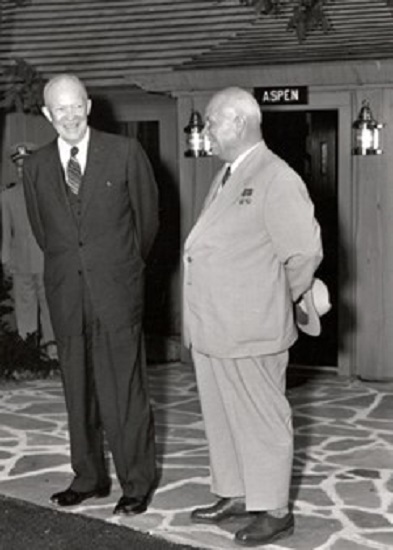
Yet the USA does not accept this agreement. It is well known that, for example, Khrushchev tried to control the atmosphere at Camp David in 1959, but Eisenhower did not accept it. Afterward, a year later, it is known that another quarrel happened in France. This shows that there are contradictions among imperialists, just as there are contradictions between imperialists and revisionists. Therefore, as Comrade Hoxha emphasized yesterday, the question is how to exploit these contradictions in favor of our aims. Currently American imperialists are attempting many tricks, but they have suffered defeats since the people of the whole world have opposed them. Thus imperialism is exposing revisionists and reactionaries in various countries more and more. Today American imperialists are trying to create crises around the world and their role is becoming clearer and clearer to the international public.
International opinion already knows that American imperialism is the source of all misfortunes and evil in the world. This has brought an increase in the mass of countries opposing imperialism. The peoples of Asia and Africa are moving toward a struggle against it. The USA has used poison gas against the people of South Vietnam and has admitted this openly. This barbaric act has brought criticism from many countries of the world, including the British government, so the USA was forced to cancel the practice. American bombings in Vietnam have caused dissatisfaction in many servile countries of the USA, which have expressed a wish not to follow them anymore.
Meanwhile, the USA is trying to frighten them by threatening them with the escalation of the war from South Vietnam to North Vietnam, or into Indochina and China. The allies are terrified by this. Yet this shows that the USA is not getting the support it needs and is being rejected by its allies and satellites because of the actions it is carrying out. This is because they foresee that the USA will suffer defeat in Vietnam and worry that it may lose its power and the anti-American movement expand. Meanwhile, the revisionists view this problem in the form of fear of a world war.
The Soviets too fear the escalation of local wars, since they do not want peoples to rise up in a war of national independence, which could turn into a world revolution. With their strategy, the revisionists seek to dominate the world alongside the American imperialists. They want to keep their satellite countries under control in order to use them later in other deals with the USA. To ease their relations with the Americans and preserve their prestige at the same time, the Soviets were forced to hold the March 1 meeting, but the result turned out contrary to what they expected. Just as Comrade Hoxha emphasized, the participants of the March 1 meeting came out of it more dispersed and divided than they were before. The resolution that came out of the meeting was only a repetition of the words of previous communiqués. I believe you have this.
COMRADE ENVER HOXHA: Yes, it is true.
COMRADE ZHOU ENLAI: And naturally this course of events has caused the prestige of the Soviets to lose even more, since it became clear that they were making a compromise with the Americans to dominate the world together. Another activity of the Soviets to find an advantageous solution, or taking steps to bring the sides in the Vietnam conflict to the negotiating table. This was noticed openly during the visit of Soviet Prime Minister Alexei Kosygin to the Far East in February 1965, when he suggested that the socialist countries issue a joint declaration in support of Vietnam, against the USA.
Yet we immediately detected that this was a plot by the Soviets, with which they sought to enter into a bargain with the Americans, representing the countries of the socialist camp. We expressed our opposition to the declaration and made our stance known to the Korean and Vietnamese parties as well. Although there was a Soviet-Vietnamese declaration and later another Soviet-Korean one, the other socialist countries did not join. Of course China did not join in such declarations, since Kosygin only passed through China and did not have time to play his role as a manipulator.
As soon as he returned to Moscow, the Soviets presented Vietnam with the plan to intervene with the USA, but this was rejected by the Vietnamese government, which said it would not bow before the bayonets and bombs of the imperialists, and that it would fight to the end. On the same day the Soviets presented the plan to the Chinese government as well, but we told them that on this they could speak only with the government of Vietnam. Yet despite the refusals, the Soviets had begun to intervene on the matter with the French. The Soviet ambassador met with De Gaulle, and two days later told the Chinese ambassador in Paris that the views of France and the USSR on the Vietnam issue were the same. Yet what was the French opinion on the matter? The French were entering into talks without conditions.
COMRADE ENVER HOXHA: Just like Tito.
COMRADE ZHOU ENLAI: (laughs) The French Foreign Minister described in a document the similarities in the stance of the two sides on the issue. The Soviets also took steps toward the British, as Andrei Gromyko’s visit to London showed too. There he was forced to accept that talks had to be held with preconditions, but Gromyko did not mention at all what Vietnam’s conditions were. The USSR wanted only the holding of talks. Britain presented to him the very same conditions of the USA, namely stopping the armed effort of the Viet Cong, stopping aid from North to South Vietnam, and surrendering the weapons of the liberation forces of South Vietnam.
The essence of these talks was clear in Gromyko’s press conference before his departure from England. When asked whether they had spoken about the Vietnam issue, he said that the issue had to be solved between the interested parties, namely between the USA and Vietnam. It is clear that Gromyko thinks he considers both the American aggressors and the Vietnamese liberation forces as two belligerent sides. The USSR and France agree on this, whereas England is more reserved. The USSR does not agree with Vietnam’s viewpoint, because it seeks to sell it for political credits.
The protests of the USSR against the American campaign there and the increase of troops are only a deception; they are not words that come from the heart. This is clear to the Vietnamese people, to the Chinese people, and to the whole world. This is confirmed every time the issue is mentioned by Russian diplomacy and the press, and by the fact that at the same time their stance was supported by the American press. When the Soviet minister presented to the American ambassador the protest note against the bombings in south Vietnam, the ambassador returned it back. This reminds us of the events of 1958, when former US Secretary of State John Foster was very worried about the bombardments along the Chinese coastline on the island of Quemoy.
The Americans thought at that time that China was attacking Taiwan and brought their fleet into the Taiwan Strait. We declared that we were reacting to Chiang Kai-shek’s attacks and not the Americans’, and as a result there were no exchanges between China and the USA. Yet why did we fire? We told Gromyko that we fired against the American attempt to create two Chinas. They sought to withdraw their forces from Quemoy and Matsu, in order to separate them from Taiwan. Yet as soon as we fired at the two islands, Chiang Kai-shek could not withdraw. You and your Foreign Minister Behar Shtylla know well why we are against the idea of two Chinas. We told Gromyko this too and also told him that if the Americans open war against China, we can bear the burden ourselves without Soviet aid.
Gromyko was very moved by China’s sincerity. Last year when I was in Moscow, Gromyko asked me if I remembered the events of that period. I told him yes, and added that Khrushchev had calmed down then, that he would not have to intervene if China entered the war, since he was very afraid. As soon as he heard our opinion, Khrushchev had sent a harsh letter to President Eisenhower, in support of China. By now the Americans had understood the Soviet nature and although we bombarded the islands of the rebels Quemoy and Matsu, they did not intervene, but moved their fleet toward Hong Kong, under the pretext that it would be supplied.
The Americans spot the Soviets’ weaknesses since through their ambassadors they continuously contact one another to prepare their activities. The same thing is happening now with Vietnam as well. The Americans work hard for the situation there to worsen for a certain period, and then wait whatever may happen, and try to make it worse again. Whereas we, that is, the revolutionary leftists, are with Vietnam the whole time; we have a clear course. We wanted to speak with you about this when we were in Romania too, but now we are in Albania. Vietnam and Indochina have already become the center of the struggle of American imperialism, although it acts in many other spots such as South Korea, Japan, Taiwan, Malaysia, Palestine, Congo, Latin America, etc. – everywhere there are anti-American centers.
(After a detailed panorama of the Vietnam conflict, Zhou Enlai around 12.30 requested a break in the session for a recess.)
The third session of talks began around 16.00
COMRADE ZHOU ENLAI: In the morning session, I took some of your time with my facts and analyses.
COMRADE ENVER HOXHA: It was a pleasure for us.
COMRADE ZHOU ENLAI: Now I want to give you some information regarding the Soviets. Our enemies, headed by the American imperialists and Soviet revisionists, are facing a number of difficulties. President Johnson, his British followers, and Khrushchev’s successors in the USSR do not have a sound position. The leader of the Indian reactionaries, Bahadur Shastri, is even weaker than his predecessor Nehru. Within a short time President Kennedy was assassinated, Khrushchev lost his post, and Indian Prime Minister Nehru died in May ’64. Of the old hand only Tito remains.
As a proverb in China says: “When there are no soldiers left, the general stands guard,” yet Tito showed himself to be no more competent than the others. The Americans, the Soviets, and Tito have attacked Albania openly in recent times, yet they are already on difficult terrain and the situation is not in their favor. Yesterday Comrade Hoxha was right when he said that the imperialist front is not ready for another war, so they will continue to arm West Germany, especially with nuclear weapons, while in the East they will carry out the militarization of Japan. Yet this task is not yet finished in these countries since the imperialists have concentrated their aggression against the people of Vietnam.
Naturally their unfavorable situation there affects neighboring peoples too, such as Laos, Cambodia, China, etc. In any case, in the future we must concentrate our forces in the struggle against Soviet revisionism. Although Khrushchev has fallen, the new administration continues to practice Khrushchevian methods. You mentioned the case of Tito, who is already at the head of a special branch of American imperialism. Yugoslavia is not a socialist country and we consider it differently from the revisionists. The revisionist states already seem to have split into leftists, rightists, and centrists. Yet we must continue the exchange of information so that in the future we are ready to coordinate activities in the struggle against revisionism. / Memorie.al
Continued in the next issue