






By DASHNOR KALOÇI
Part Twelve
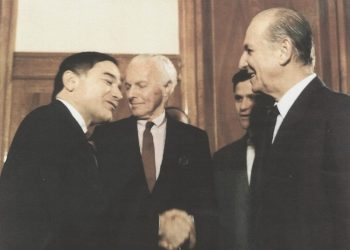
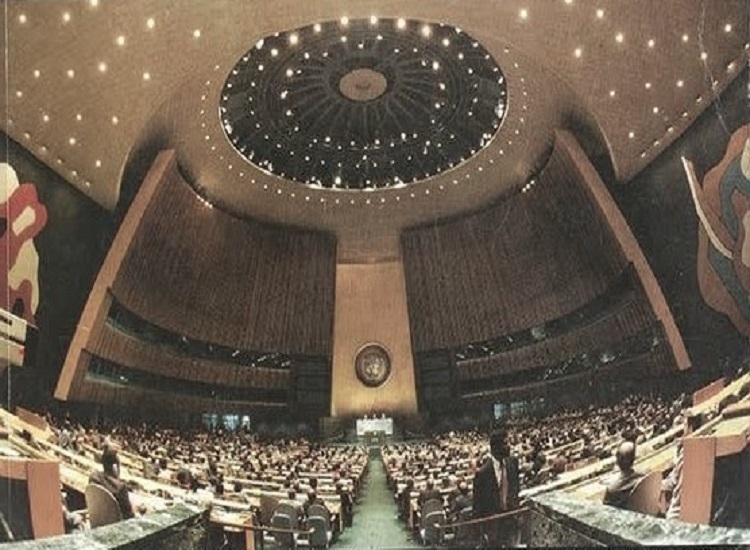
Memorie.al / Full 36 years ago, in the last week of September 1990, the head of communist Albania at that time, Ramiz Alia, who held the functions of Chairman of the Presidium of the People’s Assembly, First Secretary of the Central Committee of the PPSh [Party of Labor of Albania] and also Commander-in-Chief of the Armed Forces of the People’s Socialist Republic of Albania, at the head of a large delegation, set off to participate in the meeting of the United Nations General Assembly in New York. Ramiz Alia’s participation in the 45th session of the UN had a great echo at that time, not only within the country but also in the international arena, as it was the first time that one of the main leaders of communist Albania took part in the proceedings of the UN General Assembly, something which had not happened since 1961, when official Tirana was represented at that high forum of world politics and diplomacy by the prime minister of that time, Mehmet Shehu.
Even though 36 years have passed since that time, it continues even today to remain shrouded in mystery, since with the exception of some testimonies of the members of that delegation (the memoirs of Reiz Mailes, or Lisen Bashkurti), as well as very few archival documents published in the press, nothing else is known about the visit of the head of the Albanian state of that time, Ramiz Alia, to the 45th session of the United Nations in New York, which held its proceedings for about three consecutive weeks, until the middle of October 1990.
For example: When did the preparation and drafting of the relevant protocol for the participation of the Albanian delegation in that high forum of world politics begin, who were the other members of the delegation who accompanied Ramiz Alia on that long journey beyond the Atlantic and what functions did they hold; of how many people did the auxiliary staff that accompanied the Albanian delegation consist and who were they?! When did the preparation begin and what did the program of Ramiz Alia’s visits and meetings contain throughout the entire period that they would stay in the USA? Was that entire program realized according to the relevant protocol and who were the heads of foreign delegations that Ramiz Alia met during all the days of his stay in the USA, and what did he discuss with them? Who were the Albanians of the “old diaspora” with whom the head of communist Albania met during that visit, what was discussed at those meetings and were there incidents with the “reactionary Albanian diaspora,” who had fled from Albania after 1945? Who organized the reception that Ramiz Alia gave for compatriots in Boston, who were some of the exponents of the Albanian diaspora who assisted there and how did that meeting go?
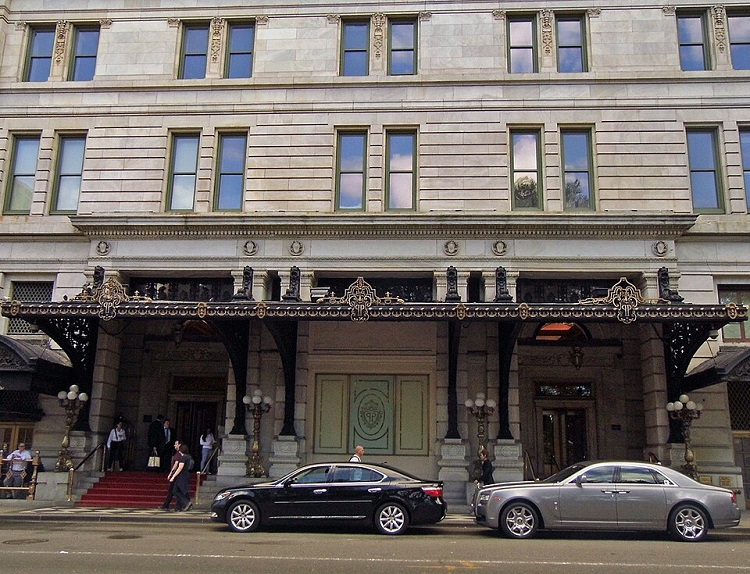
What was the itinerary of the Albanian delegation’s journey from Tirana to the USA, why were they divided into several groups and the reasons for staying one night in Switzerland? Why was Arben Alia, the son of the head of state, Ramiz Alia, also part of the Albanian delegation and how was his participation in the composition of the said delegation “justified”? How many and which were the gifts that the Albanian delegation headed by Ramiz Alia took with them and to whom were they given in Switzerland and the USA? Why was Hotel “Plaza” (the hotel owned by the current president of the USA, Donald Trump) designated for the accommodation of Ramiz Alia and some other members of that delegation? How much did that entire visit cost financially, why were other funds added during the period that the delegation was in the USA and how were those expenses justified?
Why did the staff of Albanian diplomats serving in the UN Mission take care to give Ramiz Alia also an exact floor plan of the hall where the 45th session of the UN would be held, designating also the place where the main representative of the delegation of the Federal Republic of Yugoslavia would sit?! Who were the two bodyguards (the doctor and the driver) who accompanied Ramiz Alia throughout that visit and how was it possible for them to travel on the plane with weapons and ammunition with them? Who were the members of the filming group of Albanian Radio-Television that accompanied the delegation and what tasks were given to them? Regarding these etc., we are made acquainted with the archival documents extracted from the Central State Archive (the fund of the former Central Committee of the PPSh), which are published for the first time and with the respective facsimiles by Memorie.al
ARCHIVAL DOCUMENT WITH THE MINUTES OF THE MEETING OF THE HEAD OF THE ALBANIAN STATE, RAMIZ ALIA, WITH THE PRESIDENT OF TANZANIA, ON 29 SEPTEMBER 1990, AT HOTEL “INTERCONTINENTAL”
THE CHANGES IN ALBANIA FLOW FROM THE VERY ECONOMIC AND SOCIAL DEVELOPMENT OF THE COUNTRY
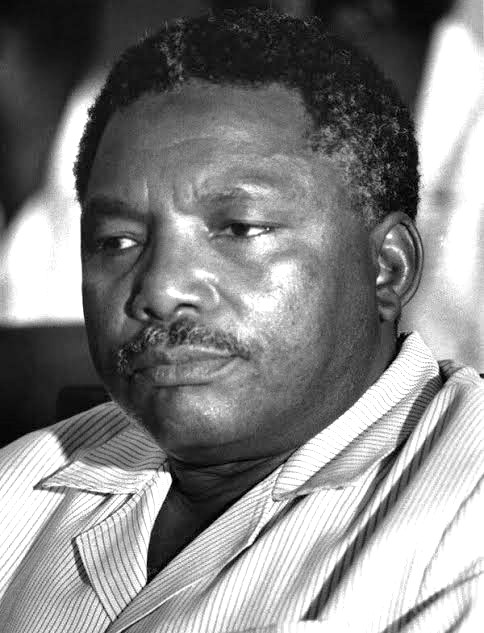
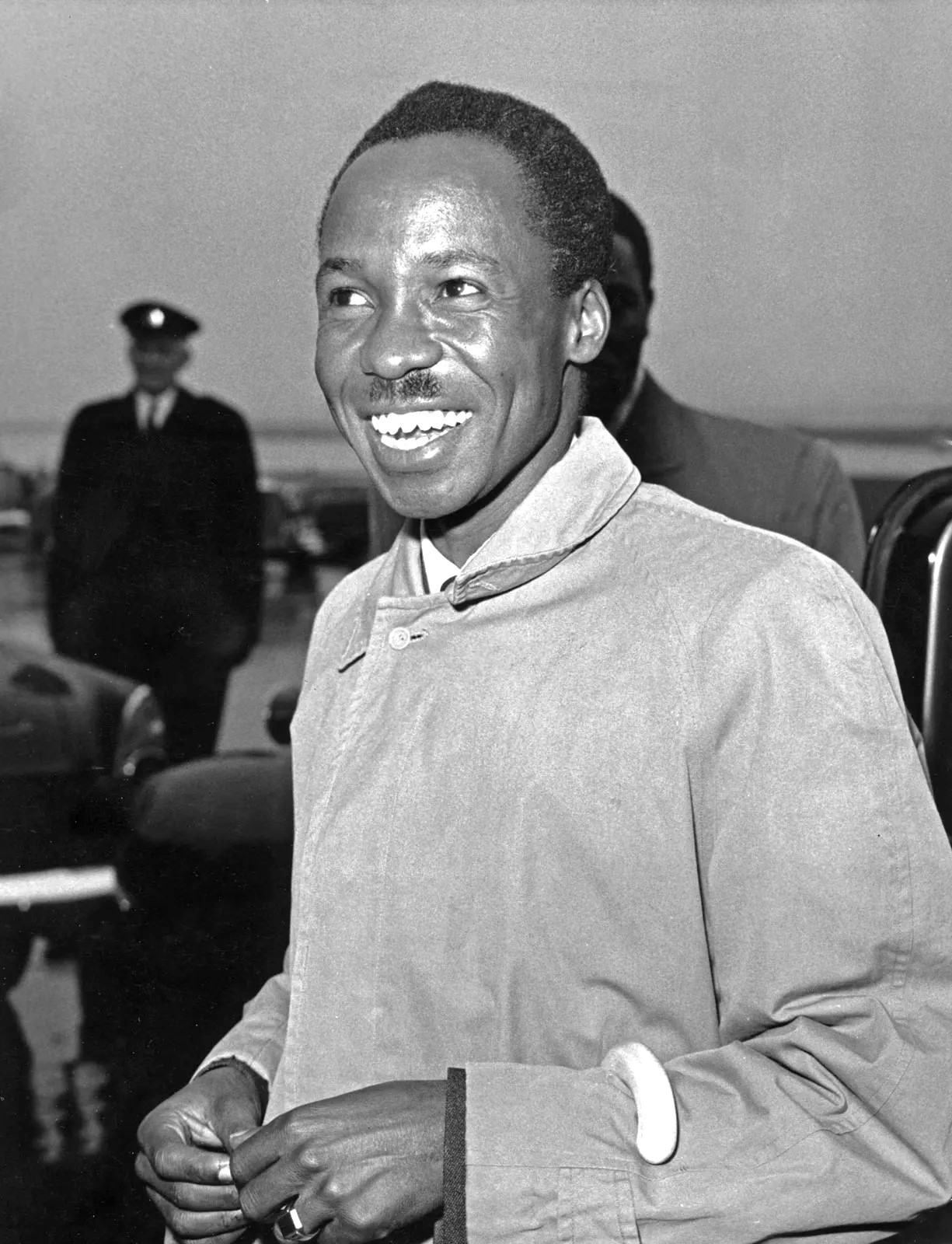
The Chairman of the Presidium of the People’s Assembly, comrade Ramiz Alia, on 29.9.1990 met in New York at hotel “Intercontinental” with the president of Tanzania, Ali Hassan Mwinyi. Between them this conversation took place:
Comrade Ramiz Alia: I am very glad to meet you. We have very good relations with Tanzania. We see Tanzanians as brothers. Although we differ in the appearance of our faces, together we are close friends. Both sides fight for the interests of the peoples, for freedom, peace and progress. Therefore the meeting with you has special importance.
A.H. Mwinyi: I am very touched and very glad that I was given the chance to meet you. I fully agree that between our two countries there exists a great friendship and close cooperation. The very fact that you had the kindness to meet me is a clear reflection of our friendship. I would like you to tell me more extensively about your country, although we Tanzanians read and hear a lot about you personally and about the friendly Albanian people. I would like to hear your thoughts regarding the changes in Eastern Europe. It is a fact that we are untouched by what happened there. But it must not be forgotten that we read a lot about the changes in those countries. We know about your relations toward the Balkans, as there is much talk about it.
Comrade Ramiz Alia: That is so, there are many writings and paintings about our country, but this depends on the writer and the painter, because some write well, some badly, some depict it rightly and realistically, some badly.
A.H. Mwinyi: We are in the same boat.
Comrade Ramiz Alia: It is better that we also talk about the realities that surround us. The changes in Eastern Europe today the Western world presents with euphoria, claiming that the same phenomena are happening and will happen in other countries too. We have problems, but they flow simply from the economic development of Albania. It is difficult to make an analogy with Eastern Europe, and this not for ideological reasons, with which nothing unites us, but also from the point of view that since 1960, Albania has had no ideological and political relations with any of the countries of Eastern Europe.
Since 1960, with the Soviet Union there have been not even diplomatic relations. We make changes, but always adapting them to our developments and conditions. We consider that imitation, copying, stereotypes, are not usable and suitable. What may be good for us may not be good for Tanzania and vice versa, because the history of Albania, the psychology of the Albanian people, the cultural level etc., are different. In the countries of the East there has been a uniformity dictated by the Soviet Union, by that so-called socialist community. Albania has developed differently from the others.
I cannot say better, but differently; this thing is of great importance. These things that are happening there now, it is not necessary that they happen in Albania too. We do what the time requires. In the economic field we have had problems. It is a fact that the issue of centralization has existed not as a theoretical concept, but also as a practical concept. Albania is a small country. At first we had, let us say, 10 factories. It was easier to maintain centralization, but now that development is much greater, it is difficult to proceed with this centralization. The same organization of that time does not work now.
Initiatives cannot be hindered, even those of individuals. It is not possible to do everything from above and in such a rigorous manner, now there is more freedom. Initiative has been given to enterprises and individuals, which also requires a better reward for work. An enterprise that has more income must also have more wages. The problem of the market also emerges in adaptation to the new conditions etc.
Nevertheless, if we take the organization of the market it is understood that the state must also protect the consumer and not leave him at the mercy of the market. So the issue of prices emerges, an entire reorganization of this system, the fiscal problem emerges, that is, of the tax, by means of which the state reconciles the interest of the enterprise with that of the citizen. All economic reforms aim to also increase the role of the masses.
Now all the directors, the heads of departments, that is, the leaders, we have left it to the masses to choose them, the working class to choose them, but the working class also to remove them. So, the working class should keep those leaders who ensure the fulfillment of their needs and demands. In the countryside we proceeded on the basis of the cooperative system. But we noticed that individual consumption was not well fulfilled by the collective, so we took some measures with the aim of encouraging production and a much better fulfillment of needs. We gave the villagers amounts of land, as well as livestock. This has stimulated the growth of agricultural and livestock products of every family.
So every family fulfills its needs from the land and from the livestock it has, and may even appear on the market, thus helping also the supply of the city. I spoke to you briefly about the changes in the economic field, but it is understood that if you say A, you will say B, and so on. So the changes in the economic field bring changes also in the relations with people, between the villager and the cooperative member, between the state and the cooperative, between the villager and the state. All these relations are also accompanied in the legal way, that is, in the reconciliation of these rights. It is understood not to touch the interests of the individual, but also to protect the interests of the state.
The changes in economic, political relations etc., have raised issues also in the field of foreign policy. We need technology. This is not achieved only by the country itself, but international cooperation is also required. We have made new laws that foresee the possibility of foreign investments in our country, but all under the control of the state. Once again I wish to emphasize that we are making changes that suit our country. We do not rush; on the contrary, we proceed with great care, because you know that every change has its perturbation.
Even the journey from Tanzania to New York, as well as from Albania to New York, causes changes in the human body. I tell you the truth; I have three days that I do not sleep well. Imagine in a state making changes within a day, how colossal the consequences would be. We are of the principle to proceed without stopping, but putting our feet on the ground carefully like an elephant. This is for the good of the people, but we always keep in mind also the international situation.
We live in the Balkan peninsula where there are numerous problems, and, in particular, national problems. We have as neighbors Yugoslavia and Greece, but it must be said that we are careful with them, especially with Yugoslavia, where there exists a deep crisis in several directions. Our aim is that the best possible roads for cooperation with one another be created. We have always followed the policy of not harming our neighbors at all.
We have never had territorial claims, because we respect our freedom and independence, but we also respect the freedom and independence of others. As true friends, respecting one another, we want cooperation with everyone. As far as Tanzania is concerned, it is a great pleasure, this not only currently, but also much earlier, that in the Tanzanian people we have had very close friends and comrades. Mr. Nyerere is a great friend of Albania, also you Mr. Mwinyi, are an honored friend of the Albanian people.
A.H. Mwinyi: Many, many thanks, I fully agree with you. Changes are made when and as they should be, taking into account the conditions of the country, the traditional, religious aspects of a country. He who copies achieves nothing. We have had such situations too, but even now we have problems. In our case it is not that we feel any urgent need for changes to be made, but the countries of Western Europe put pressure on us, they want to see us change in accordance with what they themselves have.
Comrade Ramiz Alia: We have these pressures too.
A.H. Mwinyi: We know that aid is often conditioned with changes. We have felt this thing, but the time has come that we think for ourselves and deeply whether there is a need for changes or not. In our case we feel that they should be made. 29 years ago we won independence, before we were oppressed by the colonial system. As is the custom of colonialism, we were divided into tribal groups, religious groups, into opposing groups.
As soon as we won independence we felt that we had to fight for the development of the national spirit for the recognition of the nation. The need emerged to think for ourselves about the national issue. We thought that it was indispensable to have one party, that is, to have one state and one party. During 28 years we did good work for the growth of the well-being of our people, because through the party we developed and strengthened unity, peace, always keeping in mind that we were a solid country.
It was precisely this party that managed to keep us strong. We lacked schools, but, after independence, we opened secondary schools, universities, and now everyone has it clear that the aim of the party was the unification and development of the country. In case we would allow the pluralist system we would never have achieved these results. If now the people want other parties, let it resolve this issue itself. If the need for changes emerges, let them be made but not because someone from outside wants it. We are now in a process of debate throughout the whole country and as soon as it ends, we will take its conclusions; we will sit down and decide. I fully agree with you regarding what you said about the changes.
Comrade Ramiz Alia: The problem of parties is a problem in the West, because, according to them, democracy is linked with the quantity of parties. Democracy is not a phenomenon that was born now, but since ancient Greece. Democracy is the right of the citizen to have work, education, to have his life secured, the future, the right to say his opinion openly, to elect and be elected, to criticize etc. So democracy is a very broad concept. Let me take for example Italy, where there are 9 parties, but there are 45 years that one of them is in power. Is this democracy? So, with us who have one party, it does not mean that there is no democracy.
I fully agree that the problem must be studied, not to hinder the freedoms that each thinks should be made for the democratization of the country. The mass organizations must have much personality, they must not be simply instruments, but must enjoy all the rights to say their word. With us there is a front organization, a women’s organization, a youth organization, there are associations of writers, of scientists etc., which are with an entire structure.
All these can be called parties, but there is no need to call them parties because we do not want to do formal things. But they can gain strength and can make positive pressure on the party, to stimulate or restrain something. With us the problem of women is not a simple problem, I believe it is such also in Tanzania. The women’s organization can make pressure, for peace, for health rights etc. I am against recipes and I do not give recipes.
A.H. Mwinyi: Very right, this is democracy.
Comrade Ramiz Alia: Often Western Europe, enthusiastic about the events in the East, thinks that it has found the magic wand, but experience showed that the magic wand created very great national, economic, political problems etc. Even in the Soviet Union colossal problems have been created. The Baltic republics seek to secede, likewise also Ukraine, Azerbaijan.
These are new problems, but very great. If we look at these as products of democracy, we do not eat them, because such products are dangerous. We do not want them to happen to us, I repeat the idea, that changes are dictated by the internal and external situation, but we proceed with our own head, we have our own thoughts.
A.H. Mwinyi: I fully agree with you. You are completely right.
Comrade Ramiz Alia: Many thanks! I was pleased that I met you. Best wishes for the Tanzanian people. Please convey to Mr. Nyerere my best regards, with the desire that our relations develop even further.
A.H. Mwinyi: Many, many thanks. Certainly for Mr. Nyerere it will be a great pleasure when I convey your regards. I too, likewise, wish the Albanian people great successes and you personally full health, for the good of the people. I express the conviction that the relations between our two countries will be strengthened even more. / Memorie.al
(Taken in shorthand)