By Artan Rama
Part Two
Memorie.al / In July 1978, when Albania was still a communist dictatorship, two grave events shook the state. The first was the letter from the Chinese government notifying the Albanian leadership that it was cutting off economic and military aid; the second was a letter that two political prisoners sent to the Central Committee of the Party. Although they were not connected to one another, the events were being conveyed through the same means: the sending of letters. But while the letter prepared by the Chinese leadership became public, the second, written in a prison cell, was kept secret. After 42 years it is not easy to return to the world of that time, to understand the inner workings of a state system which had been transformed, gradually, into an instrument of torture for anyone who opposed its functioning, even if only by calling it into question.
Continued from the previous issue
The officer’s testimony
“Although the journey did not last more than thirty minutes, I remember very few seconds of it, when Fadil Kokomani asked with a sorrowful calm, ‘Where are we going?’ Beyond that recording, everything else has been erased from me. I have never managed to understand this erasure from my memory, although I have constantly tried to give it an explanation.
At one point we stopped on a narrow and dark path. On the left, on terrain somewhat bare of vegetation, we made out the contour of a low earthen scarp. Adjacent to it was a pit. It was a scene that made your blood run cold. We sat them on their knees, facing the pit. When they saw it, they began to move. It seemed like an inner alarm, but that lasted only a moment. They were shot immediately, almost simultaneously, each with a bullet to the head, from behind, at a very close distance. They said not a word. Not a groan was heard!
The doctor performed the check. A worker who had come with us covered the pit. A record was also kept, which because of the rain we signed inside the car. I will never forget that night, those anguished faces. Sleep often escapes me and I remember all three of them.
It lasted an hour, but its nightmare has been following me for a lifetime. I have not experienced a greater horror than that black night. I suffered an indelible shock. I feel a permanent and inconsolable regret. That is why I can never forget that place, that pit.”
‘Was this Fadil’s killer?’
When the officer finished his account, Spartaku leaned back slightly in his seat. He told me that the searches had continued for several more days, but they had found nothing. “There must certainly have existed a map, documentation connected to it,” he told me, “but apparently, they were all taken, they disappeared – perhaps by those very people who were there that night, with or without orders.”
“Was this Fadil’s killer?” I asked him. “You mean, was this the one who pulled the trigger? I did not ask him and I had no curiosity about this. Getting into these details somehow diminishes the weight of the fact that it was someone else who ordered their execution by firing squad. Fadil’s whole story has no connection to this officer.
And I have asked myself: ‘What would I do if I were in a similar situation?’ And I have told myself that I would send people so as not to do this job, I would do something… I would tell them that I could not go. But if this officer had refused, another would have gone in his place. I am convinced of this.
More would I hate a man who has slandered Fadil, who has worked constantly with intrigues against him, who has tried every possible means to put him on that path, toward execution? I feel hatred and contempt for the diligent investigators and operatives of the Sigurimi, who forced people to confess, with violence and under torture, things that were untrue. These violated not only the laws, but exceeded every moral norm, every cruelty. In a sense, the execution had been carried out by others, long before that night when the physical death occurred.”
“Was the letter the cause, or not?”
“In reality, there are several letters. In a way, Fadil’s entire battle, his war against the ‘proven juggler,’ as he openly called Enver Hoxha, came only through letters. He made no move to create groups, he organized no subversive activity against the state, but he wrote persistently against the usurpers; against the regime that was bringing poverty; against the ‘Sultan, who was replacing one regime with another.’
His family too fought for a different regime in the anti-fascist war, but Fadil chose another path: knowledge. He fought with letters and for this he sacrificed his life, as much as in war.
I have not seen any comparable case among those who survived the prisons, who continued to stand by their convictions with persistence and to openly discredit the regime as Fadil Kokomani and Vangjel Lesho did with their letters. The letter of ’78 was the gravest. They composed it together in Spaç Prison and wrote it in two identical copies and sent it to the Central Committee of the PLA.
But the letter, which was conceived as a hope that the great movements, such as the break with China, might influence the regime to look again toward Khrushchev’s liberal socialism, turned into a murderous accusation against them, I think. For this reason, they sentenced them again.
But apparently, the dictator was not calmed. They brought them before the court again, a few months later, for the third time. Years later, when I read Fadil’s speech before the judging body, I understood that it was even heavier than the letter. His speech was the true indictment in the hall.
When they were arrested for the first time, in 1963 – first Vangjel and a few weeks later Fadil – alongside the attempt to escape, they were also accused of distributing some leaflets in Tirana, where among other things, Fadil had written: ‘Moscow is right! Hoxha-Shehu and Co. are leading Albania into a dead end!’
He was arrested and sentenced to 25 years in prison. He had not yet turned thirty. He had married a few months earlier, and they had even moved into a new apartment, together with his wife, Margarita. But he never managed to return home…”!
“Tell me about Fadil, how do you remember him?”
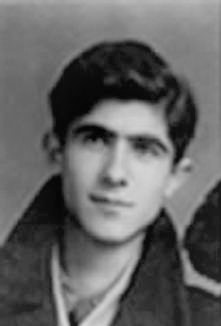
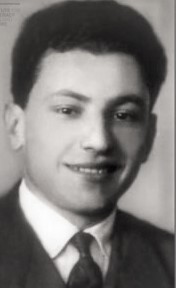
“Fadil was my uncle. I was eight years old when he returned to Albania from Russia, in 1957. He had brought with him 2,000 books, each signed with his favorite signature: ‘Fadok.’ He had just graduated in journalism, together with Vangjel.
They were the first Albanians to graduate from a faculty of journalism. But he had also studied music. Both at the University of Leningrad, the city that today is called Saint Petersburg.
Once I asked him about Moscow: ‘Uncle, is Moscow beautiful?’ Because we here saw Moscow as one of the wonders of the world. ‘It is beautiful,’ he answered me, ‘but Leningrad is even more beautiful.’
Fadil had taken part in an international festival of socialist youth, winning the cup. But his talent did not end there. He attended the Moscow Conservatory, in the drama department. He had planned to return to defend his diploma; he had great ability and energy.
The timing also coincided. In that period the Soviet Union was freeing itself from the anxieties of war. Enthusiasm had touched the youth. The Khrushchevian Spring deeply influenced his convictions and vision. However, it would be too naive an imagination to think that things would progress here as well. In Tirana the Albanian Stalinists had other plans.
His concern and impatience grew and multiplied; Fadil showed a visible dissatisfaction. Everyone knew it. Although he himself was supported economically and politically, inwardly he felt a deep grief.”
His star was rising high
“He began to write for several editorial offices at once: stories, reportages and literary sketches. Then he was assigned to radio. There he began his first programs, at the same time the first for the country. At one point they proposed that he join the party; become a member.
He mocked it, because he considered it something worthless. He seemed to have no inclination for these matters and would leave when such discussions began. He was an apolitical man, believe me!
I recall once when he took me to the cinema. I was still a child but I remember it as if it were now. Even the cinema’s schedule (from 18:00 to 20:00). It was ‘Hamlet.’ I asked him about the film, whether there would be war, partisans or tanks. But he laughed.
‘From now on you must not deal with wars or battles,’ he told me, ‘you must choose what you watch.’ Strangely, ‘his’ ‘Hamlet’ pleased me extraordinarily. I often remembered afterward the white screen in that dark hall.
The atmosphere in Tirana, especially in the evenings, was entertaining. Fadil and his friends did not let this relative freedom go to waste. In the evenings they met at the tavern of the ‘Dajti’ Hotel and he often took the microphone and sang. This was the most brilliant period. His star was rising high. It was the time when he met Margarita, whom he married in 1962.
The tragedy began a few months later, when one of his close friends denounced the group for escape to the organs of the Ministry of Internal Affairs. His father, a war veteran, but still an active military man, was notified directly by Hysni Kapo, one of the main communist leaders, that the name of Fadil Kokomani was implicated in an escape.
As a friend and as a fellow fighter, Kapo offered a possibility of leniency for Fadil, naturally in exchange for repentance. One night before the arrest my father spoke with Fadil. I remember that evening, when the two of them went into the room to discuss. An hour later they came out in silence. ‘Fadok’ was arrested the next day. Much later they told me that he had refused the offer.” / Memorie.al