By ERALD KAPRI
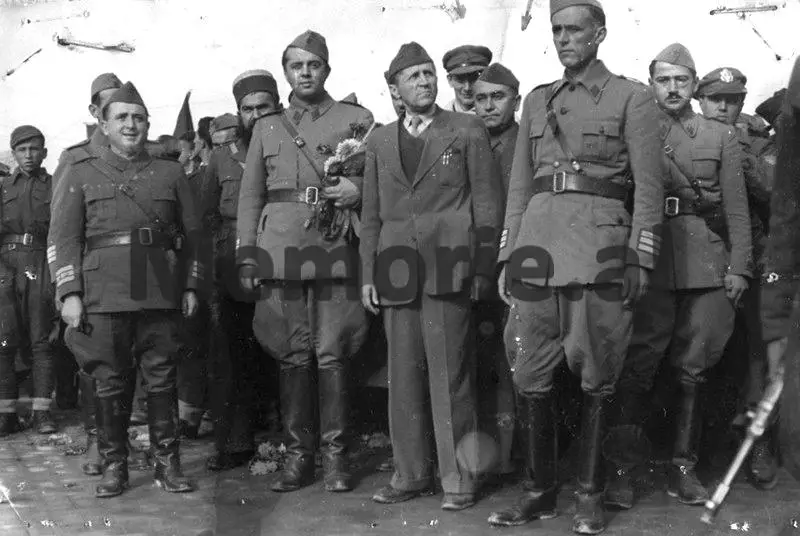
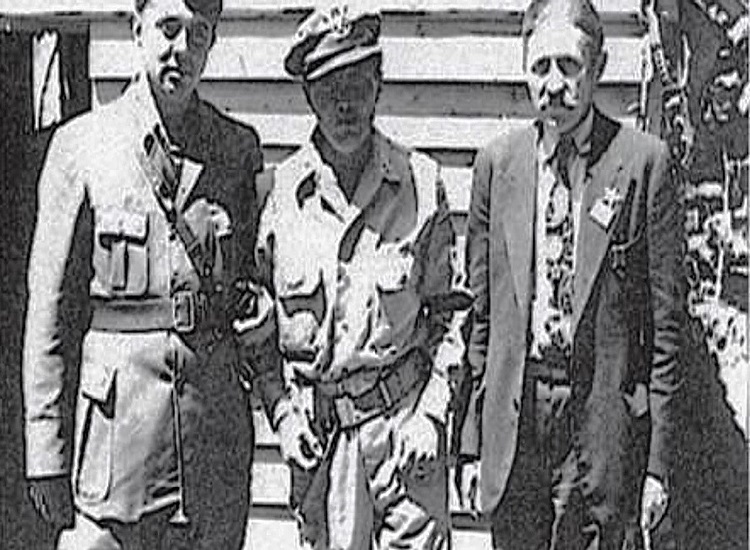
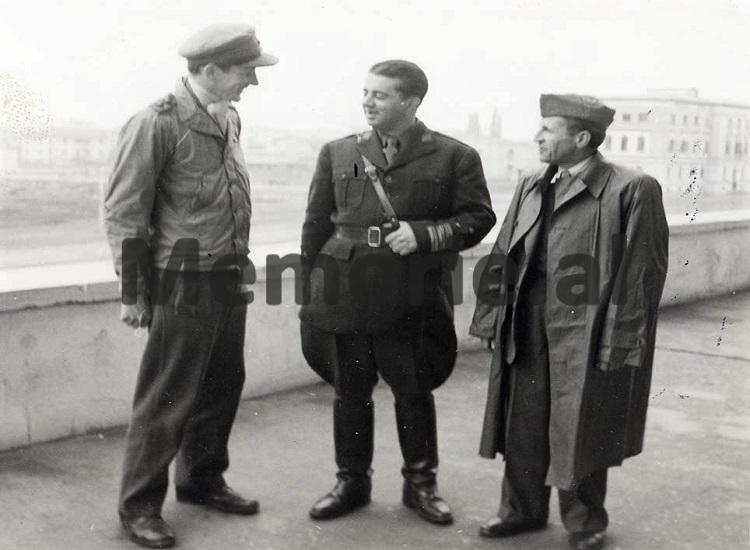
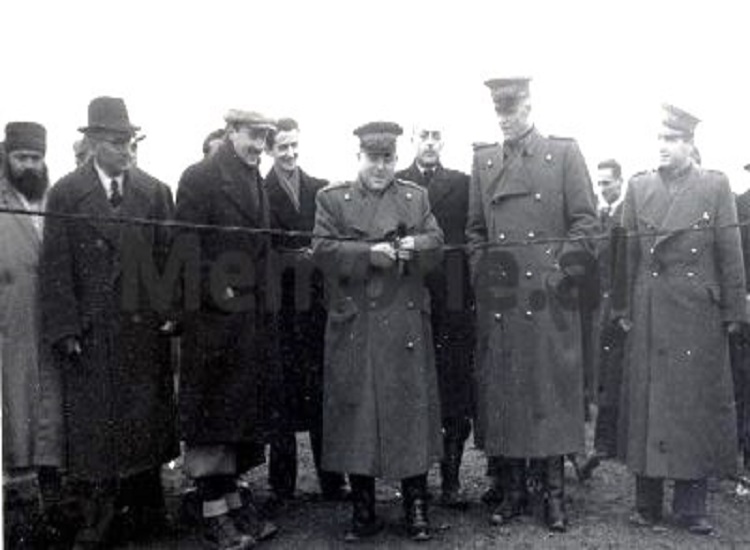
Memorie.al / The provisional government of Enver Hoxha, after the liberation of the country, was never recognized by the Western allies, such as Great Britain or the United States of America. Nevertheless, until 1946, they had semi-diplomatic missions in Tirana that followed developments. But after the liberation and in the first months of the communist regime, there were quite a few interesting developments within Enver Hoxha’s regime. The great harshness of the regime, the uprisings in the North of the country, the great economic difficulty were creating doubts that Enver Hoxha would not remain in power much longer. A rare report of the American service in Tirana, which was also sent to London, describes a dinner on January 22, 1945, at the Yugoslav legation in Tirana. Given the situation the country was in, during the dinner Omer Nishani openly criticized Enver Hoxha.
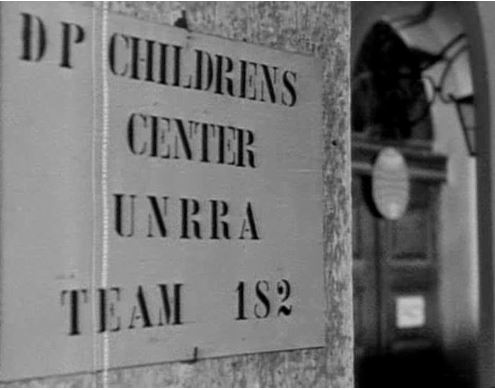
The Foreign Minister said at that dinner that affairs in the country were going badly with reconstruction and the economy, while he added that Enver Hoxha does not move from the office, so he asked him to go out and see the situation on the ground. But this whole incident was seen with suspicion by the British and the Americans. According to them, the country was in great despair because of the winter and had many needs for material aid, so Hoxha’s government was seeking aid from the Americans, although it had already become strongly tied to the Russians and the Yugoslavs.
According to them, this incident seems like a staged act to give the impression that within Hoxha’s government there are liberal and pro-Western elements such as Omer Nishani, and therefore aid for Albania should not be given. While the British further judged that Enver Hoxha would plunge deeper into relations with the Yugoslavs and expressed that if Hoxha survives these first months with internal problems, then he will survive in power.
Nevertheless, they believed that if affairs in the country went badly, then a more moderate wing of the communists such as Omer Nishani and others might have control of the situation. In fact, this did not happen and Hoxha responded to the severe economic situation and the uprisings only with violence and blood. According to reports, the economic situation at that time was desperate and the country was on the brink of great famine. Hoxha did not receive international recognition from the British and Americans and they did not give aid to Hoxha’s government as long as his eyes were only on Belgrade and Moscow.
DOCUMENT No. 1
File HS 5/32, January 26, 1945
This report was received today from Washington, drafted by the chief of the American mission in Tirana.
1) In Tirana, on the evening of January 22, a large dinner was held at the Yugoslav legation to introduce some new members of the Yugoslav mission to the Albanian ministers. The chief of the American mission and his British colleagues were present.
2) During the night, a completely unexpected development occurred between Prime Minister Enver Hoxha and Omer Nishani, the Minister of Foreign Affairs. Nishani made several remarks and sarcasms about the inefficiency of the Ministry of Public Works and addressed Enver Hoxha publicly, telling him that if he wants to see how things are going, he should leave the office and see what is happening on the ground.
3) Nishani continued further by saying (and in this aspect he was referring to the fact that he was against Enver Hoxha), that he was an Anglophile and would always be one, and recalled the good relations he had with British colleagues during his several years of living in Geneva. He went further by emphasizing that this is the reason he learned to speak English.
4) During the dinner, Hoxha asked the head of the American mission informally for explanations, saying that he has proposed having aid not only from UNRRA, but also from military missions, and added that he has never refused this aid.
5) Koçi Xoxe (a communist and well-known leader of the National Liberation Front) also asked the head of the American mission why the United States of America does not bring aid to Albania, knowing the desperate need the country has.
6) Hoxha, Xoxe, Shehu, Çitaku the Minister of Finance, expressed their indignation to the chief of the American mission for not participating in the inauguration of the National Bank in Tirana, where they had even made a spectacle with songs and dances. All express indignation at this neglect, according to them.
7) The Yugoslav mission in Tirana is now composed of 8 officers and several civilians together with a political adviser, Staja Stanjoviç.
8) Stojniç (who is now the head of the Yugoslav mission in Tirana) showed disregard for the Soviet and French missions during the dinner and devoted himself and sang praises for England and the United States of America.
9) The informant heard Enver Hoxha tell Koçi Xoxe that he had never been to the Yugoslav legation in Tirana, but in fact, according to the informant, Enver Hoxha has been there several times.
10) Throughout the entire evening, all attention went only to the heads of the American and British missions. This whole situation does not seem at all unexpected if it was not a completely prepared act by Enver Hoxha himself, in order to impress the American and British delegates.
In this return from being 100% pro-Russian, which he is, and from everything that has been seen, it is therefore doubtful to take into consideration the incident between Hoxha and Nishani. Nishani is not a “hothead” like many of the other members of Enver Hoxha’s government, but is an old man with experience and sharp judgment.
Therefore it would be difficult to believe that he would speak in this manner in public without having a reason. Nevertheless, in the first judgment, regardless of their pro-Soviet leanings, they are in desperate need of aid and it has been thought that such a situation could help stimulate the arrival of aid for them.
DOCUMENT No. 2
Report of Bush House, Ref/ SF/140/ GIA/B8
February, 1945
Due to the winter conditions and popular sentiments in the North of Albania, armed resistance is very likely to continue for a long time. If this situation continues and if the regime does not begin with tangible changes for the country in the coming months, there is a strong likelihood that there will be a rapprochement among three influential social groups, which today are divided as the youth, the rural stratum, and the merchants, to have a greater rapprochement among themselves in the spring.
It is very likely that the merchant stratum could identify itself as supporters of the National Front, but also the other two strata could turn into strong opposition to the regime, given the economic and social catastrophe of the regime.
Nevertheless, some expect the regime to take more repressive measures in the coming months, until it manages to achieve certain stability. While we speak, the regime is trying to obtain international recognition, to have aid from abroad, and awaits the surrender of those it calls war criminals, and certainly this has value for propaganda use and for stabilizing the situation in the country. Control of the army continues to remain in the hands of the National Liberation Front.
The policy of the regime
It is clear that the economic situation will be the basis of any movement of growing dissatisfaction in the country against the regime. It is also clear from the unsatisfactory forms that the leaders of the NLC have undertaken, such as in Tirana where they have removed families and people living near their homes for security reasons, while demonstrations against the regime have appeared openly in Shkodra and even tracts against the regime have been thrown in the city of Gjirokastra.
Therefore, Enver Hoxha’s stance is very surprising at the end, given the fact that he seeks aid, because it seems that he is uncertain about the durability of his regime. Therefore, the request to the Americans and the British to recognize the regime has an essential importance for Enver Hoxha as an opportunity to neutralize any opposition movement such as those that have occurred recently. Any delay in recognizing Enver Hoxha’s regime would lead to the strengthening of Enver Hoxha’s enemies.
But until now Enver Hoxha has hesitated to have a permanent British semi-diplomatic mission, and therefore seems prepared for a delay in the recognition of his regime. But as a conclusion, regardless of the recent tensions and the tendencies described in this report, the regime considers itself in strong and stable positions. While it seems that the regime cannot have sufficient aid from within, the regime is confident that it will have aid from outside.
CONCLUSIONS
If the regime does not receive aid or international recognition quickly, there is a strong likelihood that it will face an internal crisis. The possibility that the situation could be taken in hand by less extremist elements of the movement should not be ignored.
It is interesting to emphasize that in events and public meetings, a great friendship has been publicly shown by the NLC government toward the Western British and American missions. On the other hand, it is not at all impossible that in the next 6 months cooperation will appear between the NLC government and Yugoslavia. / Memorie.al