



By DASHNOR KALOÇI
Part Three
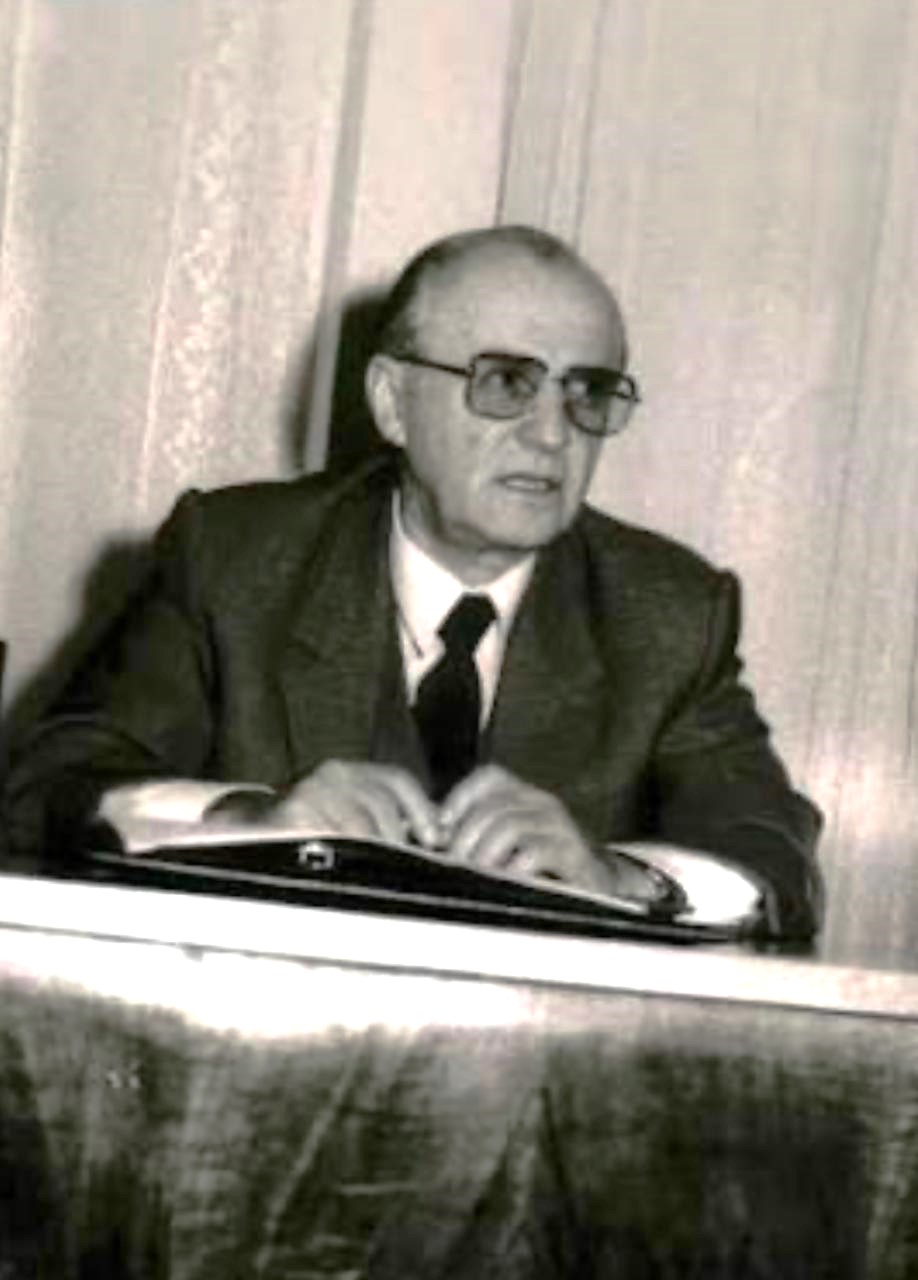
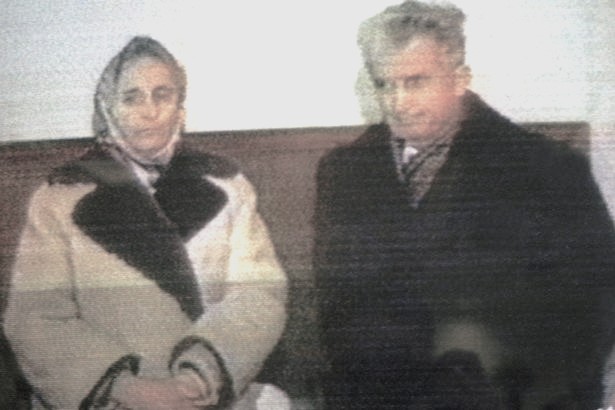
Memorie.al / On December 25, 1989, while it had been nearly three months since the Berlin Wall had fallen and the Eastern Bloc was collapsing day by day, and in Romania on that very day, after a swift trial, dictator Nicolae Ceaușescu was executed by firing squad along with his wife Elena (the footage of which at the time made its way around the world and was followed with great interest even in communist Albania), the top leadership of the Party of Labour, led by Ramiz Alia, gathered urgently in Tirana. Among other things, this is also made known by an archival document bearing the classification “Secret,” containing the minutes of the meeting of the secretaries of the Central Committee of the PPSH, attended by Ramiz Alia, Pirro Kondi, Foto Çami, Hekuran Isai, and Lenka Çuko, which reveals the regime’s anxiety in the face of the unrest engulfing Eastern Europe, and primarily Ceaușescu’s Romania.
At this meeting, the highest communist leaders, in addition to the day’s social problems such as housing, or the supply of the population with food products, clothing, and everyday industrial goods, analyzed and discussed with great concern several confidential pieces of information, such as a telephone call to the editorial office of the newspaper “Zëri i Rinisë” (The Voice of Youth), in which someone on the other end of the line made known the creation of a democratic party, etc.
Likewise, in the document in question, the top leadership of the PPSH also analyzed spontaneous reactions or words spread by certain citizens, such as on urban buses, etc., who drew analogies with the events in Romania, as well as news from the “TANJUG” agency or “Greek reaction” about demonstrations in Shkodër and incidents in the border area in the south of the country, where four citizens killed at the border had been dragged along in the trailer of a truck, etc.
Faced with this critical situation, Ramiz Alia appears to have begun floating the first ideas for controlled economic reforms, changes in the concept of class struggle, and the abuse by party and state organs of people’s biographies, which went as far back as grandparents—something that clearly appears to be a desperate attempt to keep the regime on its feet.
Alongside these measures concerning the domestic situation, at that meeting Ramiz Alia also spoke about Albania’s foreign policy issues, clearly articulating with his own mouth the reconsideration of relations with the European Common Market, as well as diplomatic relations with the USA and the Soviet Union, since according to him, the arguments used up to that time for breaking diplomatic relations with them had become outdated and no longer held.
Moreover, the leader of communist Albania, Ramiz Alia, made it clear to the secretaries of the Central Committee at that meeting that “in case representatives of the USA seek the restoration of diplomatic relations, we will tell them that we will study this matter.” Since according to him, “one can no longer proceed with political grudges, because politics is not done with grudges.” However, on this point – namely, the revision of foreign policy and the restoration of diplomatic relations with the USA and the Soviet Union – Ramiz Alia appears somewhat contradictory, since a little earlier he states: “By this I do not mean that we should establish relations with the USA, but that we should use a different argument.”
Perhaps, and most likely, in addition to Ramiz Alia’s dualistic character, he floated that idea to test the pulse of his subordinates in the top leadership of the PPSH, and to hear their opinions on that matter -indeed, one of the most important that could have been discussed by official Tirana since 1946, when the American mission received a direct order to leave Albania immediately! Regarding this, etc., we will become acquainted in the document in question, which has recently been extracted from the Central State Archive in Tirana (the fund of the former Central Committee of the PPSH) and is published for the first time by Memorie.al
Continued from the previous issue
THE SECRET DOCUMENT WITH THE MINUTES OF THE MEETING OF THE SECRETARIAT OF THE CENTRAL COMMITTEE OF THE PPSH, DECEMBER 25, 1989
MEETING OF THE COMRADE SECRETARIES OF THE CENTRAL COMMITTEE OF THE PARTY
December 25, 1989
The meeting is attended by comrades: Ramiz Alia, Foto Çami, Hekuran Isai, Lenka Çuko, and Pirro Kondi. The meeting is chaired by the First Secretary of the Central Committee of the Party, Comrade Ramiz Alia.
At this meeting, Comrade Pirro Kondi informs the secretaries of the Central Committee about the elaboration of the speech of Comrade Ramiz Alia, delivered at the plenum of the Central Council of the BPSH [United Trade Unions of Albania], in the Party organizations of the district, and the problems that have arisen from this. He also reports to the comrades on the supply situation in the capital. Comrade Ramiz puts forward some ideas for solving the problems of current development in the economy and in every other sector.
COMRADE RAMIZ ALIA: Such a regime, where the economy was stagnant in a place where injustices reigned, aroused discontent among the masses, and therefore they rose up against Ceaușescu’s clique. However, they lacked sound revolutionary consciousness and went to the extreme, rising up against communism, against everything socialist, going as far as removing the emblem of the socialist republic, which they had won with their own blood and sweat.
So man in life always does what he knows. And the youth in Romania, being inexperienced, did not know how to find the true path for establishing communist justice; they turned white into black, embraced the capitalist path.
This danger exists here among us as well; let us have no illusions, because socialist construction, especially in today’s international conditions, encounters many difficulties and raises new problems, sometimes even complicated ones. We have problems to solve in the field of economic development and management, as well as in culture and the deepening of socialist democracy.
These problems must be put up for discussion and free debate encouraged, so that workers, cadres, and specialists can openly state their opinions on the paths to solution. Some may even have erroneous opinions, but that does not mean they are enemies – so people should not be labeled.
In such cases, the person should be clarified as to why their opinion is incorrect. So debate will serve to sift through opinions well and reach correct and rational conclusions. Only in this way can the right path be found to solve problems.
Another evident problem today is the manifestations of duplication and parallelism in the work of Party organs, state organs, and economic organs. It often happens that Party organs and organizations directly deal with problems that should be solved by state and economic organs, going as far as displacing their work.
The first secretary of the district goes so far as to give an opinion on whether a person should be arrested or not! Why should the first secretary of the district deal with these problems, when there are special organs for the implementation of laws? Naturally, the Party committee, for its part, should follow the conflict in terms of how the Party line is implemented in these organs.
But state organs also deal with economic problems. For example, the Ministry of Industry, Mines, and Energy deals with problems of material-technical supply, transport, export-import, raw materials, labor force, etc.; I would not exaggerate if I say that the minister knows how many workers are absent per day in the chromium branch, let’s say, or what material base it has?!
These problems should be solved by the enterprises of the oil industry, of heavy and mechanical industry. Whereas the ministry’s duty is to implement the Party’s economic policy in the field of heavy industry.
In analogy with this, I take the Ministry of Education. The Ministry of Education implements the Party’s policy in the field of education. Here the minister deals with the study of problems of the education system, curricula, and textbooks, and does not know how many pupils are absent from schools, received good or bad grades.
Naturally, he is interested in the issue of attendance and the progress of pupils and students at school, but he does not follow it on a daily basis. But why is it different with the economic ministries? This too has its explanation.
The economy has been our Achilles’ heel, because the socialist state, unlike the capitalist one, has a special role in the economy. Even today it must play this role, but in a different form, because as it is, the economy is merging with the state, they are equalizing their affairs. With the division of large cooperatives, the people’s councils and Party organizations were also divided.
A few years ago, there were 10 cooperatives in one locality. Why not has this organization of state power today as well?! We must be consistent in our ideas, either admit that back then we were wrong, or justify this organization we have made today.
But state organs also put pressure on Party organs to draw them into solving economic problems, which we should solve ourselves; indeed, there is an excess of joint activities between Parties, state, and economic organs.
The manifestations of parallelism and duplication lead to a weakening of the Party’s leading role reduce the effectiveness of the activity of its organs and basic organizations, but on the other hand, they soften the responsibility and functions of state and economic organs. This problem has also been encountered by the revisionist countries, but they gave it an anti-Marxist solution, liquidating the Party altogether, handing power over to anti-communist and reactionary forces.
State organs have the duty to control the implementation of laws and decisions taken by the Government for the development of the economy and the entire life of the country, which embody the Party’s line. Whereas economic organs should deal with problems of material-technical supply, management and administration of production, etc.
The Party leads the entire system of the dictatorship of the proletariat. Therefore, Party organs should follow and control how the directives and orientations given by the Party leadership are implemented by state and economic organs, open horizons for them to solve problems, and hold them accountable for the proper conduct of affairs.
They should present before state and economic organs and all other organisms important problems that respond to the demands of current development and the future. The difficulties and obstacles we encounter stem from the backwardness we have inherited, from the strict demands of independent economic development, and from international developments.
Lack of experience also affects the difficulties of development. Therefore, let us be conscious that not everything has been solved by us or is being solved in a perfect manner. We have many problems to solve in the economic field. With the planning methodology we have today, many competencies in the field of planning are concentrated in central organs; the State Planning Commission decides everything, even supply problems.
The 9th Congress of the Party raised the issue of developing the initiative of the masses. But the initiative of the masses cannot grow with this centralism we have today in directing the economy.
Therefore, to open the way for the unleashing of the masses’ initiative, greater planning competencies should be given, which implies a transfer of directing activities from the center to the districts, and from the districts to enterprises, cooperatives, and institutions. This requires a new conception of the structure of production and of the relations between the base and the center.
COMRADE PIRRO KONDI: With the forms of organization we have today, the net income of the enterprise must pass to the state. Today the enterprise cannot build a warehouse, not even a window, if the ministry does not provide funds.
COMRADE RAMIZ ALIA: At the last meeting of the Political Bureau, I raised the issue that net income should be left to enterprises, removing the portion that the state would take for general amortization. The executive committees of districts should also take from enterprises a percentage of income on production. This could be 0.2 or 0.5 percent.
They should use this fund for the regulation of roads, for building shops and other facilities that today are built with state funds, or through voluntary work and other means. In this way, the executive committee of the district will strive more to exceed the production plan.
Within the framework of these changes, it is necessary to look at the issue of competencies. The executive committees of districts, excluding large enterprises, should have full competencies in directing the economy, in supply, and they – not the state – should be responsible for the shortcomings that arise in market supply. But competencies should be extended further down to the base, limiting centralized direction where it is excessive.
Enterprises and cooperatives today do not have the competence to cooperate with each other to solve their problems; for everything they must obtain approval from the executive committee of the district. It is a fact that many problems are solved by enterprises through informal channels, so it happens that a manager who is elected to leading forums fulfills the requests and needs of the enterprise or institution, while others who do not have this opportunity do nothing.
Then people say that such-and-such cadre is capable, knows how to get things done, while such-and-such does not. But the main problem that concerns me is that this path is uncontrollable, and everything that is uncontrollable always carries risk in itself, leaves room for abuses, shady deals, etc.—in a word, violations of laws. Our cadres are party-minded and honest, but there are also those who work with prejudices.
The difficulties and problems encountered by enterprises should be solved legally; everything should be done based on laws. In these conditions, it is necessary to make changes in the forms of management and organization of the economy, to make improvements and completions in competencies, but we will never allow the violation of the fundamental laws of socialism.
These changes are dictated by our conditions and needs and are subject only to the interests of the people and of socialism. New ideological, political, and economic analyses and evaluations for the problems of internal and external development will always be made on the basis of Marxism-Leninism, in the interest of socialism and the people.
In January, I think we should hold the meeting of the Plenum of the Central Committee of the Party for issues of internal and external policy. At this plenum there will be no invited guests. The comrades of the Plenum will not be given the meeting’s topic in advance, as we have done on other occasions.
At the beginning of the meeting, the problems will be presented, and then we will discuss and exchange opinions on what we will decide. The main thing is to reach a common denominator, a rational opinion on the new changes and solutions that will be made in the economic field and in foreign policy. / Memorie.al
CHIEF OF THE GENERAL SECTOR
Famir Zaloshnja