By Alket Aliu
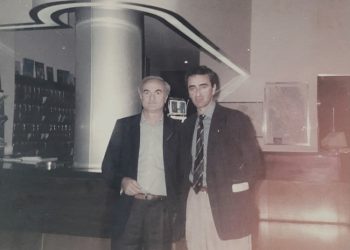
Memorie.al / One of the most important leaders of the communist state say that the biggest mistakes were made in the economy and foreign relations. How the principle of “reliance on our own forces” brought down communism. The story with the priest who met Strauss, and the unusual government meeting for… a tooth of Vaçe Zela.
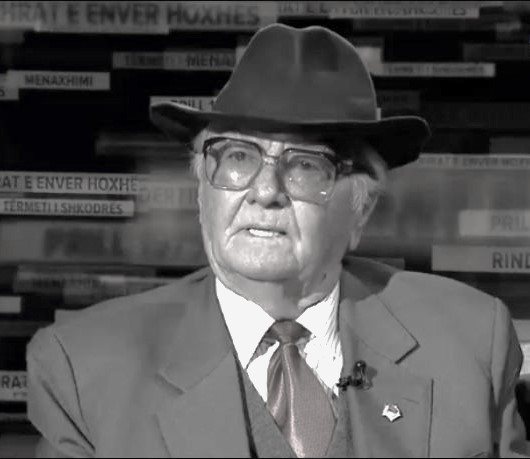
Muho Asllani was one of the 15 members of the Politburo, the real dome that governed Albania during communism. But he was the only one who did not live in the “Block”. Being constantly a man of the field, he moved continuously throughout the districts, where he led the party committees as First Secretary. But there was a period when he worked as a state minister in the government of former Prime Minister Mehmet Shehu, at that time number 2 of the regime.
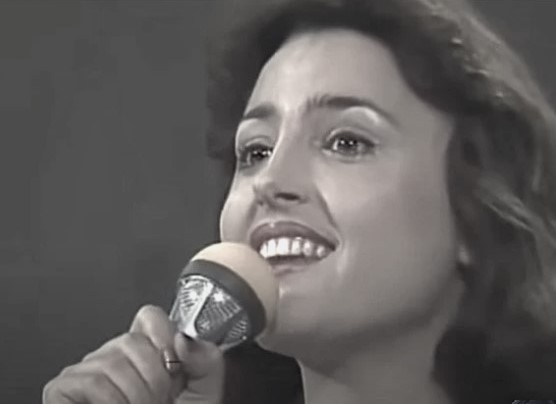
Today, almost three decades after the fall of communism, he still thinks that the regime did not fall due to political discontent, but due to economic difficulties. In an exclusive interview, he recounts how the Albanian economy was governed and the great tightening of the hand on state funds. And a rare story: the government meeting for just a few grams of gold needed to fix a tooth of the great singer, “People’s Artist”, Vaçe Zela.
Mr. Asllani, where do you think you went wrong during governance, as a party and as a government?
I was the youngest in the Politburo, but I do not exclude myself from the responsibility for those things that happened. The biggest mistakes, I think, occurred in foreign policy and the economy. We started from the principles of Marxism and did not “move from the course”. It was the economy that brought down communism, and our mistakes in planning and foreign relations. I am convinced that relations with the Soviet Union should not have been broken; much less with China, but ties should also have been created with the West, especially with Turkey, Italy, France, and some other countries.
We started international relations from a principled and philosophical side, while we should have been much more inclined toward the practical side. After the break with the Soviet Union, France, Turkey, and other Western countries approached us, but we did not move! Khrushchev turned off the taps, but at that time China helped us. China helped us to build all those great works we constructed, filled us with modern armaments, even with the latest technology aircraft, even MIG-21s.
But the cooling with China also began when the then President of the United States, Nixon, went for a visit. Even in this case, we took the teachings of Marxism as a basis and relations broke down. We did not understand that the lack of such practicality was leading us again to the taps being turned off. Until that period, Albanians lived relatively well, and then poverty came again.
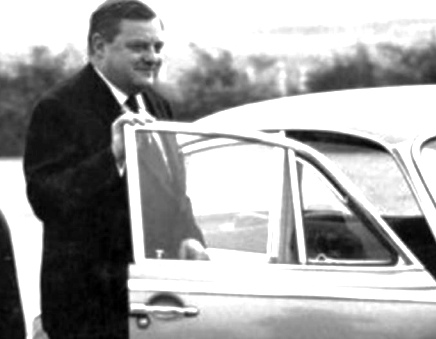
You speak about the West, but there was a moment when the chance came with the visit of Strauss…?
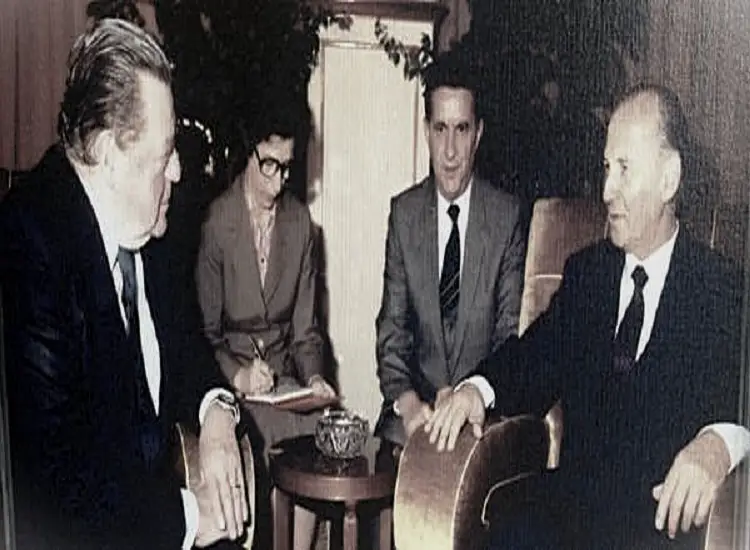
When Strauss came, I was the First Secretary in Durrës. Strauss had completed theological university, so he had started out to become a priest and had ended up in politics. I remember that he had a school friend, an Albanian priest who had studied at the same faculty in Germany and who had been imprisoned in Albania. Strauss asked to meet this old school friend. We took the priest, brought him out of prison, cut his hair, fixed him up, warned him that he would eat a bullet if he said things that shouldn’t be said, and took him to Tirana, to the meeting with Strauss.
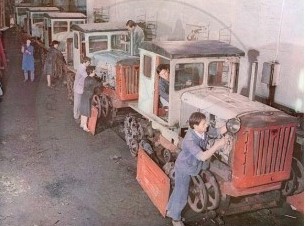
Foto Çami handled the political talks. I don’t know concretely what was offered, as these were matters discussed in a very narrow circle. I know that we asked for war reparations, but he said it was not possible, as the German Constitution did not allow it. But he offered other aid. It was said that it was a lost opportunity due to the stubbornness of the Albanian side, but I know that Strauss helped us even after the talks did not succeed. Several combine harvesters and tractors with large tires and air-conditioned cabs came to Albania. He brought us 300 Friesian heifers, which we placed in Xhafzotaj. The Strauss case was indeed a mistake by the Albanian side.
Again a theoretical mistake, or also a practical one?
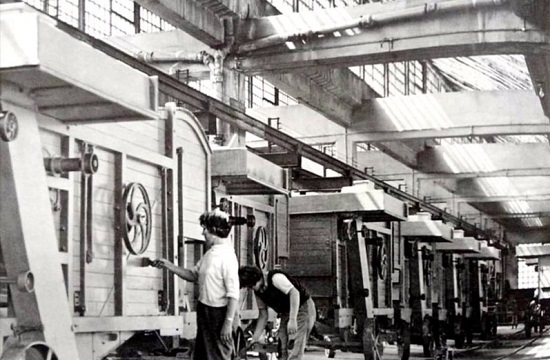
Both together. Theoretically, the closure in on itself, the principle of doing everything with our own forces, was a fatal mistake in the economy. I’ll take the case of the Auto-Tractor Combine or the UMB (Machine-Building Plant) of Durrës. We managed to produce tractors and combine harvesters, but at what cost? I was directly involved with this issue at that time. The cost of producing a CK3 combine harvester was three times the price we could buy it for from Poland. With the cost of one locally produced tractor, we could buy 2 or 3 tractors from China. But also practically, we should have considered the Strauss case as a golden opportunity for economic opening, and not have asked only for naked cash, when they found it impossible to give that.
What could have been produced instead of these machines you mentioned earlier?
There were plenty of things that could have been produced instead. I take as example household electrical appliances, refrigerators, or others that we could produce both for our market and for export. The economy could not function this way. Perhaps for our generation it was fine, as we were used to sacrifices, but it could not last long.
A typical example of this is the aid that came to us immediately from Turkey and Italy, as well as other countries, immediately after the events of December 1990. It is a fact that very few people know, but in 1991, Turkey helped us immensely. The then Prime Minister, Adil Çarçani, went for a week to Turkey and, when he returned, he reported to us on a host of aid that Turkey had agreed to give us.
Adil Çarçani was deputy prime minister at the time of Mehmet Shehu. He was very intelligent and very measured. He often restrained Mehmet Shehu, who had a very fiery temperament. I knew both of them at the time when I was a state minister, without portfolio, during Mehmet’s time. I worked for two and a half years as a minister. Later, Adil Çarçani was appointed prime minister, after the suicide of Mehmet Shehu, and after the fall of communism, together with Ramiz Alia, they led the first moments of the transition.
Do you consider Enver Hoxha responsible for these mistakes?
Enver Hoxha has responsibility for these, but also all the members of the Politburo. Even though I was elected in 1981, when this work had already come to an end, I still should have raised my voice. I might have eaten prison, perhaps even a bullet, but I should have spoken.
But it wasn’t only that. Even when I saw that there were other possibilities, I gritted my teeth and did not speak for another strong reason: What I could think was prohibited by the Constitution. And we had established the Constitution ourselves. Do not forget, violating the Constitution constituted high treason against the homeland.
Was this isolation our choice or imposed by others?
It was not well studied. Perhaps it was not imposed, but it turned into a lifestyle. Just think about what technology we chose. There was a time when even school dispensaries we took from the Soviet Union…
Why were you so rigid in the decisions you made? Was it more an economic or also a political matter?
Both together, but politics got tangled up with the economy, sometimes causing even unbelievable situations. A typical case was the problem we had with Vaçe Zela. Today it seems unbelievable, but the government gathered to discuss a tooth of Vaçe Zela.
How did that happen?
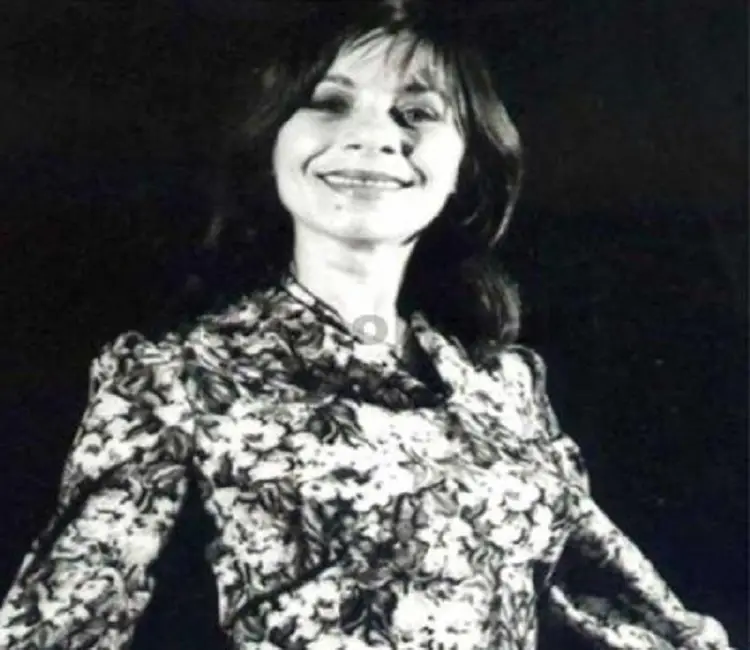
I was a state minister at the time when a group of artists was about to go on a tour abroad. I think it was in China. Vaçe Zela had a broken tooth and I don’t remember how many grams of gold were needed to fix her tooth, but it was very little. The problem was that there were strict rules for foreign currency and gold. Do you believe that the Government gathered just for a tooth of Vaçe’s? At that time, Qirjako Mihali was the director of the State Treasury. “The Constitution does not allow state gold to be used for personal reasons,” Qirjako Mihali would say. Mehmet Shehu, the then prime minister, supported him. Even Manush Myftiu did not agree, he was very strict. After more than an hour of discussions, I asked for permission to speak. “Comrade Mehmet, why didn’t you tell me to bring some gold Napoleon coins from Shkodra, why are you holding us for an hour now with discussions over trifles?” It seems laughable, but this is the truth, that’s how tightly we kept the accounts at that time. While in other matters we were not so strict.
Can you tell me an example?
Since we talked about a singer, let me tell you about another singer. When I was First Secretary in Durrës, one day the father of the singer Parashqevi Simaku came to me. He complained to me that his daughter was not allowed to go on tours abroad, as other singers were. I found out that Parashqevi had come to Durrës at that time, she was single, but had rented a room. I also found out that the reason for preventing her from going abroad was that she had a distant cousin who had fled (defected). I told Parashqevi’s father to write me a formal request. I asked the party secretary of Kavaja, at that time Jovan Sokoli. “No, Muho,” he tells me, “these are small things…now, some gossip, but who deals with these things?!”
I sent a letter regarding this matter to Ramiz Alia, who judged these things without spite. Ramizi was tolerant, while Rita Marko insisted that she should not be allowed to go abroad. Ramizi sent a letter to the Ministry of Internal Affairs and this matter was resolved. This was because, in Parashqevi’s case, no law was violated, unlike in Vaçe Zela’s case.
Regarding the youth actions of that time, dozens of films and documentaries were made and the newspapers of the time wrote often. Was it a way to encourage volunteer work, i.e., unpaid?
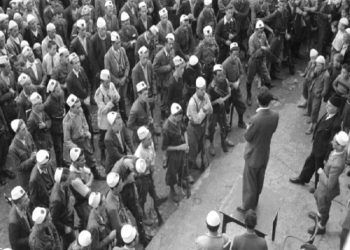
The actions were not only an economic matter, but also a social one. In those actions that you have heard talked about, not only were very important works for the country carried out, not only were many people mobilized, but we also saved many people. I am not talking about the economic value, but I am only stopping at the social aspect. There were cases, especially in Shkodër, when families were much closed. For the young people coming from these families, especially the girls, the actions were a way to live in greater freedom. But we tried to be very careful.
If we saw cases where there were feelings between the young people, we would intervene with the families to get them married, even though the families might be against it. But we also had those cases where the love of the young did not convince the family members and we tried to send the young couple to other places. For example, we sent several such couples to Ksamil. The majority refused to return to Shkodër, even after 1990. But there were also cases where the stories ended badly.
I remember 4-5 such cases where the girls had become pregnant and the boy did not want to marry. We would take them supposedly for tailoring, cooking, or some other courses and send them to Korçë, where no one knew them. There they gave birth, we placed the baby in the Children’s Home, and then she would come back to Shkodër without anyone ever knowing their drama.
We were also convinced, even in the case of adolescents with criminal tendencies, that work would put them on the right path. In the school of “Vagabonds”, as it was called then, they learned trades and many of them have become excellent specialists and have lived honestly. / Memorie.al